Owen Bradley
 Closets are the last place most people think about lighting, and the first place they regret it. You reach into a dim reach-in and pull out a navy shirt that turns out to be black, or you balance on a step stool in a walk-in trying to read a storage label by phone flashlight. Good closet lighting fixes all of that for very little money. The catch is that closets are also one of the few spaces in a home with real electrical safety rules attached, because clothing, cardboard boxes and linens are exactly the sort of material that does not belong near a hot bulb. This guide walks through the clearance rules that matter, the fixture types that suit different closet shapes, and the battery and motion-sensor options that let renters light a closet with no wiring at all. By the end you should know precisely which closet lighting ideas fit your space and which ones to skip.
Why Closet Lighting Has Its Own Rules
Electrical codes single out closets because of a simple hazard: a bare incandescent bulb can reach surface temperatures well above the ignition point of fabric and paper. Push a stack of sweaters against one and you have a fire waiting to start. That is why the National Electrical Code defines a “storage space” inside a closet and requires fixtures to sit outside it or be enclosed.
The practical takeaways are easy to remember. Bare-bulb lampholders, the kind with an exposed screw socket and a pull chain, are not permitted in clothes closets in new work. Fully enclosed surface-mounted LED or fluorescent fixtures need at least 12 inches of clearance from the nearest storage area. Recessed fixtures with a lens need at least 6 inches. LED luminaires designed and listed for closet use can be mounted right in the storage space, which is why so many modern closet retrofits use slim LED strips or pucks. Local rules vary, so treat these numbers as the baseline and confirm with your inspector before hard-wiring anything.
Heat is the other reason the industry has moved almost entirely to LED here. An LED closet fixture running at 10 watts is barely warm to the touch, so it is safe next to fabric and it will not fade the dyes on clothing you keep in the same spot for years. If you are still running incandescent or halogen in a closet, swapping the bulb is the single highest-value upgrade you can make, and choosing the right one is easier once you have compared the best light bulbs for closet use.
Match the Fixture to the Closet Shape
Closets fall into three broad shapes, and each rewards a different lighting approach.
Reach-In Closets
A standard reach-in is roughly 2 feet deep and 4 to 8 feet wide, with a single rod and a shelf above it. The problem is that your own body blocks the room light the moment you step up to the door. One surface-mounted LED fixture or a slim linear bar mounted on the ceiling just inside the door frame, aimed toward the back wall, fixes it. Around 400 to 700 lumens is plenty for a reach-in. Anything more and you are just adding glare in a small white box.
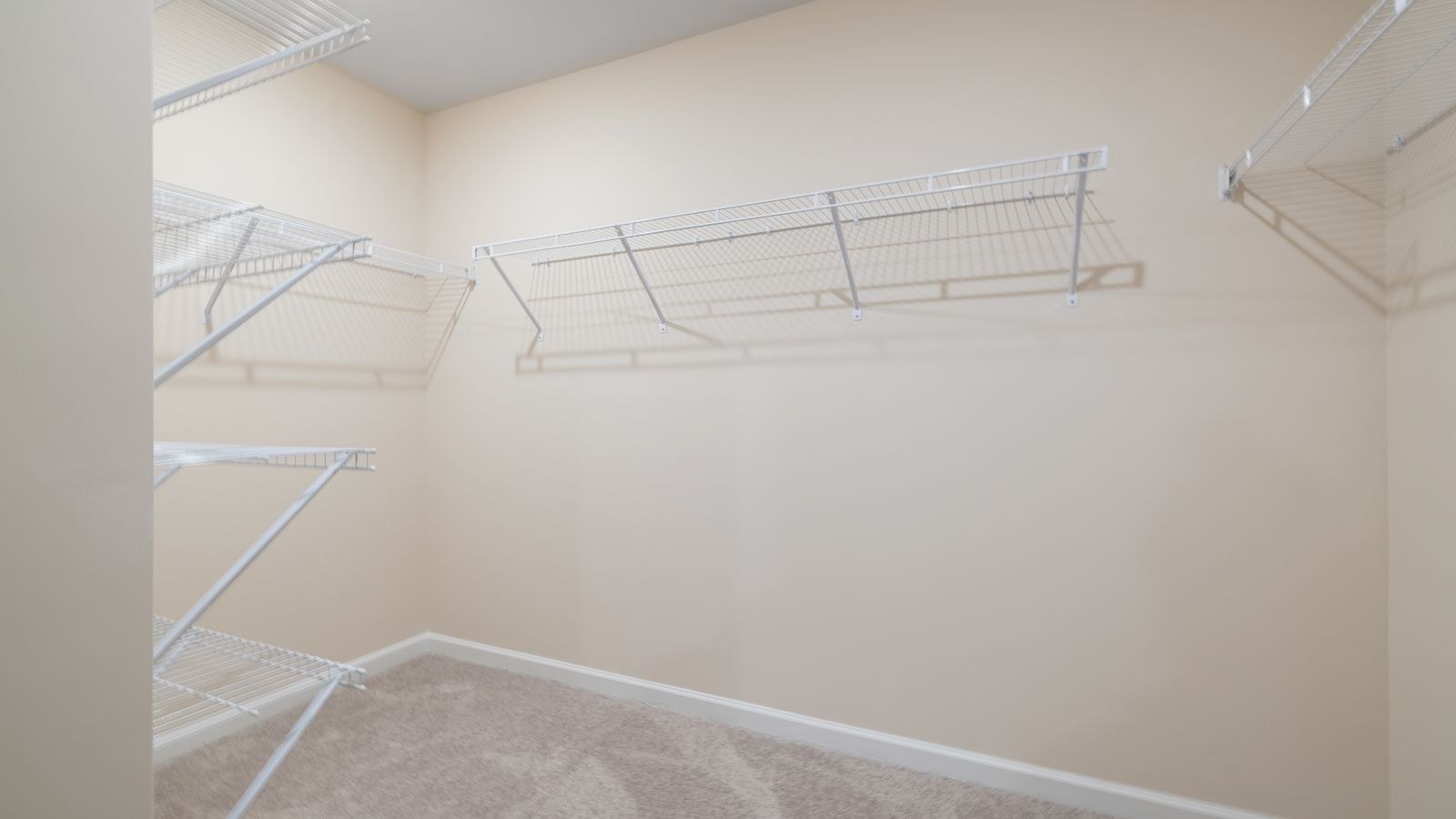
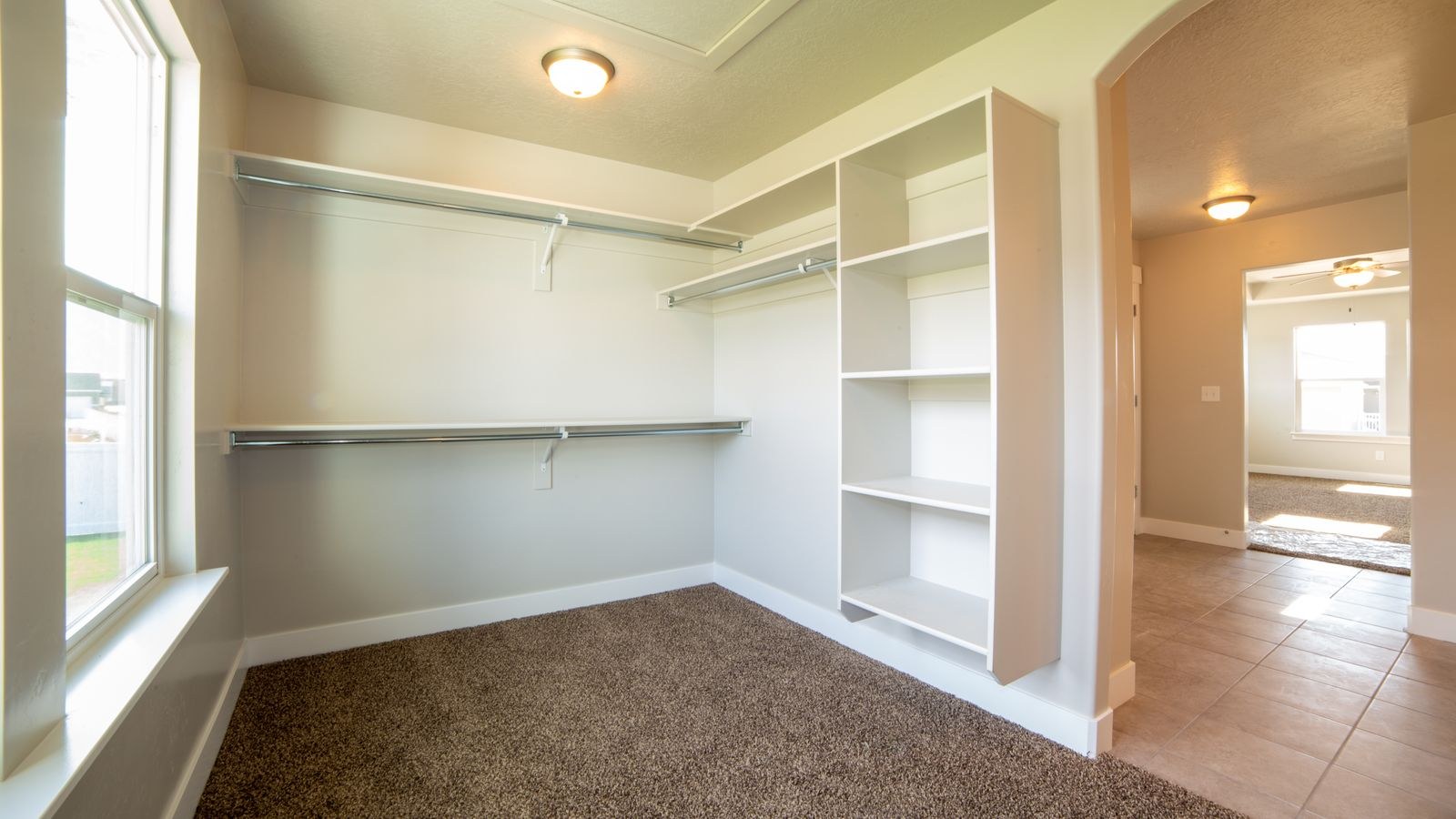
Walk-In Closets
Walk-ins behave more like small rooms and deserve layered light. A central flush-mount or two small ceiling fixtures handle general illumination, and under-shelf strips add task light where you actually look at things: the hanging rods, the shoe shelves, the drawer bank. Aim for something in the range of 20 to 30 lumens per square foot as an ambient base, then supplement. A 6 by 8 foot walk-in is 48 square feet, so roughly 1,000 to 1,400 lumens of ceiling light plus accent strips gives an even, shadow-free result.
Wardrobes, Armoires and Cabinets
Freestanding wardrobes and linen cabinets rarely have power nearby, which makes them the natural home for battery and rechargeable fixtures. Magnetic-mount bars that pull off for charging are the easiest answer, and a comparison of the best rechargeable LED lights will show you the difference between models that last a month per charge and ones you will be topping up weekly.
Brightness, Color Temperature and Color Rendering
Three numbers determine whether closet lighting actually helps you get dressed.
Lumens measure output. Small reach-in: 400 to 700. Walk-in: 1,000 to 1,600 total across all fixtures. Deep pantry or storage closet: 700 to 1,000, since you are reading labels rather than judging color.
Color temperature, measured in Kelvin, sets the mood and the accuracy. For clothing, 3500K to 4000K is the sweet spot. Warmer than 3000K and navy, black and charcoal blur together. Cooler than 5000K and the space feels like a walk-in refrigerator, plus whites can read slightly blue. If your closet opens directly into a bedroom, staying near 3000K keeps the two spaces visually consistent.
CRI, or color rendering index, is the one shoppers skip and later regret. A CRI of 90 or above means colors look the way they will outdoors. Cheap fixtures at CRI 70 make it genuinely difficult to match a brown belt to brown shoes. For a closet, high CRI matters more than raw brightness.
Wired, Plug-In or Battery: Choosing a Power Source
How you power the light usually decides the project’s cost and difficulty more than the fixture itself.
Hard-wired fixtures give you the cleanest look, unlimited runtime and the option of a wall switch or a door jamb switch that turns the light on when the door opens. The downside is that running a new circuit into a closet means opening drywall, and in most jurisdictions it means a permit. If you are already remodeling, do it. If not, the return rarely justifies the mess.
Plug-in strips and pucks are the middle ground. If an outlet sits within a few feet, adhesive-backed LED tape with an inline switch or a smart plug delivers hard-wired quality without touching a junction box. Route the cord along a shelf edge with clips so it stays invisible.
Battery and rechargeable fixtures ask nothing of your walls, which is why renters and anyone with a wardrobe in the middle of a room end up here. Modern lithium units run months on a charge in a closet that opens a few times a day. Look at the range of best cordless lights if you want the widest selection of mounting styles, from thin bars to recessed-look pucks.
Motion Sensors and Automatic Control
A closet light you have to switch on is a closet light you will forget to switch off. Motion and door-activated control solves that and doubles battery life at the same time.
Passive infrared sensors trigger on body heat and typically hold the light for 15 to 30 seconds after the last movement. That is the right behavior for a reach-in. For a walk-in where you might stand still while deciding what to wear, look for a model with an adjustable hold time of 60 seconds or longer, otherwise you will be waving your arm at the ceiling.
Door jamb switches are the wired equivalent: a plunger in the door frame that completes the circuit when the door opens. They are elegant and completely automatic, but they only work on closets with a full door, not on open shelving or curtained alcoves.
Ambient light sensors are worth having in closets that get daylight from a nearby window, since they stop the fixture from firing during the day and wasting charge. Many of the best motion sensor night lights combine both sensors and work just as well inside a closet as they do in a hallway.
Layout Tips That Make a Real Difference
- Light the front of the shelf, not the middle of the room. Mounting strips under the leading edge of each shelf pushes light down onto the items instead of onto the shelf above.
- Aim toward the back wall. A fixture placed just inside the door and angled inward eliminates the shadow your own body casts.
- Use two shorter runs instead of one long one in walk-ins. Even coverage beats a single bright hotspot.
- Keep the diffuser frosted. Bare LED chips at eye level in a small space are uncomfortably glary.
- Mind the storage zone. Measure 12 inches from the highest shelf and the rod before you mount anything that is not specifically listed for closet interiors.
Budget Tiers: What You Get for What You Spend
Under $25. One or two stick-on battery pucks or a short rechargeable bar. Solves the “I cannot see anything” problem in a reach-in in about five minutes. Expect modest output and basic CRI.
$25 to $75. Rechargeable motion bars with magnetic mounts, or a plug-in LED tape kit with a diffuser channel. This is where quality of light jumps: better CRI, adjustable color temperature, longer runtime. Most closets should land in this tier.
$75 to $200. Hard-wired LED closet luminaires, dimmable under-shelf systems with an aluminum channel, or a smart-controlled setup tied into the rest of the house. Worth it in a large walk-in you use every single day, or as part of a full closet build.
Common Closet Lighting Mistakes
- Reusing an old bare-bulb fixture. If your closet still has an exposed socket, replace it. It is the single most common code violation in older homes.
- Buying on lumens alone. A blinding 2,000-lumen light in a 12 square foot closet is worse than a well-placed 500-lumen one.
- Ignoring CRI. Low-CRI light defeats the entire purpose of lighting a clothes closet.
- Mounting adhesive strips on dusty melamine. Wipe with isopropyl alcohol first or they will drop off within a month.
- Choosing a sensor with too short a hold time. Anything under 30 seconds is annoying in a walk-in.
- Forgetting the charging routine. Battery lights need a plan. Magnetic mounts that detach in one motion get charged; screwed-in ones get left dead.
Frequently Asked Questions
Do I need an electrician for closet lighting?
Only if you are adding a new hard-wired circuit or a door jamb switch. Battery, rechargeable and plug-in options are all homeowner projects that need no tools beyond a screwdriver.
Can I put LED strip lights inside a closet safely?
Yes. LED tape runs cool and most products are listed for enclosed cabinet and closet use. Keep the driver or power brick outside the storage space and use a channel to protect the tape from being crushed by boxes.
What color temperature is best for a clothes closet?
3500K to 4000K with a CRI of 90 or higher. That range shows fabric colors accurately without feeling clinical.
How long do battery closet lights last?
A rechargeable lithium bar used for a few minutes a day typically runs two to four months per charge. Motion activation with a daylight sensor pushes that toward the top of the range.
Will closet lights fade my clothing?
LEDs emit almost no ultraviolet light, so fading from a modern closet fixture is not a practical concern. It was a legitimate worry with halogen and older fluorescent tubes.
Final Thoughts
Closet lighting is one of the rare home upgrades where a $30 purchase and fifteen minutes of work genuinely changes a daily routine. Start by checking the clearances in your space, then pick a power source that matches what you are willing to install. Renters and anyone with a wardrobe should reach for rechargeable motion bars. Homeowners planning a closet rebuild should run power and use listed LED luminaires with under-shelf task strips. Whichever route you take, prioritize high CRI and sensible placement over raw brightness, keep every fixture clear of the storage zone, and you will end up with a closet that is safe, code-friendly and finally easy to see into.