Owen Bradley
 Smoke alarms used to be a solved problem. You bought a white disc, screwed it to the ceiling, and pressed the button once a month. Then Wi-Fi arrived, and suddenly the same shelf holds units costing a few pounds next to units costing ten times as much, both claiming to do the same job. The question is whether connectivity buys anything meaningful or just adds an app to a device that already works. The honest answer depends entirely on how you live: on how often you are away, how many alarms you own, how high your ceilings are, and how much you value knowing which room the smoke is in. This comparison of smart vs standard smoke alarms goes feature by feature so you can decide where connectivity earns its cost in 2026 and where it plainly does not.
The Core Job Is Identical
Start with what does not differ. Both smart and standard alarms use the same underlying sensing technologies — photoelectric, ionisation, or both — and both must meet the same certification standards for sensitivity and response time. A certified smart alarm is not better at detecting smoke than a certified standard alarm. It detects the same smoke at the same threshold and sounds a horn at the same required loudness of 85 dB at 10 feet.
This is worth stating plainly because marketing implies otherwise. Connectivity does not improve detection. What it changes is everything that happens around detection: how you find out, what information you get, how you silence it, and how you know the alarm still works.
Where Smart Alarms Genuinely Add Value
Alerts When Nobody Is Home
This is the headline benefit and the strongest one. A standard alarm sounding in an empty house alerts nobody unless a neighbour happens to hear it. A smart alarm pushes a notification to your phone within seconds, wherever you are.
For anyone who travels, keeps pets alone at home, owns a second property, or has a home office in a detached building, that gap is real. Fires that start while a house is empty — tumble dryers, chargers, faulty wiring — are exactly the ones where early notification changes the outcome. If this is your main reason for upgrading, comparing the best smart smoke alarms will show which platforms are most reliable at pushing alerts promptly.
Knowing Which Room
In an interconnected standard system, every alarm sounds at once and you have no idea where the fire is. That is fine for evacuation and useless for decision-making. Smart systems name the location — “Smoke detected in the kitchen” — both in the app and, on voice-enabled models, spoken aloud by the alarm itself.
Knowing whether it is the kitchen or the basement stairs changes which route you take out of the building. It also changes how you respond to a middle-of-the-night alert while half awake, which is when clear information matters most.
Silencing Nuisance Alarms From Your Phone
Anyone who has stood on a chair waving a tea towel at a shrieking ceiling understands this feature. Smart alarms let you hush from the app, and better systems send a “heads up” notification when smoke levels rise but have not yet reached alarm threshold — giving you a chance to open a window before the horn goes off at all.
This matters more than it sounds. Nuisance alarms are the single biggest cause of alarms being disabled. Anything that reduces the temptation to pull a battery is a safety feature, not a convenience feature.
Automatic Self-Testing and Battery Reporting
Monthly manual testing is the maintenance task almost nobody actually performs. Smart alarms self-test regularly — often several hundred times a day on some models — and report status in the app. Battery levels appear as a percentage rather than as a 3 a.m. chirp.
For a house with six or seven alarms, or for high ceilings and stairwells where testing means hauling out a ladder, this genuinely removes friction from a task that otherwise gets skipped for years.
Integration With the Rest of the Home
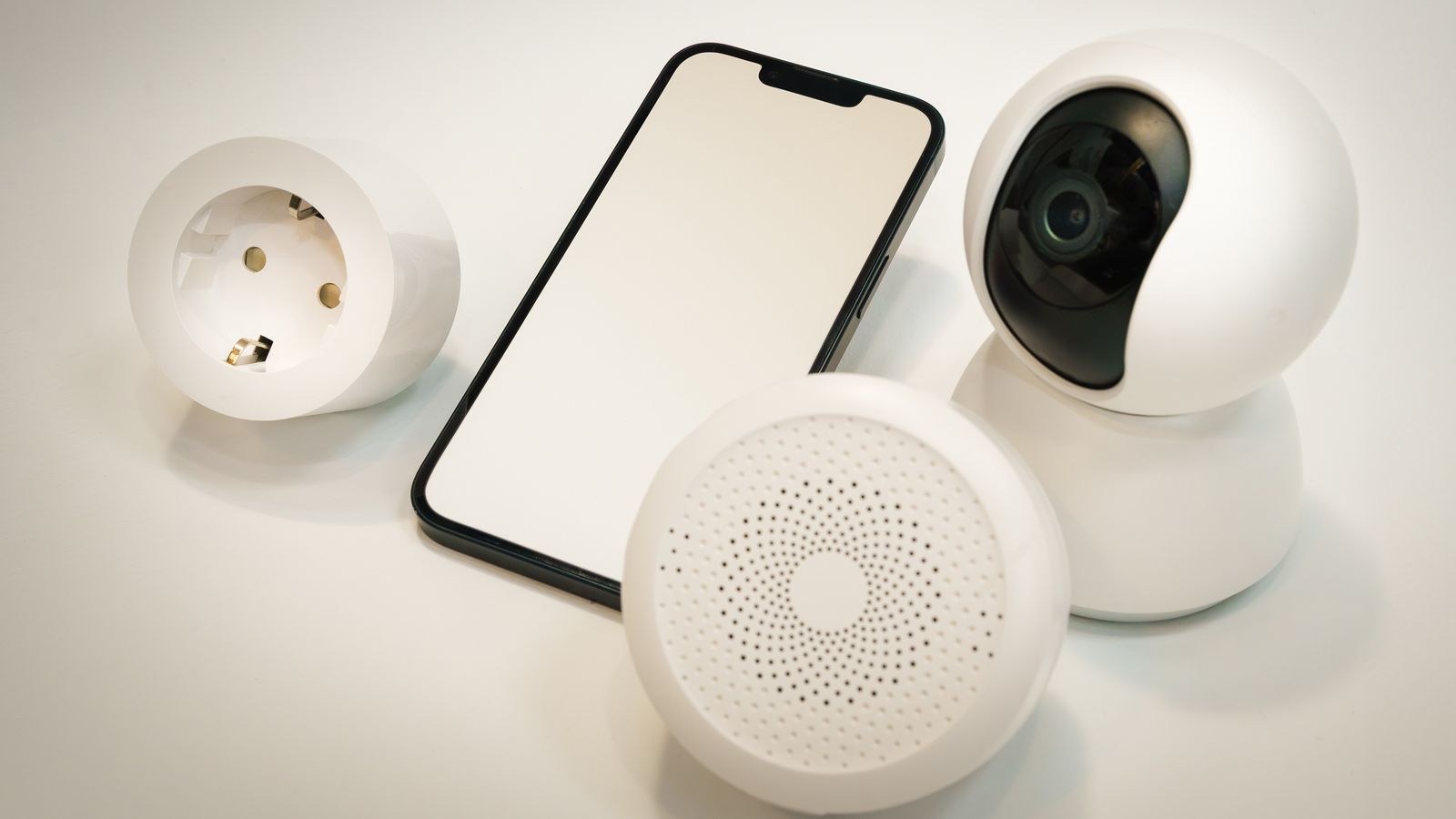
Smart alarms can trigger actions elsewhere. Common automations include turning every smart bulb in the house to full brightness for evacuation, shutting down an HVAC system so it stops circulating smoke, unlocking smart door locks for exit, and starting a camera recording.
These are secondary benefits, but if you already run a connected home they cost nothing extra to set up. Households that also want CO coverage from the same platform should look at smart smoke and carbon monoxide detectors, which handle both hazards under one app and one set of automations.
Where Standard Alarms Still Win
Price, and Therefore Coverage
A basic sealed ten-year standard alarm costs a fraction of a smart unit. Whole-house coverage typically needs five to eight alarms, so the difference across a full set is substantial.
This produces the most important argument in the entire comparison: more alarms beats smarter alarms. A house with eight standard alarms in every required location is meaningfully safer than a house with three smart ones and empty bedrooms. If budget forces a choice, buy coverage first and connectivity later. The broader field of the best smoke alarms includes plenty of standard units that cover a whole home for less than two smart devices.
No Dependencies
A standard alarm needs a battery and nothing else. A smart alarm needs Wi-Fi, a working router, an internet connection, a manufacturer’s cloud service that still exists, an app that still supports your phone’s operating system, and an account you have not been locked out of.
All of those can fail. Critically, a well-designed smart alarm still sounds its local horn when the network is down — the smoke sensing does not depend on connectivity. But every one of those dependencies is a way for the smart features to quietly stop working without you noticing.
Battery Life and Power Draw
Wi-Fi radios consume power. Battery-powered smart alarms typically last one to three years between changes, against ten years for a sealed standard unit. Many smart alarms are therefore designed to be hardwired, which limits where you can put them without an electrician.
Longevity and Support
Both types expire at ten years. But a standard alarm is guaranteed to work identically on day 3,650 as on day one, because it depends on nothing external. A smart alarm’s app support, cloud service, and integrations may change several times across that decade, and discontinued products do sometimes lose features.
The Middle Ground: Interconnected Standard Alarms
The comparison is not binary. Wirelessly interconnected standard alarms sit between the two, offering the most valuable non-smart benefit — every alarm in the house sounds when one detects smoke — without any app, account, or Wi-Fi.
For many households this is the sweet spot. Interconnection is the feature that wakes someone on the second floor when a fire starts in the basement, and it is far more consequential than a phone notification for anyone who is actually home. If you are home most of the time and mainly want whole-house alerting, interconnected standard alarms deliver the majority of the benefit at a fraction of the price.
Another hybrid worth knowing about is the retrofit listener: a small battery device that hears an existing alarm’s horn pattern and sends a phone alert. It adds remote notification to alarms you already own for very little money, though it cannot tell you which unit is sounding.
A Decision Framework
Work through these questions honestly and the answer usually falls out.
- Is the house empty for long stretches? If yes — frequent travel, a rental, a holiday home, long working days with pets inside — smart alarms earn their price. If someone is nearly always home, the case weakens considerably.
- Do you already run a smart home? If you have a hub, smart bulbs, and cameras, integration adds real value and setup is trivial. If you have none of that, you are buying an ecosystem for one device.
- Can you afford full coverage in smart units? If not, fit standard alarms everywhere first. Partial coverage is the wrong trade.
- Do you actually test alarms monthly? If you are honest and the answer is no, self-testing is a genuine benefit rather than a gimmick.
- Are your ceilings high or awkward? Stairwells, vaulted rooms, and loft landings make manual testing painful enough that remote status reporting pays for itself.
- How reliable is your Wi-Fi? Patchy coverage in the exact rooms that need alarms undermines the whole premise.
- Do you get frequent nuisance alarms? Phone hush and pre-alarm warnings solve a problem that otherwise ends with a disabled alarm.
A common and sensible compromise: fit smart alarms in the hallway and on the landing where they cover the main escape routes and give location-specific alerts, and use interconnected standard alarms elsewhere. Reviewing the best Wi-Fi smoke detectors alongside standard interconnected models makes it easy to build a mixed system where each unit is spending money on the right thing.
Practical Points Before You Buy
- Check ecosystem compatibility. Smart alarms rarely interconnect across brands, and some only integrate with one voice assistant.
- Check whether there is a subscription. Some platforms put monitoring or extended history behind a monthly fee.
- Confirm local horn operation offline. Any alarm worth buying sounds locally with no network at all.
- Prefer photoelectric or dual sensing near bedrooms, regardless of whether the alarm is smart.
- Check the mounting requirement. Many smart alarms need mains power; confirm you have a fixture where you want one.
- Remember the ten-year clock. It applies to both types, measured from manufacture date.
If you are still deciding on sensor type, ceiling positions, and coverage counts before worrying about connectivity, work through a full smoke detector buying guide first — those decisions matter more than the smart question.
Frequently Asked Questions
Do smart smoke alarms work without internet?
The smoke sensing and local horn work with no network at all. What you lose without connectivity is phone notification, remote hush, and app status reporting. Interconnection between units may also depend on the network on some models.
Are smart alarms more sensitive to smoke?
No. Both types must meet the same certified sensitivity thresholds. Some smart models use dual sensors or additional analysis to reduce nuisance alarms, but detection performance is governed by the same standard.
Can I mix smart and standard alarms in one house?
Yes, and it is a common approach. They generally will not interconnect with each other, so treat them as two separate groups: interconnect the standard alarms among themselves and the smart alarms among themselves.
How long do smart alarm batteries last?
Typically one to three years for battery-powered models, compared with ten for a sealed standard unit. Many smart alarms are designed to be hardwired for this reason.
Is a smart alarm worth it for a small flat?
Often not. In a small space you will hear any alarm from anywhere, so the main benefit is remote notification while you are out. If the flat is empty all day, that may still justify a single smart unit.
What happens if the manufacturer stops supporting the app?
The alarm continues to detect smoke and sound locally, since that function is entirely on-device. Smart features may degrade or stop. This is a reasonable argument for treating connectivity as a bonus rather than the foundation of your fire safety.
Final Thoughts
Smart smoke alarms are a real improvement in the areas standard alarms cannot touch: remote notification, location-specific alerts, phone hush, and automatic self-testing. They are not better at detecting fire, and they cost enough that buying them can tempt you into fitting fewer alarms than you need. Get full coverage first, add interconnection second, and add connectivity where it solves a problem you actually have — an empty house, an awkward ceiling, or a maintenance routine you know you will never keep up manually.