
 Owen Bradley
 A footrest is the accessory people buy last and should often buy first. The reason is simple geometry: most desks are built at a fixed height of around 29 to 30 inches, a figure derived from a tall average that fits a minority of actual users. If your desk cannot come down, the only way to get your forearms level with the keyboard is to raise your chair, and once your chair is high enough for your arms, your feet no longer reach the floor. Dangling feet put the whole weight of your legs on the underside of your thighs, compressing tissue and cutting circulation within minutes. This footrest buying guide explains tilt range, height, rocking and dynamic designs, materials, and who genuinely needs one, so you can fix the problem properly rather than living with it through 2026 and beyond.
Do You Actually Need a Footrest?
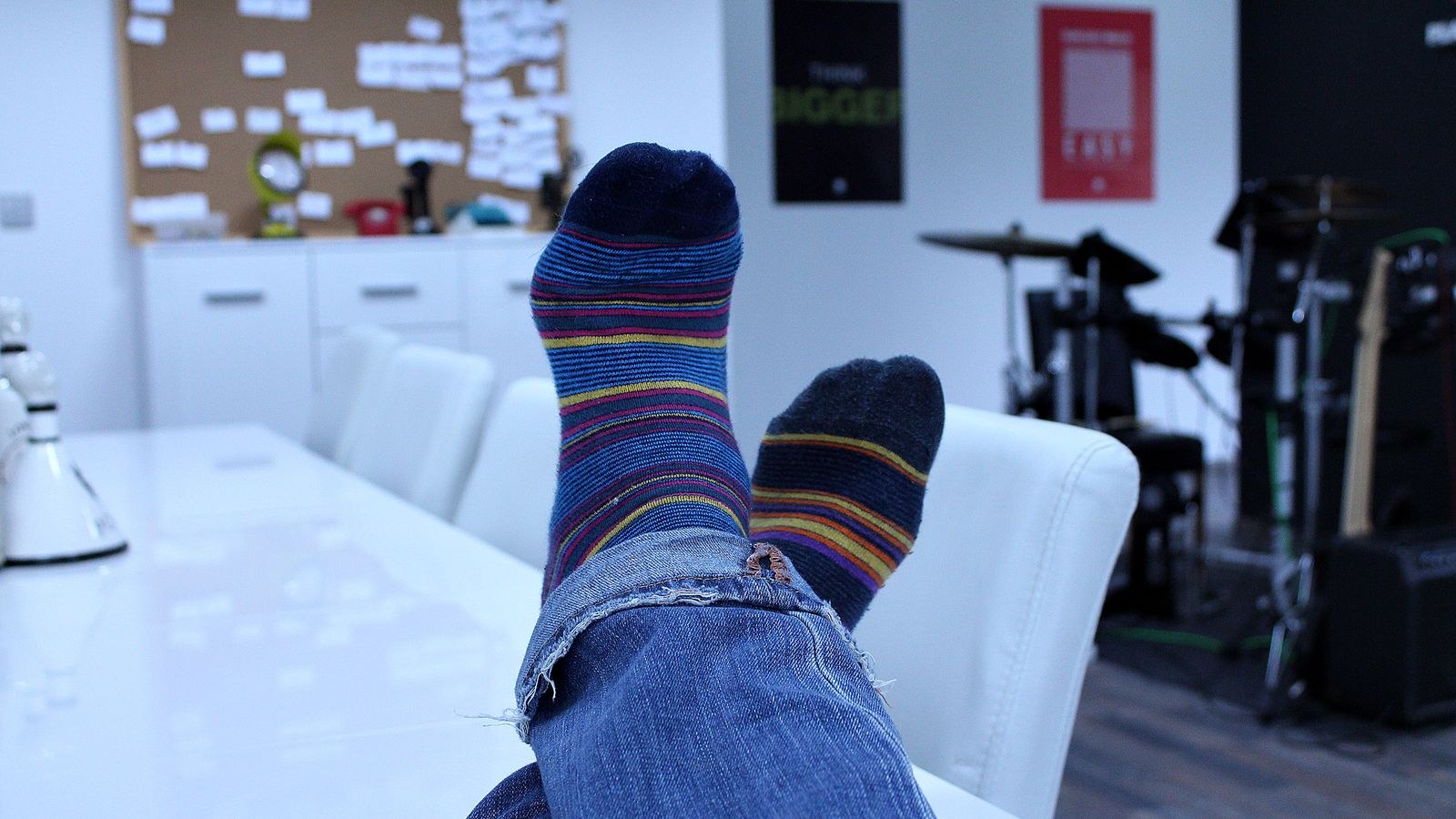
There is a quick diagnostic. Sit at your desk, adjust your chair so your forearms are parallel to the floor with elbows at roughly 90 degrees while your hands rest on the keyboard. Now look at your feet. If they sit flat on the floor with your knees at about 90 degrees, you do not need a footrest and buying one will hurt more than help. If your heels are lifted, your toes are stretching, or you have hooked your feet on the chair base, you need one.
The second test is chair-based. If you find yourself constantly lowering your chair for your feet and then hunching your shoulders to reach the keyboard, you are trading one problem for another, and a footrest resolves it by letting the chair stay where your arms need it.
Who Benefits Most
- Shorter users. Anyone under roughly 5 feet 4 inches at a standard fixed-height desk will almost always be left dangling.
- People with non-adjustable desks. Dining tables, fixed office desks, and most home setups have no height adjustment at all.
- Users with high desks. Some desks sit at 30 or 31 inches, which pushes even average-height users into the same problem.
- Anyone with lower-back or circulation issues. A slight foot elevation reduces lumbar strain and encourages a more open hip angle.
- Restless sitters. A rocking footrest gives constant low-level movement, which helps both circulation and concentration.
If your chair is the actual constraint, fixing that first may remove the need entirely. The best office chairs for short people and the best office chairs for petite people cover models with shallower seats and lower minimum heights, which solve part of the same problem from the other direction.
Height: Get This Number Right First
Footrest height is the specification that decides whether the product works. Too low and your feet still dangle; too high and your knees rise above your hips, which tilts your pelvis backward and rounds your lower spine, creating the exact posture you were trying to escape.
Measure it directly. With your chair set correctly for your arms, measure from the floor to the underside of your heels. That figure is your minimum required height. Most adults land somewhere between 3 and 6 inches, but the range across users is wide and guessing is a coin flip. Choose a footrest whose adjustable range brackets your measurement comfortably rather than one that just barely reaches it at maximum.
Adjustable-height models are worth the premium for two reasons: your ideal height changes if you switch chairs or shoes, and a shared desk needs to serve more than one body. Fixed-height wedges are cheaper and sturdier but must be right the first time.
Tilt Angle and Why It Matters
A flat platform holds your ankle at a single fixed angle for hours, which is only marginally better than the floor. Tilt lets the surface match the natural angle your foot wants to sit at and gently stretches the calf and Achilles tendon.
Look for adjustable tilt in the region of 0 to 30 degrees. Around 15 degrees suits most people for general sitting, with steeper angles useful for a deliberate calf stretch during breaks. Two mechanisms dominate. Fixed-position tilt locks at set angles, which is stable and predictable. Free-rocking tilt moves continuously with your feet, which is the more ergonomically active option and the one most people prefer once they try it.

Rocking, Sliding, and Dynamic Designs
The category has moved well beyond static blocks. Understanding the three families makes shortlisting easy.
- Static platforms and wedges. A solid ramp, usually plastic, wood, or dense foam. Cheap, indestructible, silent, and stable. No movement benefit, and the height is fixed.
- Rocking footrests. A curved base lets the platform tip forward and back freely with your ankles. This is the sweet spot for most desk users: continuous micro-movement, calf engagement, and improved circulation with no learning curve.
- Dynamic and active models. Rollers, textured massage bars, sliding decks, and under-desk pedal units. These add genuine movement and some deliver a pleasant foot massage, but the pedal-style units can be distracting during focused work and take up more floor space.
For most people at a fixed-height desk, a rocking footrest with adjustable height is the best default. Choose static only if budget is tight or the user needs a completely stable platform, and choose dynamic only if restlessness is your main complaint rather than dangling feet.
Materials, Surface, and Build Quality
Material determines both feel and longevity. Moulded plastic dominates the budget and mid tiers, is light, and cleans easily, but thin plastic can crack at the hinge over time. Wood and bamboo look better in a home office and feel more solid underfoot, though they are heavier and rarely adjustable. Memory foam and dense cushioned tops are the most comfortable for stockinged feet and the best choice for anyone who works shoeless, but foam eventually compresses and takes a permanent set. Metal-framed models with a cushioned deck combine durability with comfort at the highest price.
Surface texture matters more than it sounds. A slick plastic platform lets shoes slide off constantly, which is an ongoing low-grade annoyance. Look for a ribbed, rubberised, or textured deck, and check the base for non-slip feet, since a footrest that skates across a hard floor every time you shift weight defeats the purpose. Massaging nubs on the surface are a genuine plus for shoeless users and an irritation for those in hard-soled shoes.
Size and Under-Desk Clearance
Aim for a platform at least 17 to 18 inches wide and 11 to 13 inches deep so both feet fit comfortably with room to shift. Anything narrower forces your feet together and creates a new problem. Then check the space under your desk: measure the clearance from floor to the underside of any drawer, keyboard tray, or crossbar, and confirm the footrest at its highest setting still leaves your knees room. A pedestal drawer unit or a standing desk crossbar can quietly rule out taller models. Our overview of desk accessories for building an ergonomic workstation covers how these under-desk components compete for the same space.
Footrest Versus a Chair With Built-In Support
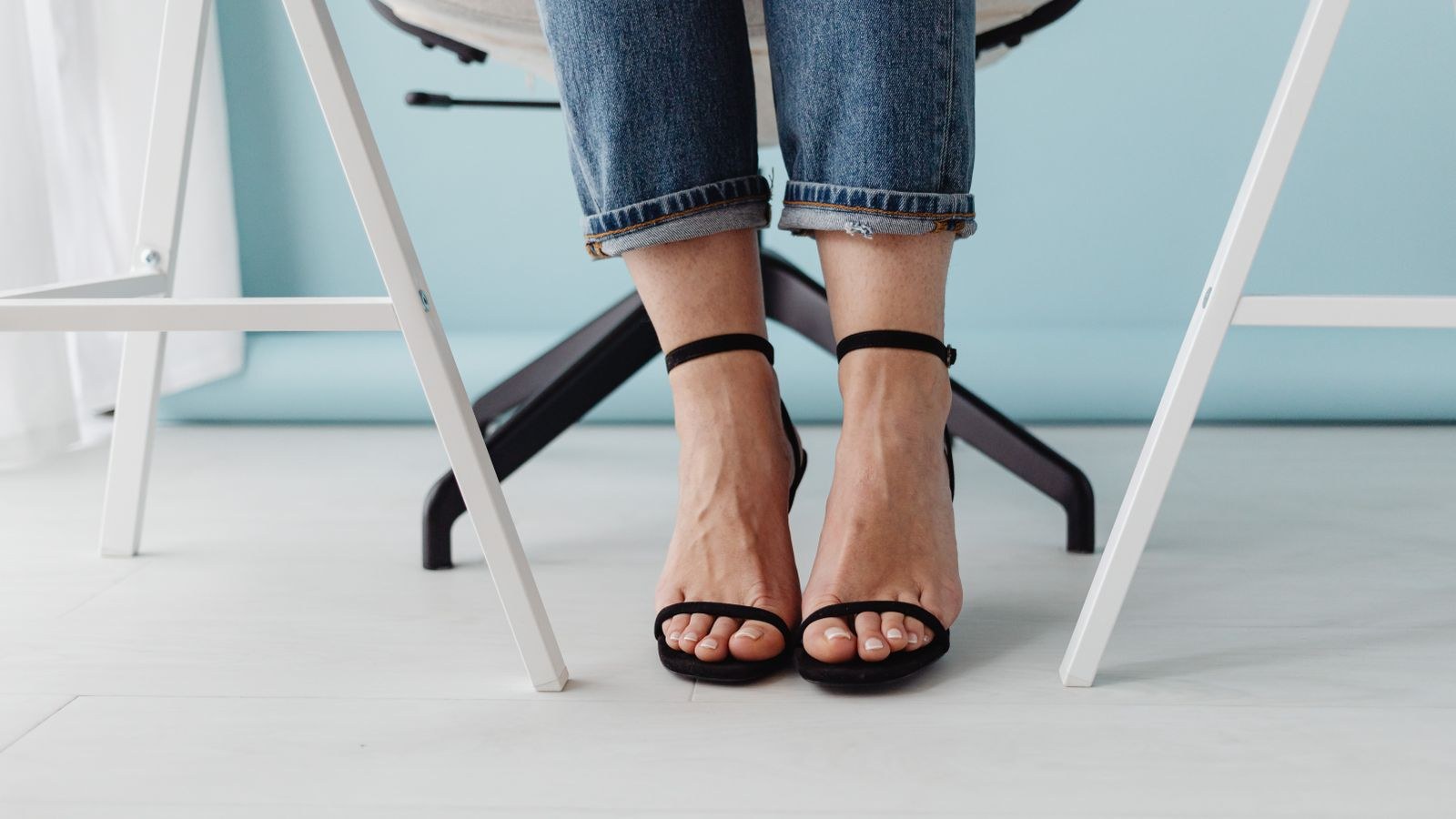
Some chairs include an integrated retractable footrest, most commonly recliner-style executive chairs and gaming chairs. These are excellent for breaks, reading, and calls, because the footrest extends with the recline and supports the whole leg. They are less useful for upright typing work, since the extended rest sits far forward and does not hold your feet at knee height while you are pulled in at the desk.
The two products serve different postures. If you want leg support for downtime within the chair itself, look at the best desk chairs with footrest and the wider selection of best chairs with footrest. If your problem is dangling feet during active work, a separate under-desk footrest is the correct tool, and it costs a fraction as much.
Setting It Up Correctly
- Set the chair for your arms first. Elbows at roughly 90 degrees, forearms parallel to the floor, shoulders relaxed. Do not compromise this for your feet.
- Measure the gap. Floor to heel underside, with the shoes you normally wear at the desk.
- Set the footrest so knees land near 90 degrees. Slightly open, up to about 100 degrees, is fine and often more comfortable than exactly square.
- Position it so your whole foot lands flat. Heels on the platform, not hanging over the back edge.
- Add tilt last. Start near 15 degrees and adjust by feel over the first few days.
- Move regularly. Rock it, change the angle, and take your feet off periodically. A footrest supports movement rather than replacing it.
Common Mistakes to Avoid
- Buying one you do not need. If your feet already sit flat, a footrest raises your knees above your hips and worsens your posture.
- Guessing the height. Two minutes with a tape measure prevents the most common return.
- Choosing a platform that is too small. Narrow decks force your feet together and eliminate the shifting you need.
- Ignoring the surface grip. Slick plastic under hard-soled shoes means your feet slide off all day.
- Forgetting under-desk clearance. Drawers and crossbars often kill the taller settings you were counting on.
- Treating it as a substitute for a better chair. If the chair’s seat is too deep or its minimum height is too tall, fix that instead.
Frequently Asked Questions
What height should a footrest be?
Set your chair for your arms first, then measure from the floor to the underside of your heels. That measurement is your target, commonly 3 to 6 inches. Pick an adjustable model whose range comfortably brackets it.
Are rocking footrests better than fixed ones?
For most desk users, yes. Continuous ankle movement improves lower-leg circulation and reduces stiffness compared with holding one static angle for hours. Fixed wedges are cheaper and make sense when stability is the priority.
Do I need a footrest if my chair is adjustable?
Only if the desk is fixed and too tall. Chair adjustability lets you set the correct arm height, but that is precisely the setting that lifts your feet off the floor at a standard-height desk.
Can a footrest help with lower back pain?
It can, by supporting your legs so their weight is not hanging from your thighs and by allowing a slightly more open hip angle. It is one element of a good setup rather than a treatment on its own.
What size platform should I look for?
At least 17 to 18 inches wide and 11 to 13 inches deep, so both feet rest flat with space to shift position throughout the day. Smaller platforms restrict natural movement.
Final Thoughts
A footrest is a small purchase that quietly fixes a structural problem in most desk setups: a work surface built at a height that assumes you are taller than you are. Diagnose the need honestly by setting your chair for your arms and looking at your feet, measure the gap rather than guessing, and prioritise adjustable height, a tilt range of roughly 0 to 30 degrees, a grippy deck at least 17 inches wide, and a stable non-slip base. Choose a rocking design if you want the circulation benefit of constant micro-movement. Get those details right and the low-grade discomfort that builds through every afternoon at the desk simply stops appearing.









