
 Sofia Marchetti
Most office chairs are sized for someone around average height. If you are shorter or have a petite frame, you know the result. Your feet dangle or just touch the floor, the seat edge presses behind your knees, and the lumbar pad sits somewhere near your shoulder blades. Many shorter people end up perched on the front edge with no back support at all.
Two specs fix most of that. A low minimum seat height lets you sit with your feet flat. A shorter seat depth lets you sit all the way back against the backrest. Lumbar height, armrest spacing and a footrest come next.
How we chose
- Minimum seat height. We looked for listed seat heights that start low, ideally under 18 inches.
- Seat depth. We favored seats under about 18 inches deep.
- Lumbar and back fit. Lumbar support that sits or adjusts low enough for a shorter torso.
- Maker’s recommended user height, when the listing gives one.
- Arms and footrest. Flip-up or armless designs, plus a built-in footrest where offered.
Our picks are based on manufacturer specs and owner reviews, not hands-on testing. Here is how we research our chair picks.
Quick picks
- Best overall for petite users: CabLady S2 — 15.7-inch seat depth and seat height from 17.7 inches.
- Best full-featured petite chair: MUSSO E80 — made for users 4’8″ to 5’10”, with footrest and 4D headrest.
- Best budget pick: Sweetcrispy Armless Task Chair — seat height from 17.71 inches and a 17.51-inch seat depth.
- Best with neck support under $100: HeroSet 9144 — 17.7-inch seat depth and a double-layer neckrest.
- Best shallow seat: BERYTH BY-5010 — 15.2-inch seat depth with a lockable tilt.

Pros
- Built for Petite Frames 17.7 -21.6 Seat Height, Feet Flat on Floor -
- Breathable Mesh Back Soft Fabric Seat No Heat Buildup, No Peeling
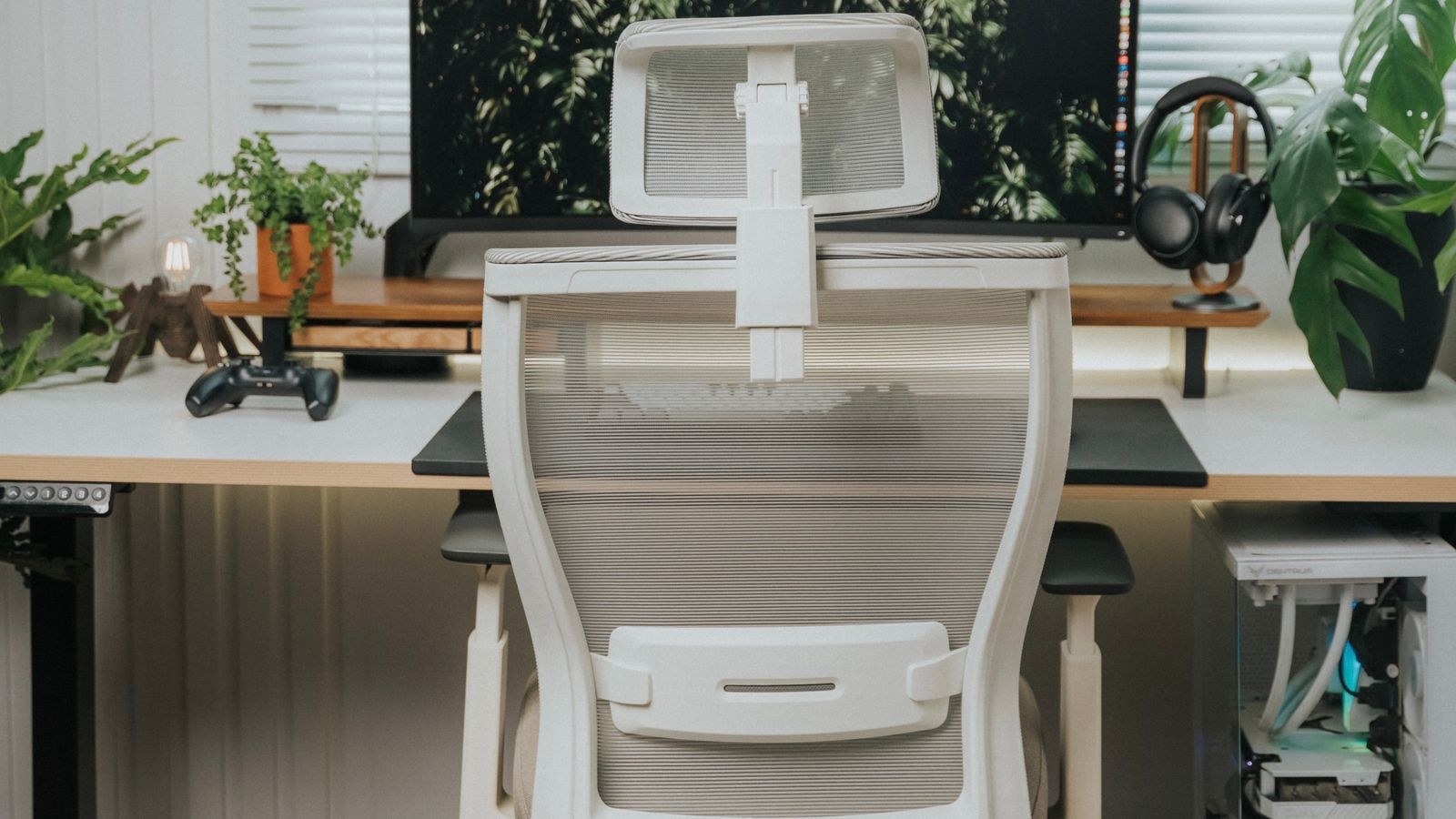
- One-Touch Recline, 4D Headrest Flip-Up Arms with Locking Stability
- Slim Build, Space-Saving Design Fits Standard 29 Desks Narrower armrest
- 15 20 Min Assembly, BIFMA X5.1 Certified, Class 4 Gas Lift PU Casters
Cons
- Requires checking room layout clearance for 26.3"D x 26.7"W x 39.9"H dimensions
- Requires periodic vacuuming and fabric care for PA

Pros
- Petite ergonomic proportions specifically tailored for smaller users
- Wide wingless seat cushion provides unrestricted leg and hip room
- Adjustable lumbar cushion and headrest encourage upright posture
- Soft breathable upholstery keeps seating surface cool during work
- Smooth pneumatic lift adjusts height easily for home office desks
Cons
- Petite seat proportions may feel tight for tall or big users
- Assembly involves securing seat mechanism bolts firmly to frame

Pros
- Seat lifts from 17.71 in to 21.45 in, covering desks and vanities between roughly 28 and 31 in high
- 16.33 in deep and 18.11 in wide with no arms, so it tucks fully under a narrow vanity or console
- U-shaped lumbar panel with high-density foam under PU leather that wipes clean with a damp cloth
- SGS-certified gas cylinder and BIFMA testing sit behind the 250 lb stated capacity
- 17.51 in seat depth with vertical grain venting across the surface to cut down on trapped heat
Cons
- No armrests, so forearms rest on the desk edge through long typing stretches
- Low back with no headrest, so neck support runs out after a couple of hours
- PU leather holds more heat than a mesh back in a warm room, even with the grain venting
The numbers matter more than usual here because this chair is deliberately small.
- The seat top sits between 17.71 in and 21.45 in from the floor across the gas lift range.
- Seat depth is 17.51 in, which suits shorter thighs and stops the front edge pressing behind the knee.
- Overall footprint is 16.33 in deep by 18.11 in wide, with 34.25 in total height at full extension.
- Stated capacity is 250 lb.
Measure your desk underside before ordering. With no armrests there is nothing to catch on a drawer box, so the whole chair pushes flush against the desk when you are not sitting, which is the main reason to pick an armless design in a tight room.

Pros
- Double-layer high-density foam seat spreads load instead of concentrating it under the hips
- Waterproof PU leather wipes clean with a damp cloth rather than needing fabric shampoo
- Neckrest supports the head during reclined breaks away from the keyboard
- Seat geometry is drawn for shorter users, so feet reach the floor without a footrest
- Brown finish avoids the gaming-chair look in a shared home office
Cons
- PU leather traps heat against the back during long summer sessions in an unconditioned room
- The short-user geometry means taller people will find the backrest ends low on the shoulders
- Leather-look surfaces scuff more visibly than woven fabric over several years

Pros
- Seat height adjusts across 19.3 to 23.3 inches, a 3.9 inch span that clears most desk aprons
- Armless profile just 21.9 inches wide, so it rolls entirely under a desk when not in use
- Supports 300 lb on a metal five-star base fitted with five silent casters
- Tilt tension knob and lock lever give a 90 to 135 degree rocking range you can set to your own weight
- Wipe-clean PU surface resists water and everyday wear, so a spilt drink is a cloth job rather than a stain
Cons
- No armrests at all, so forearms rest on the desk edge through long typing sessions
- Mid-back shell stops below the neck, meaning there is no head support when you tilt back
- Assembly typically takes 30 to 40 minutes rather than the ten-minute build of simpler task chairs
Overall the chair takes up 21.9 inches across by 20.5 inches deep, standing 35.8 inches tall, and the seat travels between 19.3 and 23.3 inches from the floor. Those numbers explain the whole design: without armrests it slides fully under a desk and disappears when not in use.
- 3.9 inches of height travel covers desk heights from low writing tables up to taller work surfaces
- Metal five-star base with five silent casters, holding a 300 lb user
- Curved backrest in a mid-back shape, supporting the lumbar area and mid spine rather than the neck
For a small room or a shared desk this footprint is the selling point. Measure the gap under your desktop, since armless chairs only pay off when they actually tuck away.
Comparison
| Chair | Seat height | Seat depth | Lumbar | Footrest | Max weight |
|---|---|---|---|---|---|
| CabLady S2 | 17.7–21.6 in | 15.7 in | 4D adjustable | Yes, 15 in | 330 lb |
| MUSSO E80 | Not listed | Not listed | 3-level adjustable | Yes | 150 kg |
| Sweetcrispy Armless | 17.71–21.45 in | 17.51 in | Fixed U-shaped | No | 250 lb |
| HeroSet 9144 | Not listed | 17.7 in | Not listed | No | 275 lb |
| BERYTH BY-5010 | 19.3–23.3 in | 15.2 in | Curved back (fixed) | No | 300 lb |
The picks in detail
CabLady S2
The CabLady S2 is built around petite proportions, and its numbers back that up. Seat height runs 17.7 to 21.6 inches, seat depth is 15.7 inches, and the maker lists a user range of 4’9″ to 5’11”. The lumbar sits low and adjusts in four directions. It also has a 4D headrest, flip-up arms with narrower spacing, and a footrest that extends 15 inches. The seat is fabric over 3.15-inch foam, with a mesh back. Capacity is 330 lb. Good fit if you are around 5’4″ or shorter and have given up on standard chairs. Skip it if you want a long review history; this listing has no reviews yet, so durability is unknown.
MUSSO E80
The MUSSO E80 targets users from 4’8″ to 5’10”. The listing describes a lower seat height and shorter seat depth but does not give the numbers, so ask the seller before ordering. Features are generous: a 3-level lumbar you push up to set, a 4D headrest with 6 cm of height and 4 cm of depth travel, a 135° recline with a retractable footrest, and 90° flip-up arms. The seat is mesh. Capacity is listed as 150 kg. Good fit if you want a full ergonomic chair with recline and footrest in petite sizing. Skip it if you want to check seat height and depth on paper first. Its dimensions match the CabLady S2, so the two may share a frame.
Sweetcrispy Armless Task Chair
This small, low-back chair is the budget pick. Its seat height runs 17.71 to 21.45 inches and its seat depth is 17.51 inches. Both suit shorter legs. The footprint is compact at 16.33 by 18.11 inches, and with no arms it slides fully under a desk or vanity. The back has a fixed U-shaped lumbar panel. The seat is PU leather over high-density foam, and capacity is 250 lb. Good fit if you need a small, inexpensive chair for a compact desk or shorter work sessions. Skip it if you sit for long days and want arm support, recline or a headrest; it has none of those. It holds a strong record at 4.7 across about 2,200 reviews.
HeroSet 9144
The HeroSet has a 17.7-inch seat depth, which suits shorter thighs, and a double-layer neckrest for when you lean back. The seat uses double-layer high-density foam under PU leather, the arms flip up 90°, and the back tilts. The listing gives 275 lb and a 5-year warranty. Good fit if you want head and neck support on a budget. Skip it if you need a low seat; the listing gives no seat height range, so check it with the seller. The chair stands 37.8 inches tall overall, so the neckrest may suit shorter users better than average-height ones.
BERYTH BY-5010
The BERYTH has the shallowest seat here at 15.2 inches. That lets shorter users sit all the way back without the edge pressing behind the knee. The tilt rocks from 90° to 135° with a tension knob and a lock, and the chair is armless with a curved walnut-finish back. Capacity is 300 lb. The catch is height: the seat runs 19.3 to 23.3 inches, which is high for many shorter people. Good fit if you have short thighs and a taller desk, or you are happy to use a footrest. Skip it if you want your feet flat on the floor without a footrest at a standard desk.
How to choose an office chair if you’re short
Measure before you buy
- Floor to the back of your knee, with the shoes you usually wear. Look for a listed minimum seat height at or below this number.
- Back of your seat to the back of your knee. The seat should be about two to four fingers shorter. For many petite users, that means a seat depth of 15 to 17 inches.
Check the back and arms
The lumbar pad should sit in the curve just above your belt line. On a short torso, fixed pads often land too high, so look for adjustable or low-set lumbar. Armrests should let your shoulders relax. Wide-set arms force your elbows out, so narrower spacing, flip-up arms or no arms can be more comfortable.
Plan for the desk
Many fixed desks sit around 29 to 30 inches, which is often too high for shorter people. If you raise your chair to reach the desk, your feet will leave the floor. A footrest solves that and is often the cheapest fix. A keyboard tray or an adjustable desk is another option. Getting the chair, desk and feet in line helps you hold a neutral posture; our guide to chairs that support good posture covers setup in more detail.
Petite, small or short?
People search for chairs for “small people,” “petite people” and “short people.” The fit rules are the same: low seat height, short seat depth, low lumbar and narrower arms. If you are slim but average height, standard chairs may fit you fine. If budget is the main limit, also see our list of budget picks that cost less than $100. Taller household members can compare our sizing guide for taller users.
FAQ
What seat height do I need if I’m 5 feet tall?
It depends on your leg length. Measure from the floor to the back of your knee with shoes on. If that number is lower than a chair’s minimum seat height, plan on a footrest.
Can I swap in a shorter gas cylinder?
Some makers offer shorter cylinders. Ask the seller first and make sure the cylinder matches the chair’s base and weight rating.
Is a footrest worth it?
Often, yes. It lets you keep your chair at the right height for your desk while your feet stay supported. Two picks above, the CabLady S2 and MUSSO E80, have one built in.
Are kids’ or gaming chairs a good option for petite adults?
Gaming chairs usually have deep seats and tall backs, which suit petite users poorly. Kids’ chairs may not have the adjustment or weight rating you need. A petite-sized office chair is usually a better match.






Comments are closed.
No reviews yet. Be the first to share your experience!