Owen Bradley
 Walk down the bulb aisle and you will see two words repeated everywhere: bright and soft. They sound like opposites, and most shoppers treat them as a single slider — more bright, less soft. In reality they describe two completely different specifications that got tangled together in marketing language. “Bright” is about lumens, the quantity of light. “Soft” is about color temperature, the character of that light. You can have a very bright soft-white bulb and a dim daylight one, and confusing the two is why so many rooms end up feeling either clinical or gloomy. This guide untangles the terminology and gives you concrete lumen and Kelvin targets for every room in the house, so the lighting you buy in 2026 actually suits what you do in each space.

Lumens vs Watts: The Number That Actually Matters
For decades we bought bulbs by wattage — 40W, 60W, 100W. Watts measure energy consumed, not light produced, and that shorthand only worked because every incandescent bulb converted energy to light at roughly the same terrible rate. LEDs broke the relationship entirely: an LED producing the same light as an old 60W incandescent draws about 8 to 9 watts.
The number to read now is lumens. Here is the rough translation from the old wattages most people still think in:
- 40W incandescent ≈ 450 lumens
- 60W incandescent ≈ 800 lumens
- 75W incandescent ≈ 1,100 lumens
- 100W incandescent ≈ 1,600 lumens
- 150W incandescent ≈ 2,600 lumens
Wattage on an LED box now tells you only about your electricity bill. When someone says a bulb is “too bright” or “not bright enough,” lumens is the specification they are actually describing.
Kelvin: What Soft, Warm, and Daylight Really Mean
Color temperature is measured in Kelvin and describes the hue of white light, from candlelight orange up to overcast-sky blue. Confusingly, low Kelvin numbers are called “warm” and high numbers “cool,” which is the reverse of the physics but matches how the colors feel.
- 2200K — amber, candle-like. Ambience and night lighting only.
- 2700K (soft white) — the classic incandescent look. Relaxing, flattering, cozy.
- 3000K (warm white) — slightly crisper while still warm. Excellent in kitchens and bathrooms.
- 3500K (neutral white) — genuinely neutral, neither yellow nor blue. Good for work areas.
- 4000K (cool white) — clean and alert. Garages, laundry rooms, workshops.
- 5000K–6500K (daylight) — crisp and blue-shifted. Task-intensive spaces, detailed work, plant areas.
Notice that “soft white” describes a color, not an intensity. A 2700K bulb at 1,600 lumens is soft and very bright at the same time. This is the single most common point of confusion in the whole lighting aisle.
How the Two Specs Interact
Brightness and color temperature affect perception together, which is why identical lumen figures feel different at different Kelvin values. Cooler light is perceived as brighter at the same lumen output, because human vision is more sensitive to the wavelengths that dominate cool light. A 4000K bulb will feel noticeably more intense than a 2700K bulb of equal lumens.
There is also a psychological pairing that our eyes learned from nature. Bright light paired with cool color reads as daylight and signals alertness. Dim light paired with warm color reads as firelight or sunset and signals rest. When you break that pairing — dim cool light, or extremely bright warm light — rooms feel subtly wrong. Dim cool light reads as dreary and institutional; very bright warm light can feel heavy and yellow.
The practical rule: as brightness goes down, color temperature should go down with it. Good dimmable bulbs and warm-dim LEDs are built around this principle.
Room-by-Room Targets
Total lumens needed depends on room size and how you use the space. A useful starting figure is 20 lumens per square foot for ambient living areas and 50 to 70 for task-heavy spaces, distributed across multiple fixtures rather than concentrated in one.
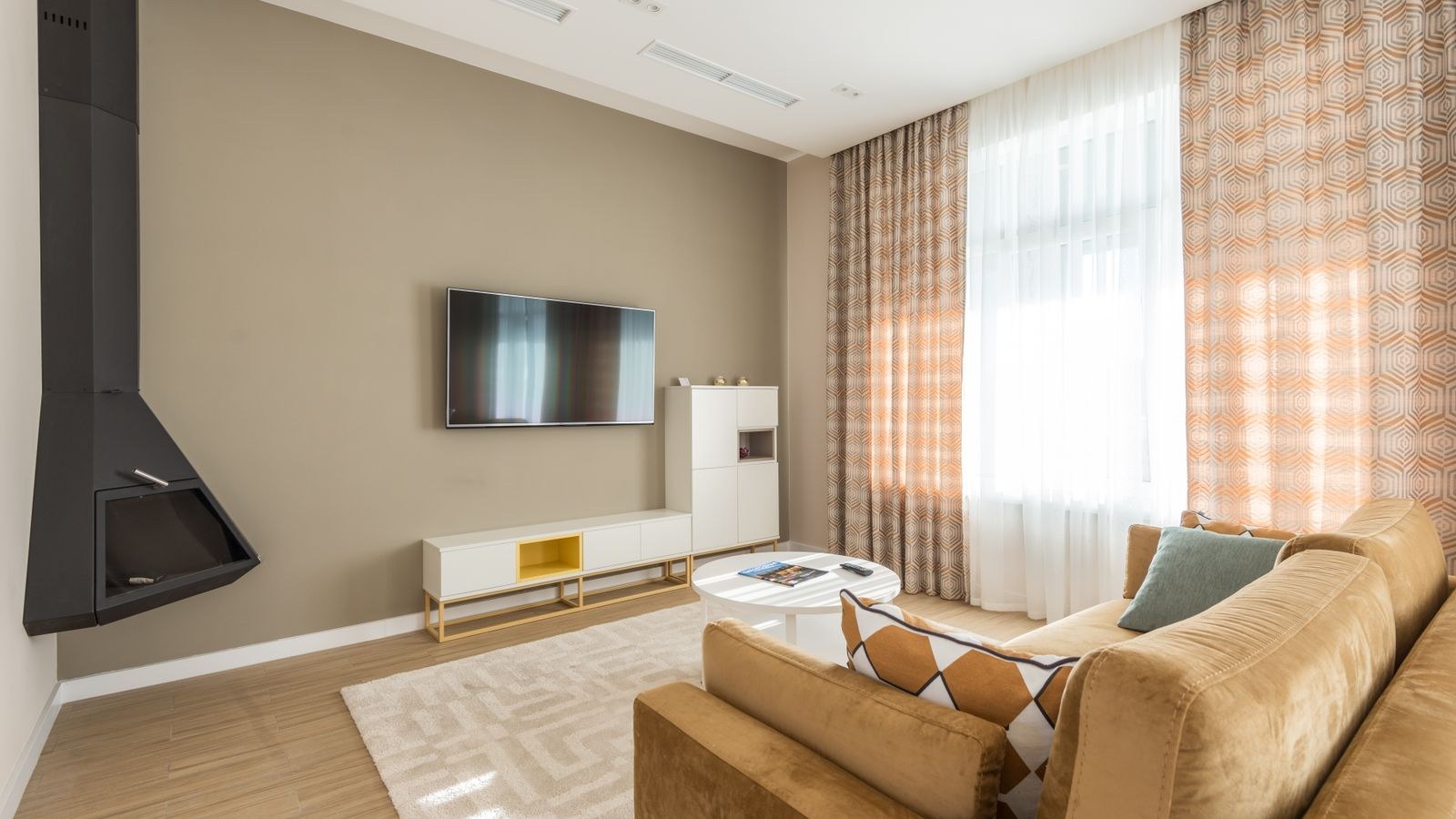
- Living room — 2700K, roughly 1,500 to 3,000 total lumens across lamps and ceiling. Dimmable is close to essential here.
- Bedroom — 2700K, 800 to 1,500 lumens ambient, plus 400 to 800 for bedside reading. Never go above 3000K.
- Kitchen — 3000K to 4000K, 4,000 to 8,000 total lumens with dedicated task lighting over counters. This is where cooler light genuinely helps.
- Bathroom — 3000K ambient, 4000K at the vanity for grooming and makeup accuracy. CRI above 90 matters more here than anywhere else.
- Home office — 3500K to 4000K, 500 to 1,000 lumens of task light on the desk plus balanced ambient light to avoid screen contrast fatigue.
- Dining room — 2700K, dimmable, 1,000 to 2,000 lumens. Warm and adjustable is the whole point.
- Garage, laundry, basement — 4000K to 5000K, as much output as you can sensibly fit. These are the rooms where daylight bulbs shine.
- Hallways and stairs — 2700K to 3000K, modest output, but even coverage matters more than brightness for safety.

When Bright Genuinely Is Better
There are situations where more output is the correct answer rather than a compromise, and under-lighting them causes real problems.
Aging eyes need substantially more light — the amount of light reaching a 60-year-old retina is a fraction of what a 20-year-old receives, so a room that seems adequately lit to one person can be dim and unsafe for another. Detailed hobby work, kitchens where you handle knives, stairs and thresholds, and rooms with very little natural light all benefit from generous output. Shortlists of the best bright light bulbs are the fastest way to find high-lumen options that do not sacrifice color quality to get there.
Rooms with small windows, north-facing orientation, or heavy exterior shading also need help, and this is a case where slightly cooler light at higher output genuinely lifts the space. Guidance on the best light bulbs for dark rooms is worth reviewing if any room in your home feels perpetually gloomy no matter what you put in the fixture.
When Soft Wins
Anywhere the goal is relaxation, conversation, or sleep, warm light is not merely a preference — it is the functionally correct choice. Warm light does not suppress melatonin the way blue-enriched light does, so bedrooms, living rooms in the evening, and dining spaces should stay at 2700K.
Warm light is also more flattering to skin tones, warmer with wood and natural fibers, and closer to the color of the incandescent lighting that most interiors were originally designed around. If your home has warm wood floors, brass fixtures, or earth-toned paint, cool bulbs will make those materials look flat and grey. Options among the best warm light bulbs cover the 2200K to 3000K range where these spaces belong.
CRI: The Spec Nobody Reads
Color Rendering Index measures how faithfully a light source reveals color compared to natural daylight, on a scale up to 100. A bulb can have perfect lumens and perfect Kelvin and still make your room look wrong if its CRI is poor — colors go muddy, skin looks sallow, and food looks unappetizing.
Aim for CRI 80 as a minimum and CRI 90 or above wherever color judgment matters: kitchens, bathrooms, closets, makeup areas, and anywhere you display art. The difference between CRI 80 and CRI 95 is immediately visible when you put the two bulbs side by side, and it costs surprisingly little extra.
Dimming: Getting Both in One Bulb
The best solution to the bright-versus-soft question is refusing to choose. A dimmable bulb gives you full output when you need it and low warm light when you do not, and warm-dim or tunable-white models go further by shifting color temperature as they dim, replicating the way natural light behaves through the day.
Watch for three practical issues: dimmer compatibility (older leading-edge dimmers often flicker with LEDs), the low-end cutoff (cheap bulbs jump straight from 20% to off), and buzzing (a sign of a mismatched driver). Quality dimmable LED light bulbs handle all three, and tunable models let a single fixture serve as a bright work light by day and a soft ambient one by night.
Budget Guidance
- $2–$4 per bulb — basic non-dimmable LEDs, CRI around 80. Fine for closets, garages, and utility spaces.
- $6–$12 per bulb — dimmable, CRI 90+, low flicker. The right tier for every living space in the house.
- $15–$30 per bulb — tunable white and smart bulbs that adjust both brightness and color temperature on demand.
Given that a bulb runs for years, the price difference between tiers works out to pennies per month. Buy cheap for storage rooms and buy well for the rooms you live in.
Mistakes to Avoid
- Assuming “soft white” means dim and “daylight” means bright — they describe color, not output.
- Putting 5000K daylight bulbs in a bedroom or living room because they seemed better value per lumen.
- Mixing color temperatures within one room, which reads as visually broken even when nobody can articulate why.
- Buying by wattage and ending up with a fraction of the light you expected.
- Ignoring CRI and wondering why a freshly painted room looks off.
- Relying on a single ceiling fixture instead of layering multiple sources.

Frequently Asked Questions
Is soft white or daylight better for the living room?
Soft white at 2700K, almost without exception. Living rooms are for relaxing and socializing, and warm light supports both. Daylight bulbs make a living room feel like a waiting room, however much you spend on the furniture.
How many lumens do I need for a bedroom?
Around 800 to 1,500 lumens of ambient light for a typical bedroom, plus 400 to 800 lumens at each bedside for reading. Keep everything at 2700K and make the main fixture dimmable so you can wind down before sleep.
Can I mix bright and soft bulbs in the same room?
You can mix brightness levels freely — that is exactly what layered lighting is. Mixing color temperatures in the same visual field is the problem. Keep every bulb you can see at once within about 500K of the others, and put genuinely different temperatures in separate zones or on separate switches.
Do daylight bulbs help you stay awake?
Yes, cool blue-enriched light does increase alertness, which is why it suits offices, workshops, and morning routines. That same property makes it a poor choice within a few hours of bedtime, so keep daylight bulbs out of bedrooms and evening living spaces.
Does higher Kelvin mean a bulb uses more energy?
No. Color temperature and energy consumption are unrelated. A 2700K and a 5000K LED of the same lumen output draw essentially the same wattage; only the phosphor mix on the chip differs.
Final Thoughts
Bright and soft are not opposites — they are two independent dials, and once you separate them the whole lighting aisle becomes straightforward. Decide how much light a room needs in lumens based on its size and purpose, then decide what character that light should have in Kelvin based on whether the space is for resting or working. Keep living and sleeping areas at 2700K, push kitchens and work spaces toward 3500K to 4000K, insist on CRI 90 where color matters, add dimming wherever you can, and never mix color temperatures within one sightline. Get those five things right and every room in your home will feel intentional rather than accidental for years past 2026.