Owen Bradley
 The humble smoke alarm battery causes more household frustration than almost any other consumable. It chirps at three in the morning, it dies in cold weather, it gets pulled out during a burnt-toast incident and never goes back in, and it costs a surprising amount over the life of a house full of alarms. Yet the choice between a 9V block, a pair of AA cells, and a sealed ten-year lithium unit changes all of that — how often you climb a ladder, how much you spend across a decade, and how likely an alarm is to be sitting there powerless when it matters. This guide compares the three formats on cost, reliability, cold tolerance, and chirping behaviour, and explains what to buy for each type of alarm you own in 2026.
The Three Formats You Will Encounter
9V Block Batteries
The rectangular 9V is the classic smoke alarm battery and still the most common in older units and in hardwired alarms that use it as backup. One cell powers the whole alarm, and the snap connector makes replacement quick.
The trade-offs are real. 9V cells have relatively low capacity for their price, they are among the more expensive formats per unit of energy, and the exposed terminals make them a genuine fire risk if stored loose in a drawer alongside coins or keys. Alkaline 9V cells typically last around a year in a smoke alarm; lithium 9V cells stretch that considerably but cost several times as much.
AA and AAA Cells
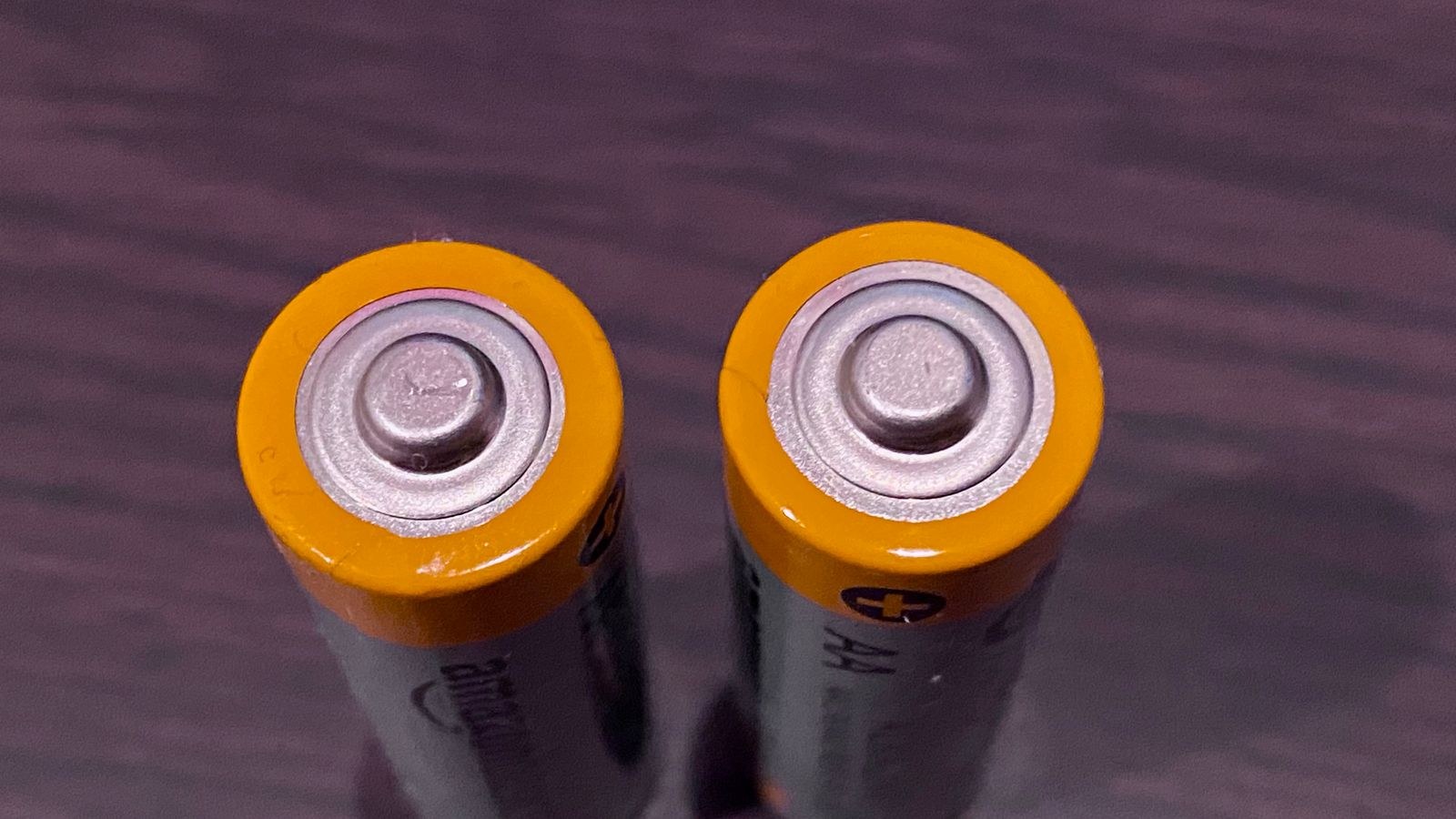
Many modern alarms, especially interconnected and smart models with higher power draw, take two or three AA cells. AA is the cheapest widely available format per unit of energy, the cells are easy to buy anywhere, and capacity is far higher than a 9V.
The downside is that you are handling multiple cells per alarm and must replace them all together. Mixing a fresh cell with a partly used one causes the pack to behave like the weakest cell and can trigger premature low-battery warnings. Practical AA life in a standard alarm is usually one to two years on alkaline, longer on lithium.
Sealed Ten-Year Lithium Units
These are not really batteries you buy — they are alarms with a lithium cell permanently built in and no battery door at all. The alarm and its power source expire together at the ten-year service life.
This format removes the two failure modes that cause most disabled alarms: the annual change nobody remembers, and the temptation to pull a chirping cell out and leave it out. Upfront cost is higher, but across ten years the replacement cells you avoid buying usually cover most of the difference. For most households this is now the sensible default, and the range of best battery smoke alarms shows how far sealed designs have come on price.
Alkaline Versus Lithium Chemistry
Within the removable formats, the chemistry matters as much as the size.
Alkaline cells are cheap, universally available, and entirely adequate for an alarm you service annually. Their weaknesses are a gradual voltage decline that can cause early low-battery chirps, poor performance below about 32°F, and a tendency to leak potassium hydroxide as they exhaust — which can corrode an alarm’s contacts and ruin the unit.
Lithium primary cells cost roughly two to three times as much but hold a flat voltage for most of their life, tolerate cold down to around -40°F, weigh less, do not leak in the way alkalines do, and have a shelf life measured in a decade rather than a few years. In an alarm mounted in a cold loft, an unheated garage-adjacent hallway, or a holiday home left unheated over winter, lithium is worth the premium without argument.
A practical rule: use lithium in anything hard to reach, anything cold, and anything in a property you visit infrequently. Use alkaline where the alarm is at head height in a heated room and you will genuinely change it every year. Comparing the best batteries for fire alarms is the fastest way to see how the two chemistries differ in real service life.
What About Rechargeables
Do not use them. NiMH rechargeable cells sit at a nominal 1.2V rather than 1.5V, so the alarm starts from a lower baseline. More importantly, rechargeables hold their voltage almost flat and then collapse abruptly, which means the low-battery warning circuit may never trigger — the alarm simply goes dead. Almost every manufacturer explicitly prohibits them, and doing so voids the warranty. This is the one place in the house where disposable primary cells are unambiguously correct.

The Real Cost Over Ten Years
Sticker price is misleading. Consider a house with six alarms over a decade.
- Alkaline 9V, annual change: six cells a year for ten years is 60 cells, plus sixty separate ladder trips spread across ten annual sessions.
- Alkaline AA, annual change: twelve to eighteen cells a year, cheaper per cell but more of them.
- Lithium 9V, changed every two to three years: roughly 20 to 30 cells, at a higher unit price, with far fewer ladder sessions.
- Sealed ten-year lithium alarms: zero replacement cells and zero battery-related ladder trips for the entire life of the alarm.
Once you value your own time at anything above zero, sealed units usually come out ahead. The exception is a household that already has functioning removable-battery alarms partway through their service life — there is no sense in scrapping working units early. Replace them with sealed models when they hit ten years.
Understanding the Chirp
Not all chirps mean the same thing, and misreading them is why so many alarms end up in a drawer.
- One chirp roughly every 30 to 60 seconds: low battery. Replace the cell.
- Chirping that continues with a brand new battery: almost always the end-of-life signal, meaning the alarm has passed its ten-year date and must be replaced entirely. Some models use a distinct three-chirp pattern for this.
- Irregular chirps or intermittent alarms: often dust or insects in the sensor chamber. Vacuum the vents and try again.
- Chirping that persists after a battery change on a hardwired unit: check the unit is fully seated on its base and the harness is connected; also check whether a different alarm on the interconnect is the actual source.
The 3 a.m. chirp has a genuine physical explanation. Household temperature drops overnight, and battery voltage falls with temperature. A cell sitting marginally above the low-battery threshold during the day crosses it in the early hours. It is not malice, though it feels like it.
Locating a Chirp in an Interconnected House
In a linked system the chirp can be maddeningly hard to place because sound reflects along hallways. Work systematically: stand directly beneath each alarm in turn and wait through two chirp cycles. If that fails, change every removable cell in the house at once — it is cheaper than another sleepless night. A step-by-step walkthrough of how to replace smoke detector batteries covers the twist-off and harness details that vary between alarm designs.
Changing a Battery Properly
- Set up a stable step ladder on level ground. Never stand on a chair or the arm of a sofa.
- Twist the alarm counter-clockwise off its mounting plate, or slide it free depending on the design. On a hardwired unit, unplug the wiring harness.
- Open the battery compartment and note the orientation of the existing cell before removing it.
- Check the contacts for white or green crusting from a leaked alkaline cell. Clean gently with a dry brush; if the corrosion is significant, replace the alarm.
- Fit the fresh cell, observing polarity, and close the compartment fully so the door latch engages.
- Refit the alarm to its plate, reconnect the harness on hardwired units, and twist until it locks.
- Press and hold the test button until the horn sounds, then confirm every interconnected alarm responds.
- Write the date on the alarm housing or in a note on your phone.
Most alarms will not seat on their plate at all if the battery compartment is empty or the door is open — a deliberate design feature to stop alarms going back up powerless.

Buying and Storing Cells Sensibly
- Check the printed use-by date. Alkaline cells lose capacity on the shelf, and a bargain multipack nearing its date is no bargain.
- Buy the quantity you need, not a huge bulk pack, unless you are buying lithium — which stores far better.
- Tape the terminals of 9V cells, new and used, before storing them. A 9V shorted by a paperclip in a drawer can get hot enough to start a fire.
- Store in a cool, dry place, not a hot loft or a damp garage.
- Recycle used cells at a collection point. Lithium cells in particular must never go into household waste, where they cause fires in collection vehicles.
- Never mix brands, chemistries, or ages within one multi-cell alarm.
If you are stocking a whole house on AA, buying a single trusted line in bulk keeps everything on one replacement cycle. The comparison of best AA batteries for smoke detectors covers which lines hold voltage longest in low-drain alarm duty.
Matching the Battery to the Alarm
Different alarm types have genuinely different power needs. Smart and Wi-Fi alarms draw far more current than a basic photoelectric unit and often demand AA lithium or mains power outright. Interconnected wireless alarms sit in between, since the radio wakes periodically. Basic standalone alarms draw very little and will run a year on a modest alkaline 9V.
Always use the exact type printed inside the compartment. Substituting a 9V lithium where the manual specifies alkaline is generally fine and often better, but substituting formats or chemistries the manufacturer excludes can cause false low-battery warnings or shortened alarm life. When replacing whole units, a look at the current best battery powered smoke detectors makes it easy to pick a model whose power format suits how often you want to be on a ladder.
Frequently Asked Questions
How often should I change smoke alarm batteries?
Once a year for any removable alkaline cell, whether or not it has chirped. Lithium cells can stretch to two or three years, and sealed ten-year units are never changed at all.
Why does my alarm chirp with a brand new battery?
Most often because the alarm has reached the end of its ten-year service life and is sounding an end-of-life warning that no battery will silence. Check the manufacture date on the back; if it is past ten years, replace the alarm.
Can I use lithium 9V cells in any alarm?
In most cases yes, and they last considerably longer. Check the manual first, since a small number of alarms specify alkaline only for their low-battery detection circuit to work correctly.
Are sealed ten-year alarms actually cheaper?
Over a full decade, usually yes once you count the replacement cells avoided, and clearly yes once you count the time saved. They also eliminate the most common cause of non-functioning alarms — a removed battery.
What do I do with used batteries?
Take them to a battery recycling point. Tape the terminals of 9V cells before storing or transporting them, and never put lithium cells in general household waste.
Do hardwired alarms still need batteries?
Yes. The battery is the backup that keeps the alarm running during a power cut, which is exactly the scenario a fire can create. Change it annually unless the unit has a sealed ten-year backup cell.
Final Thoughts
The best smoke alarm battery is the one you never have to think about, which is why sealed ten-year lithium units have become the default recommendation for most homes. Where you have removable-battery alarms, use fresh primary cells of the specified type, favour lithium anywhere cold or hard to reach, change them on a fixed annual date rather than waiting for a chirp, and never leave an alarm powerless because the noise was inconvenient. A few pounds and fifteen minutes a year keeps every alarm in the house doing its job.