Owen Bradley
 Most people buy a television by walking into a store, looking at the wall of screens, and picking whichever size felt impressive under showroom lighting. Then it arrives home, and it either swallows the wall or looks strangely small from the sofa. Screen size is not an absolute quality, it is a relationship between the panel, the resolution, and how far away you sit. Get that relationship right and a modestly priced set feels cinematic. Get it wrong and an expensive one disappoints. This TV size guide gives you the actual numbers for 55, 65, 75 and 85 inch screens, along with the measuring method that beats any rule of thumb.
How Screen Size Is Actually Measured
The advertised number is the diagonal of the visible panel, corner to corner, not the width of the product. That distinction matters because a 65 inch TV is roughly 57 inches wide and 32 inches tall, plus bezel and any stand feet. When you are checking whether a set fits a media unit or an alcove, the width is what you need, and it is always considerably less than the headline figure.
A useful shortcut for standard 16:9 screens is that width is about 87 percent of the diagonal and height about 49 percent. So a 55 inch measures roughly 48 by 27 inches, a 75 inch about 65 by 37, and an 85 inch about 74 by 42. Add an inch or two for the frame, and check the stand foot spacing separately, since wide-set feet often exceed the furniture they are placed on.
The Viewing Distance Rule That Actually Works
Old guidance told you to sit two or three times the screen diagonal away. That advice dates from standard definition, when sitting close revealed scan lines. With 4K resolution the pixels are small enough that you can sit far closer without seeing structure, so the old rule now pushes people toward screens that are too small.
The better approach is field of view. Cinema standards recommend a horizontal viewing angle of around 30 degrees for a comfortably immersive image, with 40 degrees as the reference used for professional mixing. Translated into practice, a 30 degree angle means sitting about 1.6 times the screen width away, which for 16:9 works out at roughly 1.4 times the diagonal. That single multiplier replaces every legacy rule you have heard.
The Chart for Common Sizes
- 55 inch: immersive at about 6.4 feet, comfortable range 5.5 to 8 feet.
- 65 inch: immersive at about 7.6 feet, comfortable range 6.5 to 9.5 feet.
- 75 inch: immersive at about 8.7 feet, comfortable range 7.5 to 11 feet.
- 85 inch: immersive at about 9.9 feet, comfortable range 8.5 to 12.5 feet.
Read the chart backwards, which is the way most people actually shop. Measure from your seating position to the wall, then divide by 1.4 to find the ideal diagonal. A sofa 9 feet from the wall points to roughly a 75 inch set. A tighter apartment layout at 7 feet lands close to 60 inches, so a 55 or 65 inch panel is the sensible bracket. Once you have narrowed to a size, comparing panels within that bracket is easy; our picks for the best 65 inch gaming TVs cover the most popular size class in detail.
Why Resolution Changes the Answer
Resolution sets how close you can sit before the image breaks down into visible pixels. On a 1080p screen, sitting nearer than about 1.6 times the diagonal starts to reveal pixel structure on sharp edges. On a 4K panel, with four times the pixel count, you can move to roughly 1 times the diagonal before that happens, which is why 4K makes larger screens practical in ordinary rooms.
The practical consequence is simple. If you already own a 4K set or are buying one, do not use distance to justify a smaller screen. Use it to confirm you can go bigger safely. The limit at close range is no longer sharpness, it is comfort, because a screen filling too much of your vision forces head movement to track action across the frame.
Room Layout Beats the Chart
Charts assume you sit square to the screen at a fixed distance. Real rooms rarely oblige. If your sofa is against the far wall of an open-plan space, measure to the seat you actually use most, not the centre of the room. If seating is spread across an L-shaped arrangement, measure to the furthest regular position and size for that, since a screen too small for the far seat is more annoying than one slightly large for the near seat.
Viewing angle from off-centre seats matters too. Panels vary enormously in how well colour and contrast hold up when viewed from the side, so a wide room with seating spread across it needs a panel with strong off-axis performance rather than simply a bigger one. For rooms where the TV is the social centrepiece, the best living room gaming TVs shortlist prioritises exactly that kind of wide-seating performance.
Mounting Height Is Half the Comfort
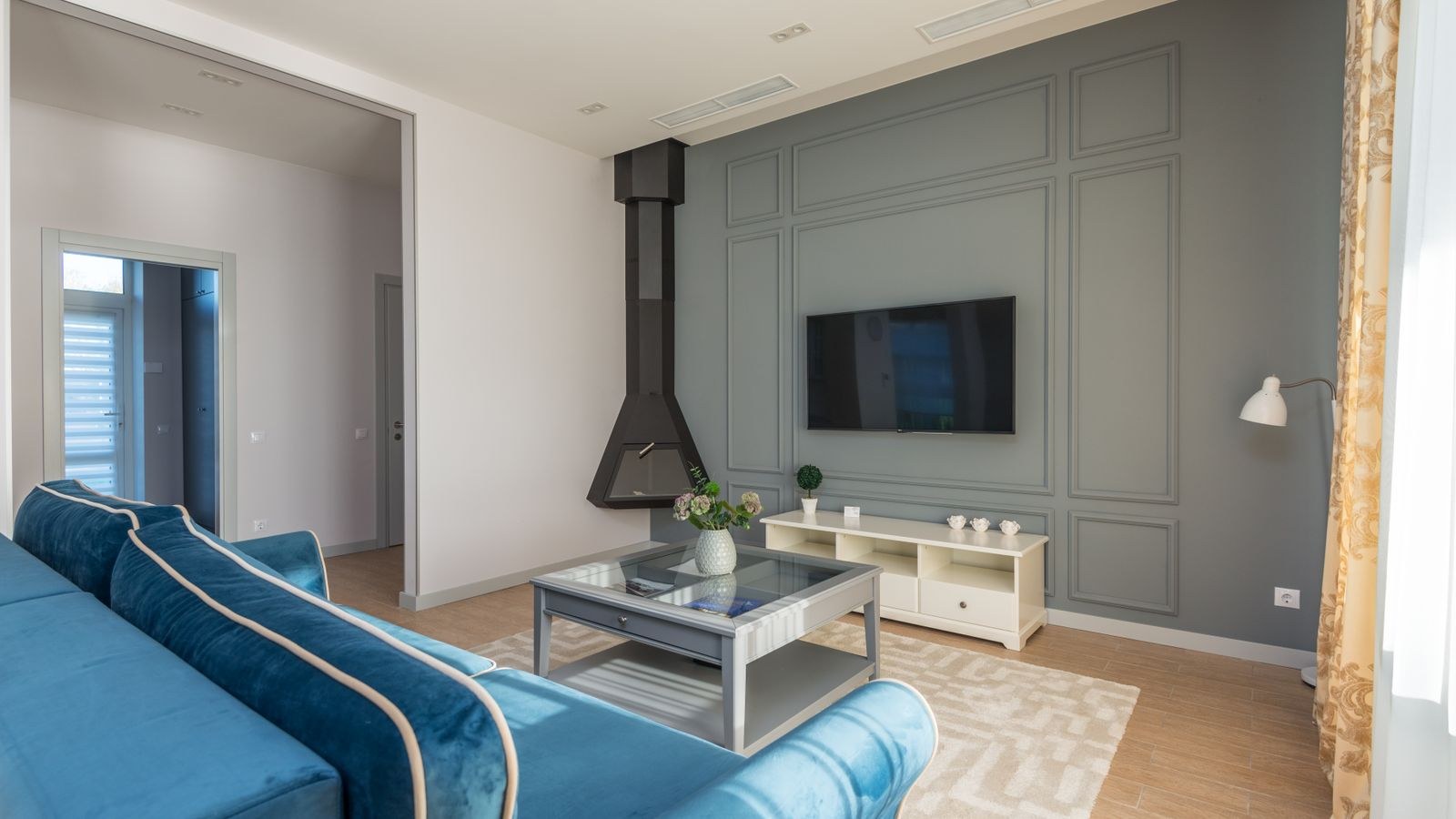
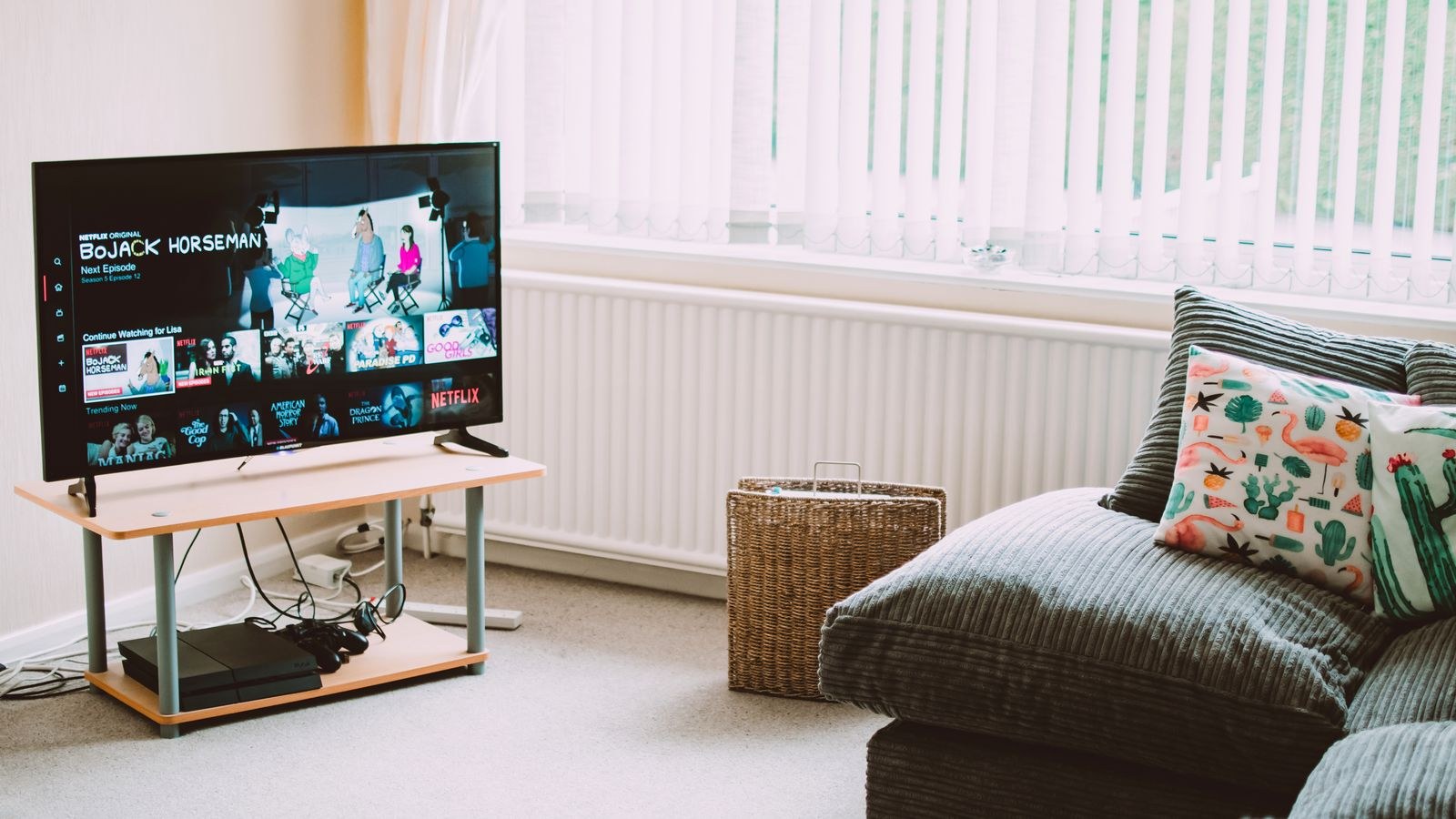
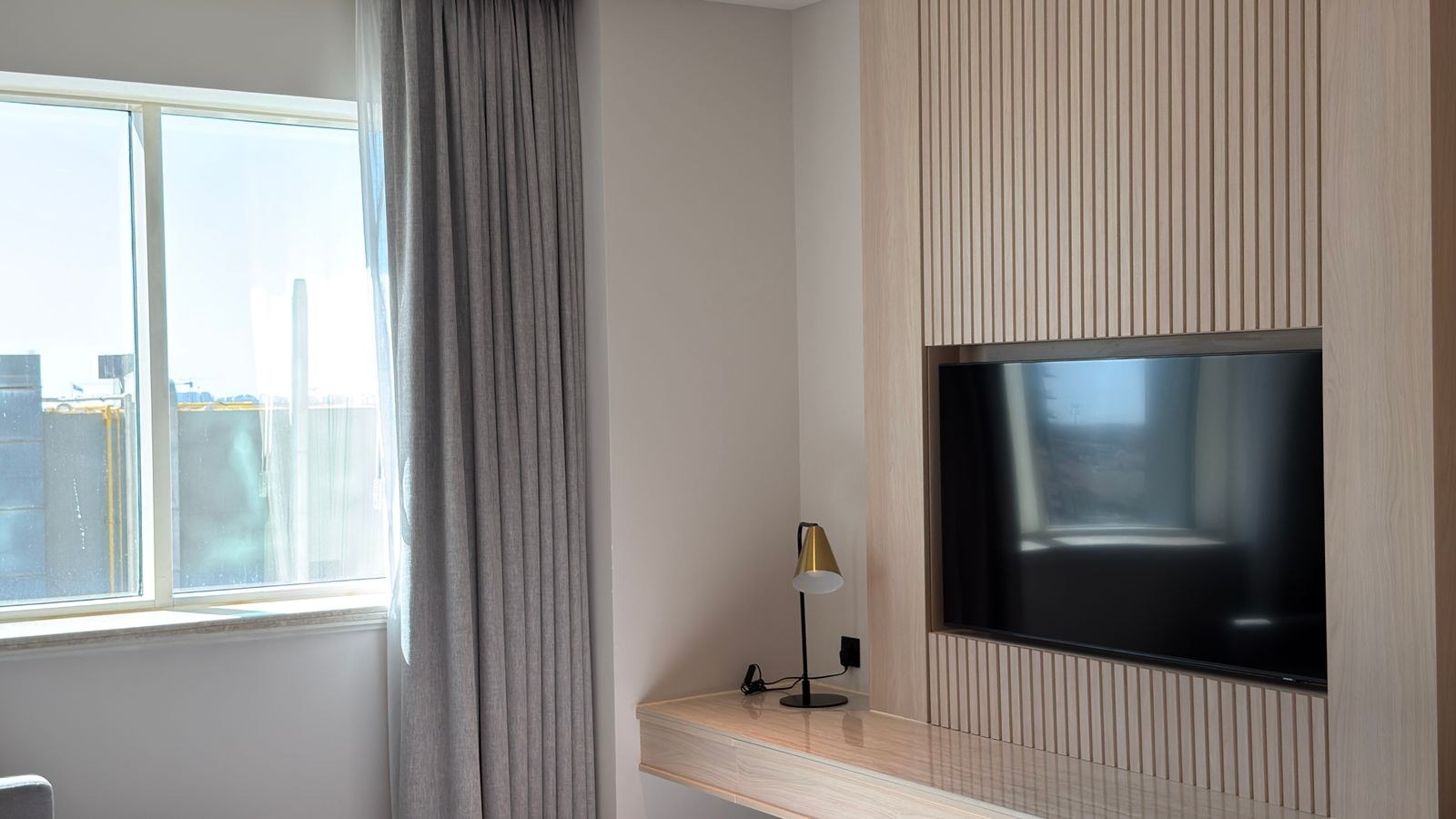
Screen size is wasted if the set is hung too high. The ideal position puts the centre of the screen at seated eye level, which is usually 40 to 45 inches from the floor for an average sofa. That commonly means the bottom edge of a 65 inch panel sits around 25 inches up. Mounting above a fireplace is the classic mistake, forcing a permanent upward tilt that causes neck strain and pushes you off the panel’s best viewing axis.
Sizing for Gaming Versus Movies
Gaming changes the calculation because you are reacting to information, not just watching it. A screen filling too much of your field of view means important detail such as a minimap or health bar sits in peripheral vision, forcing eye movement that costs reaction time. Competitive players often prefer a slightly smaller screen or a slightly greater distance than the cinematic ideal.
Immersive single-player games and films run the other way, benefiting from a larger apparent size. If your room and budget allow, a set at the upper end of the size bracket delivers noticeably more impact for cinematic content. Console gamers sitting at typical living room distances tend to be well served in the 55 to 75 inch range, and both the best 55 inch gaming TVs and the best 75 inch gaming TVs illustrate what changes as you step through the sizes.
When Bigger Genuinely Stops Being Better
There is a point where extra inches hurt. If a screen exceeds roughly 45 degrees of horizontal field of view from your seat, most viewers report eye fatigue during long sessions and find themselves scanning rather than taking in the whole frame. Compressed content also suffers, because a large panel magnifies streaming artefacts, banding and low-bitrate blur that a smaller screen would hide.
Practical limits bite as well. An 85 inch panel weighs substantially more than a 65 inch, needs studs located precisely for wall mounting, and often will not fit through a tight stairwell or doorway. Measure your access route before ordering, and check the mount’s weight rating rather than assuming a standard bracket copes. If your room genuinely supports the size, the best 85 inch gaming TVs show what the largest mainstream class offers.
Budget: Where the Size Premium Lands
Price does not scale linearly with area. Stepping from 55 to 65 inches within the same model line is usually a modest premium, often the best value move available. Stepping from 65 to 75 costs more, and 75 to 85 more again, because panel yields fall as size grows. The result is a familiar trade-off: a larger screen from a cheaper line, or a smaller screen with a better panel.
For most rooms, the honest answer is that size wins up to the point your distance supports, and panel quality wins beyond it. If the chart says 65 inches, a high-quality 65 beats a mediocre 75 that forces you to sit too close. If the chart says 75 and your budget only reaches an entry-level model at that size, take it, because the additional apparent size delivers more perceived improvement than a modest contrast upgrade.
Common Sizing Mistakes
The most frequent error is measuring to the wall rather than to the seat, which overstates distance by a foot or more once you account for sofa depth. Close behind is judging size in a showroom, where enormous rooms and bright lighting make every screen look smaller than it will at home. Tape a cardboard rectangle to your wall at the real dimensions before you buy; it takes ten minutes and prevents the most expensive mistake in the process.
People also forget furniture. A media unit narrower than the stand feet leaves a set perched precariously, and a 75 inch panel on a 55 inch console is both unstable and ugly. And many buyers ignore the room’s light, choosing a huge screen for a bright space when a smaller, brighter panel would look far better against daylight glare.
Frequently Asked Questions
What size TV is best for a normal living room?
Most living rooms place seating 8 to 10 feet from the screen, which points to 65 to 75 inches. That range has become the mainstream default for good reason.
Can a TV be too big for a small room?
Yes. Beyond about 45 degrees of field of view, comfort declines and compression flaws become obvious. In a room where you sit 6 feet away, 55 to 65 inches is usually the sensible ceiling.
Does 8K let me sit even closer?
Technically yes, but the practical benefit is small at normal sizes and distances, and native 8K content remains scarce. Prioritise panel quality and features over pixel count.
How high should I mount a TV?
Put the centre of the screen at seated eye level, typically 40 to 45 inches from the floor. Avoid above-fireplace mounting unless you use a pull-down bracket.
Should I size for movies or for gaming?
Size for whichever you do most. Competitive gaming favours the smaller end of your bracket, films and immersive titles favour the larger end.
Final Thoughts
Sizing a television is one of the few purchase decisions with a genuinely reliable formula. Measure from your usual seat to the screen wall in inches, divide by 1.4, and you have your target diagonal. Check that the width fits your furniture, confirm the mounting height puts the centre at eye level, and sanity-check the result with a cardboard mock-up on the wall.
From there, spend the remaining budget on the panel rather than on inches you cannot appreciate. A correctly sized screen at the right height, matched to how you actually use the room, will look better in 2026 than a larger set fighting your layout ever could.