Owen Bradley
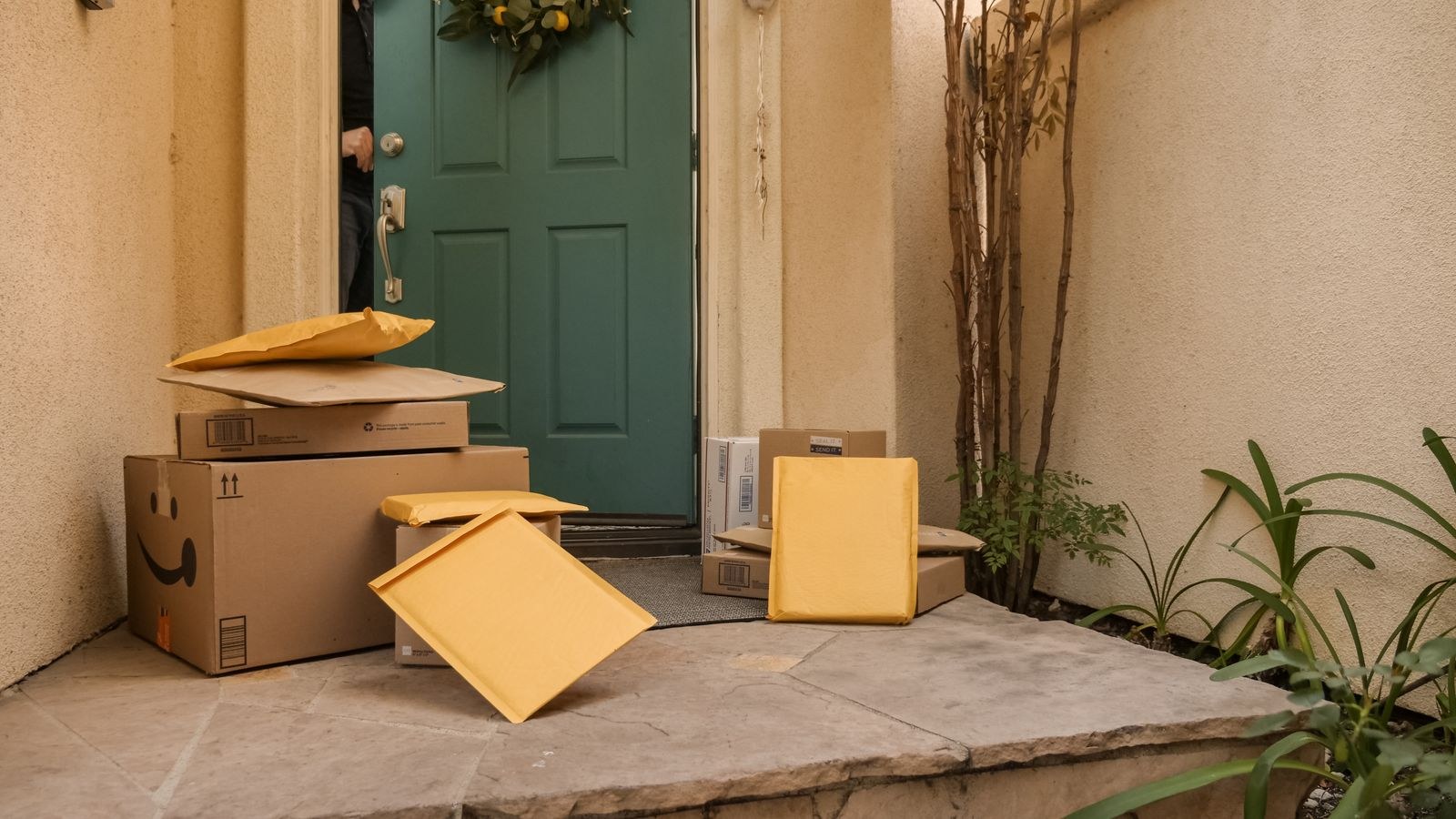
 Most package theft is not sophisticated. Someone walks up a path, picks up a box in plain view from the street, and is gone in under fifteen seconds. The fix is equally unsophisticated: give the courier somewhere obvious to put the parcel that is not the doormat, and make sure the camera watching that spot records a face rather than a hooded silhouette. A package drop zone is a small piece of design work at your front door, and it only succeeds if drivers actually use it. This guide covers choosing the location, building the physical zone, aiming the camera, and writing delivery notes that redirect the drop instead of being ignored.
What Makes a Drop Zone Work
Three things have to be true at once. The zone must be visible to the courier within a second of arriving, or they will default to the doormat. It must be invisible or uninteresting from the street, so a passing opportunist sees nothing worth approaching. And it must be covered by a camera angle that captures identifiable detail, so an incident produces evidence instead of a grey blur.
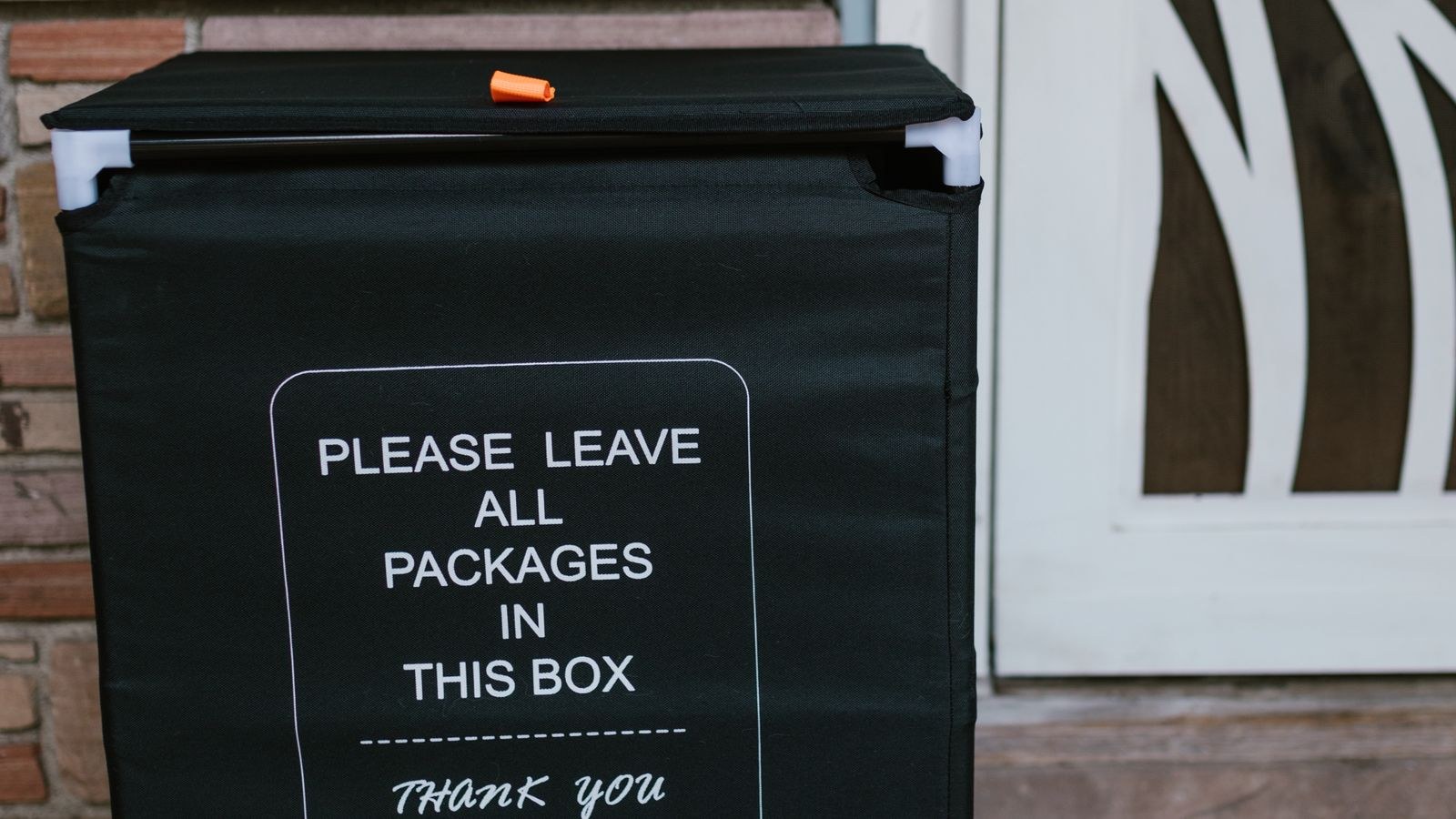
Those requirements pull against each other, which is why most people get one and lose the others. A lockbox tucked around the corner of the house is invisible from the street but couriers never find it. A bench right by the door is obvious but on display. Solving all three is the whole exercise, and the trick is usually a visible container placed just off the direct street sightline with clear signage pointing to it.
What You Will Need
- A parcel lockbox, deck box or bench with a lid, large enough for your typical delivery plus some margin.
- A padlock or built-in combination lock, plus a spare code written down somewhere other than the box.
- Anchoring hardware: masonry anchors, lag bolts or a steel cable to fix the box to the porch or wall.
- Weatherproof signage with large, plain text.
- A doorbell camera or a wall-mounted outdoor camera, plus its mounting plate and any wedge required to set the angle.
- Drill, level, tape measure and a screwdriver.
Step-by-Step: Building the Drop Zone
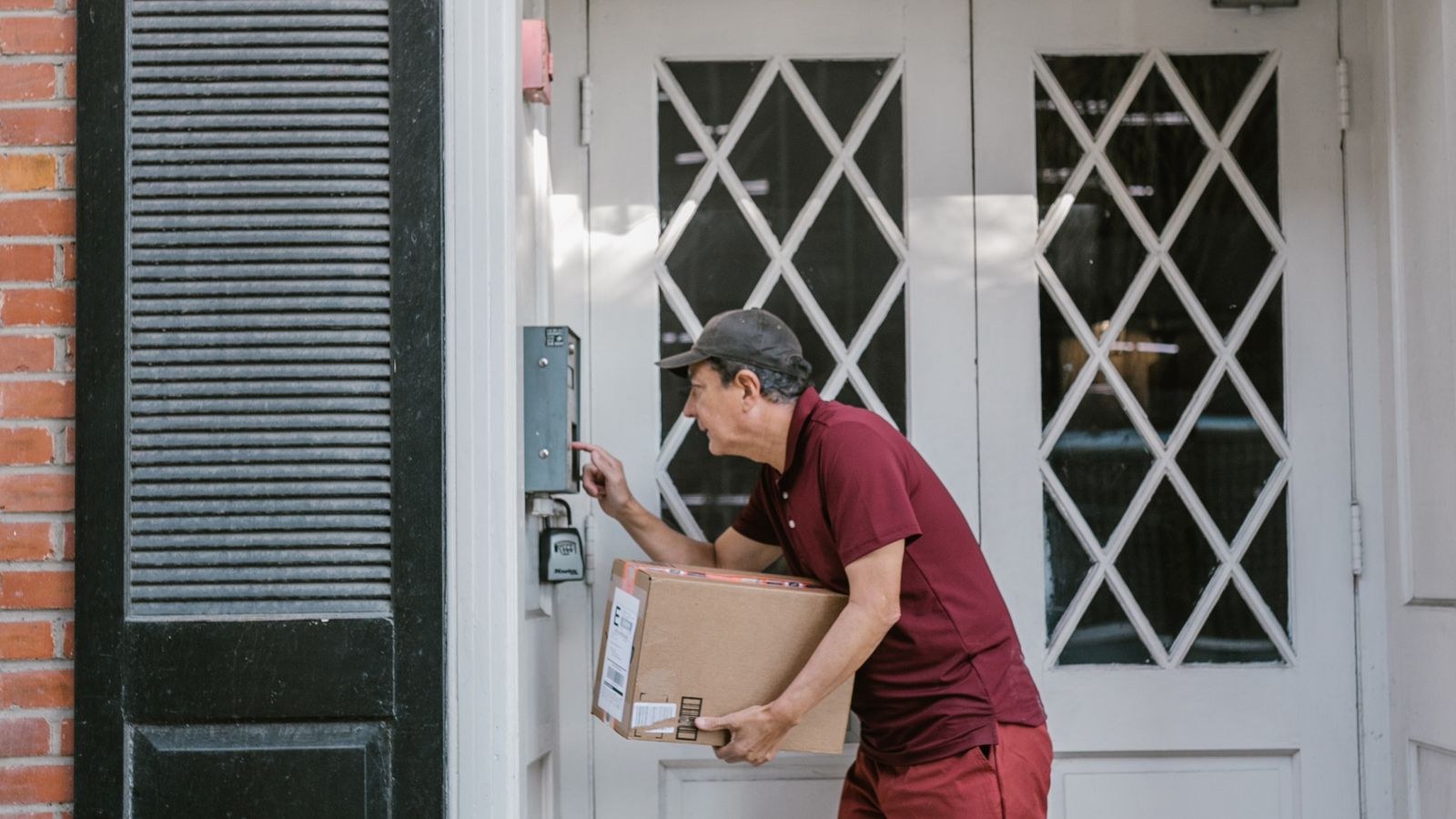
- Stand where the courier stands. Walk your delivery path exactly as a driver would, from the point they leave their vehicle. Note the first flat surface that comes into view, and note what is visible from the pavement. That five-second walk tells you more about where the zone belongs than any amount of planning from indoors. The best spot is usually beside the door on the hinge side, or in a porch corner shielded by a low wall.
- Choose the container to fit your real deliveries. Measure the largest box you regularly receive and add a few inches. A lockbox that overflows sends the next parcel back to the mat, which defeats the purpose. Look for a lid that latches under its own weight, since a driver holding a scanner will not fiddle with a catch. Anything that requires two hands or a code to deposit into is a design that fails in practice.
- Anchor the box so it cannot be carried away. An unsecured deck box is just a bigger parcel. Bolt it to the porch floor, lag it into a wall stud, or run a steel cable through the base to a fixed ring. Then lock the lid with a shrouded padlock that resists bolt cutters; our roundup of the best padlocks covers which shackle designs actually survive an attack rather than just looking substantial.
- Make the signage impossible to miss. A weatherproof sign at eye level on the door, with a short instruction and an arrow, does more than any app setting. Keep it to a few words: “Parcels in the box” with an arrow. Do not write anything implying nobody is home, do not include your name, and do not list your phone number publicly.
- Set the doorbell camera to see the zone and the face. A doorbell camera mounted at the standard 48 inches usually captures a chest and a chin, not a face. Add a wedge to angle it slightly upward, or mount it a few inches higher, and confirm the drop zone falls inside the frame. Test at night, because infrared washes out reflective clothing and a badly aimed unit produces a white smear. Our comparison of the best WiFi doorbell cameras covers field of view and head-to-toe framing, and the best video doorbell systems roundup goes further into which platforms store clips locally versus in the cloud.
- Add a second camera watching along the approach. A doorbell sees someone who is already at the door and looking down. A camera mounted higher and off to the side, aimed along the path rather than perpendicular to it, catches people as they walk in with their head up. Mount it around 8 to 9 feet, high enough to be out of easy reach but low enough to still resolve facial detail. Guides to the best outside cameras and our dedicated walkthrough on how to choose a camera for package theft cover the resolution and lighting combination that produces usable identification.
- Write delivery notes that actually redirect the drop. Most retailers and carriers accept a standing delivery instruction on your account. Keep it short and physical: “Place parcel in the black box left of the door.” Avoid vague phrasing like “safe place”, which drivers interpret however is fastest. Set the same note on every carrier account you use, not just the one you use most.
- Use carrier tools that remove the doorstep entirely. Where offered, enable delivery windows, in-garage delivery, or redirection to a locker or pickup point for high-value items. The safest package is one that never sits outside. Reserve the drop zone for routine deliveries and route anything expensive to a location that requires a signature.
- Light the zone. A dark porch defeats every camera you install. A warm, always-on porch light or a motion light triggered by the approach gives the sensor enough illumination to stay in colour mode, which is where faces, clothing and vehicle colours are actually distinguishable.
- Test the whole thing with a real delivery. Order something inexpensive and watch the footage. Did the driver see the sign? Did they use the box? Did the camera capture a face? Adjust one variable at a time and retest. Two or three iterations usually produces a zone couriers use without thinking.
Placement Rules Worth Following
Keep the box off the direct street sightline but within the porch. If your entrance has no cover, position the box behind a planter, a low wall or the door swing so a passing glance does not register a container. Never place it at the bottom of the drive by the road, which is convenient for the courier and even more convenient for everyone else.
Leave a clear walking path. A box that forces a driver to step around it into a flowerbed will be bypassed. And avoid placing it directly under a gutter or a roof valley where runoff soaks everything, since damp cardboard is its own kind of loss.
Privacy and Safety Notes
Aim cameras at your own property. A field of view covering a neighbour’s door, windows or garden creates real privacy issues and in some jurisdictions legal ones. Most cameras allow you to mask regions of the frame, so use that to exclude anything beyond your boundary and the public footpath immediately in front.
Be careful with audio recording, which is treated more strictly than video in many places; disable it if you are unsure. Do not post identifiable footage of individuals publicly, since misidentification carries consequences for everyone involved. And do not build a zone that blocks an exit route or leaves a heavy lid able to fall on a child.
Troubleshooting
If couriers keep ignoring the box, the sign is too small, too low, or too wordy, or the box is not the first thing in view. Move the sign onto the door itself at eye level and simplify the text. If the drop zone is captured but faces are not, the camera is too low or too high; identification detail falls off quickly past about 12 feet, so bring it closer to the path.
If motion alerts fire constantly, mask the street and any moving vegetation and raise the threshold to person detection only. If night footage is unusable, add a light rather than raising the camera’s exposure, since infrared alone rarely resolves faces at useful distances. If the lock keeps freezing in winter, switch to a shrouded padlock with a protected keyway or a combination dial rated for outdoor use.
Common Mistakes to Avoid
The most common is an unanchored container, which turns a theft of one parcel into a theft of every parcel plus the box. Second is signage that announces absence, such as “Out until Friday, leave parcels here”, which invites exactly the attention you were avoiding. Third is a camera mounted for coverage rather than identification, producing wide shots where nobody is recognisable.
Two more that are easy to fix: forgetting to set the delivery instruction on every carrier account, and leaving the collected parcels in the box for two days. Empty the zone daily so a single successful entry never nets more than one item.
Frequently Asked Questions
Will couriers actually use a lockbox?
Usually, if it is visible, opens one-handed, and there is a clear sign. Compliance improves further once you set a standing delivery note on your carrier accounts.
Is a doorbell camera enough on its own?
It is a good start but it looks straight out from the door, so it often captures the top of a head. Pairing it with a second camera aimed along the approach path is what produces identifiable footage.
How big should the drop box be?
Size it for the largest parcel you receive regularly plus a margin, and empty it daily. Most households do fine with something in the 80 to 150 litre range.
Does a sign advertise that I get deliveries?
Every house gets deliveries, so the sign reveals nothing new. What matters is that it never implies the house is empty and never carries your name.
Final Thoughts
A package drop zone works when it is easy for the courier and boring for everyone else. Walk the delivery path yourself, pick a spot just off the street sightline, install a one-handed lockbox and bolt it down, sign it clearly, and set the same short instruction on every carrier account you use. Then aim one camera at the zone and another along the approach, light both, and run a live test with a cheap order until the footage shows a face and the parcel ends up in the box. Set that up once and doorstep theft stops being a recurring annoyance for the rest of 2026 and well beyond.