Owen Bradley
 Basements are damp for structural reasons, not because of anything you did wrong. They sit below grade against soil that holds moisture year round, their walls stay cool enough to condense humid summer air, and they rarely get the airflow the rest of the house enjoys. A dehumidifier is the practical answer, but simply plugging one in beside the stairs delivers a fraction of the benefit it should. A proper basement dehumidifier setup is about placement, target humidity, drainage, and airflow, and getting those four right turns a musty storage space into a room that smells clean and stays that way.
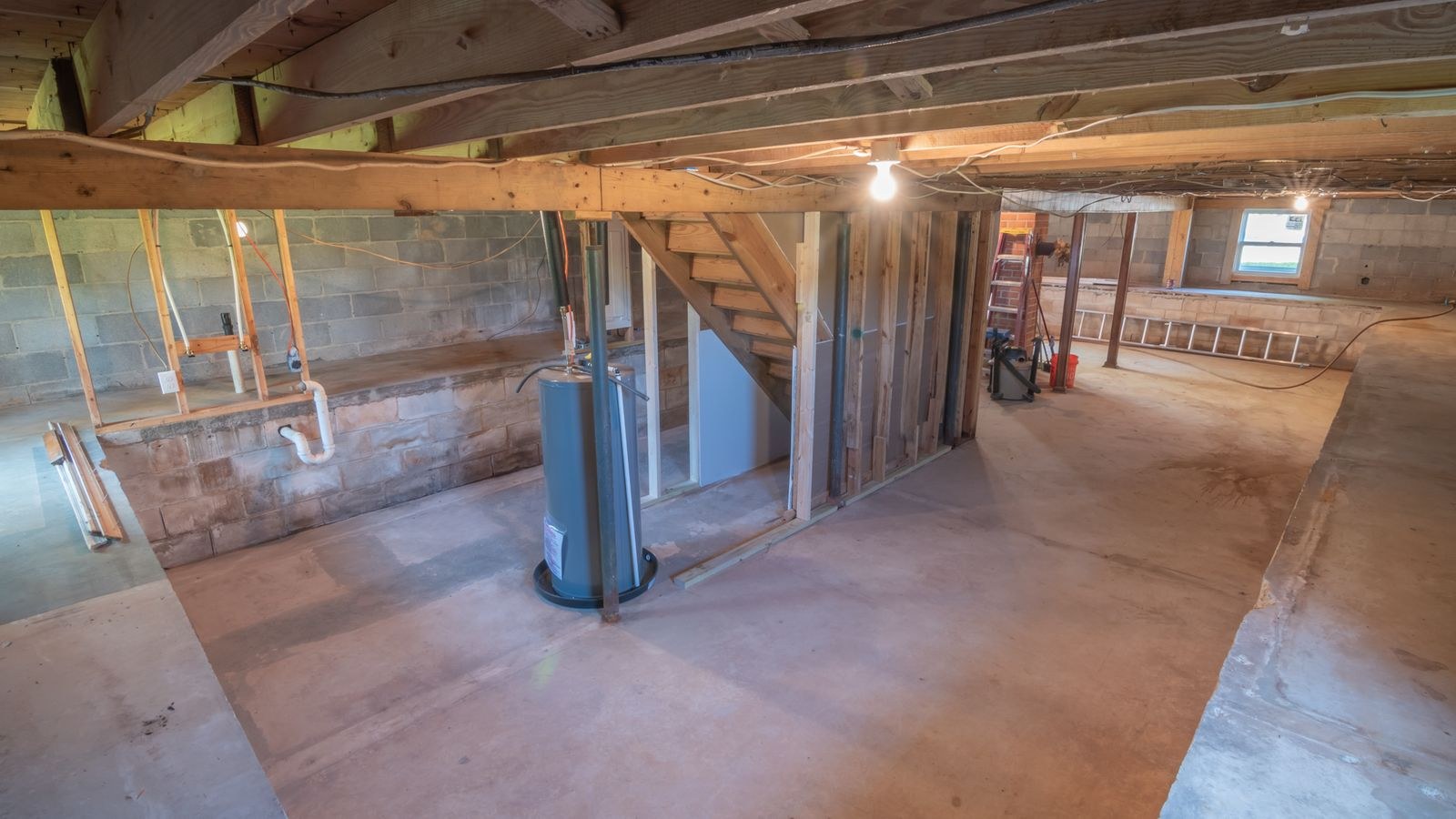
Understand the Moisture Before You Buy Anything
A dehumidifier removes water from the air. It does not stop water coming through a wall. Spend an hour identifying the source first, because a unit fighting active bulk water intrusion will run constantly and still lose. Look for efflorescence, the chalky white mineral bloom on concrete that marks water passing through the wall, and for dark staining at the base of the foundation.
Check the exterior too. Downspouts should discharge at least several feet from the foundation, and the grade should slope away from the house. A simple test for slab moisture is to tape a square of clear plastic sheeting tightly to the floor and leave it for two days. Condensation underneath means vapor is coming up through the slab and a vapor barrier belongs in your plan. Fix drainage and grading first, then let the dehumidifier handle the airborne humidity that remains.
What You Will Need
- A hygrometer to measure actual relative humidity rather than guessing.
- A dehumidifier sized for the space and its dampness level.
- A garden hose or vinyl drain hose if you plan continuous gravity drainage.
- A condensate pump if there is no drain below the unit’s outlet height.
- A stand, shelf, or blocks to raise the unit and create the slope a gravity drain needs.
- A grounded outlet on a circuit that is not shared with other heavy loads.
- Foam or duct sealing tape to close obvious air paths from outside.
Step-by-Step: Setting Up the Dehumidifier
- Measure the space and the current humidity. Calculate the square footage and place a hygrometer in the dampest corner for a day. Anything above 60 percent relative humidity is mold territory; readings in the 70s indicate a genuinely wet basement that needs a large-capacity unit.
- Choose capacity with a margin. Undersizing is the most common setup error, because a unit that runs continuously never reaches setpoint and wears out early. Sizing tables based on area and dampness are the right starting point, and our walkthrough on choosing a dehumidifier size explains how to adjust for a cold basement.
- Pick a central location. Set the unit near the middle of the open floor area rather than tucked in a corner. Dehumidifiers pull air from all directions, and a central position lets them treat the whole volume instead of recirculating one pocket.
- Give it clearance on every side. Leave at least 6 to 12 inches around the intake and exhaust grilles unless the model is designed to sit against a wall. Blocked airflow directly reduces water removal and makes the compressor run hot.
- Raise the unit if you want gravity drainage. Set it on a sturdy shelf, a small stand, or concrete blocks so the drain port sits above the floor drain or sink. Elevation also keeps the intake out of the coldest, dustiest layer of air right at floor level.
- Connect continuous drainage. Remove the bucket, thread the hose onto the drain port, and run it to a floor drain, sump pit, or laundry sink with a steady downward slope the whole way. No dips, no coils on the floor, and no runs that rise even slightly.
- Fit a pump if gravity will not work. When the only drain is above the unit or across the room, use a built-in or external condensate pump and route the small-diameter discharge line up and over. Secure the line so it cannot be knocked loose.
- Set the target humidity. Start at 50 percent, which suppresses mold and dust mites without forcing the unit to run endlessly. Drop to 45 percent if you still smell mustiness, and avoid going below 40 percent, which wastes energy for little benefit.
- Enable continuous or auto mode. With a hose connected, most units offer a continuous setting that ignores the tank sensor. Auto mode with a humidistat is usually the better long-term choice because it cycles off once the target is met.
- Close the basement to outside air. Shut windows during humid weather, seal obvious gaps around rim joists and hose bib penetrations, and insulate cold water pipes so they stop dripping condensation onto the floor.
- Improve internal air circulation. A small floor fan aimed along a far wall keeps air moving toward the dehumidifier and eliminates the stagnant corners where mold starts. This costs a few watts and improves results noticeably in a partitioned basement.
- Verify after 48 hours. Check the hygrometer, confirm the hose is still draining and dry underneath, and listen for the compressor cycling off. Continuous running after two days means the unit is undersized or the space is leaking humid air.
Picking the Right Type of Unit
Standard compressor dehumidifiers are the default and work well in basements that stay above roughly 60 degrees Fahrenheit. Below that, the coil can frost, so look for a model with automatic defrost or a stated low-temperature rating if your basement is genuinely cold. Desiccant units handle cold spaces better but use more energy in warm conditions.
Pump-equipped models cost more but remove the biggest installation constraint, because you no longer need a drain below the unit. That flexibility is worth a lot in a basement with a single high sink, and our comparison of the best dehumidifiers with pumps for basements covers models built for that layout. For general basement duty at a range of capacities, the best basement dehumidifiers roundup is the broader starting point, and the best 70 pint dehumidifiers list covers the large-capacity class most full basements need.
Crawl Spaces Are a Different Problem
If your home has a crawl space rather than a full basement, the approach changes. Those spaces need a sealed vapor barrier across the ground, encapsulation of the walls, and a low-profile unit built to run unattended in a confined area with no one checking the tank. Standard portable units struggle there. Our guide to the best crawl space dehumidifiers covers the specific requirements for that environment.
Safety and Electrical Considerations
Plug the dehumidifier directly into a grounded wall outlet. Extension cords are a genuine fire risk with a compressor appliance, and the voltage drop reduces performance as well. If the basement outlet is GFCI protected, that is ideal near a floor drain, but test the outlet monthly because a tripped GFCI silently stops the unit for weeks.
Keep the drain hose clear of walkways and stair treads. Check the sump pit if you drain into it, since a dehumidifier adds a steady flow that a marginal pump may not keep up with. If a unit shares a circuit with a freezer or a well pump, watch for breaker trips on hot days when everything runs together.
Common Mistakes to Avoid
- Buying too small. A unit sized for a bedroom will run nonstop in a 1,200 square foot basement and never win.
- Placing it in a corner or closet. Restricted intake and exhaust drastically cut water removal.
- Leaving the hose looped on the floor. Any low spot holds water, backs up, and eventually overflows the pan.
- Setting the target too low. Below 40 percent the energy cost rises sharply with almost no additional mold protection.
- Opening windows on humid days. Warm outdoor air condenses on cool basement surfaces and undoes hours of work.
- Ignoring the filter. A clogged intake filter reduces airflow and pint capacity within weeks in a dusty basement.
Maintenance That Keeps It Working
Rinse the intake filter every few weeks during heavy use and let it dry fully before refitting. Once or twice a season, unplug the unit and vacuum the coils gently with a brush attachment, then wipe the collection pan and check the drain port for slime. Inspect the hose connection for drips, since a slow leak behind the unit can go unnoticed for months on a concrete floor.
At the end of the damp season, drain the tank, run the unit on fan only to dry the coil, and store it upright in a dry place. Keep an eye on the hygrometer year round rather than relying on how the air feels, because the difference between 55 and 65 percent is not obvious to the nose until mold is already growing.
Frequently Asked Questions
What humidity level should a basement be?
Aim for 45 to 50 percent relative humidity. That range suppresses mold, mildew, and dust mites while keeping run time and energy use reasonable. Going below 40 percent offers little extra protection for the cost.
Should the dehumidifier run all the time?
Let the humidistat decide. Continuous running is normal for the first day or two while the unit dries the space and its contents, but after that it should cycle off periodically. Nonstop running after several days points to undersizing or air leaks.
Can I put the dehumidifier on a shelf?
Yes, and it often helps. Elevation creates the slope a gravity drain hose needs and keeps the intake in warmer air. Just make sure the shelf is sturdy, level, and leaves clearance around all the grilles.
Does a dehumidifier heat up the basement?
Slightly. A compressor unit releases its motor heat and the latent heat of condensation into the room, typically warming it by a few degrees. In a cool basement that is usually welcome rather than a problem.
Do I still need one if I have central air?
Often yes. Central systems dehumidify only while cooling, and basements rarely call for cooling, so they stay damp through spring and autumn when the air conditioner barely runs.
Final Thoughts
A basement dehumidifier setup succeeds or fails on four decisions: fix bulk water first, size the unit generously, place it centrally with clearance and a properly sloped continuous drain, and hold the target at 45 to 50 percent. Add a small fan for circulation, seal the space against humid outdoor air, and rinse the filter regularly. Do that and the musty smell disappears within a week, stored belongings stop growing mildew, and the basement becomes usable space rather than a place you avoid, right through the damp months of 2026.