Owen Bradley
 A digital meat thermometer is the cheapest piece of kitchen equipment that reliably improves cooking. It removes the guesswork from roasts, steaks, poultry and barbecue, and it is the only way to know that food is both safe and not overcooked. The catch is that “meat thermometer” describes at least five different tools with different speeds, accuracy and use cases, and buying the wrong type is why so many end up in a drawer. This guide explains the categories, the specifications that matter, the temperatures you should actually be cooking to, and how to keep a thermometer accurate over the years.
The Main Types of Digital Thermometer
- Instant-read probes. A folding or pen-style probe you insert for a few seconds to take a spot reading. The single most useful type for everyday cooking: steaks, chops, chicken breasts, bread, oil and confectionery. You use it repeatedly through cooking and it never stays in the food.
- Leave-in probe thermometers. A heat-resistant probe stays in the meat with a cable running out of the oven or grill to a display or alarm unit. Ideal for roasts, whole birds and long low-and-slow cooking where opening the lid costs you heat and time.
- Wireless and app-connected probes. A leave-in probe transmitting by Bluetooth or WiFi to a phone, with alarms, graphs and estimated finish times. Genuinely useful for long barbecue sessions where you want to be elsewhere.
- Fully wireless single-probe units. A self-contained probe with no cable at all, pushed entirely into the meat, reporting to a charging base. Excellent for rotisserie, air fryers and anything where a cable is impractical.
- Infrared thermometers. Measure surface temperature only, without contact. Perfect for checking a griddle, pan or pizza stone, and useless for judging doneness inside meat. Many cooks own one alongside a probe, never instead of one.
Most kitchens are best served by one fast instant-read plus one leave-in or wireless probe. That pair covers essentially everything. Roundups of the best digital meat thermometers compare instant-read and leave-in models directly, which makes the speed and accuracy differences easy to see.
Speed, Accuracy and Range
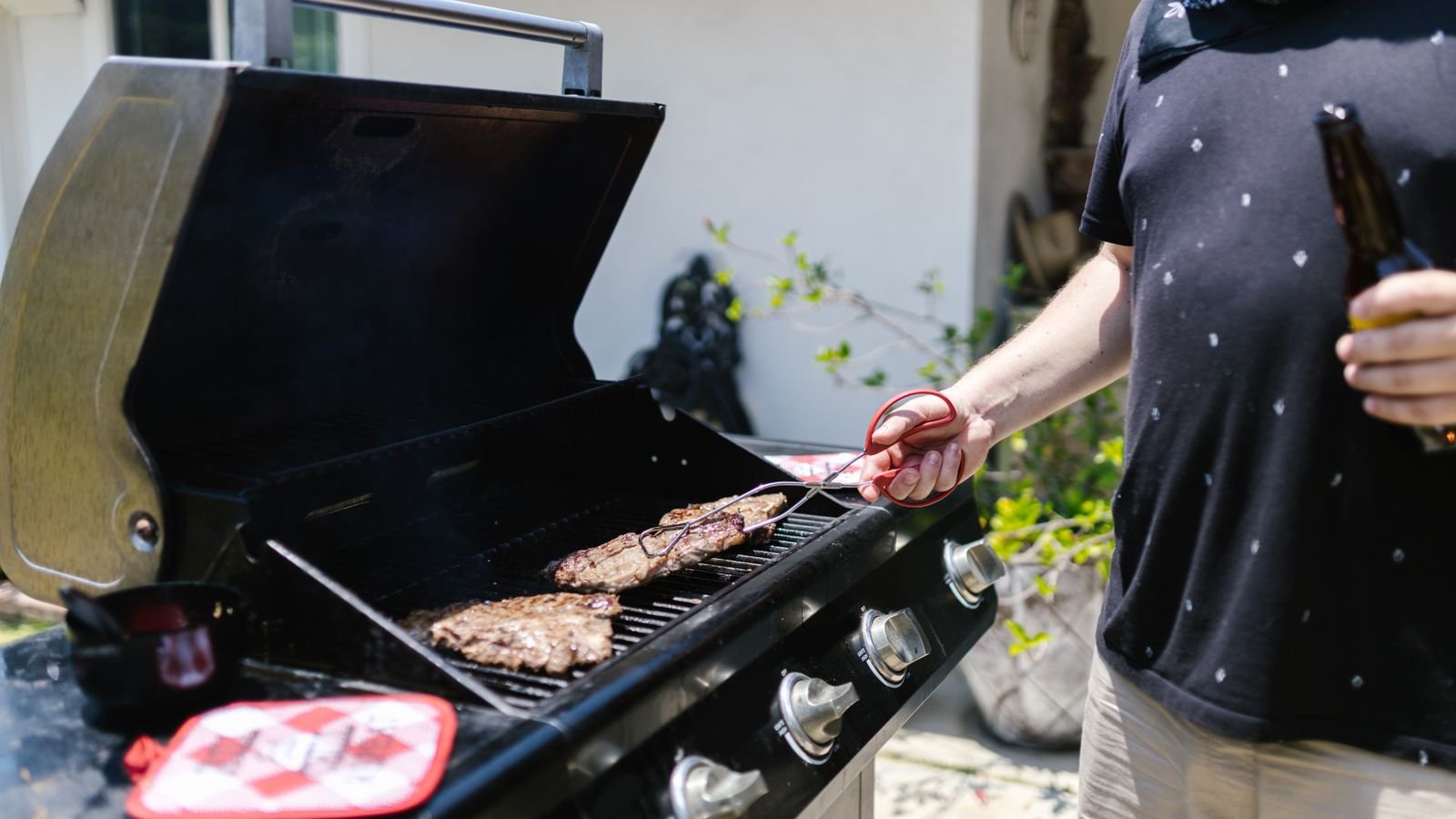
Response time is the specification you will notice most. A premium instant-read settles in two to three seconds; a budget model can take eight to twelve. That difference sounds trivial until you are holding a grill lid open in winter checking six steaks, losing heat with every second. Anything under four seconds feels genuinely instant; anything over ten is frustrating enough that you will start skipping checks.
Accuracy is usually quoted as plus or minus a tolerance. Good units claim ±0.5°F to ±1°F; budget ones ±2°F or worse. For chicken cooked to a safety threshold, a couple of degrees is not critical. For a steak where the window between medium-rare and medium is about five degrees, it is the whole game.
Probe tip size drives both speed and accuracy. A thin, tapered tip reaches thermal equilibrium faster and leaves a smaller hole for juices to escape. Thick, blunt probes read slowly and average temperature across a wider zone, which matters when you are trying to find the true centre of a thin cut.
Temperature range should comfortably exceed cooking needs. A range of roughly -40°F to 500°F handles all meat, frying oil, bread and sugar work. Note that leave-in probes have two separate ratings: the probe tolerates high oven or smoker temperatures, but the display or transmitter unit usually must not.
Features Worth Paying For
- Auto-rotating backlit display. Reading a screen upside down while leaning over a hot grill is a genuine annoyance that this solves.
- Waterproofing. An IP66 or IP67 rating means the unit survives being rinsed under the tap. Since a probe goes into raw chicken, being able to wash it properly matters for hygiene, not just convenience.
- Auto on/off with wake-on-open. The thermometer you have to switch on is the one whose battery you find dead.
- Calibration function. The ability to reset the unit against ice water keeps it honest for years.
- Alarms and target presets. Essential on leave-in models; the alarm is the entire point.
- Magnetic back and hanging hook. Trivial but the difference between a thermometer that lives on the oven door and one lost in a drawer.
- Standard batteries. A common coin cell or AAA is easier to live with than a proprietary rechargeable pack, though wireless probes necessarily use the latter.
Target Temperatures Worth Knowing
Food safety guidance sets minimum internal temperatures, while quality often has a narrower ideal window. Both matter.
- Poultry, whole or ground: 165°F throughout, measured in the thickest part of the thigh without touching bone. Dark meat is more pleasant taken a little higher, around 175°F.
- Ground meats: 160°F. Grinding distributes surface bacteria through the mixture, so the whole mass must reach temperature.
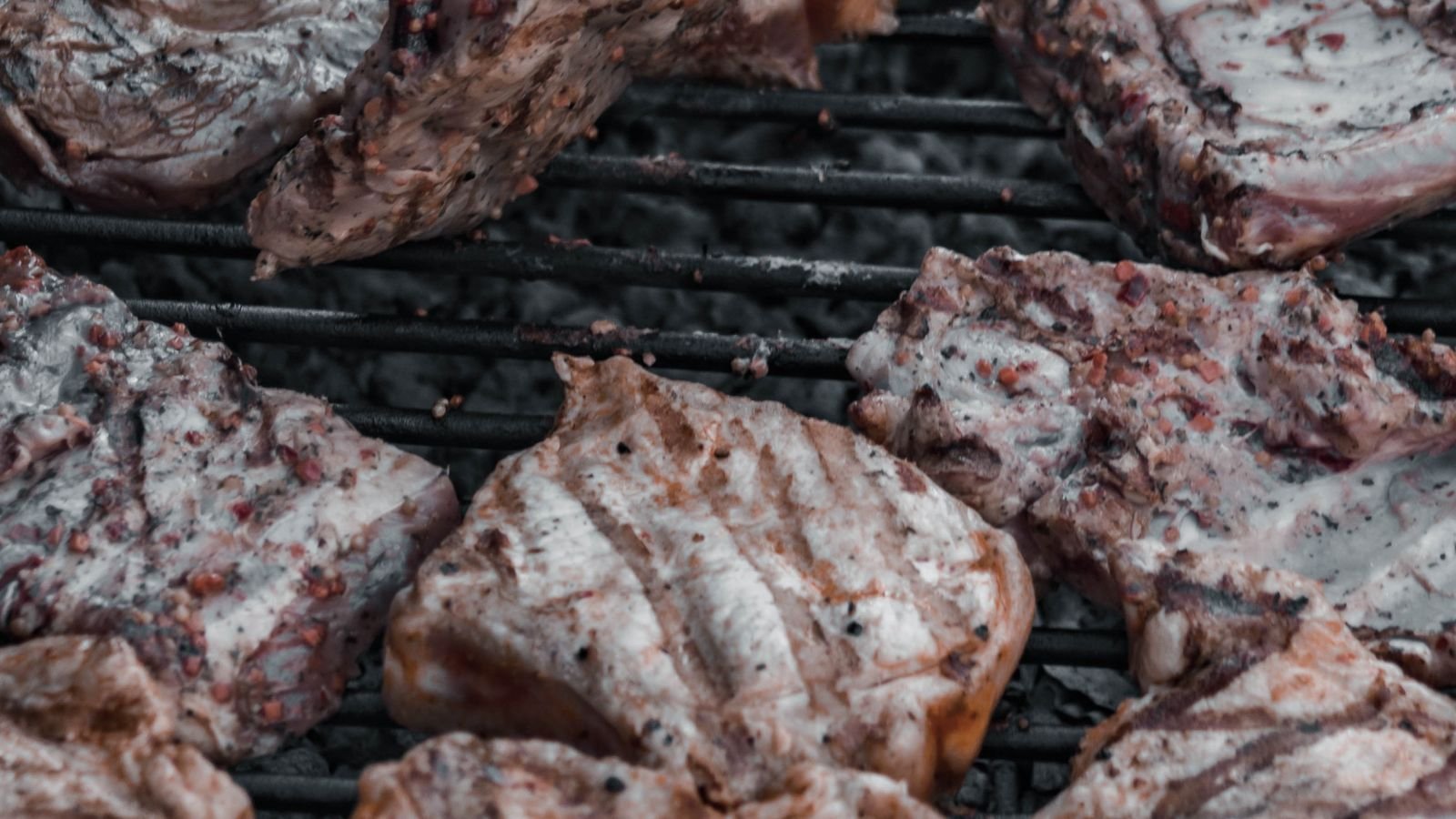
- Whole cuts of beef, lamb and pork: a safe minimum of 145°F with a three-minute rest. In practice, beef steak is pulled at about 125°F for rare, 130 to 135°F for medium-rare and 140°F for medium.
- Pork loin and chops: 145°F leaves them faintly pink and far juicier than the well-done pork of previous generations.
- Fish: 145°F for most species, though salmon is often preferred nearer 125°F.
- Barbecue brisket and pork shoulder: 195°F to 205°F, cooked well past safety to break down connective tissue.
Account for carryover cooking. A large roast continues rising 5°F to 10°F after leaving the oven, a thin steak only 2°F or 3°F. Pull food off the heat before it reaches target and let the rest happen during the rest period.
How to Use a Probe Properly
Placement determines the reading. Insert into the thickest part of the cut, avoiding bone, gristle and fat pockets, all of which conduct heat differently and give misleading numbers. On thin cuts, come in from the side rather than the top so the sensing tip sits in the centre rather than passing straight through.
Know where the sensor actually is. Most thin instant-read probes sense in the first few millimetres of the tip; thicker probes may average over an inch or more. Push in, then withdraw slowly and watch for the lowest reading — that dip marks the true centre.
Check several spots on large or irregular items. A whole chicken has at least three meaningfully different temperatures, and the coldest one is what matters. Never leave an instant-read probe in the oven unless it is explicitly rated for it, and never submerge a display unit that is not waterproof.
Calibration and Maintenance
Test accuracy with the ice-water method: fill a glass with crushed ice, top with cold water, stir, wait a minute and insert the probe without touching the sides. It should read 32°F within its stated tolerance. Boiling water gives a second check at 212°F, adjusted for altitude. Do this when the thermometer is new and once or twice a year afterwards.
If readings drift and the unit has a calibration offset, apply it. If it has none and is off by several degrees, replace it — an inaccurate thermometer is worse than none, because it inspires misplaced confidence. Clean probes with hot soapy water and sanitise after contact with raw meat, dry cables fully before storage, and never put a probe or display through a dishwasher unless the manufacturer explicitly allows it.
Cables on leave-in probes are the usual failure point, degrading where they flex at the oven door seal. Route them at the least stressed point of the door and avoid sharp bends. Replacement probes are cheap and are usually all that a failing set needs.
Matching the Thermometer to How You Cook
Everyday weeknight cooking. One fast, accurate, waterproof instant-read does everything. This is the highest-value purchase in the category.
Sunday roasts and holiday birds. Add a leave-in probe with an alarm so you stop opening the oven, and keep the instant-read for verifying other spots.
Low-and-slow barbecue. A multi-probe wireless unit tracking both meat and pit temperature over ten hours is transformative, and remote alerts mean you can sleep through an overnight brisket.
Air fryers and rotisseries. A fully wireless single probe with no cable is the only practical option.
Bread, oil and sugar work. Check the upper range and response speed; deep frying in particular needs quick feedback to hold oil temperature steady.
Thermometers pair naturally with the rest of a food-preparation setup. If you buy meat in bulk and portion it, our comparison of the best vacuum sealers covers freezer storage that preserves quality, and the more specialised best vacuum food sealers guide goes further into bag types and sous vide use, where accurate temperature control is the whole technique. And since high-temperature searing and deep frying are the two jobs a thermometer encourages you to attempt more often, it is worth keeping one of the best home fire extinguishers rated for cooking oil within reach of the hob.
Common Mistakes to Avoid
- Relying on the dial thermometer built into a grill lid, which measures air far from the grate and is often wildly out.
- Trusting pop-up timers in supermarket turkeys, which trigger well past the point of dryness.
- Measuring against bone, which conducts heat and reads high.
- Buying an infrared gun expecting it to judge doneness inside meat.
- Leaving a non-oven-safe instant-read in the oven and melting it.
- Never calibrating, then blaming the recipe when results drift.
Frequently Asked Questions
Is an expensive instant-read worth it over a budget one?
For most cooks, yes — the gains are speed and accuracy, and both are things you feel every time you use it. A two-second, ±0.5°F probe with a waterproof body gets used constantly; a slow, imprecise one gets abandoned.
Can one thermometer do everything?
Almost. A good instant-read handles the majority of cooking, but it cannot monitor a roast without opening the oven. If you cook large joints or barbecue, a leave-in or wireless probe is a genuine second tool rather than a duplicate.
Where exactly should the probe go in a whole chicken?
The thickest part of the thigh, angled in from the side, not touching bone. That is the last part to reach temperature. Check the breast separately, since it will read higher and can be over-cooked while the thigh is still short.
Do wireless probes really survive being fully buried in meat?
Modern designs do, with an internal sensor at the tip and a heat-tolerant handle section that must stay outside the heat zone by a marked line. Observe that line, keep them out of direct flame, and follow the charging routine and they last well.
How often should I calibrate?
Once when new, then roughly twice a year, and immediately after any drop onto a hard floor. The ice-water test takes two minutes and is the only way to know your readings still mean anything.
Final Thoughts
Buy for speed, accuracy and a probe thin enough to read the true centre, then choose the format that matches how you actually cook rather than how you imagine you might. One quick instant-read transforms everyday cooking; a leave-in or wireless probe transforms roasting and barbecue. Learn the target temperatures, allow for carryover, check the calibration occasionally, and the most common cooking failure — meat that is either unsafe or ruined by overcooking — simply stops happening.