Owen Bradley
 Smart toilets have moved from luxury curiosity to a genuine mainstream bathroom upgrade, and the reason is simple: once you have used a heated seat and a properly adjusted bidet wash, going back feels like a downgrade. But the category is confusing. Some products are complete integrated units that replace the entire fixture; others are seats that bolt onto the toilet you already own for a fraction of the price. Power requirements, water pressure, seat sizing and drainage layout all vary, and getting any of them wrong turns an exciting upgrade into a return. This guide explains every decision you need to make so you buy the right thing for your bathroom in 2026.
Integrated Units Versus Smart Bidet Seats
This is the first and biggest fork in the road.
- Integrated smart toilets replace the whole fixture. The bidet mechanism, tank, seat and controls are engineered as one unit, giving the cleanest appearance, the most reliable performance, and features like tankless instant heating and automatic lid operation. They cost several times more and installation is a full plumbing job.
- Smart bidet seats replace only the seat on your existing toilet. They deliver most of the functionality, including heated seats, warm water washing and warm air drying, for a small fraction of the cost, and a competent DIYer can fit one in under an hour.
For the majority of buyers, a smart seat is the sensible starting point. It gives you the daily benefits immediately and lets you discover which features you actually use before committing to a full fixture replacement. Reserve the integrated unit for a full bathroom renovation, where the seamless look and the tankless design genuinely justify the cost. Our roundup of the best smart toilets covers both categories side by side.
Bidet Wash Functions: What the Specifications Mean
The wash system is the core of the product, and quality varies enormously.
- Nozzle count and type: better units have separate nozzles for rear and front (feminine) washing rather than one nozzle repositioned. Stainless steel nozzles resist mineral scaling better than plastic.
- Self-cleaning: the nozzle should rinse itself before and after each use. Premium models add an ultraviolet or electrolysed-water sterilisation cycle.
- Adjustability: look for adjustable pressure across a wide range, adjustable nozzle position front to back, and adjustable water temperature. Fixed-setting units suit nobody perfectly.
- Oscillating and pulsating modes: genuinely useful rather than gimmicks, since they widen the cleaning area without raising pressure.
Water temperature is delivered one of two ways. A tank system stores a reservoir of warm water, which is cheaper but delivers a limited warm wash before turning cool. A tankless system heats on demand and gives unlimited warm water, costs more, and draws considerably more electrical power. In a household with several users in the morning, tankless is worth the premium.
Heated Seats, Dryers and Deodorisers
The heated seat is the feature people underestimate before buying and rank first afterwards. Look for multiple temperature levels and, ideally, a timer or occupancy sensor so the seat is not heated continuously through the night. Seat temperature adjustment in small increments matters more than the maximum temperature.
Warm air dryers vary widely in effectiveness. Cheaper units produce a gentle breeze that takes several minutes; good ones have adjustable temperature and enough airflow to be practical. Read specifications carefully here, because this is where budget models most often disappoint.
Deodorisers pull air through a carbon filter, and they work well within their limits. The filter is a consumable, so check that replacements are available and inexpensive before buying.
Power and Water Requirements: Check Before You Buy
This is the step that derails more purchases than any other. Almost every smart toilet or seat needs a grounded electrical outlet within about three feet of the toilet, protected by a ground fault interrupter. Many older bathrooms have no outlet anywhere near the fixture, and adding one means an electrician.
- Confirm there is a suitable GFCI outlet within reach of the supplied cord. Extension leads in a bathroom are not an acceptable solution.
- Check your household water pressure. Most units want at least 15 psi to operate the wash properly; very low-pressure systems may need a pump.
- Verify the water supply connection type, since the seat tees into the existing fill line with a supplied adapter.
- Measure the distance from the mounting bolts to the front of the bowl and the bowl width, and compare against the seat’s stated fit.
- Check clearance behind the toilet, because the seat’s control body sits further back than a standard seat.
Non-electric bidet seats exist and need no outlet at all, but they offer cold water washing only and no heated seat, which removes most of what makes a smart toilet appealing.
Bowl Shape and Fit
Toilets come in two common bowl shapes: round front and elongated. Seats are sold to match, and an elongated seat on a round bowl overhangs awkwardly while a round seat on an elongated bowl leaves a gap. Measure from the centre of the seat mounting bolts to the front edge of the bowl: roughly 16.5 inches indicates round, roughly 18.5 inches indicates elongated.
Some seats are sold as universal fit with adjustable brackets, which is convenient but occasionally results in a seat that sits slightly proud of the bowl. If your toilet is an unusual shape, a French curve or a compact design, check the manufacturer’s fitment guide specifically rather than trusting a universal claim.
Flushing Technology on Integrated Units
If you are buying a complete smart toilet, the flush deserves as much attention as the bidet. Look at flush volume, since dual-flush and high-efficiency designs use significantly less water per flush without sacrificing performance in a well-designed bowl. Consider the trapway: a fully glazed, concealed trapway resists clogs and is dramatically easier to clean than an exposed one.
Tankless integrated toilets flush directly from the supply line, which requires adequate pressure and flow but eliminates the tank entirely, giving a very compact footprint. In older buildings with marginal water pressure, a tanked design is the safer specification.
Smart Features Worth Having
Beyond the wash, the useful additions are an automatic opening lid with proximity sensing, a night light that means never turning on the main bathroom light, automatic flushing, user profiles that remember individual pressure and temperature preferences, and a remote or app control with a clear interface. Heated seat scheduling saves real electricity if the unit runs a heated reservoir.
Skip features that add failure points without daily benefit. Built-in speakers, elaborate lighting effects and voice control are rarely used after the first month, and each one is another component that can fail in a humid environment.
Budget Tiers
- Entry level seats: cold or tank-warmed water, basic heated seat, single nozzle, simple side-panel controls. A genuine upgrade over a standard seat and a good way to test the concept.
- Mid range seats: tank or hybrid heating, dual stainless nozzles with self-cleaning, adjustable everything, warm air dryer, deodoriser and a remote. This is the value sweet spot.
- Premium seats and integrated units: tankless instant heating, automatic lid and flush, user memory, UV sterilisation, seamless one-piece design.
Running costs are modest but not zero. A heated seat and a tank heater draw power continuously, and carbon filters and occasionally the nozzle assembly are consumables. Factor those in over a decade of use.
Water Quality and Maintenance
Hard water is the main enemy of any bidet mechanism. Mineral scale builds on nozzles and inside the heating system, reducing flow and eventually causing failure. If you live in a hard water area, plan on descaling the nozzle regularly with the manufacturer’s recommended solution, and consider filtration for the bathroom supply. Many households already address this elsewhere with one of the best filtered shower heads, and the same water chemistry that scales a shower will scale a bidet nozzle.
Routine maintenance is otherwise light: wipe the seat with a mild cleaner rather than anything abrasive or bleach-based, run the self-clean cycle regularly, replace the deodoriser filter on schedule, and check the supply tee connection for weeping every few months. If your household pressure is genuinely low, the same underlying problem that produces a weak bidet spray also produces a poor shower, and our guide to the best high pressure shower heads explains how to diagnose it.
Bathroom Planning Considerations
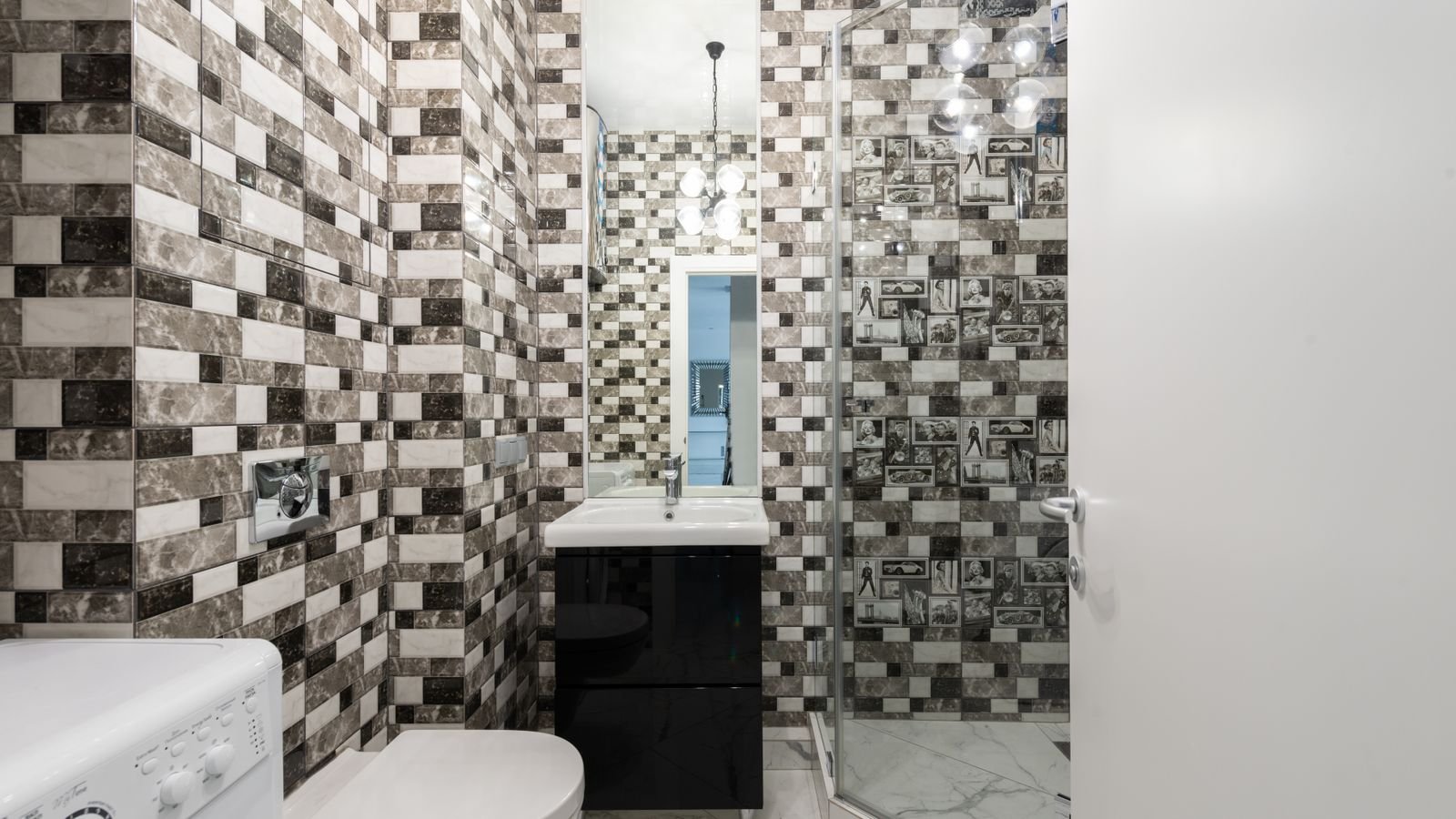
If this is part of a renovation rather than a standalone upgrade, think about the room as a whole. Position the electrical outlet during first fix so no cord is visible. Allow for the extra depth of an integrated unit when planning clearances. Consider slip resistance underfoot, since bidet use means occasional splashes; our overview of the best tiles for shower floors covers the ratings that apply equally around a toilet. And coordinate finishes early, because matching a smart toilet’s white to your existing basin and to whichever of the best shower heads you choose is far easier before anything is ordered.
Common Mistakes to Avoid
Buying before checking for a nearby GFCI outlet is the number one problem, and it is entirely avoidable with a two-minute look behind the toilet. Ordering the wrong bowl shape is second. Underestimating how much a warm-water tank limits consecutive users in a busy household is third. Choosing a unit with proprietary consumables that are hard to obtain locally is a slower-burning mistake that shows up two years later. Finally, do not assume a smart seat will fit a wall-hung or skirted toilet without checking the mounting arrangement specifically.
Frequently Asked Questions
Do I need a plumber to install a smart bidet seat?
Usually not. The seat tees into the existing fill valve with a supplied adapter and hand-tightened fittings. You will need an electrician only if there is no suitable outlet nearby.
How much electricity does a heated seat use?
Modest, comparable to a small appliance left on standby, though tank-heated models use more because they maintain a warm reservoir. Seats with occupancy sensing or scheduling cut this significantly.
Is the water clean?
Yes. The bidet draws from the same fresh supply line that fills the tank, not from the bowl, and quality units rinse the nozzle before and after every use.
Will it work during a power cut?
The toilet still flushes normally. Most electric seats lose wash, drying and heating functions, though some include a manual bypass for basic cold washing.
Are smart toilets suitable for elderly or mobility-limited users?
Very much so. Automatic lid operation, hands-free washing and drying, and a night light all reduce the physical demands of using the bathroom independently.
Final Thoughts
Choosing a smart toilet comes down to three practical checks and one honest preference. Confirm you have power and adequate water pressure at the fixture, measure the bowl so the seat actually fits, and decide whether a seat upgrade or a full integrated unit matches your budget and renovation timeline. Then be honest about which features you will use every day: heated seat and adjustable warm wash almost always, drying and deodorising often, everything else occasionally. Buy well against those criteria and the result is one of the few home upgrades that improves an ordinary daily routine for years.