Owen Bradley
 The light you sit under in the two hours before bed has a measurable effect on how easily you fall asleep. Short-wavelength blue light is the strongest signal your body uses to decide whether it is daytime, and modern homes are full of it — cool white LEDs, bright bathroom fixtures, screens, and overhead downlights that were chosen for efficiency rather than for evening comfort. The fix is not complicated or expensive. It involves choosing bulbs with the right color temperature, dimming them properly, and putting light at the right height in the room. This guide explains what to look for on a bulb box, how to stage your lighting through the evening, and how to build a low-blue setup room by room without making your home feel gloomy.
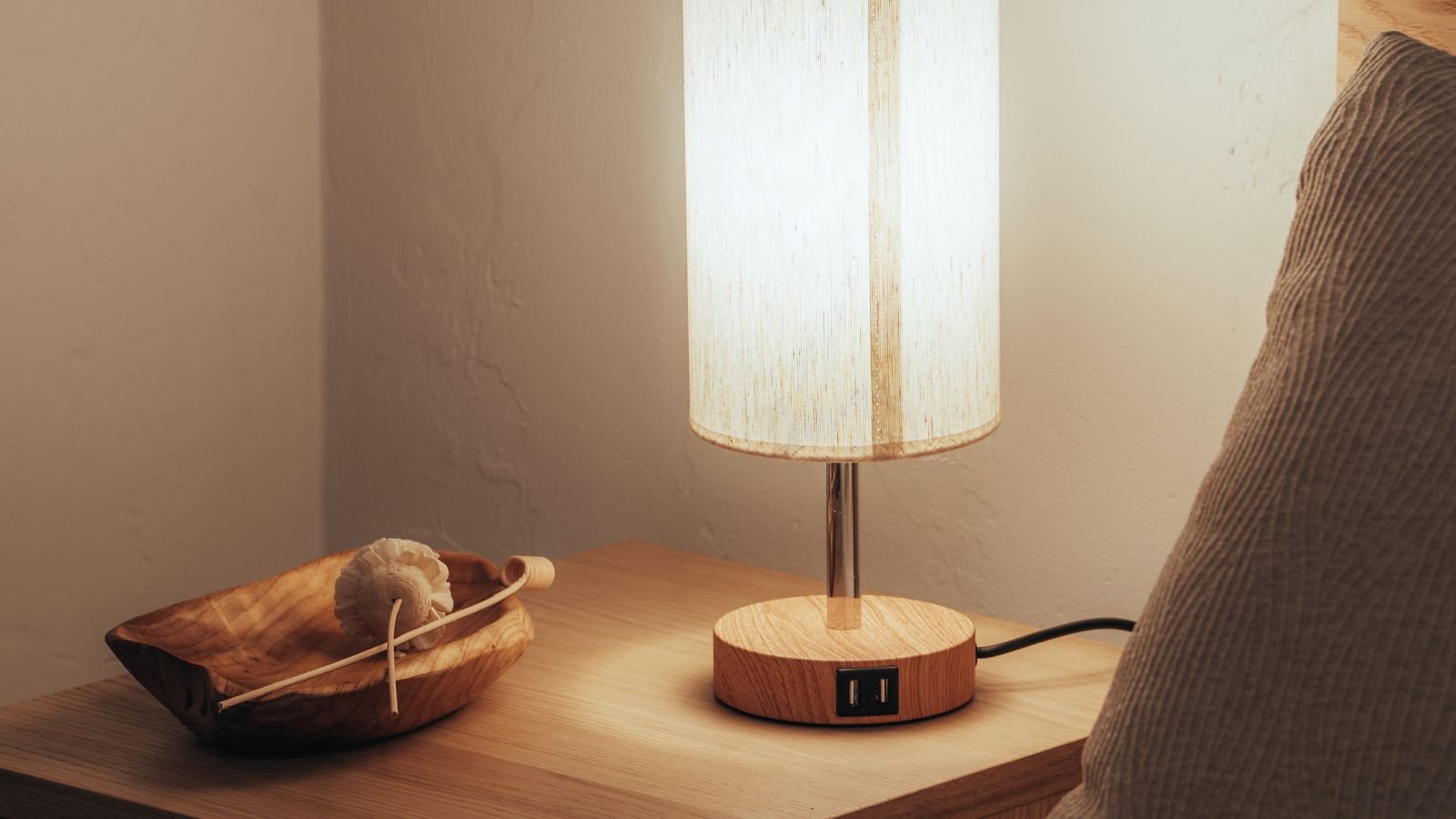
What “Blue Light” Actually Means on a Bulb Box
All white light contains a mixture of wavelengths. What matters for sleep is how much energy sits in the short, blue end of the spectrum — roughly 460 to 490 nanometres, the range that most strongly suppresses melatonin.
Bulb packaging does not print a spectral graph, but it does print correlated color temperature in kelvin, and that is a reliable proxy. A higher kelvin number means a bluer, cooler light with more short-wavelength content. A lower number means a warmer, more amber light with less. So the single most useful thing you can do is learn to read the kelvin number and buy accordingly.
- 5000K–6500K (daylight): highest blue content. Genuinely useful in the morning and in workshops; the worst possible choice for a bedroom lamp.
- 4000K (neutral white): moderate blue content. Fine for kitchens and offices during the day.
- 3000K (soft white): noticeably reduced blue. A reasonable general-purpose evening light.
- 2700K (warm white): the traditional incandescent color and the sensible default for living rooms and bedrooms.
- 2200K–2400K (amber / “candle”): very low blue content. Excellent for the final hour before bed.
- Deep amber and red bulbs (below 2000K): almost no blue. Ideal for night lights, bathroom trips, and nursery lamps.
Brightness Matters As Much As Color
This is the part most advice omits. A dim 4000K bulb can be gentler on your body clock than a very bright 2700K one, because the total quantity of light reaching your eyes matters alongside its color. Both variables act together.
Practically, that means an evening lighting plan needs three things: warm color, low output, and low placement. A 400-lumen warm lamp on a side table beside you produces far less biological signal than a 3000-lumen ceiling fixture directly overhead, even though both may say “soft white” on the box.
For the last hour or two before bed, aim for total room output well below what you use during the day — a few hundred lumens spread across two or three small sources is usually plenty for reading and conversation.
Choose Between Fixed-Warm and Tunable Bulbs
There are two workable strategies, and the right one depends on how much you want to fiddle.
Fixed warm bulbs are the simplest approach. Put 2700K bulbs in every lamp you use in the evening and a lower amber bulb in the bedside lamp. Nothing to configure, nothing to fail, and no app. The downside is that those fixtures are also warm during the day, which some people find flat in a home office.
Tunable white or smart bulbs shift from cool in the morning to warm at night on a schedule. This gives you bright, alert light at 8am and amber light at 10pm from the same fixture. The downside is setup effort and dependence on an app.
For a bedside lamp or a bathroom night light specifically, dedicated low-blue bulbs are worth considering. The options in the best red light bulbs for sleep illustrate how far the amber end of the spectrum goes compared with an ordinary warm white bulb — the difference is far larger than most people expect.
Check These Specifications Before Buying
- Kelvin rating. The headline number. Prefer 2700K or lower for evening fixtures.
- Lumens. Match to the room and the moment; lower is better at night.
- Dimmability. Essential for evening lighting. Check the bulb is marked dimmable and that your dimmer is LED-compatible.
- Warm dimming. Some premium bulbs shift toward amber as they dim, imitating a candle or an incandescent. This is the most natural-feeling option.
- CRI. A value of 90 or above makes warm light look rich rather than muddy. Cheap warm bulbs with low CRI often make rooms look dingy, which is why some people wrongly conclude they dislike warm light.
- Flicker. Poor drivers pulse invisibly and can cause eye strain and headaches. Better bulbs specify low or no flicker.
- Enclosed rating. Required if the bulb sits inside a sealed shade or fixture.

Set Up Your Evening Lighting Step by Step
- Audit what you have. Walk through the house at night and note the kelvin rating of every bulb you use after sunset. Most people find at least one 5000K bulb in a room they relax in.
- Fix the bedroom first. It has the largest effect for the least effort. Put 2700K or amber bulbs in every bedroom fixture, and make sure the bedside lamp is the warmest and dimmest of them.
- Fix the bathroom next. A bright cool bathroom light before bed, and again during a night trip, undoes everything else. Add a low amber night light, or fit a warm dimmable bulb on a dimmer.
- Move light downward. Ceiling fixtures shine into your eyes from above, which is exactly the angle daylight comes from. In the evening, switch off the overhead and use table and floor lamps instead.
- Install dimmers or dimmable smart bulbs in the living room, so the same fixtures work for daytime and evening.
- Build a two-stage evening routine. At around two hours before bed, drop to warm lamps only. At around one hour before bed, drop again to the lowest amber setting.
- Deal with screens. Enable the built-in night mode on phones, tablets, and computers, and lower screen brightness. A screen at full brightness in a dim room is a large, close light source.
- Get bright light in the morning. The contrast is what strengthens the rhythm. Cool, bright light early in the day makes warm light at night far more effective.
Common Mistakes to Avoid
- Changing color but not brightness. A blazing warm room still signals daytime.
- Forgetting the bathroom. The most commonly overlooked source of late-night blue light.
- Buying low-CRI warm bulbs. They make rooms look dull and put people off warm lighting entirely.
- Relying on tinted glasses instead of the room. They help, but fixing the lighting works even when you forget to put them on.
- Mixing color temperatures within one room. A single cool bulb among warm ones is visually jarring and undermines the effect.
- Using amber light for detailed tasks. Low-blue light is poor for reading fine print or applying makeup. Keep a brighter task option available.
Frequently Asked Questions
Is a 2700K bulb low-blue enough, or do I need amber?
For most of the evening, 2700K is a meaningful improvement over cool white and is comfortable to live with. For the last hour before bed and for night lights, going down to 2200K or a dedicated amber bulb makes a further noticeable difference.
Do red or amber bulbs actually help sleep?
They emit very little of the short-wavelength light that suppresses melatonin, so they interfere less with your body clock than ordinary white bulbs. They are not a treatment for insomnia, but they remove one common obstacle.
Are smart bulbs worth it for this?
If you want lighting to change automatically without thinking about it, yes. If you would rather not manage an app, fixed warm bulbs plus a dimmer achieve most of the benefit for less money.
What about blue-light-filtering glasses?
They can help, particularly if you cannot control the lighting where you spend your evenings. Changing the bulbs is more reliable, because it works for everyone in the room and requires no remembering.
Should I use warm bulbs everywhere, all day?
No. Cool, bright light during the day supports alertness and reinforces the day–night contrast. Reserve warm and amber light for the evening, and use tunable bulbs if you want one fixture to do both.
Final Thoughts
Reducing blue light before bed is mostly a shopping decision followed by a small habit. Read the kelvin number, put 2700K or lower in every fixture you use after dark, add a genuinely amber bulb beside the bed and in the bathroom, and switch from overhead lighting to low lamps as the evening goes on. Start with the bedroom and bathroom, since those two rooms deliver most of the benefit, and let the rest of the house follow as bulbs need replacing. The change costs a handful of bulbs and takes an afternoon, and the room will feel calmer long before you notice anything about your sleep.