Owen Bradley
 Mesh Wi-Fi solved the coverage problem, but it introduced a quieter one. When satellite nodes talk to the main router over the air, they spend part of their radio time relaying traffic instead of serving your devices. Depending on the system and the distance involved, that can cut usable throughput at a distant node roughly in half, sometimes worse. Wiring each node back to the router with an ethernet cable eliminates that penalty entirely. This is called ethernet backhaul, and it is the single most effective upgrade you can make to an existing mesh system without buying new hardware. This guide covers planning the cable paths, connecting each node correctly, adjusting the settings that matter, and confirming that every satellite actually switched from wireless to wired.
Why Wired Backhaul Makes Such a Difference
In a wireless mesh, every packet that reaches a satellite node has to be received from the main unit and then retransmitted to your device. If the node uses the same radio band for both jobs, it is effectively doing double duty on a shared channel. Tri-band systems mitigate this by dedicating a third radio to node-to-node traffic, but even then the link quality depends on distance, walls, and interference from neighbours.
A cable removes all of that. The backhaul becomes a dedicated gigabit path with no interference, no distance penalty inside normal house dimensions, and no contention with client traffic. The node’s radios are then free to do nothing but serve the devices in that room. In practice, users often see distant rooms go from a third of the expected speed to nearly the full rate, and latency becomes much steadier, which matters most for video calls and gaming.
When Wired Backhaul Is Worth the Effort
It is worth it if you have an internet plan faster than about 300 Mbps, if any node sits more than one wall or one floor from the main unit, if your building has dense construction like brick or plaster over metal lath, or if you live somewhere with heavy neighbouring Wi-Fi congestion. It matters less if your service is slow enough that the wireless backhaul is not the bottleneck, or if all nodes are within easy line of sight of each other.
Planning the Cable Paths
Wired backhaul is a star, not a chain. Every node should have a path back to the main router, either directly or through a switch that itself connects back to the router. Start by marking where each node lives, then trace the shortest realistic route to your central networking location.
Existing pathways make this dramatically easier. Look for a basement or crawlspace under the floor, an attic above the ceiling, existing conduit, or the same holes your cable television or telephone lines already use. Running along a baseboard with flat cable and paintable trim is a legitimate option for a single node when opening walls is not practical.
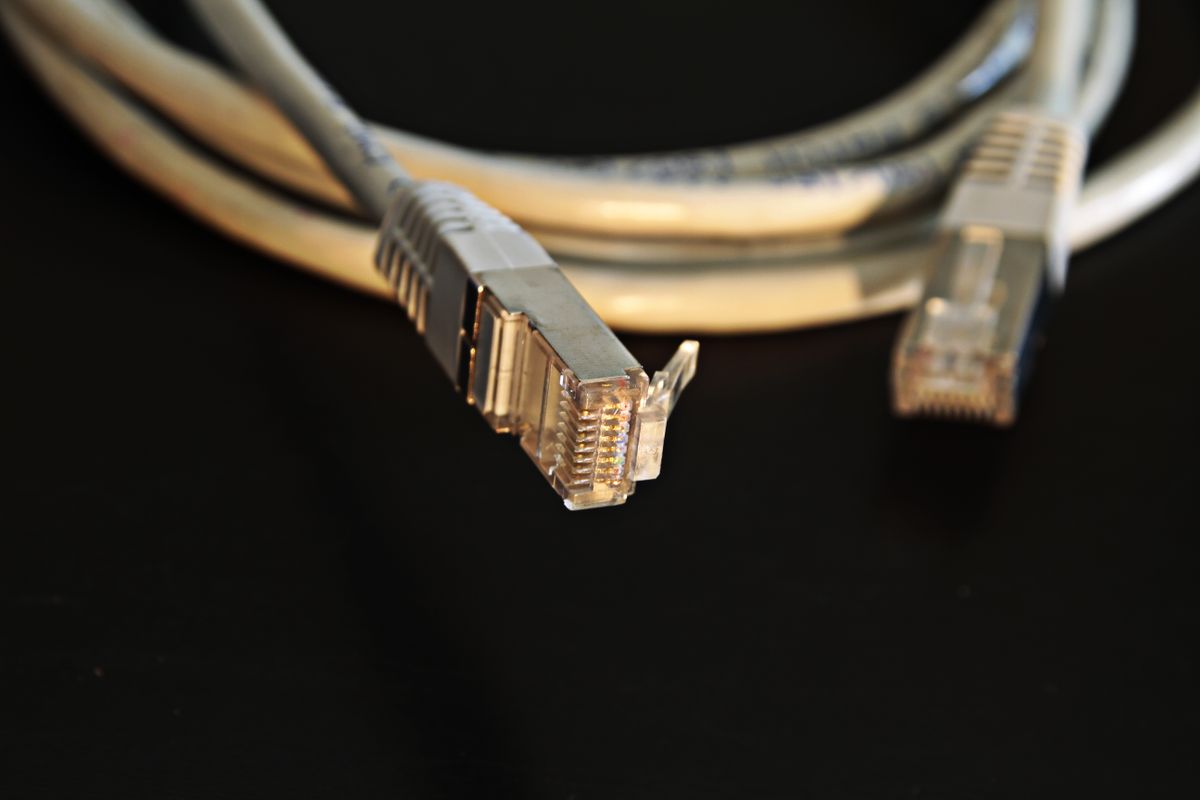
Use Cat5e or better. Cat6 solid conductor is the sensible default for permanent runs and gives headroom for multi-gig hardware later. Keep every run under 100 meters, avoid running parallel and adjacent to electrical wiring for long stretches, and never kink the cable, since a sharp bend permanently damages performance.
Where a Switch Belongs
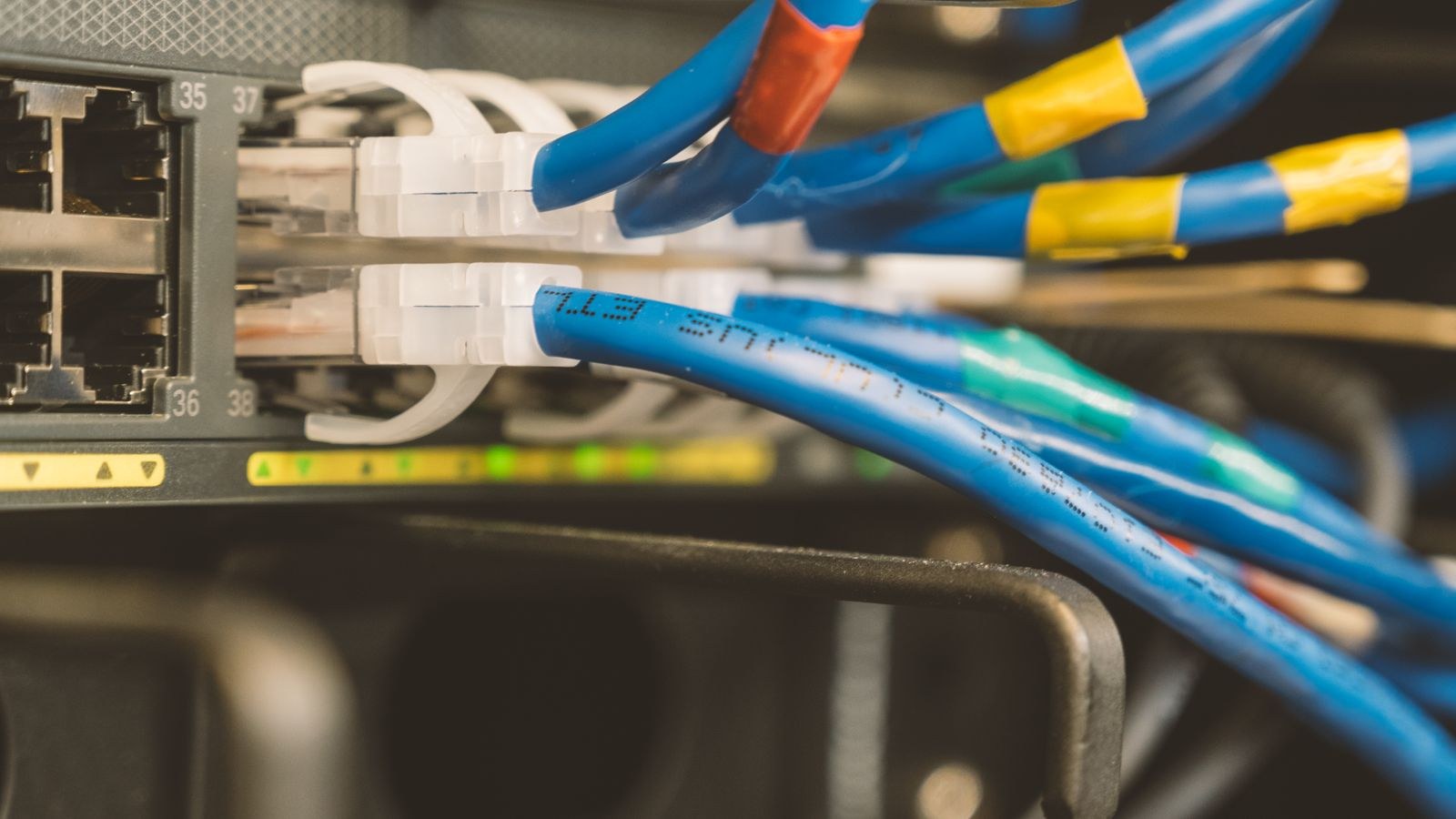
Most routers do not have enough LAN ports to feed three or four nodes plus the wired devices you already own. A switch placed near the router solves this cleanly: one cable from a router LAN port to the switch, then one cable from the switch to each node. A second switch at a distant location works too, letting a single long run serve several nodes and devices in that area. Any gigabit model works, and our roundup of the best network switches for home mesh setups covers port counts and fanless designs suited to living spaces.
Step-by-Step: Wiring the Nodes
- Get the wireless mesh working first. Set up the system normally over Wi-Fi and confirm every node shows online in the app. Introducing cables to a system that was never configured properly makes it far harder to tell what broke what.
- Identify each node’s ports. Satellite nodes typically have one or two ethernet ports. On many systems both are ordinary LAN ports and either can accept the backhaul; on others the port labelled WAN or internet is the correct one for a wired uplink. Check the manual, because guessing here is the most common source of failure.
- Wire the main unit to the switch. Connect a LAN port on the primary router to any port on the switch. Never use the router’s WAN or internet port, which is reserved for the modem.
- Run one cable per node. Connect each satellite to a switch port with its own dedicated cable. Do not daisy chain node to node unless the manufacturer explicitly supports it, and never create a second path between two devices, which forms a loop.
- Power cycle in order. Reboot the main router first and wait until it is fully online, then power cycle each satellite one at a time. Many systems only re-evaluate their backhaul path during boot, so a node plugged in while running may stubbornly stay wireless.
- Check the app for backhaul status. Open the mesh system’s mobile app or web interface and look at each node’s connection detail. Most modern systems explicitly show Wired or Ethernet versus Wireless, sometimes with a signal quality figure that disappears once wired.
- Enable wired backhaul mode if the system offers it. A few systems have an explicit setting, sometimes called ethernet backhaul or wired mode. Others detect it automatically. If a manual toggle exists, turn it on only after the cables are physically in place.
- Verify the node did not create a second network. Confirm devices connected to the satellite still receive addresses in the same range as the rest of the network. A node in the wrong mode can start its own DHCP and quietly fragment your LAN.
- Test speed at each node. Stand next to each satellite, connect a laptop or phone to it, and run a speed test. A wired node should deliver close to your full plan speed, not the reduced figure you saw before.
- Label and secure the cables. Tag each run at both ends with the room name, and support cable along framing with clips rather than tight staples.
Settings Worth Adjusting After Wiring
With backhaul off the air, the radios have spare capacity. On a tri-band system that previously dedicated a 5 GHz radio to node communication, wiring the nodes usually frees that band for client devices, and many systems do this automatically. Check whether your unit now advertises an extra band, and if band steering was disabled to protect the backhaul, you can generally re-enable it.
Channel selection also becomes simpler. Nodes no longer need to share a channel with each other for backhaul, so letting the system re-scan and re-optimise after wiring often yields better results than the channels it chose while wireless. Finally, review transmit power if your system exposes it. With solid wired links, slightly lower power per node can reduce overlap between nodes and improve roaming behaviour.
Choosing Hardware That Supports Wired Backhaul
Not every mesh product handles cabling gracefully. Some budget systems have only a single ethernet port on satellites, or lack a true wired mode, so a cable does nothing useful. If you are buying into a system with wiring in mind, check the port count and confirm explicit ethernet backhaul support in the specifications.
Our comparison of the best mesh Wi-Fi systems for whole-home coverage notes which models support wired backhaul, and the broader look at the best mesh routers for reliable multi-room networks covers port layouts and management features. For sprawling floor plans where several nodes are far apart, the best mesh routers for large homes highlights systems built for long runs and many satellites. If the whole concept is still new, our explainer on how mesh Wi-Fi systems work walks through the underlying architecture before you commit.
Troubleshooting a Node That Will Not Go Wired
App still shows a wireless connection. Power cycle the node while the cable is connected. If it persists, try the node’s other ethernet port; the correct backhaul port varies by manufacturer.
Node goes offline entirely once cabled. This usually means a loop or a port mismatch. Confirm there is exactly one cable between the node and the switch, and that the switch uplink lands on a router LAN port rather than the WAN port.
Devices on the node get the wrong IP range. The satellite has fallen into router mode instead of node mode. Look for an access point or bridge setting in its configuration, or factory reset it and re-add it to the mesh with the cable already connected.
Speeds improved but not much. Test the cable itself. A run with a damaged pair negotiates at 100 Mbps, which caps the backhaul well below what the radios can serve. A simple cable tester or the link speed reported by the switch will reveal this immediately.
Frequently Asked Questions
Can I mix wired and wireless nodes?
Yes. Most systems handle a hybrid setup fine, wiring the nodes you can reach and leaving the rest on wireless backhaul. The wired nodes get the full benefit, and a wireless node can even connect through a wired one for a shorter hop.
Do I need Cat6 or is Cat5e enough?
Cat5e carries gigabit reliably at household distances and is perfectly adequate for backhaul today. Cat6 costs slightly more and gives headroom if you later move to multi-gig equipment, which makes it the better choice for permanent in-wall runs.
Will wired backhaul improve my internet speed?
It will not raise the speed your provider delivers, but it removes the loss that happens between the main router and distant nodes. If a back bedroom was getting a fraction of your plan speed, wiring that node often recovers most of the gap.
Can powerline or MoCA adapters replace ethernet backhaul?
They can help where running cable is impossible. MoCA over existing coaxial wiring performs close to ethernet in many homes, while powerline is more variable and depends heavily on your electrical wiring. Both beat a weak wireless backhaul, but neither matches a proper cable.
Final Thoughts
Wiring your mesh nodes is the rare upgrade that costs almost nothing and delivers an immediately noticeable improvement. Plan short, sensible cable paths, add a switch so every node gets its own dedicated run back toward the router, power cycle in order so each satellite re-evaluates its path, and verify in the app that the backhaul really switched to wired rather than assuming it did. Then re-run a speed test in the rooms that used to disappoint. For most households the difference is dramatic, and it turns a mesh system bought in 2026 into something that performs the way the box promised.