Owen Bradley
 Nothing dates a house faster than a porch light that is obviously the wrong size. A tiny lantern beside a tall front door looks like an afterthought, and an oversized one on a narrow entry looks like a mistake nobody wanted to admit. The frustrating part is that fixture listings show photos taken in isolation, so a lantern that measures 22 inches tall can look modest on screen and enormous on your wall. Getting porch light size right is mostly arithmetic, and the rules are simple enough to do in your head. This guide covers the height and width formulas for doors and garages, the correct mounting position, how many lumens an entry actually needs, and which bulbs and controls finish the job.
The Basic Sizing Formulas
Designers use a small set of ratios that reliably produce fixtures which look intentional. Start with your door height, measured from threshold to the top of the door slab, not including any transom window above it.
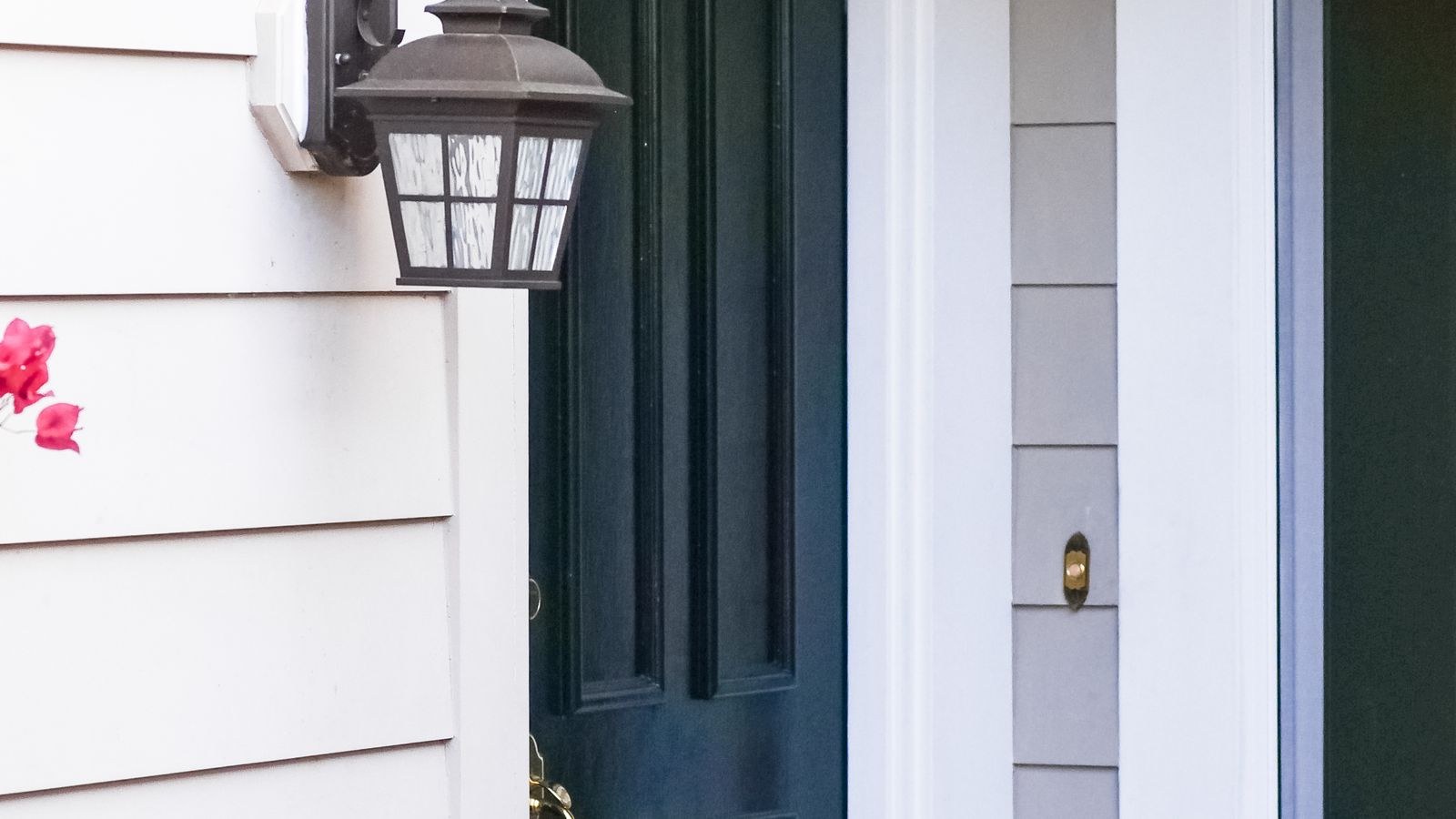
For a single fixture beside the door: the lantern should be roughly one quarter to one third of the door height. A standard 80-inch door therefore takes a fixture between about 20 and 26 inches tall. A taller 96-inch door takes something in the 24 to 32 inch range.
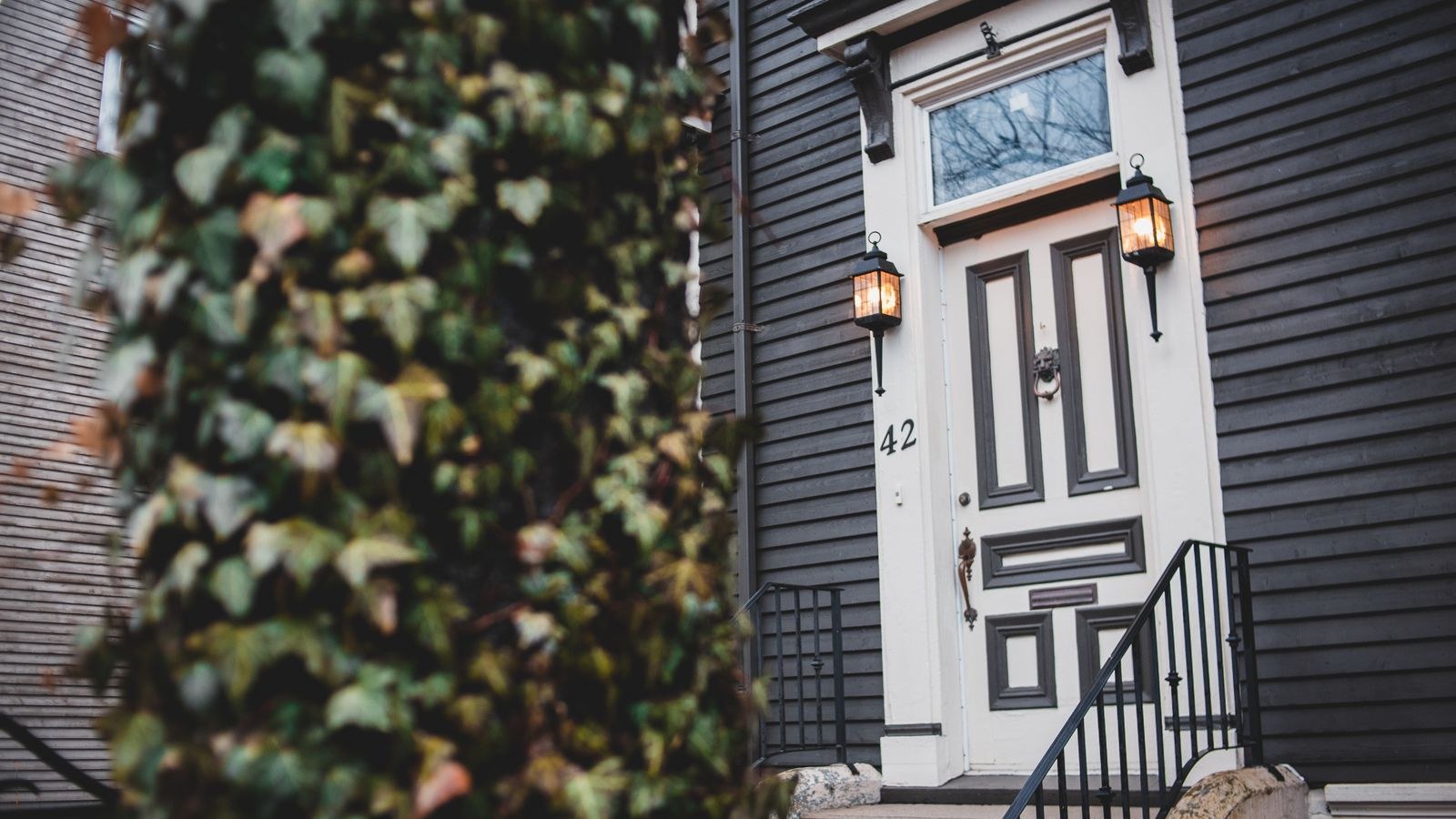
For a matched pair flanking the door: reduce that to one quarter of the door height or slightly less, because two fixtures carry visual weight together. Two lanterns of 16 to 20 inches on an 80-inch door look better than two 24-inch ones, which crowd the entry.
For width: a wall lantern should measure roughly one third of its own height, and it should not project more than about 8 to 10 inches from the wall on a walkway where people pass close to it. Wide fixtures on a narrow porch become head-height obstacles.
For a hanging or ceiling-mounted porch light: add the porch width and depth in feet, and treat that number in inches as the maximum fixture diameter. A 6 by 8 foot porch takes a fixture up to about 14 inches across.
The Look-From-The-Street Check
Formulas produce a starting range, not a final answer. Before ordering, cut the fixture’s outline from cardboard, tape it to the wall in the intended position, and look at it from the sidewalk and from a car in the driveway. Fixtures are almost always viewed from 20 feet or more, and at that distance the eye consistently reads a correctly sized lantern as slightly too big when you are standing next to it. When in doubt between two sizes, choose the larger one; undersizing is the far more common error.
Mounting Height and Position
Position matters as much as dimension. The centre of a wall lantern should sit roughly 66 to 72 inches above the porch floor, which puts the light source near eye level for most adults. Mounting higher throws light down onto the tops of heads and creates unflattering shadows; mounting lower turns the fixture into a glare source directly in a visitor’s face.
Horizontally, place the fixture about 8 to 12 inches out from the door casing on the latch side. If you are installing a pair, keep them symmetrical about the door centre line and equal distances from the trim. Where a sidelight window occupies that space, move the fixture outboard of the sidelight rather than squeezing it in, or switch to an overhead ceiling mount.
For a ceiling-mounted or hanging porch light, keep the bottom of the fixture at least 7 feet above the floor so nobody walks into it, and centre it over the doorway rather than the porch, since the door is what people look at.
Garage Door Fixtures Follow Different Rules
Garage doors are much wider than entry doors, so scaling from door height gives poor results. Instead, size garage fixtures relative to the door width. A single-car door of about 8 to 9 feet suits fixtures in the 14 to 18 inch range. A double door of 16 to 18 feet needs 18 to 24 inch fixtures, and usually looks best with a matched pair mounted on either side rather than one central light.
Mount garage fixtures higher than entry lights, typically 6 to 8 inches above the top of the door opening so the door itself clears them, and align the pair with each other and with any entry lantern on the same facade. Consistency across the front of the house matters more than perfect individual sizing.
How Much Light an Entry Actually Needs
Size is only half the decision. A beautifully proportioned lantern with the wrong lamp inside it still fails at the job.
For a single fixture serving a front door, aim for roughly 800 to 1200 lumens total, which is the equivalent of a traditional 60 to 75 watt incandescent bulb. If you are running a pair, drop each to 450 to 800 lumens so the combined output does not overwhelm the space. Ceiling-mounted porch lights over a small entry work well at 800 to 1000 lumens.
Colour temperature is where most entries go wrong. Choose 2700K for a warm, welcoming glow that flatters brick, wood and painted siding, or 3000K if the architecture is more contemporary and you want a slightly crisper light. Anything at 4000K and above reads as commercial and makes the house look unwelcoming from the street. A colour rendering index of 90 or higher keeps door colours and landscaping looking true. The trade-offs between brightness, tone and bulb shape are covered in detail in our roundup of the best light bulbs for front porch.
Clear Glass Needs a Different Bulb
If the lantern has clear or seeded glass, the bulb is visible and its appearance matters. A bare-looking filament LED in an ST19 or A19 shape looks appropriate; a stubby plastic-domed LED does not. Frosted or opal glass hides everything, so you can use whatever performs best. Match bulb shape to the fixture opening as well, since an oversized globe pressed against the glass creates hot spots and shortens bulb life. Practical picks for both cases are compared in the best light bulbs for porch guide.
Bulb Compatibility and Weather
Porch lanterns are usually enclosed, which traps heat around the LED driver. Always use a bulb explicitly marked enclosed fixture rated; ordinary LEDs in a sealed lantern often fail in a fraction of their claimed lifespan. Check the low-temperature rating too if you live somewhere with hard winters, because some LEDs flicker or refuse to start in deep cold.
Confirm the fixture’s own location listing while you are at it. A deep, fully covered porch can use a damp-rated fixture, but a shallow overhang or an exposed entry needs a wet-rated one. Bulbs designed for that environment, including their cold-weather and enclosed-fixture behaviour, are covered in the best LED light bulbs for outdoor fixtures comparison.
Dusk Sensors, Timers and Smart Control
A porch light that only works when someone remembers to flip a switch is a porch light that is off on the night it matters. There are three ways to automate it.
Dusk-to-dawn bulbs have a photocell built into the lamp and are the simplest option: swap the bulb, leave the wall switch on permanently, and it handles itself. The catch is that the sensor needs to see ambient light, so it works poorly in a deeply recessed lantern or under a wide soffit where it thinks it is dark all day.
Photocell fixtures put the sensor in the housing, which is more reliable but locks you into that fixture’s behaviour.
Smart bulbs give the most control: astronomical schedules that follow sunset through the year, dimming for late-night hours, remote operation while you travel, and integration with cameras or doorbells. They need decent wireless coverage at the front of the house and a switch that stays powered. Options that hold up to outdoor temperature swings are compared in the best outdoor smart bulbs roundup.
Matching Style Across the Facade
Once size is settled, keep finishes consistent. The entry lantern, garage fixtures, house numbers and door hardware should share a finish family: matte black with black, oil-rubbed bronze with bronze, brushed nickel with nickel. Mixing two finishes on one facade reads as unplanned unless it is done deliberately across the whole exterior.
Scale style to architecture as well. Traditional homes carry lanterns with visible frames and clear glass; contemporary homes suit rectangular or cylindrical sconces with clean lines; craftsman homes want tapered shapes and amber or seeded glass. A fixture that is correctly sized but stylistically foreign still looks wrong.
Common Mistakes to Avoid
- Buying the fixture that looks right in a product photo rather than measuring against the door.
- Undersizing, which is by far the most frequent error and the hardest to spot until it is installed.
- Mounting the fixture too high, so light falls on scalps rather than faces.
- Using a 5000K daylight bulb, which makes a welcoming entry look like a service door.
- Installing two large lanterns on a narrow entry where a single one, or two small ones, would suit.
- Ignoring projection depth on a tight porch where people brush past the fixture.
- Fitting a non-enclosed-rated LED into a sealed lantern and replacing it every year.
Frequently Asked Questions
What size porch light do I need for a standard front door?
For an 80-inch door with one fixture, look for something 20 to 26 inches tall. For a matched pair on the same door, drop each to 16 to 20 inches so they do not crowd the entry.
Should I install one light or two?
Use a pair when the door has symmetrical space on both sides and the facade is wide enough to balance them. Use one, on the latch side, when a sidelight, window or narrow wall makes symmetry impossible.
How high should a porch light be mounted?
Centre the fixture 66 to 72 inches above the porch floor for a wall lantern, and keep the bottom of any hanging fixture at least 7 feet above the walking surface.
How many lumens should a porch light be?
Around 800 to 1200 lumens for a single fixture, or 450 to 800 per fixture if you have a pair. Warm 2700K light at that level is bright enough to read a house number and see a face at the door without glaring.
Can I mount a porch light above the door instead of beside it?
Yes, and it is the right answer when there is no usable wall space. Use a ceiling mount or a downward-facing sconce centred over the door, and go slightly brighter since the light is further from faces.
Final Thoughts
Sizing a porch light is a two-minute exercise with a tape measure and a piece of cardboard, and it prevents the most visible mistake people make on the front of a house. Measure the door, apply the quarter-to-third rule, mock up the outline before you buy, and lean larger rather than smaller. Then finish the job properly with a warm, enclosed-rated bulb at the right output and some form of automatic control so the light is on before anyone arrives. Done well, the entry reads as considered from the street and comfortable at the door, which is exactly what a porch light is for.