Owen Bradley
 If you have shopped for a graphics card in the last few years, you have run into three acronyms over and over: ray tracing, DLSS and FSR. Marketing slides make them sound magical, benchmark charts make them look confusing, and forum arguments make them feel political. The truth is more grounded. Ray tracing is a rendering technique that costs frames, while DLSS and FSR are upscaling technologies that give frames back. Understanding how they interact is the difference between buying the right card and overpaying for features you will never switch on. This guide explains each one in plain language, what it costs in performance, which hardware handles it well, and when it is genuinely worth enabling.
What Ray Tracing Actually Does
Traditional real-time rendering uses a bag of clever shortcuts called rasterization. Shadows, reflections and lighting are faked with pre-baked maps and screen-space tricks that look convincing most of the time but break down in edge cases. A puddle might not reflect an object standing beside it, or a shadow might have a hard, unnatural edge. Ray tracing takes a different approach. It simulates the actual path of light rays as they bounce around a scene, producing reflections, shadows and global illumination that behave the way light does in the real world.
The catch is cost. Tracing thousands of light rays per frame is enormously demanding, which is why dedicated ray tracing hardware only arrived on consumer cards relatively recently. Turning ray tracing on can cut your frame rate by a third or more, depending on how aggressively a game uses it. Some titles apply it only to reflections, which is cheap and impactful. Others layer ray-traced shadows, ambient occlusion and global illumination together into a “path traced” mode that will bring even flagship cards to their knees without help.
Where Ray Tracing Is Worth It
Ray tracing shines in games with lots of reflective surfaces, dramatic lighting or large open interiors. In fast competitive shooters, where you are staring at the center of the screen and chasing the highest possible frame rate, it adds little and costs plenty. The honest recommendation is to treat ray tracing as a single-player, cinematic feature. If you want a card that handles it comfortably at higher settings, it pays to compare the best ray tracing GPUs rather than assuming any modern card will do.
DLSS Explained: Nvidia’s Upscaler
Deep Learning Super Sampling, or DLSS, is Nvidia’s answer to the performance cost of high resolutions and ray tracing. Instead of rendering every pixel at your display’s native resolution, the game renders at a lower internal resolution and DLSS reconstructs a sharper, higher-resolution image using a trained neural network running on dedicated hardware. The result is a frame rate closer to what you would get at the lower resolution, but with image quality that approaches native.
DLSS comes in quality presets, usually labeled Quality, Balanced, Performance and Ultra Performance. Quality mode renders at a higher internal resolution and looks nearly indistinguishable from native, while Performance mode renders at a much lower base and prioritizes frame rate. Newer versions also add frame generation, which inserts AI-created frames between rendered ones to boost the number on your counter dramatically, though this works best when your base frame rate is already reasonable.
The Hardware Requirement
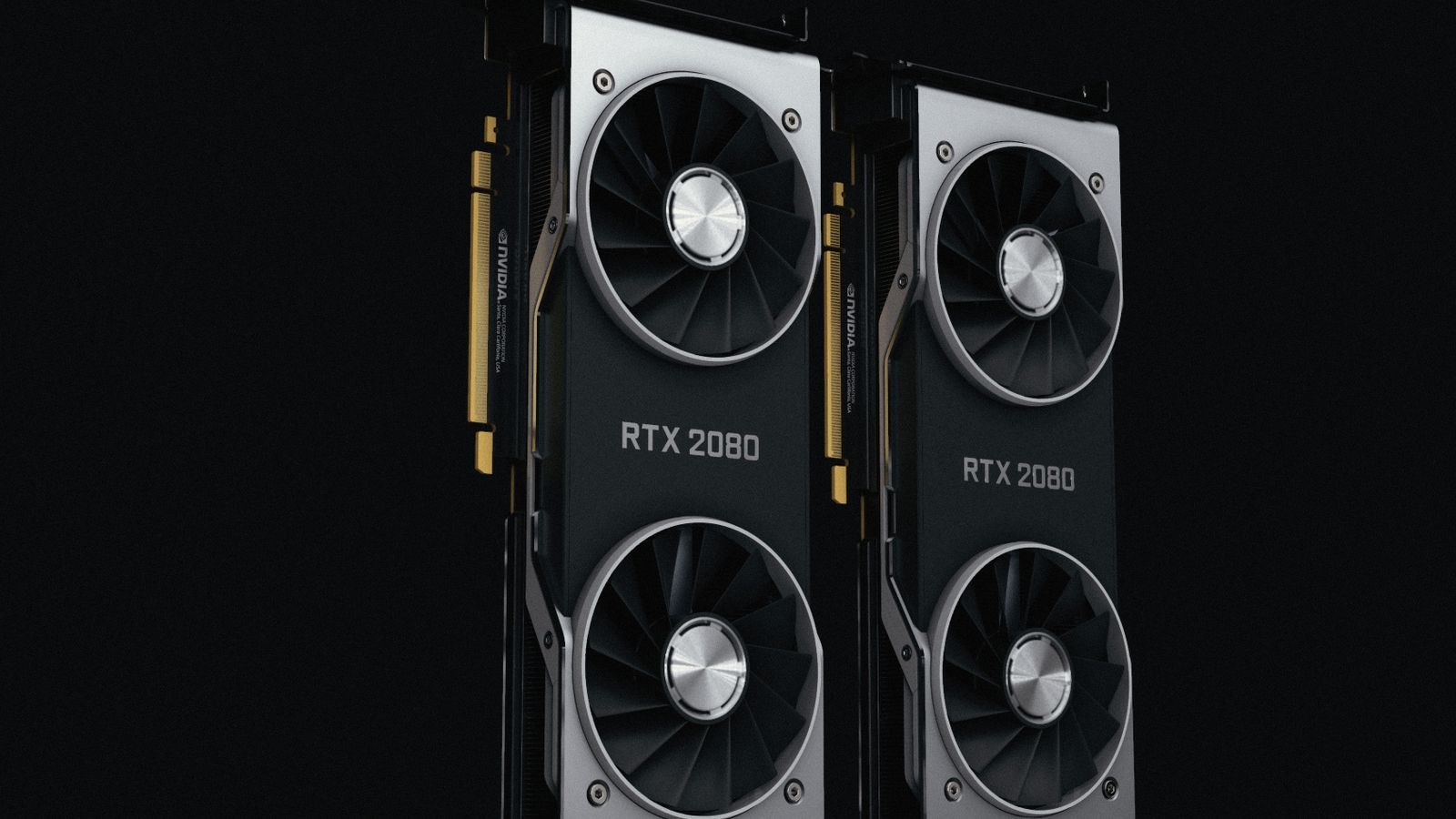
DLSS is exclusive to Nvidia cards because it relies on their Tensor cores. If you want upscaling that leans on this dedicated silicon, you need a card in the RTX family. Shoppers focused on this feature should look at the best GPUs with DLSS support, and more broadly at the best RTX series GPUs across price tiers, since DLSS availability and quality have improved with each generation.
FSR Explained: AMD’s Open Alternative
FidelityFX Super Resolution, or FSR, is AMD’s upscaling technology, and its defining trait is that it is open and hardware-agnostic. Early versions of FSR used spatial upscaling that did not require any special cores, meaning it ran on a huge range of hardware, including older Nvidia cards and even some integrated graphics. Later versions moved to temporal upscaling that samples data across multiple frames, closing much of the quality gap with DLSS while still running broadly.
Because FSR does not depend on proprietary hardware, developers can add it to games without locking out players on competing cards. That openness is a genuine advantage for anyone building on a budget or running an older system. If you are shopping in the AMD ecosystem, it is worth comparing the best AMD graphics cards to see which models pair strong raw performance with the latest FSR support.
DLSS vs FSR: How They Compare
In direct comparisons, DLSS generally holds a small image-quality lead, particularly in how cleanly it handles fine detail and motion, thanks to its neural-network approach and dedicated hardware. FSR has narrowed that gap considerably and wins on compatibility. In practice, most players cannot tell the two apart at Quality settings during normal gameplay. The deciding factor is usually which card you own, since DLSS is locked to Nvidia and FSR runs almost everywhere.
How Upscaling Interacts With Ray Tracing
This is the part that ties everything together. Ray tracing takes frames away, and upscaling gives them back. The two were practically made for each other. A game that runs at 40 frames per second with ray tracing enabled at native resolution might jump back to a smooth, playable rate once DLSS or FSR Quality mode is switched on. This is exactly how demanding titles achieve high frame rates with all the lighting bells and whistles turned up.
The upshot is that you should not evaluate ray tracing performance in isolation. A card that looks marginal with ray tracing at native resolution may be perfectly comfortable once upscaling is factored in. This matters most at higher resolutions, where the pixel count is enormous and upscaling delivers its biggest gains. Anyone chasing crisp visuals at the top end should study the best GPUs for 4K gaming, because at that resolution upscaling is less of a bonus and closer to a requirement for smooth ray-traced play.
Choosing Settings for Your Resolution
Your monitor’s resolution should shape how you use these features. At 1080p, upscaling has less raw data to work with, so lower-quality presets can look soft; stick to Quality mode or leave upscaling off if your card is already fast enough. At 1440p, upscaling hits a sweet spot, offering a strong frame-rate boost with minimal visible loss. At 4K, the difference between native and upscaled is hardest to spot, and the performance savings are largest, making DLSS or FSR almost mandatory for ray-traced gaming.
A Simple Decision Framework
- Competitive shooters: Skip ray tracing, use upscaling only if you need extra frames to hit a high refresh target.
- Cinematic single-player games: Enable ray tracing for the visual payoff and pair it with Quality-mode upscaling to recover frames.
- Older or budget hardware: Lean on FSR for broad compatibility and treat ray tracing as optional eye candy.
- High-end Nvidia builds: Combine ray tracing, DLSS Quality and frame generation for the smoothest premium experience.
Performance Cost in Real Terms
It helps to translate these features into the frames you will actually feel. Enabling ray-traced reflections alone might trim ten to fifteen percent off your frame rate, a cost many players happily absorb for the visual gain. Layering multiple ray-traced effects together can push that penalty past a third, and full path tracing can halve your frame rate or worse. Those numbers are exactly why upscaling exists: DLSS or FSR Quality mode typically recovers a large share of what ray tracing takes, and Performance mode can more than double your frame rate from the upscaled base. The practical result is that the two technologies together often land you back near, or even above, your native rasterized frame rate while delivering far better lighting.
This is why a card’s raw ray tracing benchmark can be misleading in isolation. A model that looks borderline at native resolution may be genuinely comfortable once upscaling is switched on, especially at higher resolutions where the reconstruction has more room to work. When you read reviews, look for numbers that reflect ray tracing and upscaling used together, since that is how you will actually play. Judging a card on native ray tracing alone tells you only half the story and can steer you toward overspending on horsepower that upscaling would have provided for free.
Frequently Asked Questions
Does upscaling make games look blurry?
At higher quality presets, most players cannot distinguish upscaled images from native during normal play. Blurriness usually appears only at aggressive Performance or Ultra Performance settings, or at low base resolutions where there is little detail for the algorithm to reconstruct.
Can I use DLSS on an AMD card?
No. DLSS requires Nvidia’s dedicated hardware and is exclusive to RTX cards. AMD users rely on FSR instead, which is one reason FSR’s open approach is so valuable across the wider market.
Is ray tracing worth turning on for competitive play?
Generally no. Competitive games reward high, stable frame rates and clear visibility over cinematic lighting. The frame-rate cost of ray tracing rarely justifies the visual gain when you are focused on reaction time and consistency.
Does frame generation add input lag?
Frame generation inserts AI-created frames, which can add a small amount of latency. It works best when your base frame rate is already solid, so the generated frames smooth motion rather than mask a sluggish starting point. For fast games, keep an eye on latency-reduction options.
Final Thoughts
Ray tracing, DLSS and FSR are not competing features you must choose between. Ray tracing is the visual upgrade that costs performance, while DLSS and FSR are the tools that hand that performance back. The smartest approach in 2026 is to match these technologies to how you actually play: reach for ray tracing in cinematic single-player titles, lean on upscaling to keep frame rates smooth, and pick a card whose ecosystem fits your priorities. Understand what each one costs and delivers, and you will spend your budget on capability you will genuinely use rather than a spec-sheet feature that stays switched off.