Owen Bradley
 Almost every ceiling fan has a small switch on the motor housing that half the people who own one have never touched. That switch reverses the blade rotation, and using it correctly turns a summer-only appliance into something that helps all year. Set ceiling fan direction the right way and you get a cooling breeze in warm months and gentle warm-air recirculation in cold ones, often letting you nudge the thermostat a few degrees in either direction. This guide covers which way the blades should turn in each season, how to flip the switch safely, how to confirm you got it right, and what to do when your fan has no switch at all.
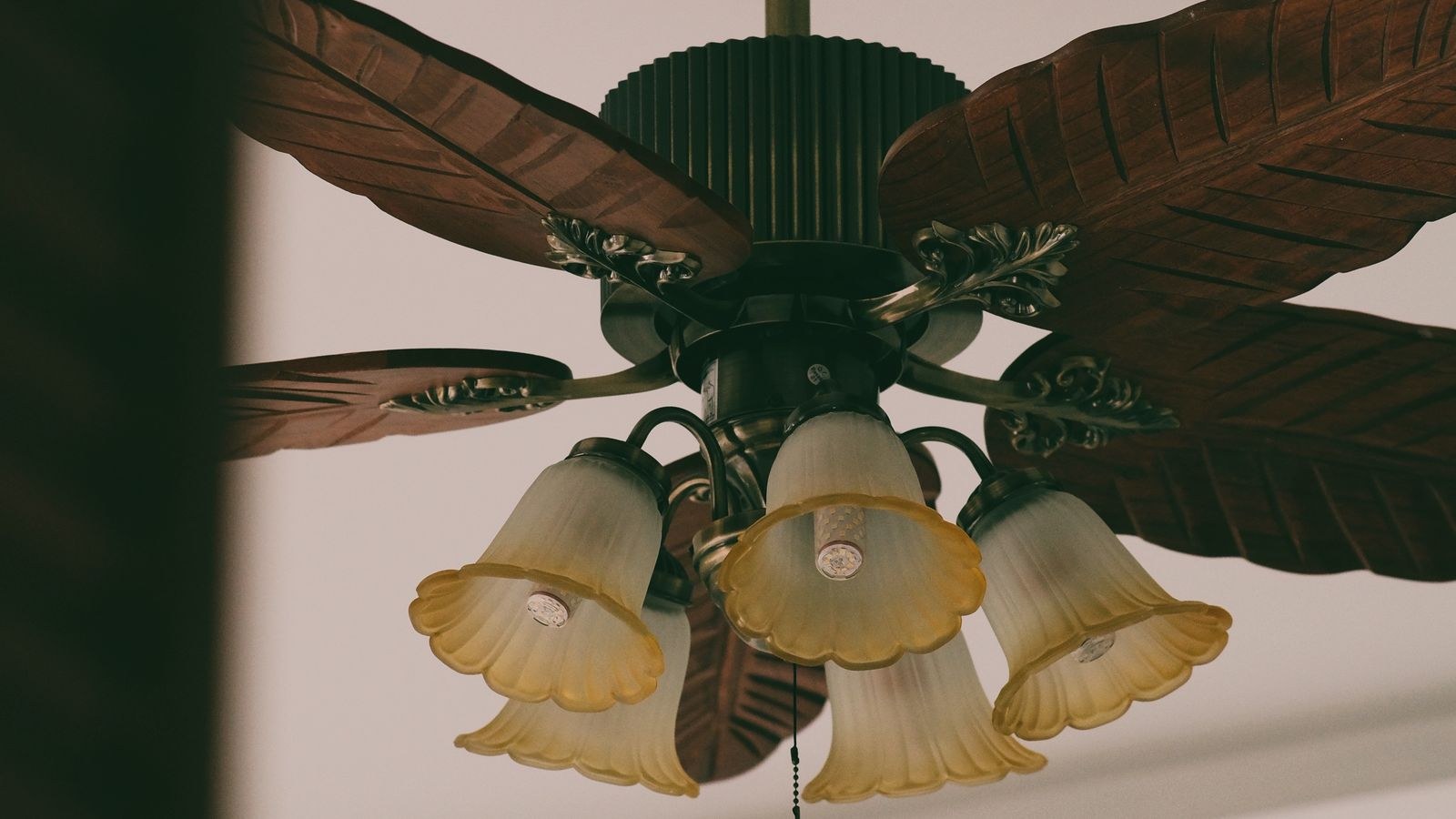
The Rule in One Sentence Each Way
Summer: counterclockwise, viewed from below, at medium or high speed. The angled blades push air straight down, creating a column of moving air that carries heat away from your skin and speeds evaporation. That wind-chill effect can make a room feel three to four degrees cooler without lowering the actual air temperature by a single degree.
Winter: clockwise, viewed from below, at the lowest speed. The blades now draw air up the middle of the room, push it outward along the ceiling and send it gently down the walls. Warm air that had collected at ceiling level gets folded back into the living space without you ever feeling a draught.
The key point in winter is speed. Run the fan fast in reverse and you still create noticeable air movement, which feels chilly and defeats the purpose. Low and slow is what makes it work.
Why It Actually Works
Warm air is less dense than cool air, so it rises. In a room with an eight-foot ceiling the temperature difference between floor and ceiling might be a few degrees; in a room with a vaulted or ten-foot ceiling it can be considerably more. During the heating season, a large share of the heat you are paying for sits above head height doing nothing.
Reversing the fan at low speed breaks that stratification without producing a felt breeze. The air travels up the centre, spreads across the ceiling, and descends along the cooler perimeter walls, mixing gently. In summer the physics run the other way: a fan cools people, not rooms, by moving air across skin. That is exactly why leaving a fan running in an empty room wastes electricity no matter which direction it turns.
What You Need
- A stable step ladder tall enough that you are not stretching at the top.
- A second person to steady the ladder, especially on carpet or uneven flooring.
- A dry microfibre cloth or an old pillowcase for cleaning the blades while you are up there.
- The remote or wall control if your fan is controlled electronically.
Step-by-Step: Reversing Your Ceiling Fan
- Turn the fan off and wait for it to stop completely. Never flip the reverse switch on a spinning fan. On many motors this can damage the winding or the control module, and on all of them it is a hand-injury risk.
- Cut the power at the wall switch. Pull the chain or use the wall control, and if you want to be thorough, switch off the breaker for the circuit. That matters most if you are also cleaning the blades or the light fitting.
- Set up the ladder squarely. Position it so you can reach the motor housing without leaning sideways. The most common ceiling fan injury is a fall, not a shock.
- Find the reverse switch. Look on the side of the motor housing, the round or cylindrical body above the blades. It is usually a small black or silver slider, sometimes horizontal, sometimes vertical, occasionally hidden just above the light kit collar. It may be marked with arrows, or with an L and R, or with nothing at all.
- Clean the blades before you flip it. Slide an old pillowcase over each blade and pull it back towards you so the dust stays inside the fabric rather than raining onto the furniture. Seasonal reversal is the natural reminder to do this twice a year.
- Slide the switch to the opposite position. Push it firmly all the way across until it clicks. A half-seated switch can leave the motor unable to start, which owners often mistake for a fault.
- Restore power and start on low. Step down first, then switch on. Starting at the lowest speed lets you listen for any new wobble or noise.
- Confirm the direction from directly below. Stand under the fan and watch the leading edge of the blades. Counterclockwise means the blades sweep from the twelve o’clock position towards nine o’clock. Clockwise is the reverse.
- Do the feel test. Stand under the fan on medium speed. If you feel a distinct downward breeze on your face and arms, you are in summer mode. If you feel almost nothing directly below but notice gentle movement near the walls, you are in winter mode.
- Set the speed for the season. Medium to high in summer, lowest setting in winter.
- Adjust your thermostat to capture the benefit. In summer, raise the setting a few degrees and let the breeze cover the difference. In winter, try lowering it a degree or two once the fan has been mixing the air for an hour.
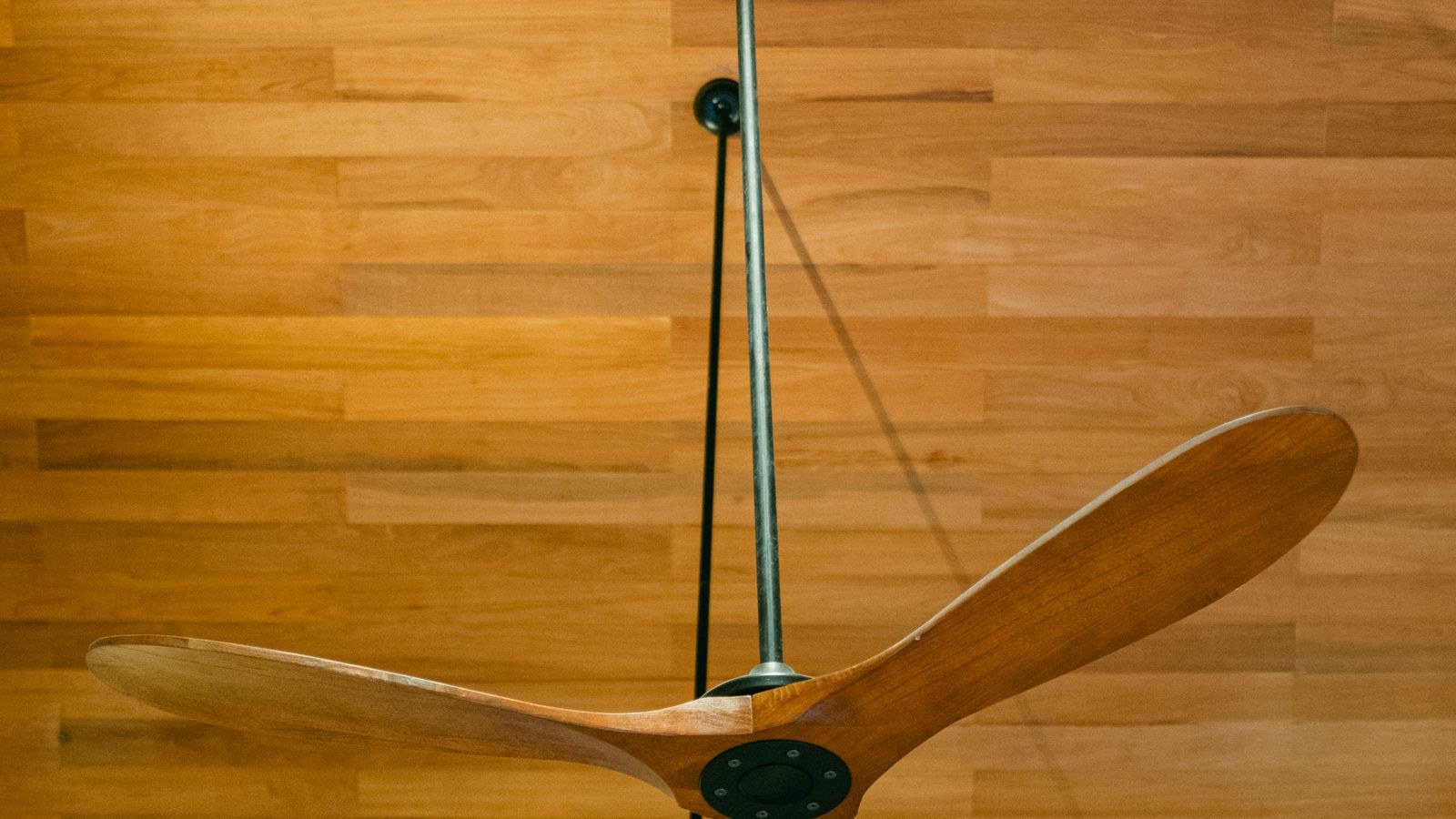
Fans Without a Physical Switch
Remote-controlled and smart fans usually reverse electronically instead. Look for a dedicated reverse button on the handset, often marked with a curved arrow, or hold the fan speed button for several seconds until the motor pauses and restarts in the other direction. On app-controlled models the setting is typically under fan direction or seasonal mode in the device settings.
Some wall controls include a reverse rocker beside the speed slider. And a small number of older or budget fans genuinely cannot reverse at all. If you have checked the housing, the remote and the wall plate with no result, consult the manual before assuming the switch is broken; on many DC motor fans the reverse function is available only through the remote, and the motor housing is completely bare.
When Reversing Alone Is Not Enough
Direction only helps if the fan is the right size and moves enough air for the room. A 42-inch fan in a large open-plan living room will never create the air movement you need in either season. Blade span should be matched to room square footage, and mounting height matters just as much, with the blades ideally 8 to 9 feet above the floor and at least 18 inches from the nearest wall. Our ceiling fan sizing guide maps room dimensions to blade span and downrod length.
Airflow itself is measured in cubic feet per minute, and it varies enormously between models with identical blade spans. If your fan feels weak even at full speed in summer mode, compare its rating against the high-output models in our roundup of the best CFM ceiling fans. For a room where cooling is the priority, the designs in our best ceiling fans for cooling a room list are built around blade pitch and motor strength.
Noise becomes the deciding factor overnight, where a fan that hums is worse than no fan at all. Our comparison of the best ceiling fans for bedroom use focuses on quiet operation at low speed, which is exactly the setting winter mode requires. If you plan to run a fan for long stretches in both seasons, brushless motors are worth the premium, and the models in our best DC ceiling fans roundup use roughly a third of the power of a comparable AC motor while running noticeably quieter.
Common Mistakes to Avoid
- Flipping the switch while the fan spins. Always wait for a complete stop.
- Running reverse at high speed in winter. The draught cancels out the benefit entirely.
- Leaving fans on in empty rooms. In summer a fan cools skin, not air, so it does nothing without someone there.
- Judging direction from the side. Rotation looks reversed unless you are standing directly underneath.
- Forgetting to change the thermostat. The energy saving comes from the thermostat adjustment, not the fan itself.
- Skipping blade cleaning. Dust buildup unbalances the blades and causes wobble.
Frequently Asked Questions
Which way should a ceiling fan turn in summer?
Counterclockwise when viewed from below, at medium or high speed, so it pushes air straight down and creates a cooling wind-chill effect on your skin.
Does running a fan in reverse in winter really save money?
It can, in rooms with high or vaulted ceilings where warm air stratifies noticeably. The saving comes from being able to lower the thermostat a degree or two, not from the fan itself.
How do I tell which direction my fan is spinning?
Stand directly beneath it and watch the leading edge of one blade. Feeling for a downdraught is an even simpler test: strong breeze below means summer mode.
My fan has no reverse switch. What now?
Check the remote for a reverse button or a long-press function on the speed control, then the wall plate. A few basic models genuinely cannot reverse at all.
Should the fan run all winter?
Only in rooms you occupy, and only on the lowest speed. It costs very little to run at that setting and keeps warm air from pooling uselessly at the ceiling.
Final Thoughts
Setting ceiling fan direction is a thirty-second job with year-round payback. Counterclockwise and faster in summer for a direct cooling breeze, clockwise and slow in winter to fold warm air back down without a draught. Stop the fan before flipping the switch, verify the direction from underneath, clean the blades while you are on the ladder, and adjust the thermostat to bank the benefit. Make it a twice-yearly habit tied to the change of season and your fan will earn its keep in every month of 2026.