Sofia Marchetti
 When summer heat settles in, the fastest way to make a room comfortable without running up a huge cooling bill is a well-chosen ceiling fan. The best ceiling fans for cooling a room move enough air to create a genuine breeze on your skin, which makes you feel several degrees cooler even when the thermostat has not budged. Paired with air conditioning, a good fan lets you raise the set point and still stay comfortable, saving energy all season.
The challenge is that not all fans cool equally. Airflow depends on blade size, motor strength, mounting height, and how well the fan matches your room. This guide breaks down how to pick the best ceiling fans for cooling a room by focusing on the factors that actually determine cooling power, so you can shop with confidence rather than guessing from a product photo.




How Ceiling Fans Actually Cool You
It is worth understanding what a ceiling fan does and does not do. A fan does not lower the air temperature in a room. Instead, it moves air across your skin, speeding up the evaporation of moisture and carrying heat away from your body. This wind-chill effect can make you feel up to four degrees cooler. The stronger the airflow, the more pronounced the cooling sensation.
Because the effect depends on air actually reaching you, airflow strength is everything. A fan with a bright, powerful motor like the Philips 5400 CFM Fan pushes a lot of air with multiple speed settings, giving you a strong breeze on hot days and a gentle one when you just want circulation.
CFM: The Cooling Power Metric
CFM (cubic feet per minute) is the measure of how much air a fan moves at top speed, and it is the number that most directly predicts cooling performance. When comparing fans, prioritize CFM over blade count or speed settings.
- Small rooms (up to 150 sq ft): 2,000 to 4,000 CFM is plenty.
- Medium rooms (150 to 300 sq ft): Look for 4,000 to 6,000 CFM.
- Large rooms (over 300 sq ft): 6,000 CFM or more, or consider two fans.
An eight-blade fan built for big spaces like the Fanbulous 65-inch Fan delivers the high airflow a great room needs, while a smaller room is well served by a more modest fan. If your space is on the compact side, our guide to the best ceiling fans for small room can help you avoid buying more fan than you need.
Blade Span: Match Size to the Room
Blade span is the diameter of the fan, and it must scale with the room for effective cooling. A fan that is too small will not move enough air, while one that is too large in a small room can feel overpowering. Use these guidelines:
- Up to 100 sq ft: 29 to 42 inch blades.
- 100 to 200 sq ft: 44 to 50 inch blades.
- 200 to 400 sq ft: 52 to 56 inch blades.
- Over 400 sq ft: 60 inches or larger.
A 52-inch fan such as the Fanbulous 52-inch Low Profile covers most living rooms and master bedrooms, while a 44-inch model like the DREO 44-inch Flush Mount fits medium rooms nicely. For a very small room or a spot where headroom is tight, a compact 20-inch flush-mount fan still adds welcome circulation.
Motor Type and Efficiency
The motor determines how much air the fan moves, how quietly it runs, and how much electricity it uses.
DC Motors
DC-motor fans are the top choice for cooling. They deliver strong airflow while using far less energy than AC motors, run very quietly, and usually offer more speeds and a smooth reverse function. A quiet DC fan like the DREO Smart 42-inch DC Fan keeps a room cool without the hum, and it can be controlled by remote, app, or voice.
AC Motors
AC motors are more affordable up front and reliably move air, but they use more power and tend to be a bit louder. For a guest room or budget project, an AC fan can still cool effectively; it just costs a little more to run over the years.
Mounting Height and Ceiling Type
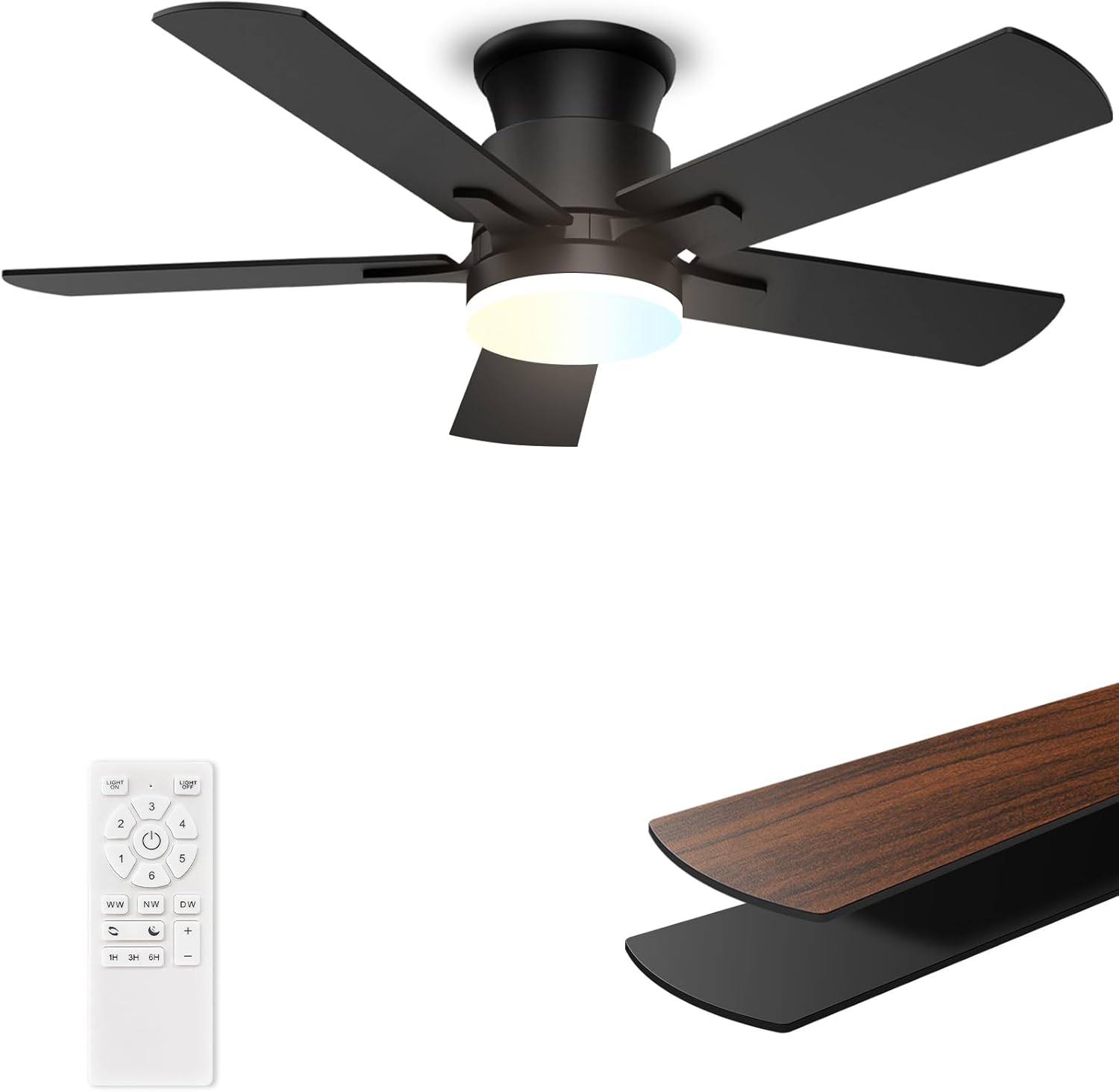
Cooling depends on air reaching the people below, so mounting height matters. Ideally, blades sit 8 to 9 feet above the floor. On standard 8-foot ceilings, a low-profile or flush-mount fan preserves headroom while keeping the blades in the effective zone. A hugger-style fan like the 42-inch Flush Mount Fan is designed exactly for these ceilings and even carries an indoor/outdoor rating for covered patios.
For tall or vaulted ceilings, use a downrod to drop the fan into the occupied zone, otherwise the breeze dissipates before it reaches you. And if the fan is going on a porch or in a damp space, confirm it is damp-rated so it can handle the humidity of a covered outdoor area.
Helpful Features for Cooling
Multiple Speeds and Remote Control
More speed settings give you finer control over the breeze, from a gentle stir to a strong gust. A remote or app makes it easy to adjust airflow without getting up, and smart models integrate with voice assistants for hands-free control.
Reversible Motor
A reversible motor is valuable year-round. In summer, the fan spins counterclockwise to push cooling air down. In winter, reverse it to clockwise at low speed to circulate warm air trapped at the ceiling, improving comfort and cutting heating costs.
Retractable and Specialty Blades
Some fans offer unique designs, such as retractable blades that tuck away when the fan is off. A retractable-blade fan blends the look of a flush-mount ceiling light with the cooling of a full fan, a nice option for dining and living rooms where aesthetics matter.
Placement for Maximum Cooling
Where you install the fan is just as important as which fan you choose. Center it over the main seating or sleeping area so the breeze falls where you actually spend time, not over an empty corner. In a bedroom, position it over the foot of the bed rather than directly above the headboard so the airflow reaches you without blowing straight on your face all night. Keep at least 18 to 24 inches of clearance between the blade tips and any wall, and avoid placing a fan too close to a doorway or window where drafts can disrupt the airflow pattern. Getting placement right ensures the cooling breeze you paid for actually reaches your skin, which is the whole point of running a fan in the first place.
Budget Guidance
Cooling fans range from affordable AC models to premium smart DC fans. Budget picks move plenty of air and are fine for occasional-use rooms, though they run louder and cost more to operate. Mid-range DC fans, which represent the best value for most homes, deliver strong quiet airflow and lower energy bills that offset their higher price over time. Premium fans add smart controls, larger spans, and refined designs. If the fan will run daily through the summer, the energy savings of a DC motor usually justify spending a bit more. A modern flush-mount option like the Asyko 46-inch Low Profile offers quiet, dimmable performance at a reasonable price.
Installation and Maintenance Basics
- Use a fan-rated ceiling box that can support the weight and movement; a standard light box is not sufficient.
- Balance the blades with the included kit to eliminate wobble, which improves both airflow and quiet.
- Set the motor to counterclockwise in summer for cooling and clockwise in winter for warmth.
- Dust the blades regularly, since buildup adds drag and reduces air movement.
Frequently Asked Questions
Does a ceiling fan really cool a room?
It cools the people in the room rather than the air itself, by creating a wind-chill effect on your skin. This lets you feel comfortable at a higher thermostat setting, which saves on cooling costs.
How much CFM do I need to cool a room?
For a medium room, aim for 4,000 to 6,000 CFM. Larger rooms need 6,000 CFM or more. Higher CFM means a stronger, more noticeable breeze.
Should I run my fan and AC together?
Yes. Running a fan lets you raise the thermostat several degrees while staying comfortable, so the two together are more efficient than air conditioning alone.
Which way should the fan spin in summer?
Counterclockwise when viewed from below. This pushes air straight down to create the cooling breeze you want on hot days.
Is a bigger fan always better for cooling?
Not necessarily. The fan should be sized to the room. An oversized fan in a small space can feel overpowering and force you to run it on the lowest setting, while an undersized fan in a large room will not move enough air. Match the blade span to the square footage for the best result.
Final Thoughts
The best ceiling fans for cooling a room combine high CFM airflow, a blade span matched to the space, an efficient motor, and proper mounting height so the breeze reaches you. Get those fundamentals right and you will stay comfortable all summer while spending less on cooling. To keep researching, browse our roundup of the best ceiling fans overall, or explore the best ceiling fans for bedroom for quiet nighttime comfort. For humid spaces, our best bathroom ceiling fans guide covers moisture-rated options.