Owen Bradley
 Fan sizing is where most ceiling fan purchases go wrong, and the mistake is almost always the same: the buyer picks the fan they like the look of and then hopes it suits the room. Blade span, however, is not a styling choice. It determines how far the airflow travels, how evenly it lands, how much noise the fan makes reaching a given output, and whether the room feels pleasantly breezy or like a wind tunnel. This guide explains how fan sizing really works, gives you the measurements to match span to square footage, and covers the height and clearance rules that decide which mounting hardware you need.
Start by Measuring the Room, Not the Fan
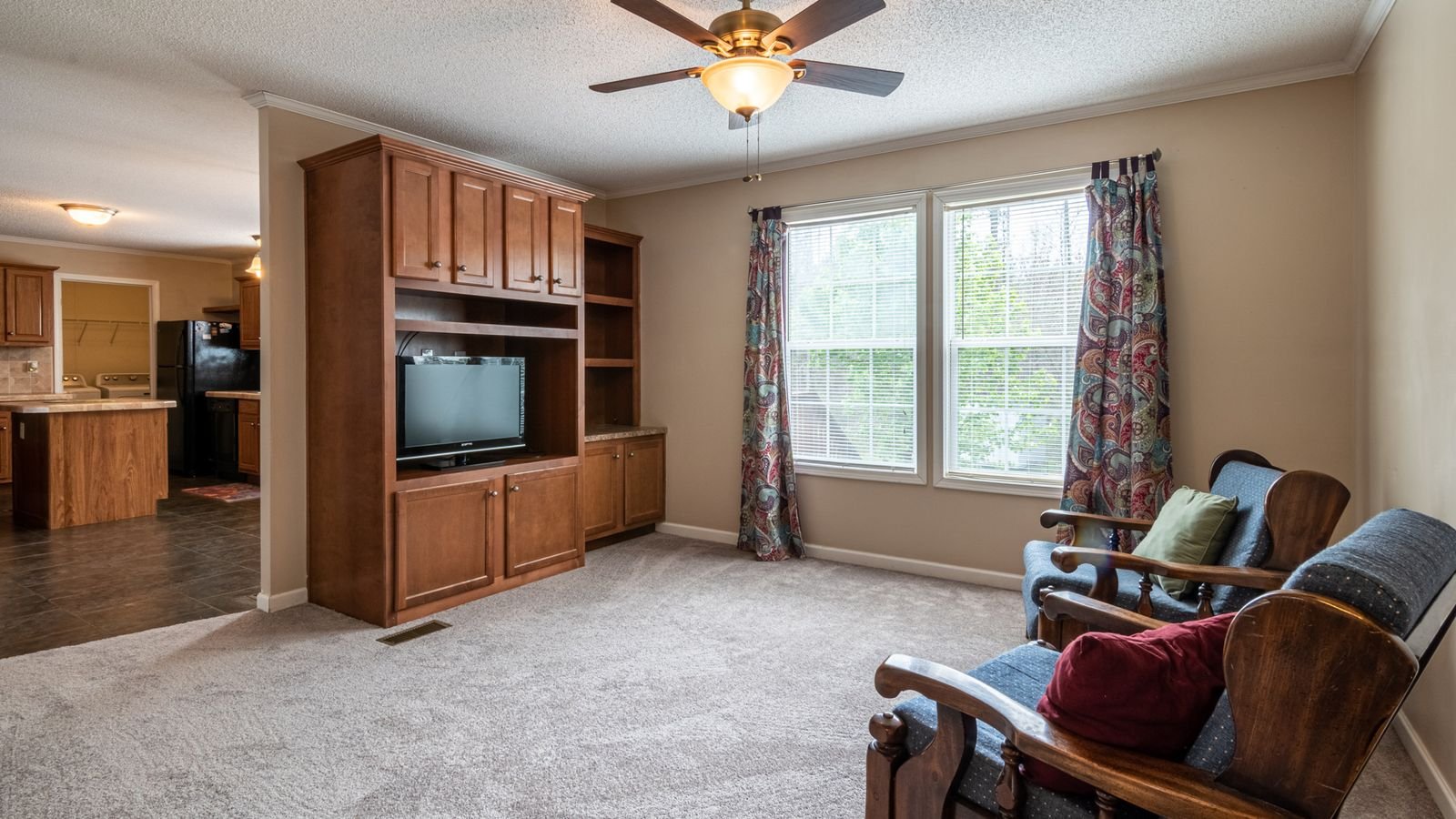
Sizing begins with square footage. Multiply the length of the room by the width. For irregular or L-shaped rooms, break the floor plan into rectangles, calculate each, and add them together. For open-plan spaces, do not treat the whole floor as one room. Measure the zone the fan is actually meant to serve, because airflow does not travel usefully across a dining area into a distant kitchen.
Then measure ceiling height from floor to ceiling at the mounting point. On a sloped ceiling, measure at the exact spot where the fan will hang, not the average. These two numbers, square footage and ceiling height, determine blade span and downrod length respectively, and they are independent decisions that people frequently conflate.
Blade Span by Room Size
Blade span is measured as the full diameter of the circle the blades sweep, tip to tip. On fans with an even number of blades, measure straight across from one tip to the opposite tip. With an odd number, measure from the centre of the fan to one blade tip and double it. The standard sizing bands look like this:
- Up to 75 sq ft: 29 to 36 inch span. Suits small bathrooms, closets, laundry rooms.
- 76 to 144 sq ft: 36 to 44 inches. Home offices, nurseries, small bedrooms.
- 145 to 225 sq ft: 44 to 52 inches. Standard bedrooms, dining rooms, dens.
- 226 to 400 sq ft: 52 to 60 inches. Living rooms, large primary bedrooms.
- 400 to 600 sq ft: 60 to 72 inches, or two mid-size fans.
- Over 600 sq ft: 72 inches and up, or multiple fans spaced across the ceiling.
The 52 inch size is the most common domestic span for good reason: it fits the majority of bedrooms and mid-size living rooms with room to spare. If your measurements land in that band, the roundup of the best 52 inch ceiling fans covers the field thoroughly. For genuinely large open-plan rooms, the guide to the best 72 inch ceiling fans deals with the structural and hardware considerations those big spans introduce.
When to Use Two Fans Instead of One
Beyond roughly 500 square feet, or in any room longer than about 25 feet, a single fan struggles regardless of span. Airflow falls off rapidly past the blade circumference, so an enormous fan in a long room creates a strong column of air in the middle and dead zones at both ends. Two mid-size fans, each sized for its half of the space, deliver more even coverage, cost less to run at moderate speed than one large fan at high speed, and look more balanced on a long ceiling.
Space them so each fan sits over the centre of its zone, with at least the diameter of one fan between them. In rooms with distinct furniture groupings, position each fan over a grouping rather than dividing the ceiling arithmetically.
Ceiling Height and Downrod Length
The target is to have the blades sit 8 to 9 feet above the floor. That is the height at which the downdraft has room to develop and still reaches people standing or sitting below. The absolute minimum clearance is 7 feet from floor to blade, which is the figure to respect on low ceilings.
- 8 foot ceiling: use a flush or hugger mount, no downrod.
- 9 foot ceiling: 6 inch downrod, usually the one supplied in the box.
- 10 foot ceiling: 12 inch downrod.
- 12 foot ceiling: 24 inch downrod.
- 14 foot ceiling: 36 inch downrod.
- 16 foot ceiling: 48 to 60 inch downrod.
Flush mounting on a high ceiling is the single most common sizing error after choosing the wrong span. The fan looks neat and moves plenty of air, but the airflow dissipates long before it reaches head height, so the room never feels cooler. If your ceilings are over 10 feet, the guide to the best ceiling fans for high ceilings covers downrod compatibility and slope-mount limits. At the other extreme, rooms with 8 foot ceilings or exposed beams need the best low profile ceiling fans, which are designed to hug the ceiling without sacrificing clearance.
Wall Clearance and Obstructions
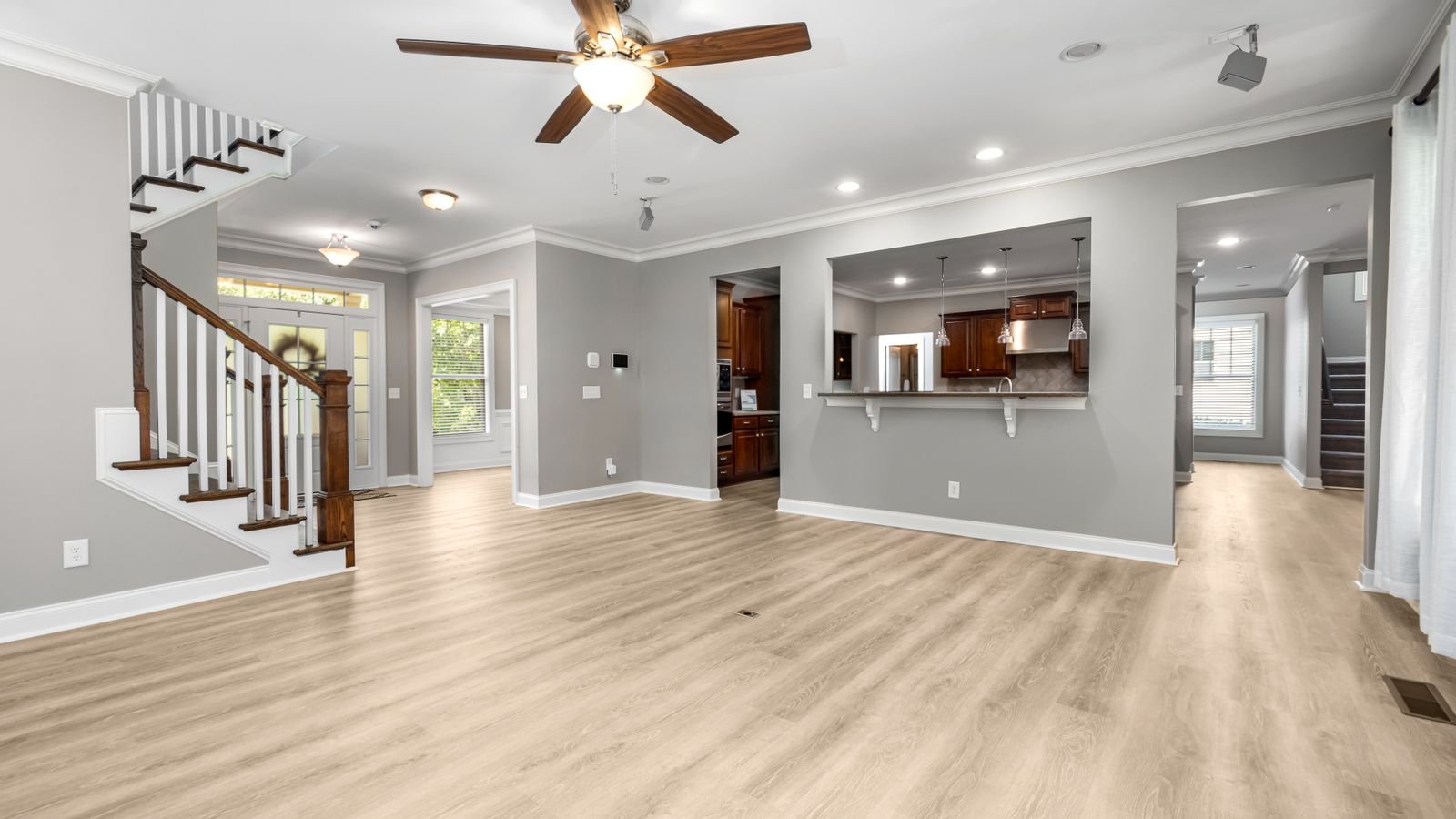
Blade tips should sit at least 18 inches from the nearest wall, and 24 inches is better in rooms where the fan runs at high speed. Too close and the airflow reflects off the wall back into the blades, creating turbulence, noise and a measurable drop in output.
Check for obstructions in the swept circle before buying: sloped ceiling planes, exposed beams, tall wardrobes, canopy beds, pendant lights and door swings on wall-mounted cupboards. A fan that clears the ceiling but clips a beam edge on one side will produce a rhythmic thump and uneven airflow that no amount of balancing will fix.
Airflow, CFM and Why Span Is Only Half the Story
Two fans of identical span can differ enormously in output. Blade pitch, the angle at which the blade is set, is the main reason. A pitch below 10 degrees moves very little air no matter how fast the fan turns; 12 to 15 degrees is the effective range for most domestic fans. Motor torque has to match the pitch, because a steep blade on a weak motor simply slows down.
This is why CFM is the number to compare within a size class. A well-engineered 52 inch fan can beat a poorly designed 60 inch one outright. Efficiency, measured in CFM per watt, tells you what that airflow costs to produce. The comparison of the best CFM ceiling fans is useful when you have fixed your span and need to separate strong performers from weak ones.
Does Blade Count Change the Sizing Maths?
Not in the way people expect. Adding blades adds drag, which the motor must overcome, so a five-blade fan does not automatically out-move a three-blade one. What blade count really changes is sound character and appearance. Fewer, wider blades on a strong motor typically move more air per watt and produce a smoother, deeper airflow, which is why many high-efficiency DC fans use three blades. More blades tend to produce a softer, more diffuse breeze and a slightly quieter tone at low speed.
If efficiency and a modern look are priorities, the roundup of the best 3 blade ceiling fans shows how far the minimal-blade designs have come. Whichever count you choose, size the span by room area first and treat blade count as a secondary preference.
A Quick Sizing Checklist
- Measure length by width and calculate square footage for the zone the fan will serve.
- Match that figure to the blade span band above.
- Measure floor-to-ceiling height at the mounting point.
- Choose the downrod that puts blades 8 to 9 feet off the floor.
- Confirm at least 18 inches of clearance from blade tip to the nearest wall.
- Check the swept circle for beams, slopes, wardrobes and light fittings.
- Compare CFM and CFM per watt among the fans left in your size band.
- Verify the ceiling box is fan-rated and joist-braced before installation day.
Common Sizing Mistakes
- Buying a large fan for a small room on the theory that more airflow is always better. It is not: an oversized fan is unusable above its lowest speed.
- Sizing an open-plan area as a single room instead of by zone.
- Using the supplied downrod on a 12 foot ceiling because it came in the box.
- Forgetting that a light kit adds several inches to the drop and can push blades below the 7 foot minimum.
- Assuming blade span alone predicts airflow and ignoring pitch and CFM.
Frequently Asked Questions
How do I measure blade span accurately?
On even-bladed fans, measure tip to tip across the centre. On odd-bladed fans, measure from the exact centre of the motor housing to one blade tip and multiply by two.
Can a fan be too big for a room?
Yes. An oversized fan creates uncomfortable turbulence, disturbs papers and fabrics, and visually overwhelms a small ceiling. You end up running it only on the lowest setting, which wastes the capacity you paid for.
What if my room falls between two size bands?
Go with the larger span if the ceiling is 9 feet or higher and the room is open. Go smaller if the ceiling is low, the room is cluttered, or the fan sits close to a wall.
Does a longer downrod reduce stability?
Not if it is the manufacturer’s own rod and the ceiling box is properly braced. Long downrods on very high ceilings can sway slightly in airflow, which is normal, but excessive movement points to an unbraced box rather than the rod itself.
Do outdoor and covered patio spaces need different sizing?
The square footage maths is the same, but outdoor air moves and disperses more freely, so size up one band and choose a damp or wet rated model to handle the conditions.
Final Thoughts
Getting fan sizing right is unglamorous work that pays off every day the fan runs. Measure the room, match the span, choose the downrod that puts the blades at the right height, and then compare airflow within that size band rather than across it. A correctly sized fan feels almost invisible, moving a steady, even breeze at a speed you never think about. An incorrectly sized one announces itself constantly, and no amount of style compensates for that.