Owen Bradley
 Window coverings are one of the few decisions that affect how a room looks, how well you sleep, how much you spend on heating and whether the neighbours can see in. Curtains, blinds and shades each solve those problems differently, and the marketing around them tends to blur the distinctions. This comparison separates them clearly: what each one is, where each genuinely outperforms the others on light control, privacy, insulation and cost, and which options a renter can install without touching the wall. By the end you should know not only which type suits your windows but whether the right answer, as it often is, involves layering two of them.
Defining the Three Categories
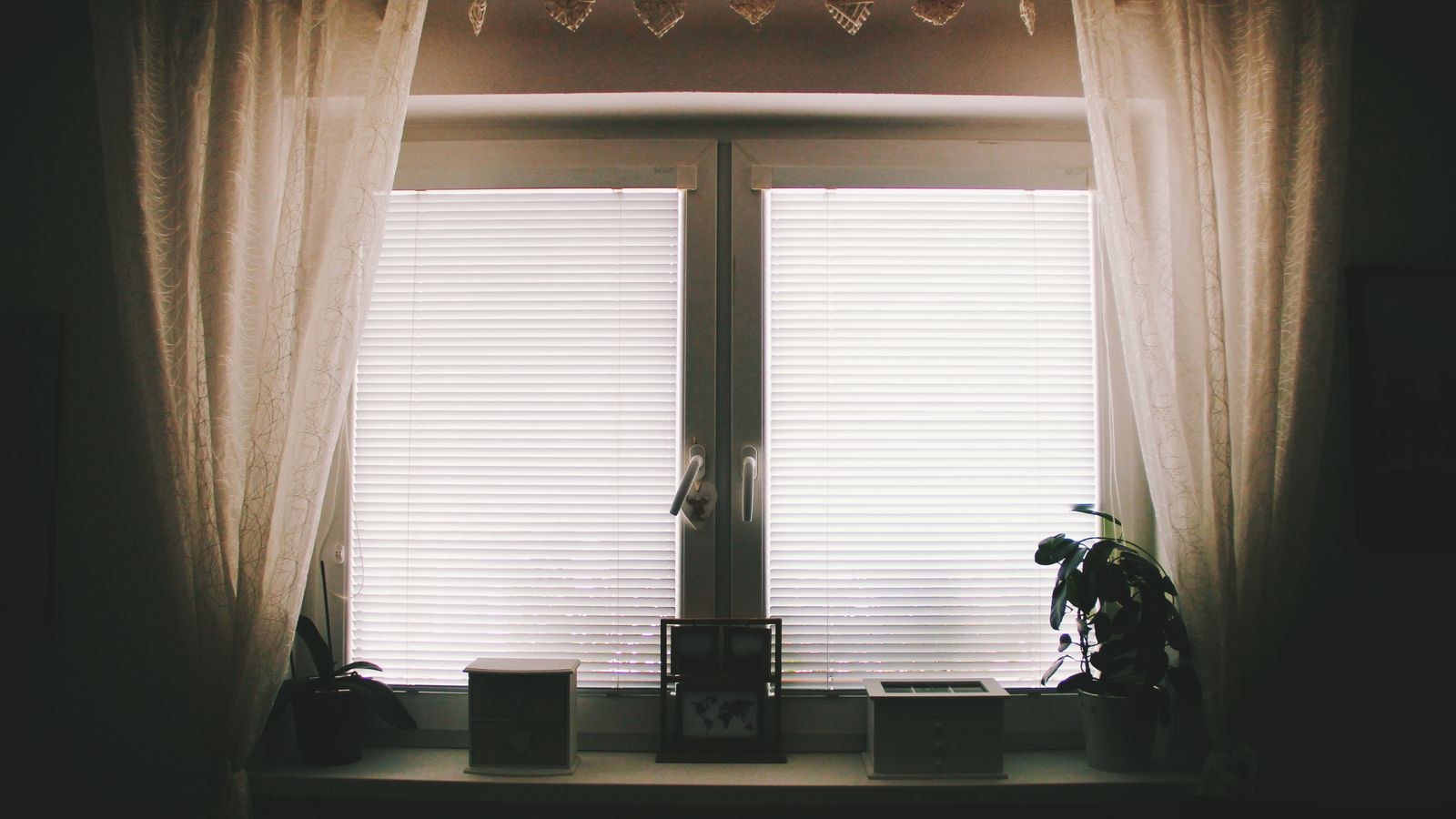
The terms get used loosely, so it helps to fix the definitions before comparing anything. Curtains (and drapes, which are simply heavier and usually lined) are panels of fabric hung from a rod or track that draw sideways. Blinds are hard window coverings made of individual slats or vanes that tilt to control light and raise to stack out of the way. Shades are soft coverings made from a single continuous piece of fabric or a cellular structure that rolls, folds or gathers upward.
The functional difference that matters most is the tilt. Only blinds let you adjust light and privacy without changing how much of the window is covered. Curtains and shades operate as a spectrum between open and closed, which is simpler but less nuanced.
Light Control
If your priority is precise daytime light, blinds win outright. Tilting the slats lets you bounce light toward the ceiling, cut glare on a screen, or close down to near darkness while the blind remains fully lowered. Venetian and vertical blinds handle harsh afternoon sun better than almost anything else because you can redirect it rather than simply block it.
For true darkness, blackout curtains and blackout roller shades are the serious options. Fabric is far better than slats at eliminating light because slats always leak through their tilt gaps and around the route cords. A lined blackout curtain hung on a wraparound rod that returns to the wall, and mounted well above and beyond the window frame, gets closer to complete darkness than any slatted product.
Shades sit in the middle and are the best choice for controlled diffusion. A light-filtering roller or cellular shade turns direct sun into an even glow across the room without the striping that slats create. Top-down bottom-up shades are a particularly clever compromise, letting daylight in at the top while keeping the lower half of the window covered.
The Bedroom Case
For sleep, layering usually beats any single product. A blackout roller shade mounted inside the frame handles the bulk of the light, and a lined curtain over the top covers the perimeter gaps that every inside-mount product leaves. If you are shopping fabric panels, our roundup of ready-made curtains compares lining types and blackout ratings, which matter far more than the pattern for a bedroom.
Privacy Day and Night
Privacy behaves differently after dark, and this is where most people get caught out. During the day, exterior light is brighter than interior light, so almost any covering conceals the room. At night the relationship reverses, and a sheer or light-filtering fabric that looked private at noon becomes effectively transparent with the lamps on.
- Blinds give the best adjustable privacy, since you can tilt slats upward to block sightlines from the street while keeping light coming in.
- Curtains give complete privacy when closed but nothing at all when open; there is no middle setting.
- Light-filtering shades obscure shapes but reveal silhouettes at night, so bathrooms and bedrooms need a blackout or room-darkening fabric.
- Top-down shades are the standout solution for ground-floor rooms facing a pavement, covering the lower half while daylight enters above.
Vertical blinds deserve a mention for sliding doors and floor-to-ceiling glazing, where their vanes handle the height and the traffic better than any horizontal product.
Insulation and Energy Efficiency
Windows are the weakest thermal point in most rooms, and coverings can make a measurable difference. The mechanism is trapped air: anything that creates a still pocket between the glass and the room slows heat transfer.
Cellular or honeycomb shades are the clear leader here. Their construction is a series of sealed air pockets in cross-section, and double-cell versions perform better than single-cell. Fitted snugly inside the frame with minimal side gaps, they are the most effective standard window covering for reducing heat loss.
Heavy lined or interlined curtains come second and can be excellent if they are hung correctly. The critical detail is sealing the air pocket: curtains that reach the floor, extend well past the frame at the sides, and have a pelmet or return at the top prevent the convection loop that otherwise pulls cold air down the glass and out along the floor. A short curtain hung on an exposed rod loses much of this benefit.
Blinds are the weakest insulators. Slats have gaps by design and air moves freely between them even when closed. If thermal performance matters and you love the look of blinds, the practical answer is to layer curtains over them for winter.
Cost Comparison
Prices overlap heavily, but the general pattern is consistent. Ready-made curtains are the cheapest entry point, often $20 to $60 per panel, though you also need a rod, brackets and possibly rings. Basic vinyl or aluminium blinds are similarly cheap at $20 to $50 per window in standard sizes, and roller shades start around $30.
Costs climb quickly with customisation. Made-to-measure blinds and shades commonly run $100 to $300 per window, cellular shades more, and motorisation adds $100 or more per unit. Custom curtains in good fabric with proper lining can easily exceed $300 per panel because fabric is priced by the metre and labour scales with size.
Two hidden costs are worth planning for. Curtains almost always need more fabric than people expect, since a proper gathered look requires panels totalling roughly two to two and a half times the track width. And unusual window sizes push you into custom territory for hard coverings, where ready-made options simply do not exist. Our guide to choosing curtain length and width explains the fullness calculation, and if you are pricing panels across suppliers, the comparison in our roundup of online curtain stores covers who offers custom sizing without a large surcharge.
Installation and Renting
Renters and anyone reluctant to drill have real options now, though each has limits. Tension rods fitted inside a window recess hold light to medium curtains with no fixings at all, provided the recess has solid opposing surfaces and the panels are not heavy. Adhesive-mounted brackets work for lightweight rods but fail with lined blackout curtains, which are far heavier than they look.
On the hard-covering side, no-drill blinds and shades clip onto the top of a tilt-and-turn window sash or use tension-fit brackets inside the frame. Cordless roller shades with spring mechanisms are widely available in this format. Magnetic blinds attach directly to steel doors and are a neat solution for entry doors with glazing.
- Decide between an inside mount (inside the recess, neat, better insulation) and an outside mount (on the wall, better light blocking, hides an ugly frame).
- Measure the width in three places and use the smallest figure for an inside mount, the largest plus overlap for an outside mount.
- Check what the wall is made of before buying brackets; plasterboard needs proper anchors for anything heavy.
- For curtains, mount the rod several inches above the frame and extend it well past the sides so panels stack off the glass.
- Confirm nothing obstructs the window opening, especially on egress windows and any that must open fully.
Rod length is where curtain installations most often go wrong, since a rod cut to the frame width leaves the panels permanently blocking part of the glass. Our walkthrough on choosing curtain rod length covers the stack-back allowance that keeps the whole window usable.
Safety, Children and Pets
Corded blinds and shades are a recognised strangulation hazard for young children, and looped cords are the specific danger. If there are children or pets in the home, buy cordless, motorised or continuous-loop products with a tensioned cord guide fixed to the wall. Move cots and furniture away from windows so cords cannot be reached, and use cleats to keep any existing cords high and taut.
Curtains carry a different risk, which is pulling. A child or a climbing cat can bring a poorly anchored rod down, so fix brackets into studs or use proper anchors and add a centre support on any rod longer than about 60 inches.
Maintenance and Durability
- Curtains collect dust and odours but many are machine washable; check whether the lining will shrink at a different rate to the face fabric.
- Blinds wipe clean slat by slat, which is tedious but easy; aluminium and faux wood tolerate damp kitchens and bathrooms far better than real wood.
- Roller shades are the simplest to clean, needing only a wipe, but a stained or torn shade cannot be repaired.
- Cellular shades trap dust inside the cells and need vacuuming with a brush attachment; damaged cells are difficult to restore.
- Sun exposure degrades everything eventually; south-facing windows will fade unlined fabrics within a few years.
Which Should You Choose?
Choose blinds when you want precise daytime light adjustment, when the window is in a kitchen or bathroom where moisture rules out fabric, or when a clean minimal look matters and there is no room for stacked panels. Choose shades when insulation is the priority, when you want soft diffused daylight, or when a slim inside-mount profile suits the architecture. Choose curtains when you want softness, sound absorption, complete blackout, or the ability to change the look of a room cheaply.
In practice the strongest solution in living rooms and bedrooms is layering: a functional shade or blind inside the frame for daytime control, with curtains outside the frame for warmth, blackout and softness. It costs more than one product but solves problems neither can address alone. If you are going down the fabric route and want a deeper look at headings, linings, fullness and hardware before committing, our full curtain buying guide covers the decisions in order.
Frequently Asked Questions
Are curtains or blinds better for insulation?
Heavy lined curtains outperform blinds because slats leave gaps that let air circulate. However, cellular shades beat both, since their honeycomb structure traps air in sealed pockets. Fitting any covering snugly with minimal side gaps matters as much as the material itself.
Can I have both curtains and blinds on one window?
Yes, and it is the most effective arrangement for bedrooms and living rooms. Mount the blind or shade inside the recess and hang the curtain rod above and outside the frame so the panels clear the hardware and the two operate independently.
What is the best option for renters?
Tension rods with lightweight curtains inside a recess, or no-drill spring-loaded roller shades that tension-fit into the frame. Both avoid wall damage entirely. Avoid adhesive brackets for heavy blackout panels, since the weight will eventually pull them off the wall along with the paint.
Do blinds or shades work better in a bathroom?
Faux wood or aluminium blinds handle humidity best because they do not absorb moisture, warp or grow mildew. Real wood blinds and fabric shades both suffer in a steamy room. Whichever you choose, use a room-darkening material rather than a light-filtering one for night-time privacy.
Which is cheapest overall?
Ready-made curtains and basic aluminium blinds are similarly inexpensive for standard windows once hardware is included. Costs diverge sharply when you need custom sizes, at which point curtains often become the more affordable route because fabric panels tolerate approximate sizing far better than hard coverings do.
Final Thoughts
There is no universal winner among curtains, blinds and shades, only a best fit for a particular window and priority. Blinds give the finest daytime control, shades give the best insulation and diffusion, and curtains give the deepest blackout along with warmth and softness. Work out what the room actually needs first, whether that is glare control at a desk, real darkness for sleep, or lower heating bills, then pick the type that solves it and layer a second only if one leaves a gap. Approach it in that order and the windows you dress this 2026 will work as well as they look.