 Daniel Okafor
Sitting at the wrong desk all day can leave your shoulders tight and your lower back aching by mid-afternoon. If you’re shopping for the best ergonomic desks, you’re really looking for a workstation that adapts to your body instead of forcing you to adapt to it — the right height range, enough desktop depth, and smooth adjustment whenever you switch between sitting and standing. This guide breaks down what actually matters when comparing ergonomic desks, then matches specific models to real home-office situations so you can pick with confidence.
Quick answer: For most home offices in 2026, the best ergonomic desks option is the Desktronic HomeOne Standing Desk — it pairs dual-motor height adjustment with a rock-solid frame and thousands of positive reviews. See the full ranked comparison, alternatives and buying advice below.
Pros
- Dimensions of 37.7"D x 47"W x 29.5"H engineered for optimal spatial fitting
Cons
- Requires verifying placement clearance for 37.7"D x 47"W x 29.5"H prior to installation
- Load weight limits should not exceed 176 Pounds during active operations

Pros
- Designed with Modern Retro Style Standing deskfeatures a unique and creative trapezoidal for reliable daily operation
- Designed with Restore the original oak texture veneer Use PU paper laminate for reliable daily operation
- Designed with Healthy ways to workYour workspace should not only increase productivity for reliable daily operation
- Dimensions measure 26"D x 63"W x 29"H for spatial allocation
- Rated load capacity supports up to 220 Pounds
Cons
- Requires measuring doorways and room clearance for EUREKA ERGONOMIC S prior to placement

Pros
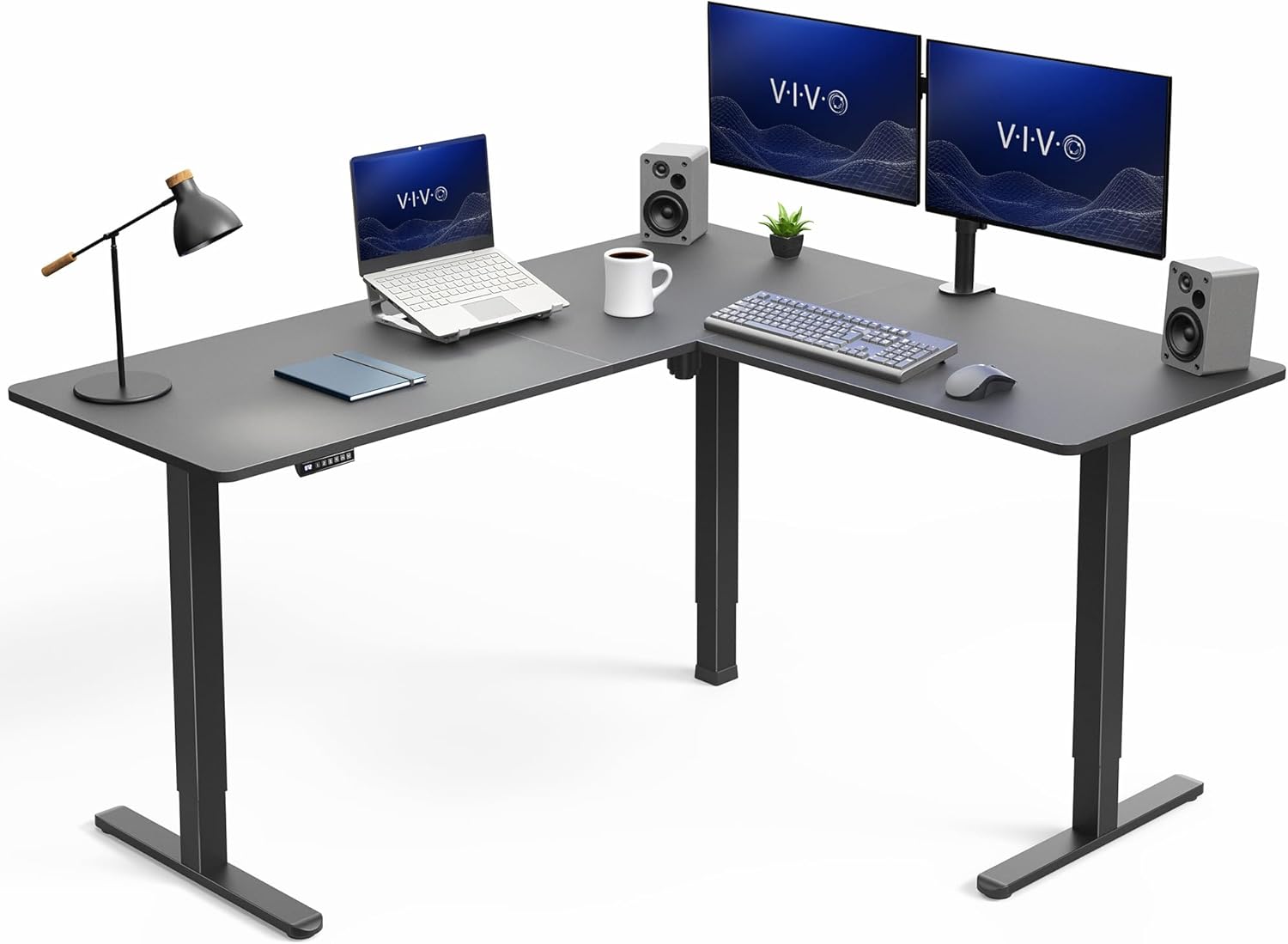
- Designed with Adjustable Height Reversible L-Shaped Design This ergonomic l shaped standing for reliable daily operation
- Designed with Spacious Organized Workspace Engineered for a spacious comfortable workspace this for reliable daily operation
- Designed with Smooth Dual-Memory Height Presets Designed to reduce back strain and for reliable daily operation
- Dimensions measure 47.2"D x 63"W x 46.5"H for spatial allocation
- Rated load capacity supports up to 180 pounds
Cons
- Requires measuring doorways and room clearance for 63 L Shaped Electr prior to placement

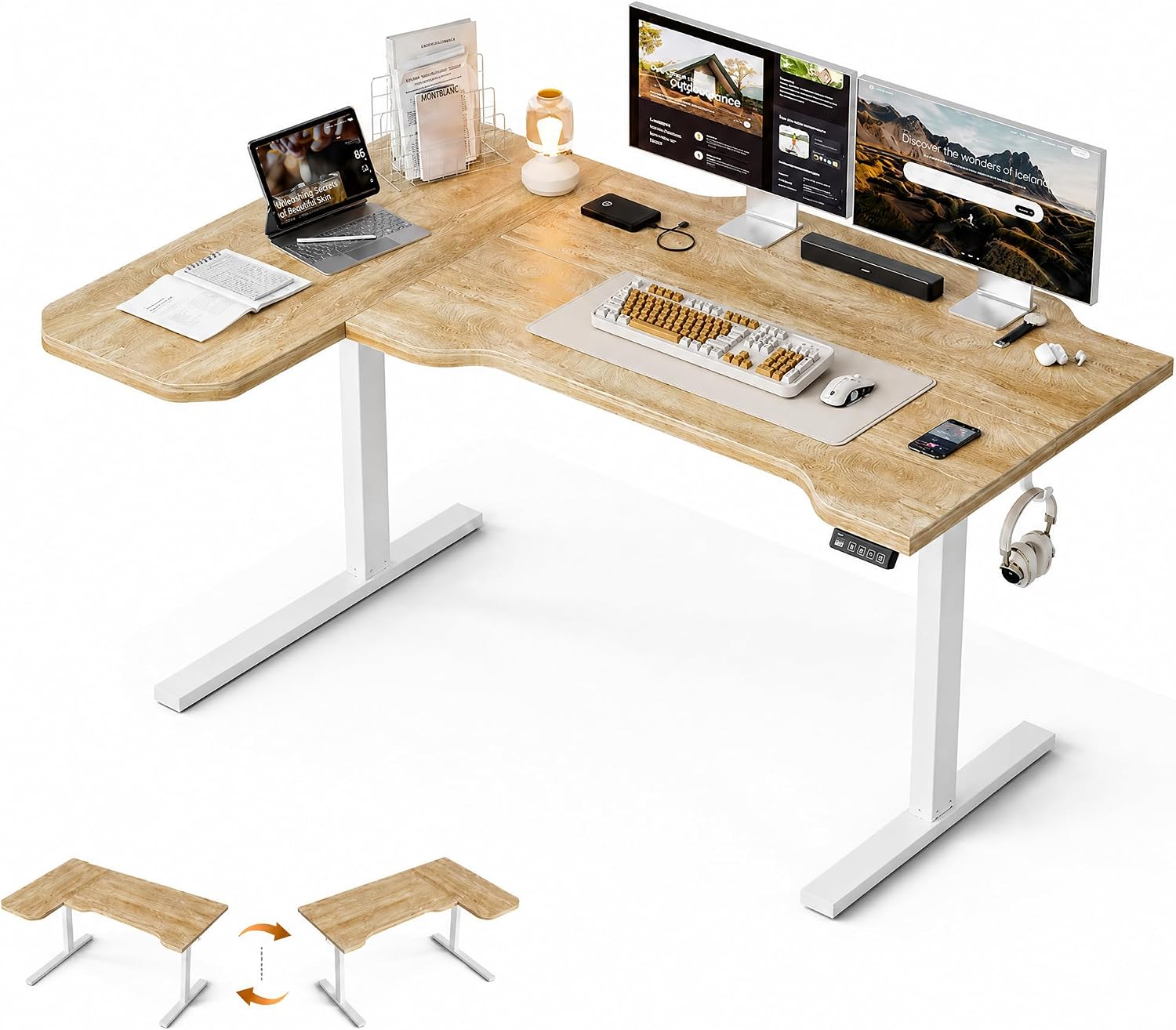
Pros
- Electric lift covers 27.9 inches to 46.1 inches, spanning seated and standing positions for most heights
- Memory keypad recalls preset heights, so switching positions doesn't need re-measuring each time
- Reversible corner return installs on either the left or right side to match room layout
- Large L-shaped top holds multiple monitors and a laptop alongside paperwork without crowding
- Reinforced frame is built to keep the desk steady at extended standing heights
Cons
- Weight capacity is capped at 154 lbs, which limits stacking multiple monitors, a PC tower and equipment together
- Engineered wood top needs the same moisture care as particleboard furniture, unlike solid wood or metal
- Full corner footprint of 47 x 63 inches needs a genuine room corner, not a narrow wall run
The corner desk spans 47 inches deep by 63 inches wide, with electric height adjustment covering 27.9 inches to 46.1 inches to move between seated and standing positions. A memory keypad stores preset heights so the desk can return to a saved position instead of manual adjustment each time.
- Height range of 27.9" to 46.1" covers most seated and standing needs
- 47" x 63" L-shaped surface for a genuine corner setup
- Memory keypad recalls preset heights
Weight capacity is rated at 154 lbs, worth checking against the combined weight of monitors, a PC tower, and other desk equipment before loading it up.

Pros
- Adjustable lumbar pad follows the spine's natural curve for lower back positioning
- Breathable mesh backrest promotes airflow to reduce heat buildup during long sessions
- Flip-up armrests free up desk space when raised
- Adjustable headrest, lumbar depth, and seat height allow multi-point customization
Cons
- Rocking recline function has no listed lock at intermediate angles, only a full tilt
- Seat cushion uses virgin foam rather than gel or memory foam layering
- Dimensions of 19.6"D x 19.6"W x 40"H may feel compact for taller users
The chair measures 19.6"D x 19.6"W x 40"H and is rated to support up to 330 pounds, a higher ceiling than the roughly 250-pound capacity common on entry-level mesh task chairs. Seat height, headrest position, and lumbar depth all adjust independently.
- Overall size: 19.6"D x 19.6"W x 40"H.
- Weight capacity: 330 pounds.
- Frame: Alloy steel with a mesh and nylon build.
- Adjustments: Headrest, lumbar support, seat height, and flip-up armrests.
The compact base footprint suits smaller desk setups but may feel tight for users well over 6 feet tall.

Pros
- Height adjusts from 28 to 46 inches, covering seated and standing positions for most heights
- Reinforced steel frame with anti-wobble design stays stable even at full extended height
- Motor runs under 50dB, quiet enough for calls without background whirring
- 2 memory presets recall favorite heights with one button press
- Anti-collision sensor auto-stops and reverses within about 1 inch of an obstacle
Cons
- 132-pound weight capacity is lower than some heavy-duty standing desks built for multiple monitors plus equipment
- 48 x 24 inch desktop leaves limited legroom width for a wide keyboard tray or side storage
- Motor-driven height adjustment relies on a wall outlet, so it will not operate during a power outage
The desktop measures 48 inches wide by 24 inches deep, with electric height adjustment spanning 28 to 46 inches to cover both seated and standing positions for most adult heights. The frame is rated to hold up to 132 pounds of monitors, a laptop and accessories without sagging or losing stability during height changes.
- Height adjustment range: 28 to 46 inches
- Desktop size: 48 inches wide by 24 inches deep
- Weight capacity: up to 132 pounds
That capacity comfortably covers a dual-monitor arm setup or a monitor plus laptop dock, though heavier multi-monitor arrays with additional gear should be weighed against the limit first.

Pros
- 60 LARGE GAMING DESKTOP Captain GIP-P60 gaming desk is a extraordinary
- STURDY AND STABLE STRUCTURE Captain GIP-P60 gaming desk s support
- EXCLUSIVELY AND FULLY COVERED MOUSE PAD FOR FREE Captain GIP-P60 gaming
- EUREKA GAMING OFFERS YOU FREE ACCESSORY OPTIONS All come together with
- CUSTOMER SERVICE We hold our products to a high standard and hope you
Cons
- Requires checking room layout clearance for 27.56"D x 60"W x 30.12"H dimensions
- Requires periodic vacuuming and fabric care for Carbon Fiber

Pros
- Electric height range of 28.3 to 46.5 inches across 3 memory presets, covering both seated and standing positions without manual cranking
- Built-in 3 outlets and 2 USB ports let you charge devices at the desk instead of running an extension cord
- U-shaped 55.1-inch top plus a full-size monitor stand holds 2 monitors while leaving desktop space clear
- Steel frame rated to 154 lbs, enough for dual monitors, a laptop dock and desk accessories together
- LED strip offers 10 colours and 10 lighting modes built into the frame, no separate light bar needed
Cons
- Footprint of 29.1 x 55.1 inches with a U-shaped corner needs more floor space than a straight desk of the same width
- 154 lb capacity is lower than some steel-frame standing desks rated past 200 lbs, so heavy dual-monitor arm setups should check total load
- Only offered in white in this listing, with no alternate finish
The desktop measures 29.1"D x 55.1"W, finished with a U-shaped corner extension that adds side workspace beyond a standard rectangular top. Height adjusts electrically from 28.3" to 46.5", covering seated and standing positions for most adult heights.
- 3 preset memory buttons recall favourite heights without re-adjusting each time
- Steel frame construction supports up to 154 lbs of desktop load
- Monitor stand section accommodates 2 monitors side by side
- 3 power outlets and 2 USB ports are built into the frame
The U-shape trades a larger footprint for additional side surface, so measuring available floor space before assembly is worthwhile, particularly in home offices where the desk sits in a corner.

Pros
- Height adjusts from 28.35" to 46.45" across a tri-motor lift system rated below 50 dB
- Desktop and frame support up to 180 lbs, enough for a triple-monitor setup
- Steel frame and connectors passed a 100,000-cycle durability test for repeated height changes
- 3-button LED memory presets recall favorite heights with one tap
- FSC-certified desktop wood with 78% lower VOC emissions versus industry-standard boards
Cons
- 48"x24" top fits two monitors comfortably; a third monitor pushes close to the edges
- Split-top design has a center seam, which some users may not want under a single large monitor arm
- Tri-motor lift still takes several seconds to move through the full 28.35"-46.45" range, so quick sit/stand toggling isn't instant
The desktop measures 48"W x 24"D, sized to hold two monitors comfortably with room left for a keyboard, notebook and coffee. Height travels from 28.35" to 46.45", covering seated and standing positions for most adult heights.
The frame and desktop together support up to 180 lbs, enough for triple-monitor arms, a laptop dock and typical desk accessories without approaching the weight ceiling. A heavy-duty steel frame with aerospace-grade connectors passed a 100,000-cycle durability test, which is the kind of repeated up-down cycling a daily sit-stand routine puts on a desk over several years.
- 48"W x 24"D desktop
- Height range 28.35"-46.45"
- 180 lb weight capacity
What Makes a Desk Ergonomic, Anyway?
An ergonomic desk isn’t just a desk that looks modern — it’s one built around how your body actually moves through a workday. The core idea is adjustability: your elbows should sit near 90 degrees when typing, your monitor should land at eye level, and you should be able to switch positions without wrestling with tools or bolts.
Height range matters more than most buyers expect. A desk that only goes down to 29 inches won’t work for a shorter typist, and one that tops out at 44 inches won’t suit someone over six feet tall. Look for a range of roughly 28 to 48 inches, which covers nearly every body type in a shared household or office.
Desktop stability comes next. A wobbly desk at standing height is worse than no adjustment at all, since it discourages you from using the feature you paid for. Dual-motor lifting systems, reinforced frames, and cross-bracing all reduce shake, especially on L-shaped or corner-desk platforms.
Types of Ergonomic Desks Worth Comparing
Not every ergonomic desk looks the same, and the right shape depends on your room and your workflow more than any single spec sheet.
Electric Standing Desks
These use one or two motors to raise and lower the whole desktop, usually with a keypad that stores a few memory presets. They’re the easiest way to alternate between sitting and standing through the day, and models like the budget electric standing desk bring the feature down to a much lower price point than you’d expect.
L-Shaped and Corner Desks
An L-shaped or corner layout gives you separate zones — one for your monitor setup, another for paperwork or a laptop — without eating up floor space in the middle of the room. If your home office doubles as a creative studio, pairing this shape with our corner desk buying guide can help you fine-tune the fit for an awkward room layout.
Compact Desks for Small Rooms
Studio apartments and shared bedrooms usually need a desk under 48 inches wide that still adjusts in height. The trade-off is less surface area, so cable management and a slim keyboard tray become more important than they would be on a larger desk.
How to Choose the Best Ergonomic Desk for Your Needs
Once you know the shape you want, a handful of specs separate a genuinely ergonomic desk from one that just claims to be. Here’s what to check before you add anything to your cart.
- Weight capacity: Add up your monitors, PC tower, and any monitor-arm hardware — most electric desks hold 150 to 300 lb, but heavier dual-monitor setups need the higher end of that range.
- Motor speed and noise: A quiet, steady motor encourages you to actually change positions during the day instead of leaving the desk parked at one height.
- Desktop material and edge finish: Engineered wood with a sealed edge resists moisture rings better than raw MDF, which matters if you keep a coffee mug within reach.
- Cable management: A hook, tray, or grommet keeps cords from tangling in the lift mechanism as the desk moves — a small detail that prevents real wear and tear.
- Memory presets: Programmable height buttons let two people share one desk without re-measuring every time, which is worth paying for if your household rotates who’s on the computer.
Budget is the last filter, and it’s a wide one here — you’ll find capable options anywhere from under $100 to well over $1,000, so it helps to know which features you’re actually willing to pay extra for.
Best Ergonomic Desks for Every Home Office
Matching a desk to your actual routine beats chasing the highest spec sheet. Here’s how the standout options in this roundup fit different needs.
Best for Small Apartments
If your workspace is a corner of a studio, look for a compact footprint that still adjusts in height. The Grandder 47″ L Shaped Standing Desk tucks into a tight corner while still giving you separate zones for a monitor and a laptop, and its rounded edge keeps the layout safer in a small room where you’re constantly brushing past it.
Best Splurge for Daily Use
When a desk is the centerpiece of a full-time home office, paying more for stability pays off. The Desktronic HomeOne Standing Desk uses a dual-motor lift and a wobble-resistant frame, and its touchscreen memory presets make it easy to return to your exact sitting or standing height without guesswork.
Best for Multi-Monitor Setups
Running two or three monitors demands a wide, stable surface that won’t flex under the weight. The EUREKA ERGONOMIC Gaming Desk offers a generous 60-inch top and a reinforced leg design built to keep a heavy multi-screen setup steady during long sessions.
Best Spacious Layout for Two Screens Plus Storage
If you want room for a keyboard tray, outlets, and dual monitors without a full L-shape, a U-shaped desk is worth a look. The OffiGo 55″ U Shaped Standing Desk adds built-in outlets and USB ports, which cuts down on the power-strip clutter that usually piles up under a large desk. If built-in storage matters more to you than desktop width, our desks with drawers guide is a useful next stop.
Budget-Friendly Ergonomic Desks That Still Adjust
You don’t need a four-figure budget to get real height adjustment. The Casaottima 63″ L Shaped Electric Desk keeps the L-shaped layout and electric lift under $200, making it a reasonable starting point if you’re testing whether a standing desk fits your routine before spending more. If a straightforward rectangular layout suits your room better, our standing desk comparison covers more entry-level electric models side by side.
Pairing Your Desk with the Right Chair
Even the best ergonomic desk only solves half the equation — the chair underneath you matters just as much for your back and hips. Look for adjustable lumbar support and a seat height that lines up with your desk’s sitting position. The padded lumbar-support office chair in this lineup is built for long stretches at a desk and adjusts to match most of the sitting heights on this list. If you’re rebuilding your whole setup, our executive desk guide can help you round out a more traditional office look once the ergonomics are sorted.
Common Mistakes to Avoid When Buying an Ergonomic Desk
A few buying mistakes show up again and again in home-office setups, and they’re easy to avoid once you know what to check.
- Ignoring the height range for your specific height. Always check the minimum sitting height, not just the maximum standing height — many taller desks bottom out too high for shorter users.
- Skipping the weight rating. A desk rated for 150 lb will struggle under three monitors, a dock, and a full-size tower.
- Underestimating assembly time. Electric desks have more hardware than fixed desks, so block out an hour or two rather than rushing it before a workday.
- Placing it against a wall with no cable slack. Height adjustment needs slack in every cord, or you’ll eventually yank a cable loose.
Not sure a standing desk is right for you? If you mostly work from a laptop for short stretches and rarely sit for more than an hour, a fixed-height desk might genuinely serve you better — the extra cost of an electric lift makes the most sense for people at a desk five or more days a week.
Frequently Asked Questions
How tall should an ergonomic desk be for standing work?
Most people land between 38 and 44 inches when standing, depending on height and shoe sole thickness. Set your elbows at roughly 90 degrees with your wrists straight to find your ideal number.
Is a standing desk actually more ergonomic than a fixed desk?
It can be, but only if you actually alternate positions throughout the day. A standing desk left at one height all day offers little advantage over a well-set fixed desk.
What weight capacity do I need for a dual-monitor setup?
Plan for at least 200 lb of capacity once you add two monitors, a monitor arm, a tower, and accessories — lighter-rated desks can sag or wobble under that combined load.
Do I need an L-shaped desk, or is a rectangular one enough?
Rectangular desks work fine for single-monitor setups with limited floor space. An L-shape earns its keep when you need a separate zone for paperwork, a laptop, or a printer.
How long does it take to assemble an electric standing desk?
Budget one to two hours for a first-time build. The frame and motor wiring take the most care, while the desktop itself usually attaches with a handful of bolts.
Whichever model you land on, the real test happens after the first week: are you actually changing positions, or is the desk parked at one height like the old one? Revisit your settings after a few days and adjust — that’s when an ergonomic desk starts paying off.