 Daniel Okafor
A corner spot is one of the most wasted areas in a home office, and picking from the best corner desks on the market can turn that dead space into a real workstation. Whether you’re tucking a desk into a small bedroom or building out a dedicated office, an L-shaped or triangle desk gives you more surface area without eating up floor space. Below you’ll find our top picks organized by need, plus the details that actually matter before you buy.
Quick answer: For most people in 2026, our top pick among the best corner desks is the SEDETA L-Shaped Desk — our #1 rated choice thanks to its LED shelving, sturdy build, and nearly 1,000 verified reviews. See the full ranked comparison, alternatives, and buying advice below.

Pros
- Designed with Integrated Power Hub with USB-C This L shaped desk features for reliable daily operation
- Designed with Functional Storage File Cabinet Stay organized with a dedicated file for reliable daily operation
- Dimensions measure 39"D x 39"W x 30.9"H for spatial allocation
- Rated load capacity supports up to 180 pounds
Cons
- Requires measuring doorways and room clearance for 59'' Reversible L- prior to placement

Pros
- Designed with CORNER DESK FOR SMALL PLACES This farmhouse corner desk is for reliable daily operation
- Designed with MULTI-FUNCTIONAL CORNER TABLE This triangle corner table is perfect for for reliable daily operation
- Designed with FULL-SIZED MONITOR STAND This triangle office desk comes with full-size for reliable daily operation
- Dimensions measure 31.5"D x 44.5"W x 35.2"H for spatial allocation
Cons
- Requires measuring doorways and room clearance for Small Corner Desk prior to placement

Pros
- Designed with L-Shaped Desk with Storage Cabinet This corner home office desk for reliable daily operation
- Designed with 360 Rotating Transform deskour work desk can adapt your desk for reliable daily operation
- Designed with Fluted Rolling Door Sturdy Build Features a mid-century inspired tambour for reliable daily operation
- Dimensions measure 20.87"D x 93.32"W x 30.52"H for spatial allocation
- Rated load capacity supports up to 100 pounds
Cons
- Requires measuring doorways and room clearance for ONBRILL 60 Inch L prior to placement
Pros
- Dimensions of 37.7"D x 47"W x 29.5"H engineered for optimal spatial fitting
Cons
- Requires verifying placement clearance for 37.7"D x 47"W x 29.5"H prior to installation
- Load weight limits should not exceed 176 Pounds during active operations

Pros
- Sculptural Rotating Design for Modern Living:This premium computer desk
- Physical footprint measures 23.6"D x 60"W x 29.48"H for spatial placement
Cons
- Requires checking room space for HSH Office L Shaped Co prior to installation
- Routine cleaning needed to maintain Walnut Wood appearance

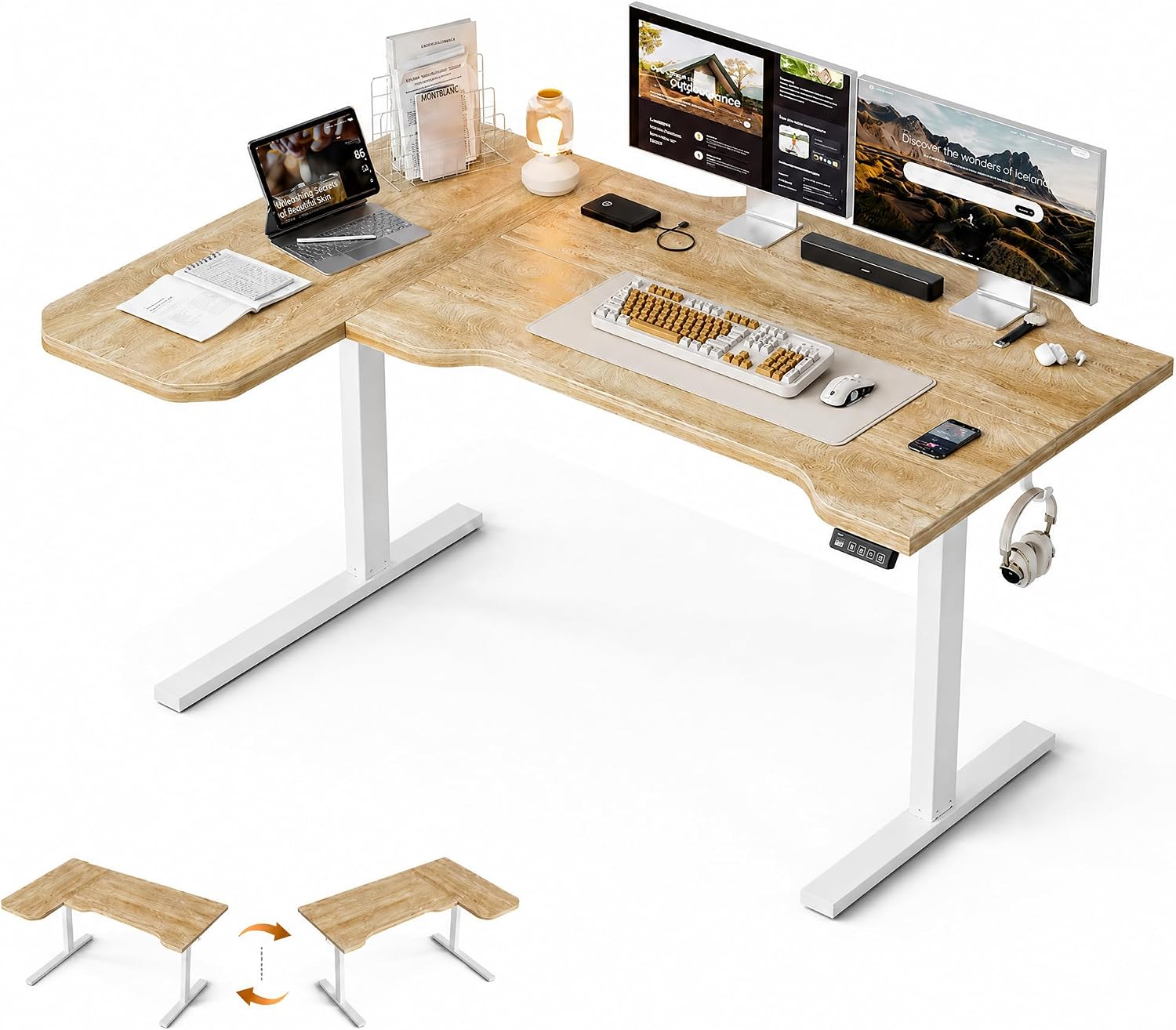
Pros
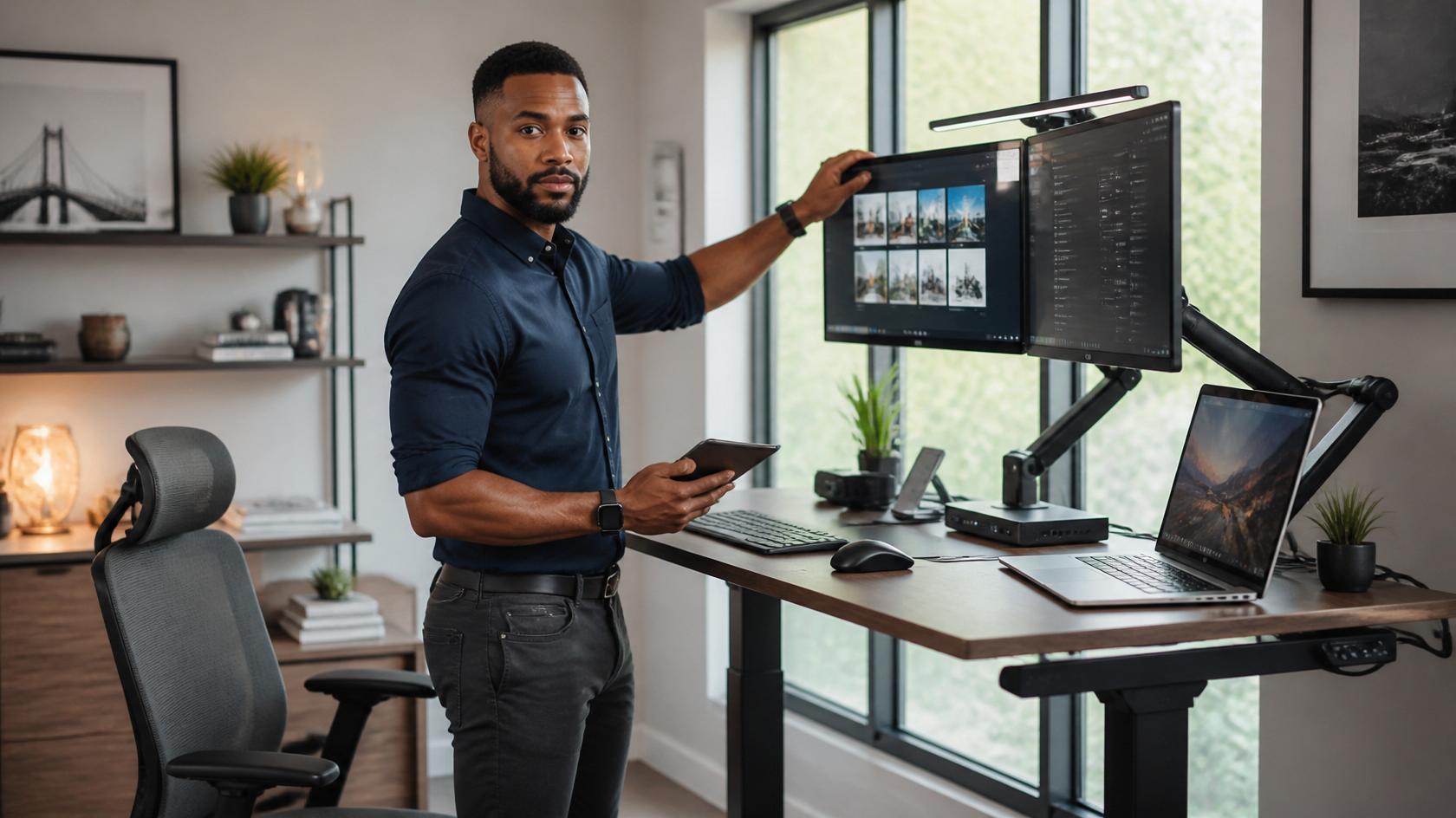
- Electric lift covers 27.9 inches to 46.1 inches, spanning seated and standing positions for most heights
- Memory keypad recalls preset heights, so switching positions doesn't need re-measuring each time
- Reversible corner return installs on either the left or right side to match room layout
- Large L-shaped top holds multiple monitors and a laptop alongside paperwork without crowding
- Reinforced frame is built to keep the desk steady at extended standing heights
Cons
- Weight capacity is capped at 154 lbs, which limits stacking multiple monitors, a PC tower and equipment together
- Engineered wood top needs the same moisture care as particleboard furniture, unlike solid wood or metal
- Full corner footprint of 47 x 63 inches needs a genuine room corner, not a narrow wall run
The corner desk spans 47 inches deep by 63 inches wide, with electric height adjustment covering 27.9 inches to 46.1 inches to move between seated and standing positions. A memory keypad stores preset heights so the desk can return to a saved position instead of manual adjustment each time.
- Height range of 27.9" to 46.1" covers most seated and standing needs
- 47" x 63" L-shaped surface for a genuine corner setup
- Memory keypad recalls preset heights
Weight capacity is rated at 154 lbs, worth checking against the combined weight of monitors, a PC tower, and other desk equipment before loading it up.

Pros
- Rated to hold 300 lbs across the desktop, enough for two desktop towers plus monitors
- 58-inch desktop width fits dual-monitor and multi-PC setups without crowding
- 7-tier open shelving plus a glass storage cabinet on the attached hutch adds vertical storage beyond desk surface
- Reversible frame lets the L-shape be installed left or right-facing depending on room layout
- RGB LED strip offers over 60,000 colors and 29 modes, including music-sync via a built-in microphone
Cons
- 61-inch overall height plus the hutch shelving takes up more wall space than a standard desk, so low-ceiling or slanted-wall rooms may not fit it
- Particle board desktop surface is less scratch- and moisture-resistant over years of use than solid wood or laminate-coated MDF
- LED strip requires its own app pairing and remote, adding another accessory to manage alongside desk assembly
The desktop measures 58 inches long by 21.6 inches wide with an overall footprint of 21.6 inches deep by 58 inches wide by 61 inches tall once the shelving hutch is included, and the desk surface is rated to hold 300 lbs, enough for two desktop towers, dual monitors and typical desk accessories at once. The attached hutch adds 7 tiers of open shelving plus a glass storage cabinet, giving vertical storage for books, a printer or collectibles without taking up desktop space. Being an L-shaped design, it needs a corner placement rather than a flat wall run to use the footprint efficiently.

Pros
- Built-in power strip adds 4 AC outlets plus one USB-A and one USB-C port directly on the desk surface
- Rated to hold up to 220 pounds across the work surface and shelving
- Three fabric drawers give closed storage separate from the open shelving sections
- Reversible shelf design lets the L-shape face either left or right to match room layout
- Adjustable feet compensate for uneven flooring without shimming
Cons
- Constructed from particle board rather than solid wood, so it is lighter-duty than hardwood desks under heavy sustained loads
- 47.2-inch width is compact for an L-shaped desk, tight for dual-monitor plus paperwork setups
- Built-in outlets require plugging the desk itself into a wall outlet, so it does not add power in rooms without a nearby outlet
This L-shaped desk measures 17.7 inches deep by 47.2 inches wide by 29.5 inches tall, with a listed weight capacity of 220 pounds across the surface. Construction combines particle board panels with a metal frame, reinforced with X-shaped back supports for added stability under regular use.
- Dimensions: 17.7 in D x 47.2 in W x 29.5 in H
- Weight capacity: 220 pounds
- Frame: metal with particle board panels
- Storage: 3 fabric drawers plus open shelving
Adjustable feet let the desk sit level on uneven flooring, and the 2-level shelf section is sized to hold a CPU tower, files, or books separate from the main desktop surface.

Pros
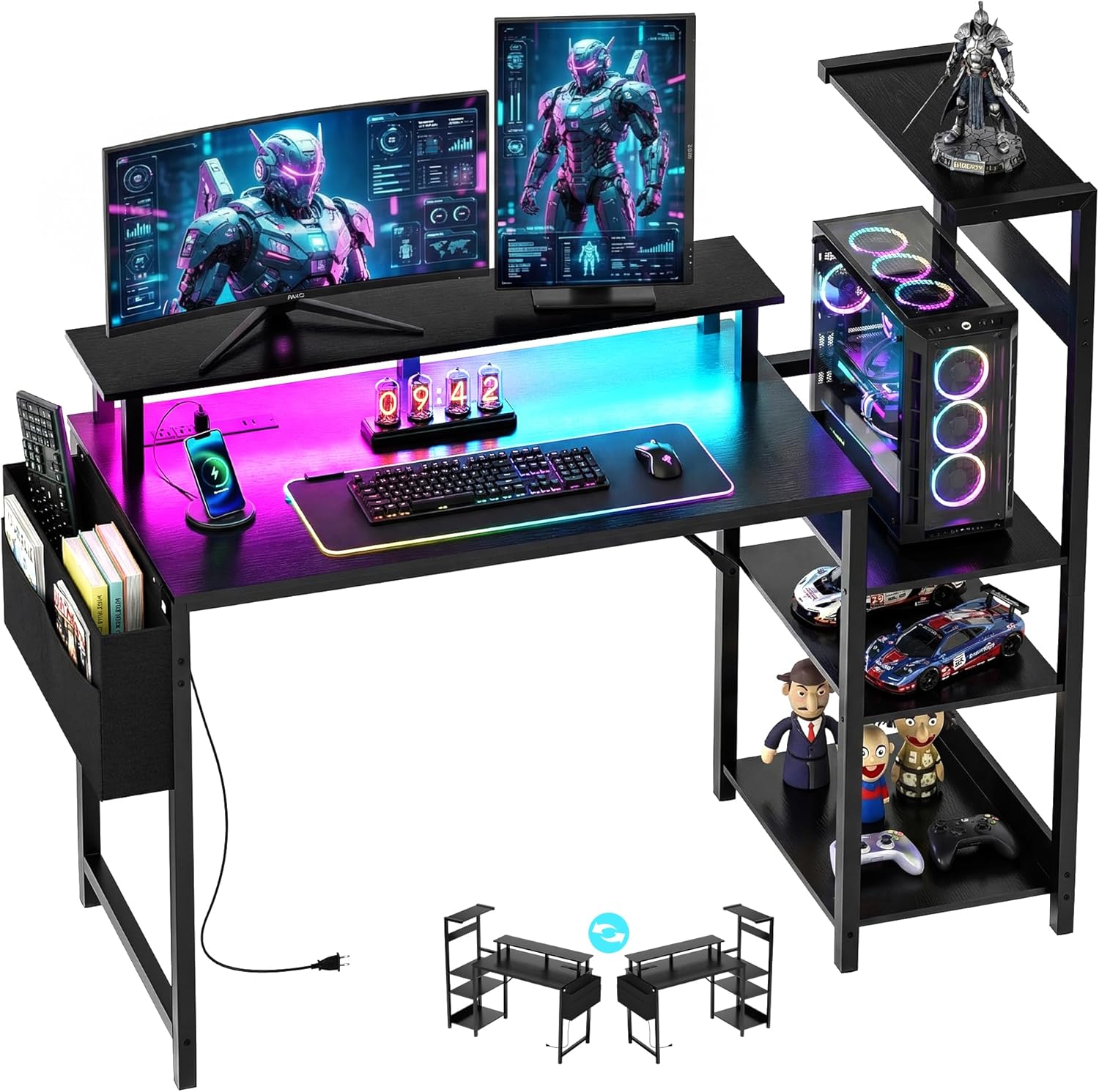
- 96-inch reversible L-shape converts into a long double desk, letting two people work side by side
- Built-in charging station provides 4 outlets and 2 USB ports for up to 6 devices at once
- 3-tier storage shelving holds 2 monitors, a notebook, a printer stand and files without extra furniture
- RGB LED strip syncs to music with over 60,000 colors and 29 flashing modes through app control
- Frame surface is made from FSC-certified wood, a sourcing standard not every desk brand discloses
Cons
- 96-inch footprint needs a genuinely large room, ruling it out for smaller home offices or bedrooms
- LED lighting and charging station both depend on being plugged into a wall outlet, adding a permanent power cable to the desk's footprint
The desk measures 19.7 inches deep, 59 inches wide and 35.4 inches tall in its L-shaped configuration, extending to a 96-inch length when reconfigured into a long double desk. The larger work surface is rated to hold two desktop computer setups alongside a notebook, supported by 3-tier storage shelving that can hold 2 monitors, a printer stand, files and books without needing separate shelving furniture.
A keyboard tray and monitor stand are built into the design, along with a pegboard for hanging small accessories, aiming to consolidate a full workstation into one footprint rather than requiring separate furniture pieces around the desk.
- 96-inch reversible L-shaped or double-desk length
- 3-tier storage for monitors, printer and files
- Built-in keyboard tray, monitor stand and pegboard

Pros
- Multifunctional Desk with Wide Desktop This L-Shaped computer desk is
- Spacious Desktop If your job requires a lot of electronic equipment,
- Durable Metal Frame Wood Tabletop home office desk is made of
- Desk Panel Dimension 64.84 x 21.65 (with corner length)
Cons
- Requires checking room layout clearance for 64.84"D x 21.65"W x 29.6"H dimensions
What Makes a Corner Desk Worth Buying
A good corner desk should feel like it was built for the room, not just placed in it. Before you compare specific models, it helps to know which features separate a desk you’ll love from one you’ll regret within a month.
- Footprint and reversibility: Many corner desks can be set up left- or right-facing, which matters if your outlets or window are on a specific wall.
- Surface depth: A deeper corner section gives you room for dual monitors without your keyboard hanging off the edge.
- Cable management: Built-in outlets, USB ports, or grommet holes keep power strips off the floor and out of sight.
- Storage: Drawers, shelves, and cabinets reduce clutter, which matters more in a corner where you can’t walk around the desk.
- Stability: Look for steel frames or reinforced legs, especially if you’ll rest your weight on the desk while reaching for something.
Once you know your must-haves, the rest of the decision comes down to matching a desk to how you actually work.
Materials and Build Quality to Check Before You Buy
Photos rarely tell you how a desk will hold up after six months of daily use, so it helps to know what’s under the finish. Most budget and mid-range corner desks use engineered wood, sometimes called particleboard or MDF, wrapped in a laminate that mimics oak, walnut, or a painted finish.
Engineered wood is lighter and cheaper than solid wood, but it’s also more sensitive to moisture and heavy point loads, so avoid setting a large monitor directly on an unsupported overhang. The frame matters just as much as the desktop. Steel legs with cross-bracing resist wobble far better than plastic or thin aluminum, especially on the long L-shaped side where you’ll likely lean while reaching for a drawer.
Fluted paneling and drawer fronts, which show up on several picks below, are mostly cosmetic, but they’re worth mentioning because they add a bit of texture that keeps a desk from looking purely utilitarian. If the listing specifies a weight capacity, treat it as a rough guide rather than an exact limit, and always leave some buffer for monitors, a laptop, and daily clutter.
Best Corner Desks for Small Spaces
If your office is really just a nook, size is the deciding factor. A compact triangle or L-shaped frame lets you fit a full workstation into a spot that would otherwise sit empty.
The Small Corner Desk with Monitor Stand is built specifically for tight corners, with a built-in monitor riser that frees up desktop space for a keyboard and notebook. Its farmhouse-style finish also works well if you don’t want an office that looks purely industrial. For anyone in a studio apartment or shared bedroom, this kind of scaled-down footprint matters more than extra bells and whistles.
If you want more storage without adding much floor space, the ONBRILL Swivel Corner Desk rotates a full 360 degrees, so you can angle the desktop toward a doorway or window depending on the time of day. That flexibility is genuinely useful in small rooms where furniture placement is limited.
Best Corner Desks for Standing and Sit-Stand Setups
Sitting for eight hours straight isn’t great for your back, and a corner desk doesn’t have to mean you’re stuck in one position all day. Electric height-adjustable corner desks have become far more common, and a few options below now include that feature.
The Casaottima Standing Desk is a 63-inch L-shaped frame with electric height adjustment, which means you can switch between sitting and standing without swapping furniture. It’s a strong pick if you deal with lower back tightness or just want to break up long stretches at the computer.
For smaller apartments, the Grandder Standing Desk offers the same sit-stand benefit in a shorter 47-inch frame with rounded corners, which is worth considering if you’re tight on space but still want the health benefits of an adjustable desk. Rounded edges also reduce bruised hips in narrow rooms.
Best Corner Desks for Gaming and Multi-Monitor Setups
Gamers and multitaskers usually need more desktop real estate than a single monitor requires, plus somewhere to route thick cables. Corner desks solve both problems at once.
The SEDETA Gaming Corner Desk stretches to 96 inches and includes a monitor stand, keyboard tray, and pegboard for hanging headsets or controllers. If you’re setting up a dedicated gaming or streaming corner, that combination of length and organization is hard to beat. If you want to compare it against dedicated gaming builds, our best gaming desks guide covers a wider range of layouts.
For a slightly smaller footprint with similar shelving, the Teraves Corner Desk pairs a 64.84-inch L-shaped top with a four-tier shelf unit, so monitors, speakers, and books all have a dedicated spot instead of stacking on the desktop itself.
Best Budget-Friendly Corner Desk
You don’t need to spend a lot to get a functional corner desk. The Huuger L Shaped Desk comes in under $100 and still includes three drawers and open shelving, which is a rare combination at that price. It’s a sensible starting point if you’re furnishing a first apartment or setting up a secondary workstation and don’t want to overspend.
Keep in mind that lower-cost desks are usually made from thinner particleboard, so they’re better suited to laptops and lighter monitor setups rather than heavy dual-monitor arms.
How to Choose the Right Corner Desk for Your Room
Start by measuring your actual corner, not just guessing. Many buyers order a desk that’s technically the right shape but too deep for the room, which leaves the drawers unable to open fully.
Next, think about how you’ll use the desk day to day. If you work from home full-time, prioritize storage and a stable, reinforced frame. If the desk is mostly for occasional use, a lighter and more affordable model like the Huuger or the Small Corner Desk will likely serve you better. Pair your new desk with a supportive chair, since even the best office desks won’t feel comfortable if your seating doesn’t match your posture needs.
If back pain is a concern, it’s worth reading up on ergonomic desks as well, since desk height and monitor positioning both play a role in how your body feels after a long workday.
Common Mistakes to Avoid When Buying a Corner Desk
Even a well-reviewed desk can be the wrong choice if it doesn’t fit your space or workflow. Here are the mistakes we see most often.
- Skipping the doorway swing test: Some L-shaped desks are too wide to fit through a standard doorway fully assembled, and a few ship in pieces too large to maneuver into a small room.
- Ignoring outlet placement: If your desk doesn’t include built-in power, plan out where your power strip will sit before assembly, not after.
- Choosing looks over depth: A shallow corner section might look sleek in photos but won’t comfortably fit a keyboard and mouse together.
- Forgetting about chair clearance: Corner desks often have a support leg right where a chair needs to roll, so check the underside layout before ordering.
- Not accounting for reversibility: If a desk isn’t reversible, confirm the listed orientation actually matches your room before you order.
Corner Desk Buying Guide FAQs
Are corner desks good for small rooms?
Yes. Corner desks use space that’s typically wasted, which makes them one of the most space-efficient options for small bedrooms, studio apartments, or shared offices.
What size corner desk do I need for two monitors?
Most people need at least 55 to 60 inches of combined desktop length to comfortably fit two monitors side by side with room for a keyboard and mouse.
Can a corner desk be used for standing work?
Yes, several corner desks now come with electric height adjustment, letting you switch between sitting and standing throughout the day without buying separate furniture.
Do corner desks work in the middle of a room?
Not well. Corner desks are designed to sit flush against two walls, so they generally aren’t a good fit for open floor placement.
How much should I expect to spend on a quality corner desk?
Solid options are available from under $100 up to around $300, with price mostly reflecting materials, electric height adjustment, and added storage features.
Whichever model you land on, take a moment to compare specs and availability before checking out, since even a few inches of extra depth or an extra drawer can make a real difference in daily use. If you’re outfitting a full setup, browsing our standing desks guide alongside this one can help you settle on a layout that works for the whole room.