Owen Bradley
 A burst supply line under a sink can push hundreds of gallons onto your floor before anyone notices, and the average insurance claim for interior water damage runs into the thousands. A water leak detector is the cheapest insurance you can buy against that scenario, because it turns a silent, slow disaster into a phone notification you can act on in minutes. Yet the category is confusing: puck sensors, rope probes, whole-home flow monitors, and automatic shutoff valves all get sold under the same label while doing very different jobs. This guide explains what each type actually detects, which specs matter, and how to build sensible coverage for your house without spending more than the damage you are trying to prevent.

What a Water Leak Detector Actually Does
At the simplest level, a leak sensor is a pair of metal contacts and a radio. When water bridges the contacts, resistance drops, the device wakes, and it sounds a local siren and pushes an alert to your phone through Wi-Fi, Zigbee, Z-Wave, Thread, or a proprietary hub. That is the entire trick, and it is why good sensors can cost less than a takeout meal.
The important thing to understand is that a basic sensor is reactive. It tells you water has already reached the floor at that exact spot. It does not know a pipe inside a wall is weeping, and it will not stop the flow. More capable products add a second layer: flow monitoring that watches your main line for unusual usage patterns, and motorized valves that physically close the supply. Most homes benefit from a mix, with cheap spot sensors covering the many places water appears and one smarter device guarding the main.
The Four Types of Leak Detection Compared
Puck and Pad Spot Sensors
These are the small discs or rectangles you drop behind a toilet, under a sink, or beside a water heater. They are inexpensive, battery powered, and install in seconds with no tools. The tradeoff is coverage: a puck only detects water that touches its own contacts, so placement decides everything. Buy several rather than one, and put them at the lowest point of each risk area, since water always finds the low spot first.
Rope and Cable Probes
A rope sensor is a length of moisture-sensing cable, typically 4 to 6 feet, that plugs into a puck-style base. Anywhere along that run counts as a trigger point, which makes rope ideal for long, thin risk zones: the back edge of a washing machine pan, a run of baseboard along a basement wall, the length of a water heater platform. Many sensors ship with a short probe already attached and accept an extension. If your risk area is bigger than a dinner plate, rope pays for itself.
Flow and Pressure Monitors
These clamp onto or splice into your main supply line and watch behavior rather than puddles. By learning your normal usage, they flag anomalies like a fixture running continuously for an hour at three in the morning, or a slow pressure drop that suggests a pinhole leak inside a wall. This is the only category that catches hidden leaks before water becomes visible. It is also the most expensive and often the only one that needs a plumber, especially if it splices into the pipe.
Automatic Shutoff Valves
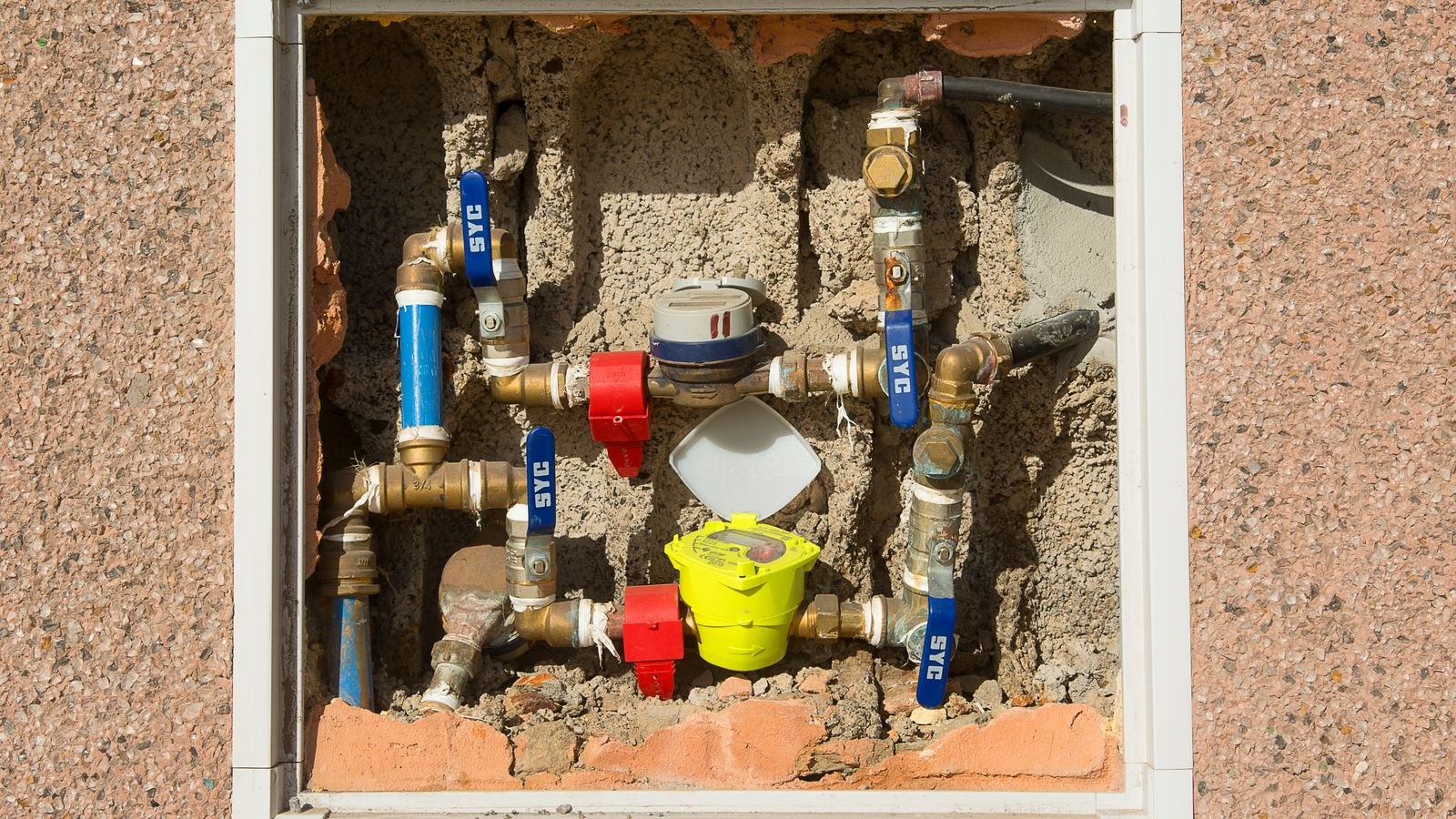
A motorized valve sits on the main and closes it on command, either from your phone or automatically when a paired sensor gets wet. This is the difference between coming home to a damp patch and coming home to a ruined floor. Two designs exist: full inline valves that replace a section of pipe, and robotic actuators that clamp over your existing ball valve handle and turn it. Actuators are renter-friendly and reversible; inline valves are more reliable long term but require a plumbing shutdown to install.

Specs That Genuinely Matter
Alert Path and Local Siren
Check how the alert reaches you. A sensor that only beeps locally is useless while you are at work, which is precisely when an unattended leak does the most damage. You want a push notification, and ideally an escalation path such as a repeated alert, an email, or a call to a second household member. A loud local siren still matters for when you are home and asleep, so look for at least 90dB.
Battery Life and Battery Type
Leak sensors live in places you rarely look, so a dead battery equals no protection. Zigbee, Z-Wave, and Thread models sip power and commonly run two to five years on a coin cell or a pair of AAA cells. Wi-Fi sensors that maintain a direct connection often manage only one to two years. Whatever you choose, the device must report low battery to your app, and you should confirm that alert works before you tuck it behind a heavy appliance.
Connectivity and Hub Requirements
Wi-Fi sensors need no hub, which is convenient in a small apartment but strains battery life and depends on router coverage reaching your crawlspace. Hub-based sensors on Zigbee, Z-Wave, or Thread use a mesh, so each mains-powered device extends range into basements and utility rooms where Wi-Fi struggles. If you already run a controller, matching its protocol is usually the right call, and our roundup of the best smart hubs explains which ecosystems pair with the widest sensor selection.
Temperature and Humidity Sensing
Many leak sensors add a thermometer for a few dollars more, and it is worth having. A temperature alert warns you when a crawlspace or garage approaches freezing, which lets you drip a faucet before a pipe splits. Humidity readings help you spot chronic dampness under a sink long before it becomes a leak. If a model offers both for a small premium, take it.
Where to Place Sensors for Real Coverage
Most water damage starts in a short list of predictable places. Prioritize in this order and you will cover the majority of realistic failures:
- Water heater base — tanks fail from the bottom and often flood an entire utility room.
- Washing machine hoses — braided supply lines burst under constant pressure; use a rope probe behind the unit.
- Under every sink — kitchen, bathroom, and utility; supply valves and P-traps weep slowly for months.
- Behind toilets — fill valves and tank seals are the most common slow leak in any home.
- Dishwasher and refrigerator — ice maker lines are notorious, and the leak hides under the appliance.
- Sump pump pit and basement floor drains — a failed pump means water rises fast.
- HVAC condensate pan — a clogged drain line quietly overflows into the ceiling below.
Place each sensor flat on the floor at the lowest point, not perched on a shelf or taped to a pipe where a drip can miss it entirely. If a floor slopes, follow the slope. Test each one with a damp cloth after install and after any battery change.
Budget Tiers and What You Get
Entry level means a two or three pack of basic Wi-Fi pucks with app alerts and a siren. That is enough for a small apartment where you mainly need to know quickly. Mid tier adds hub-based mesh sensors with multi-year batteries, temperature and humidity readings, rope probe support, and reliable automation hooks so a leak can trigger lights, sirens, and notifications across the household. Upper tier means adding a flow monitor or a shutoff valve on the main, which is where the real financial protection lives.
A useful rule of thumb: spend on breadth first, depth second. Eight cheap sensors in the right eight places beat one premium sensor in the wrong spot. Once every wet area is covered, then invest in automatic shutoff. Many insurers offer a policy discount for a monitored shutoff valve, which can offset part of the cost, so ask before you buy.
Fitting Leak Detection Into a Smart Home
A leak sensor becomes far more valuable when it can act instead of merely alerting. Wired into a broader system, a wet sensor can close a valve, flash every light in the house red, announce the alert on a speaker, and notify a neighbor. If you are assembling protection from scratch, comparing the best smart home kits is a sensible starting point because bundled sensors and hubs are usually cheaper than buying separately.
Compatibility is the thing people get wrong. Before buying, confirm the sensor works with the app and voice assistant you already use, and check whether automations run locally or require the cloud. Local execution matters here more than in most categories, because a leak during an internet outage is exactly when you need the shutoff to fire. Browsing the best smart devices and the wider selection of devices for smart homes makes it easier to see which brands share a common standard rather than locking you into one app.
Related Plumbing Upgrades Worth Considering
While you are auditing water risk, look at the fixtures themselves. Aging supply lines, worn washers, and cheap plastic shutoffs cause a large share of household leaks, and replacing them costs little. Touchless and metered fixtures also reduce waste and overflow risk in busy kitchens, so it is worth reviewing the best smart faucets if you are already renovating. Replace braided washing machine hoses every five years, and swap rubber ice maker lines for braided stainless.
Common Mistakes Buyers Make
The most frequent error is buying one sensor and calling the house protected. Water does not travel to your sensor; the sensor has to be where the water will be. The second mistake is skipping the annual test, which leaves people trusting a device with a dead battery or a lost network pairing. Set a recurring reminder and physically wet each sensor once a year.
A third mistake is assuming an alert is enough. If nobody is home, or the phone is on silent, a notification does nothing. Anyone who travels, owns a second home, or has a finished basement should treat an automatic shutoff valve as the core purchase and the sensors as its trigger network. Finally, do not mount sensors where routine splashes occur, such as directly beside a shower door. False alarms train you to ignore real ones.
Frequently Asked Questions
Do leak sensors work without Wi-Fi?
They still sound their local siren, but push alerts stop. Hub-based sensors on a mesh protocol keep talking to the hub, so local automations such as closing a valve can still run if your system executes rules locally rather than in the cloud.
How many sensors does an average home need?
Most single-family houses land between six and ten, covering the water heater, laundry, each bathroom, the kitchen, and any basement or crawlspace. Apartments usually need three or four. Count your wet locations rather than guessing.
Will a shutoff valve stop every kind of leak?
It stops anything fed by your main supply, which covers most burst pipes and fixture failures. It cannot stop groundwater intrusion, roof leaks, or a failed sump pump, so pair it with spot sensors in those areas for full awareness.
Is a subscription required?
Most spot sensors need no subscription. Some whole-home flow monitors offer optional plans for detailed usage analytics or professional monitoring, but core leak alerts are typically included. Confirm this before buying, since paywalled alerts defeat the purpose.
Can I install a shutoff valve myself?
A clamp-on robotic actuator is a straightforward DIY job that fits over your existing ball valve. An inline valve requires cutting into the main and is a plumber’s task in most homes, and in some areas it needs a permit.
Final Thoughts
Water leak detection is a rare home upgrade where the math is not close. A handful of sensors costs less than one service call. Start by mapping every place water enters or leaves your home, put a spot sensor or rope probe at the low point of each, and confirm alerts actually reach your phone. Then, if your budget allows or your home sits empty for stretches, add automatic shutoff on the main so the system can act without you.
Choose based on where your water actually is, not on the longest feature list. A modest, well-placed network of sensors backed by a valve you have tested will serve you far better in 2026 than a single expensive gadget guarding the wrong room. Test it once a year, keep the batteries fresh, and the whole setup quietly earns its keep the first time it saves you a floor.