Owen Bradley
 Getting vanity light size right is the difference between a bathroom that flatters you and one that carves shadows under your eyes every morning. Fixture width, mounting height, and the distance between light sources all work together, and a fixture that looks beautiful in a showroom can fail badly once it sits above your actual mirror. This vanity light size guide walks through the proportion rules designers rely on, the mounting heights that put light where your face is, and the spacing that makes side sconces genuinely useful. Whether you are replacing a builder-grade bar in a powder room or planning a full remodel in 2026, the numbers below will keep you from ordering a fixture that is an inch too short or a foot too high.
Start With the Mirror, Not the Vanity
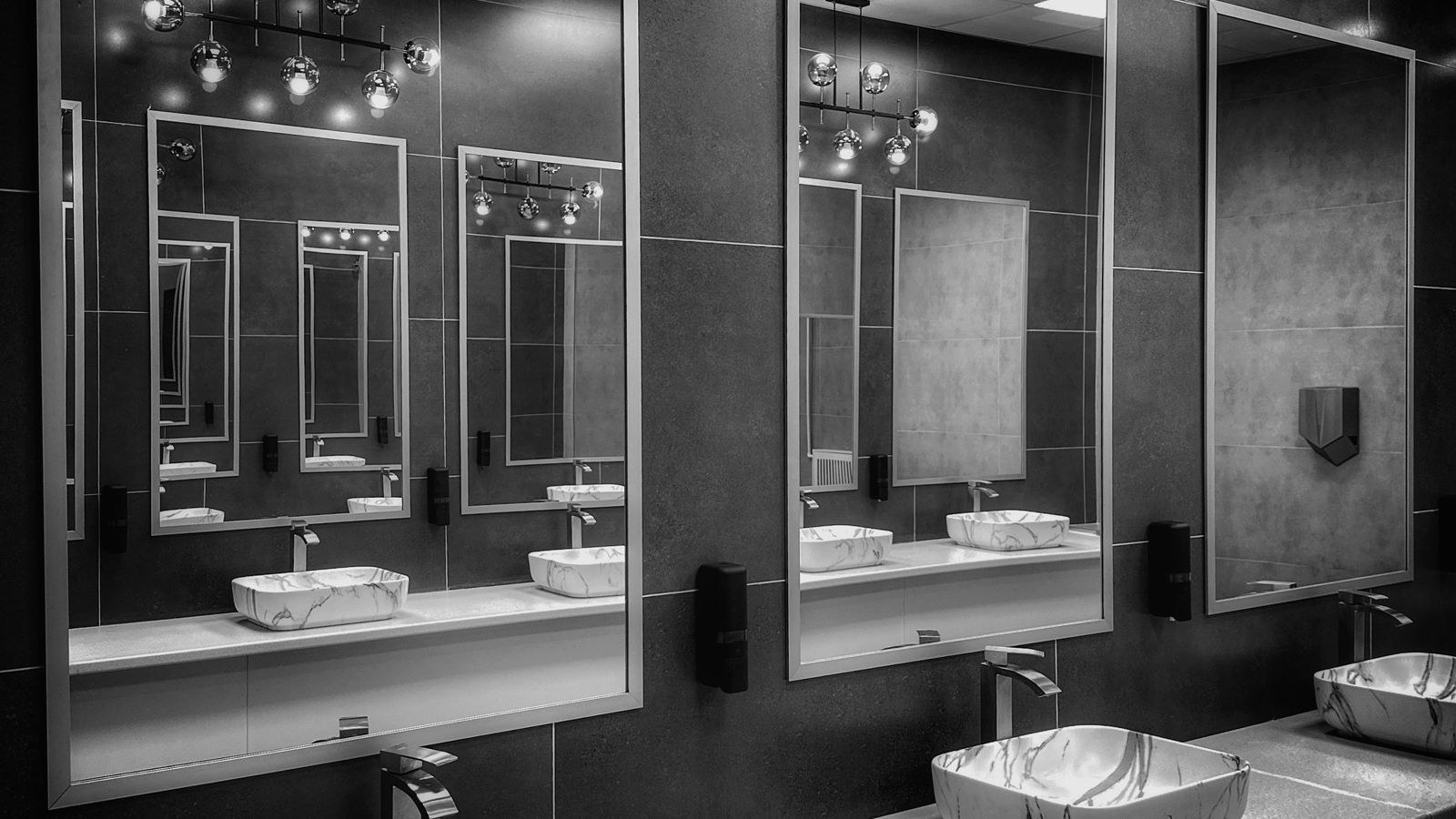
The most common sizing mistake is measuring the cabinet instead of the mirror. Light needs to land on your face, and your face sits in front of the mirror, so the mirror is the reference point that matters. A fixture sized to a wide double vanity but hung over a narrow mirror looks unbalanced and throws much of its output onto the countertop and walls instead of onto you.
Measure the mirror’s width and height first, then note how far the mirror’s top edge sits from the ceiling. Those three numbers determine almost every decision that follows. If you are still choosing a mirror, remember that a taller mirror leaves less headroom for an overhead bar, which may push you toward side-mounted sconces instead.
The Width Rules That Actually Work
For a fixture mounted above the mirror, aim for a width equal to roughly 75 percent of the mirror’s width. A 30-inch mirror pairs naturally with a bar in the 22 to 24 inch range, and a 36-inch mirror suits a 26 to 28 inch fixture. Staying narrower than the mirror keeps the composition tidy and prevents the fixture from visually crowding the wall.
The alternative school of thought sizes the fixture to the vanity cabinet instead, using a width around 60 to 70 percent of the counter. That works when the mirror is much smaller than the cabinet, such as a small round mirror over a 60-inch double vanity. In that case a longer bar spanning more of the counter reads better than a stubby fixture floating over a small circle. Either way, never let the fixture exceed the mirror width, and never let it overhang the vanity edges.
Mounting Height: The 75 to 80 Inch Window
Height decides how flattering the light is. For an overhead bar, the center of the fixture should land roughly 75 to 80 inches above the finished floor. That range puts the light source a few inches above average eye level, so illumination falls forward onto the face rather than straight down from the ceiling. Mount too high and you get raccoon-eye shadows under the brow and nose; mount too low and the fixture blocks the mirror or catches your forehead.
A practical shortcut: leave 3 to 6 inches of gap between the top of the mirror and the bottom of the fixture. If that gap forces the fixture above 82 inches, the mirror is too tall for an overhead bar, and you should look at sconces or a backlit mirror instead. In rooms with 8-foot ceilings this rarely becomes a problem, but 7-foot basement baths and sloped attic bathrooms often do need the alternative approach.
Shade Direction Changes the Math
Fixtures with shades pointing up bounce light off the ceiling for soft, even fill, but they deliver less light to your face and need a light-colored ceiling to work. Shades pointing down throw more usable light onto the counter and face but can create harsher shadows if mounted too high. Fixtures with globes or fully diffused shades scatter light in all directions and are the most forgiving choice when you are unsure. If you want a sense of which formats suit different bathroom layouts, our roundup of the best vanity lighting fixtures groups options by shade style and beam behavior.
Side Sconces and the Shadow Problem
Overhead lighting alone always casts some downward shadow. The professional fix is to add light at eye level on both sides of the mirror, which fills those shadows from the sides and produces the even, wraparound illumination you see in well-designed hotel bathrooms and makeup studios.
Mount sconces with their centers at about 65 to 68 inches above the floor, which sits close to eye height for most adults. Space them 28 to 40 inches apart, which usually means 3 to 6 inches out from each side of the mirror. Sconces closer together produce tighter, more focused light; wider spacing gives a softer wash but starts losing shadow-fill effectiveness past about 40 inches.
When to Choose Sconces Over a Bar
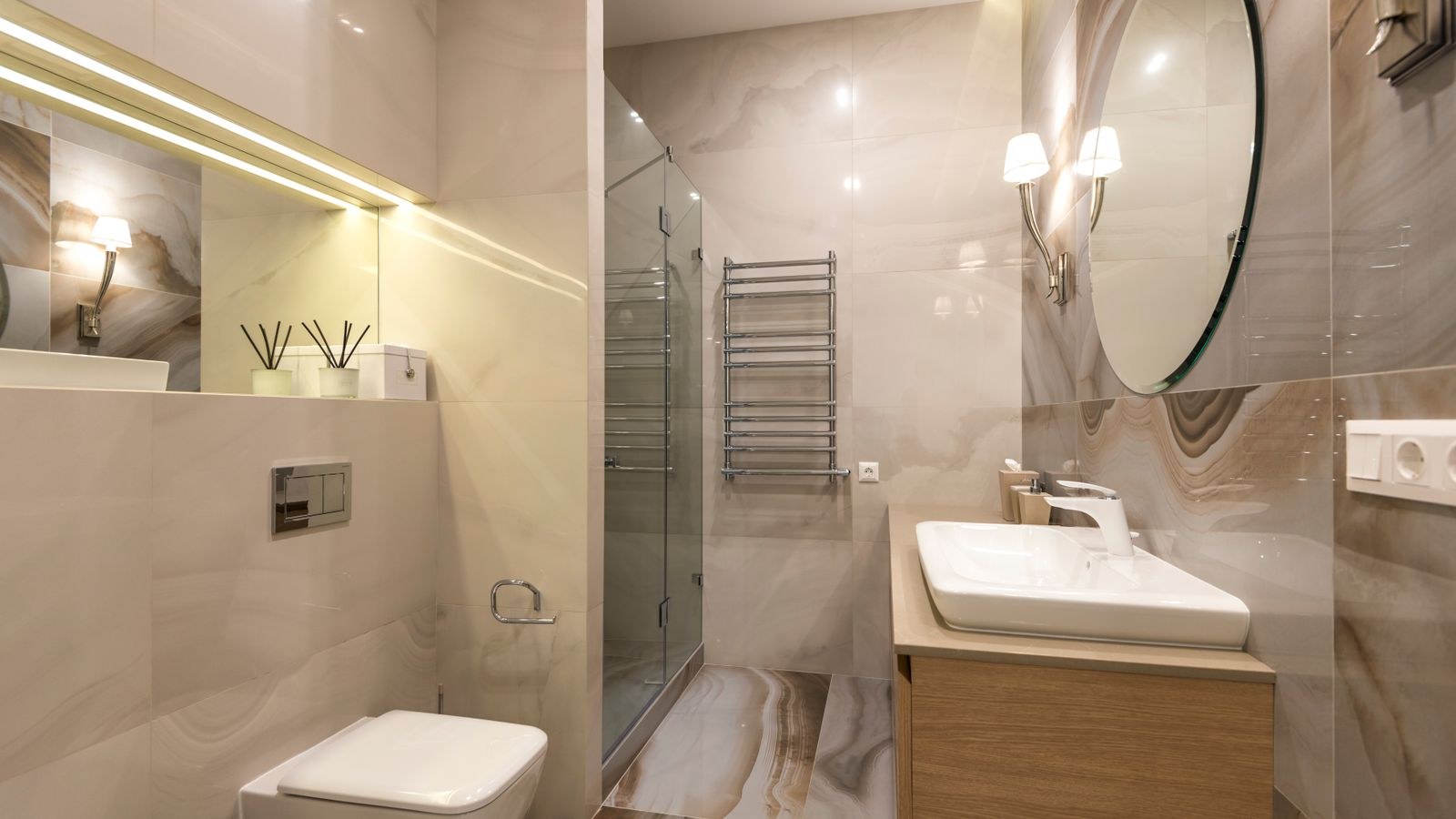
Side sconces make the most sense when the mirror runs floor to ceiling, when the mirror is a tall rectangle that leaves no headroom, or when detailed grooming and makeup application are the priority. They also work beautifully on double vanities, where a single central sconce between two mirrors can serve both stations. The tradeoff is wiring: adding sconces to a wall that only has a single junction box above the mirror means opening drywall, so factor that into remodel planning rather than treating it as a swap-out upgrade.
Sizing for Different Vanity Widths
Standard bathroom vanities cluster around a handful of widths, and each one has a natural fixture pairing. On a 24-inch vanity typical of powder rooms, a single fixture 18 to 20 inches wide works well, or a pair of compact sconces if the wall allows. A 30 to 36-inch vanity, the most common size in secondary bathrooms, takes a 22 to 28 inch bar comfortably.
At 48 inches, you have room for a 36-inch bar or two sconces flanking a single mirror. On a 60 to 72-inch double vanity, resist the urge to stretch one enormous fixture across the whole span. Two separate fixtures, each sized to its own mirror, look far more intentional and light both users evenly. Three sconces, one at each end and one in the middle, is another classic solution that scales well.
Brightness and Color Temperature by Room Size
Size is not only physical. A perfectly proportioned fixture that produces too little light still fails. As a working target, aim for roughly 1,500 to 2,500 lumens of total output at the vanity in a typical bathroom, split across however many fixtures you install. Small powder rooms can sit at the lower end; large primary bathrooms with dark tile need the upper end or more.
Color temperature matters just as much. Choose bulbs in the 2700K to 3000K range for warm, relaxed light that suits most homes, or step to 3500K to 4000K if you want crisper light for grooming tasks. Look for a color rendering index of 90 or higher so skin tones and makeup shades read accurately. Our guide to the best vanity light bulbs covers how lumen output, CRI, and dimming behavior interact once the fixture is on the wall.
Dimming Is Worth the Extra Wiring
The same bathroom needs blazing light for shaving at 7 a.m. and gentle light at midnight. A dimmer solves this without compromise, but only if the bulbs and the switch are compatible. Confirm the fixture is dimmable, then match it with a dimmer rated for LED loads. Mismatched pairs flicker at low settings, which is the single most common complaint after an otherwise successful vanity upgrade.
Depth, Clearance, and Practical Fit
Two dimensions people forget are projection and clearance. Projection is how far the fixture extends from the wall, typically 4 to 8 inches. A deep fixture over a shallow vanity can sit uncomfortably close to your head when you lean toward the mirror, so check the specification against how far your counter extends.
Clearance rules also apply near showers and tubs. Fixtures within a defined zone above and around a tub or shower must be rated for damp or wet locations, and local electrical codes set minimum distances. Any fixture over a vanity should sit outside that zone, but in compact bathrooms where the vanity sits close to the tub, confirm the rating before buying. Choosing from a shortlist of the best lights for bathroom vanities makes this easier, since damp-rated options are common in that category.
Common Vanity Lighting Mistakes
- Mounting too high. Anything above 82 inches starts casting shadows down the face instead of onto it.
- Buying a fixture wider than the mirror. It looks top-heavy and wastes light on side walls.
- Relying on a single ceiling can light. Overhead-only lighting is the worst possible geometry for grooming.
- Mixing color temperatures. A 2700K bar with 4000K ceiling cans makes skin tones look muddy.
- Skipping the dimmer. One brightness level never suits both morning routines and late nights.
- Ignoring CRI. Low-CRI bulbs distort makeup colors, so what looks right at the mirror looks wrong outdoors.
A Quick Sizing Checklist Before You Buy
- Measure mirror width and multiply by 0.75 to get your target fixture width.
- Measure from the floor to the top of the mirror and confirm the fixture can sit within 75 to 80 inches at its center.
- Check the gap left between mirror top and fixture bottom; 3 to 6 inches is the sweet spot.
- Decide overhead bar, side sconces, or both based on mirror height and grooming needs.
- Add up lumens across all fixtures and compare against your room size.
- Verify projection depth, damp rating, and dimmer compatibility before ordering.
Frequently Asked Questions
How wide should a vanity light be for a 36-inch mirror?
Aim for 26 to 28 inches, which is about 75 percent of the mirror width. Staying slightly narrower than the mirror keeps the proportions balanced and directs more of the output onto your face rather than the surrounding wall.
Can I mount a vanity light directly on the mirror?
Yes, provided the mirror is drilled for it or the fixture is designed for mirror mounting. This approach lowers the light source closer to eye level and works well when there is no wall space above the mirror, but it requires planning before the mirror is installed.
Should the fixture face up or down?
Downward-facing shades put more light on the face and counter, while upward-facing shades bounce softer light off the ceiling. If you want strong task light for shaving or makeup, choose downward or fully diffused shades; if you want ambient softness, upward works well alongside another light source.
Do I need side sconces if I already have a bar above the mirror?
Not necessarily, but sconces make a real difference for detailed grooming because they fill shadows from the sides. If makeup application is a priority, the combination is worth the extra wiring. See our picks for the best bathroom lighting for makeup for setups built around shadow-free coverage.
What height should sconces be mounted at?
Center them 65 to 68 inches from the finished floor, roughly at eye level, and space them 28 to 40 inches apart. Higher than that and they lose their shadow-filling advantage over an overhead bar.
Final Thoughts
Vanity light sizing comes down to three measurements you can take in five minutes: mirror width for the fixture width, floor-to-center height for the mounting position, and mirror-to-fixture gap for the visual balance. Get those right and almost any style of fixture will perform well. Add a dimmer, pick bulbs with a high color rendering index in a temperature you like, and consider side sconces if grooming precision matters to you. Do that and your bathroom lighting will look intentional and work properly, instead of being one more thing you notice every morning and never quite fix.