Owen Bradley
 A small space desk has one job: deliver a genuine working surface without eating the room it sits in. That sounds simple, and it is where most compact desk purchases go wrong. Buyers shop by footprint alone, choose the narrowest thing they can find, and end up with 18 inches of depth that will not hold a monitor at a sensible viewing distance. Usable surface, not overall size, is the metric that matters. This guide ranks the realistic options for a tiny home office, from compact rectangular desks to folding and wall-mounted designs, and shows how to get a full workstation into a corner of a bedroom, a hallway alcove or a studio apartment.
Define Your Minimum Before You Shop
Work out the smallest surface that still does the job, then treat that as a floor you will not go below. Three numbers define it.
- Depth. A laptop alone works at 20 inches. A 24-inch monitor on its factory stand needs about 26 inches. A 27-inch monitor wants 30 inches, or 22 inches if you use a monitor arm and reclaim the stand footprint. Depth is the dimension people cut first and regret most.
- Width. 40 inches handles a laptop and a notebook. 47 inches fits a monitor plus a full-size keyboard and mouse. Below 36 inches you are choosing between the keyboard and everything else.
- Knee clearance. At least 24 inches of width and 22 inches of depth under the surface, free of drawers and cross-braces. This is the specification compact desks quietly sacrifice.
If a desk cannot deliver your minimum depth, no amount of clever styling redeems it. It is better to have a 40-by-26 inch desk than a 55-by-18 inch console table, even though the console table is technically wider.
Option One: Compact Rectangular Desks
The straightforward answer, and usually the right one. A compact desk in the 40-to-47-inch width range with 24 to 26 inches of depth fits against most walls, costs less than the alternatives, and gives you a stable, permanent surface with no compromise in daily use. Against a wall it occupies a strip roughly two feet deep and leaves the rest of the room intact.
The trade-off is that it is always there. In a bedroom or studio where the same square footage serves another purpose in the evening, a permanent desk can dominate. Where that is acceptable, it beats every other option on rigidity, cost and convenience. The roundup of the best compact desks covers models that keep full depth while shrinking width, which is exactly the right trade to make.
Option Two: Corner and Angled Desks
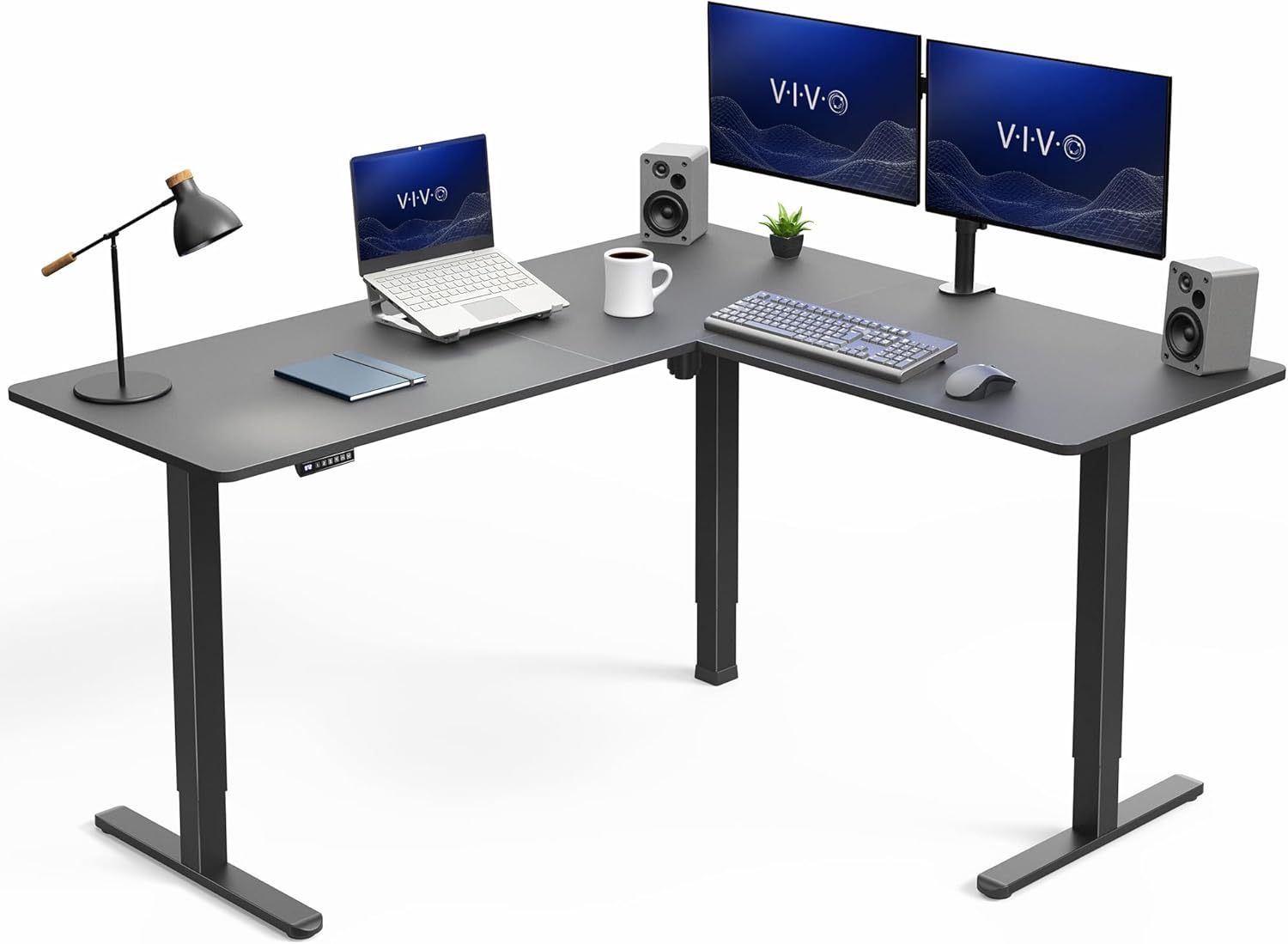
A corner unit uses floor space that furniture rarely occupies, and in a square room it is the most efficient shape available. A 47-by-47 inch corner desk gives more usable surface than a 55-inch straight desk while projecting less far into the room from either wall.
Two cautions. First, the deepest part of the corner sits beyond comfortable seated reach, so treat it as storage rather than workspace. Second, corners often hold radiators, pipe boxing or window returns that stop the desk sitting flush. Measure at desk height rather than at the skirting before you commit.
Option Three: Folding and Drop-Leaf Desks
Folding desks buy back floor space when you are not working, which is genuinely valuable in a studio or a shared room. A wall-mounted drop-leaf collapses to two or three inches of projection; a freestanding folding desk stows flat against a wall or in a closet.
The costs are real. Folding mechanisms are the weakest point structurally, so expect more flex under a monitor arm or when typing hard. Setup and teardown friction is the bigger issue: a desk that takes two minutes to deploy is a desk you will stop deploying. And a folding desk forces you to clear the surface every time, which means no permanent monitor, no docked machine and no cable routing worth the name. They suit laptop-based work and occasional use, not a daily workstation. If that matches your pattern, the best foldable desks list covers designs with the sturdiest mechanisms.
Option Four: Wall-Mounted and Floating Desks
A floating desk removes legs entirely, which does more for perceived space than any other change. Visually the floor stays continuous, and practically you can push a chair fully underneath and slide storage below. Mounting height is yours to choose, which means you can set the exact ergonomic height instead of accepting a standard 29 inches.
Everything depends on the fixing. A floating desk transfers all load and leverage into the wall, so it needs to meet studs in a timber wall or proper heavy-duty anchors in masonry. Plasterboard fixings alone will not hold a desk you lean on. Get the mounting right and a floating desk is the strongest small-space option; get it wrong and it is the only one that can fail dangerously.
Going Vertical to Free the Surface
In a small room the fastest way to gain desk space is to stop using the desk for storage. Four moves reclaim most of a compact surface.
- Mount the monitor. A clamp arm removes the stand base and frees 10 to 12 inches of depth, effectively converting a 24-inch-deep desk into a 34-inch one for viewing purposes. This is the single highest-value change on any small desk.
- Move the tower off the surface. An under-desk CPU sling or a floor position with a dust guard recovers a large block of area.
- Add a shelf above. A single 8-inch shelf at head height takes speakers, a router, books and a lamp without touching floor space.
- Use under-desk trays. A slim keyboard tray or a clamp-on drawer stores peripherals without a pedestal that eats knee room.
Do all four and a 40-by-24 inch desk supports a setup that would otherwise need a desk half again as large.
Height Adjustment in a Small Room
Compact sit-stand desks exist and are worth considering when the room serves multiple purposes, because standing removes the chair from the floor for part of the day. Single-column and crank models fit narrower footprints than dual-motor frames, though they flex more at full extension. Check the minimum height as well as the maximum: many frames bottom out around 28 inches, which is too high for shorter users and defeats the purpose of buying adjustable in the first place.
A cheaper route is a fixed desk at the correct seated height plus a small desktop riser for occasional standing. It costs a fraction as much, adds no footprint, and suits people who stand for an hour a day rather than half the day.
Layout Tactics That Make a Room Feel Bigger
Placement matters as much as the desk itself. Facing a window rather than a wall makes a small room feel considerably less enclosed, and the natural light reduces eye strain. Where a window is not available, avoid pushing the desk into the darkest corner; a wall-mounted lamp costs little and adds no surface clutter.
Choose a light-coloured or glass top if the room is dark, and prefer a desk with open legs over a solid panel base, since visible floor underneath reads as more space. Keep the chair proportionate too: a full-size racing chair in a 9-by-9 foot room dominates it, and a compact task chair that tucks fully under the desk will free real circulation space. Broader treatments of these layout choices appear in the best desks for small spaces and best desks for small home office roundups.
Gaming in a Small Space
Gaming setups need more surface than office work because of the mouse sweep. A low-sensitivity player needs 16 to 20 inches of clear lateral space, which pushes minimum width to around 47 inches even in a tight room. The way to find it is depth efficiency: mount the monitor, put the tower on the floor, and use a keyboard tray if the sweep still feels cramped.
Console setups are easier, since the console can live on a shelf and the controller needs no desk space at all. Either way, prioritise a rigid top over a large one; a flexing desk transmits every keystroke into the monitor. Models that balance a small footprint against gaming requirements are collected in the best small gaming desks shortlist.
Common Mistakes
- Buying a console table as a desk. Wide and shallow looks efficient and fails the depth test immediately.
- Choosing a drawer pedestal in a narrow desk. It consumes the knee clearance that makes the desk usable.
- Skipping the monitor arm. It is the cheapest way to add effective depth and the most commonly omitted.
- Mounting a floating desk into plasterboard alone. Find the studs or use rated masonry anchors.
- Assuming a folding desk will be folded. If you work daily, it will stay open, so buy for the open footprint.
- Ignoring the chair footprint. The chair often occupies more floor than the desk does.
Frequently Asked Questions
What is the smallest practical desk size?
Around 40 inches wide by 24 inches deep for a monitor-based setup, or 36 by 20 inches for laptop-only work. Below that, depth rather than width becomes the limiting factor.
Is a wall-mounted desk sturdy enough for a monitor?
Yes, when it is fixed into studs or rated masonry anchors. Properly mounted floating desks are often more rigid than folding or lightweight legged models.
Does a corner desk save more space than a straight one?
In a square room, usually yes, because it uses a corner that other furniture cannot occupy. In a narrow room, a straight desk against the long wall often wins.
Can I fit a dual monitor setup in a small space?
With a dual monitor arm and at least 47 inches of width, yes. The arm is what makes it possible by removing both stand bases from the surface.
Final Thoughts
The right small space desk is the one that protects depth and knee clearance while shrinking everything else. Set your minimum dimensions first, then choose the format that matches how the room is used: a compact rectangular desk for a dedicated corner, a corner unit in a square room, a floating desk where floor space is the priority, and a folding desk only where the surface genuinely gets stowed. Add a monitor arm and a shelf above, move the tower to the floor, and keep the chair proportionate. Applied together in 2026, those choices turn even a tiny room into a workstation that feels deliberate rather than squeezed.