Owen Bradley
 Shopping for a height-adjustable desk quickly narrows to one fork in the road: single motor or dual motor. The price gap is real, often a couple of hundred dollars for what looks like the same desk, and the marketing rarely explains what you actually gain. A single motor drives both legs from one gearbox through a connecting shaft. A dual motor puts an independent motor in each leg and synchronises them electronically. That structural difference changes lift speed, weight capacity, noise, smoothness, and how the desk ages. This comparison lays out where the upgrade genuinely pays for itself and where a single motor frame is the smarter buy, so you can spend the difference on a monitor arm or a better chair instead. The reasoning holds regardless of which brands are trending in 2026.
How Each System Works
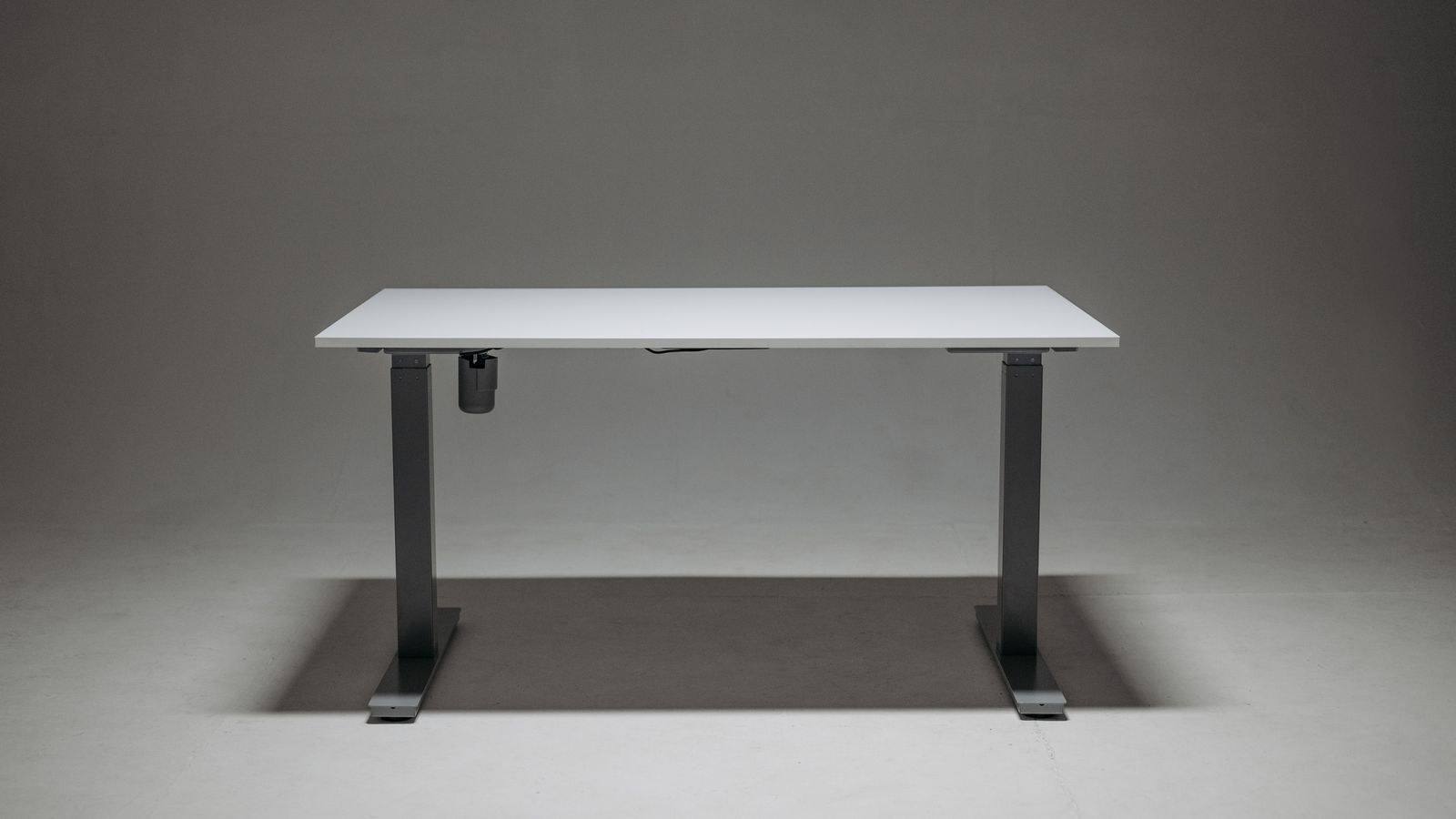
A single motor desk houses one motor, usually under the crossbar or inside one leg, connected to the second leg by a steel drive shaft. Turning that shaft raises both columns together. Because they are mechanically linked, the legs cannot drift out of sync, but everything the desk lifts passes through one gearbox and one shaft.
A dual motor desk gives each leg its own motor and gearbox. There is no drive shaft, so each column lifts independently and the control board keeps them level, correcting tiny differences on the fly. Splitting the work in half means each motor works well below its limit, which is the root cause of nearly every practical advantage the design has.
Why the Difference Compounds
A motor running near its rated limit runs hot, slow, and loud, and heat is what eventually kills electric motors. Two motors sharing a heavy top spend their lives in a comfortable band. That single fact explains the speed difference, the noise difference, the capacity difference, and much of the longevity difference between the two designs. It is not that dual motors are made of better metal, it is that each one is doing half the job.
Weight Capacity: The Clearest Gap
Single motor frames typically advertise somewhere around 155 to 220 lb of lifting capacity. Dual motor frames commonly claim 265 to 355 lb, with heavy-duty models going further. Those numbers include the desktop itself, which surprises a lot of buyers: a solid bamboo or hardwood top at 60 by 30 inches can weigh 60 to 90 lb before you place anything on it.
Add up your real load honestly. A tower PC, two 27-inch monitors on a heavy arm, a laptop dock, speakers, and a stack of books can total 80 to 120 lb. On top of a heavy desktop, that puts you uncomfortably close to a single motor frame’s ceiling, and a motor that lives at its limit will slow down and get noisy within a year or two. If your total is under about 100 lb including the top, a single motor has ample headroom. Above 150 lb, dual motor is the honest answer.
Lift Speed and Smoothness
Single motor desks generally travel at roughly 1 inch per second unloaded, and noticeably slower under load. Dual motor desks typically manage 1.4 to 1.6 inches per second and hold that speed far better when loaded. Over a 15-inch transition that is the difference between about 15 seconds and about 10 seconds.
Five seconds sounds trivial until you factor in behaviour. Ergonomics research consistently shows the benefit of a sit-stand desk comes from switching often, and people switch less when switching feels slow. A sluggish, groaning desk quietly trains you to stay put. Smoothness matters too: dual motor frames start and stop with less jolt, which matters if a full mug of coffee lives on your desk, and it is a large part of why premium frames feel more inviting to use throughout the day.
Noise Levels
Single motor desks under load commonly run in the 50 to 55 dB range, roughly a normal conversation. Dual motor desks usually land nearer 40 to 50 dB, closer to a quiet room. In a home office alone, this is a footnote. On a video call, in a shared apartment, or in an office where you sit next to someone, it is the difference between adjusting freely and waiting for a break in the meeting.
Noise also drifts upward as a frame ages, and it drifts fastest on frames that run near capacity. If you already know you will be adjusting during calls, treat quiet operation as a functional requirement rather than a luxury.
Stability, Wobble, and Frame Design
This is where the comparison gets misread. Motor count does not directly determine wobble. Stability comes from column count, leg cross-section, crossbar design, and foot depth. A three-stage single motor frame with beefy legs can easily be steadier than a two-stage dual motor frame with thin ones.
What is true is that dual motor frames are more often built as three-stage designs with wider columns, because manufacturers pair the premium motor system with a premium frame. So dual motor desks tend to be more stable in practice, but you are paying for the frame, not the second motor. Judge the frame on its own merits; the roundup of the best standing desk frames is a good place to compare column staging and crossbar layouts directly.
Two-Stage Versus Three-Stage Legs
Two-stage legs have two nested segments and less total travel, often around 25 to 50 inches. Three-stage legs add a segment, giving both a lower minimum and a higher maximum, plus faster travel because all segments move at once. Very short and very tall users should prioritise three-stage regardless of motor count, because reaching a genuinely correct height matters far more than shaving seconds off a transition.
Reliability and Warranty
The intuition that two motors means two things to break is mostly wrong. In practice, single motor frames have a distinctive failure point of their own: the drive shaft and its couplers. Under repeated heavy load, couplers can wear or the shaft can bind, and a single overloaded gearbox is a common failure too.
Dual motor systems remove the shaft entirely and run each motor gently. Their weak point is the electronic sync: if a controller loses its reference the legs can end up slightly uneven, which a reset procedure normally fixes in under a minute. Warranties tell the story. Single motor frames often carry 3 to 5 years on the motor; dual motor frames commonly carry 5 to 10 or even lifetime frame coverage. Manufacturers price warranty by expected claims, so that spread is a useful signal.
Price and Who Should Buy Which
Expect single motor complete desks to start meaningfully below dual motor equivalents, with frame-only kits following the same pattern. Here is how the decision usually shakes out.
- Buy single motor if: your total load including the top is under roughly 100 lb, you use a laptop or one monitor, you work alone so noise is irrelevant, your desktop is 48 inches or narrower, and budget is the binding constraint.
- Buy dual motor if: you run multiple monitors or a tower PC, your desktop is 60 inches or wider or made of solid wood, you switch positions several times a day, you share the space, or you want the longer warranty on a desk you plan to keep for a decade.
If you are undecided, browse the best electric standing desks to see how the two tiers are priced against each other in complete packages, and the broader best standing desks list for options across both categories.
What Actually Deserves Your Money First
If the price gap forces a trade-off, spend in this order. First, frame quality and staging, because a wobbly desk gets abandoned. Second, desktop size and material, because that is what you touch all day. Third, motor count. Fourth, extras like memory presets and cable trays. A single motor three-stage frame with a great top beats a dual motor two-stage frame with a thin laminate slab for most users.
One caveat: if you already know your load is heavy, motor count jumps to the top of the list, because no amount of desktop quality rescues a motor straining at its limit. Weigh your gear before deciding. Those hunting frame-only upgrades can compare full kits among the best sit-stand desks and read our walkthrough on how to choose a standing desk frame for the measurement details.
Common Mistakes Buyers Make
- Forgetting the desktop in the capacity math. A heavy solid-wood top can eat a third of a single motor’s rated lift before anything else goes on it.
- Assuming dual motor cures wobble. Wobble is a frame geometry issue. Check column staging and foot depth instead.
- Buying by advertised speed alone. Quoted speeds are unloaded. Ask how the desk performs with weight on it.
- Ignoring the height range. A desk that will not go low enough for a shorter user or high enough for a taller one is useless no matter how many motors it has.
- Skipping the warranty comparison. Coverage length is the clearest public signal of how long a manufacturer expects the system to last.
Frequently Asked Questions
Is a dual motor standing desk worth the extra cost?
It is if you carry a heavy load, use a wide or solid-wood top, adjust several times a day, or want the longer warranty. For a laptop and one monitor on a 48-inch desk, a good single motor frame does the job and leaves budget for a better chair.
Do single motor desks wobble more?
Not because of the motor. Wobble comes from leg thickness, column staging, crossbar design, and foot depth. Single motor frames often pair with lighter frames, which is the real source of the reputation.
Are dual motor desks quieter?
Generally yes, usually by around 5 to 10 dB under load, because each motor runs well below its limit. That gap matters most in shared spaces and during video calls.
Can I upgrade a single motor desk to dual motor later?
Practically, no. The legs, controller, and wiring are all different. Replacing the frame is the actual upgrade path, which is why it is worth deciding correctly at purchase.
What happens if dual motor legs get out of sync?
The desk may look slightly tilted or refuse to move. Every dual motor controller has a reset routine, usually holding the down button until the legs bottom out and re-register. It takes about a minute and is not a repair.
Final Thoughts
The single versus dual motor question is really a load question wearing a spec-sheet disguise. Weigh your desktop, add every piece of gear that will live on it, and compare that total against the frame’s rated capacity with real headroom to spare. If you clear it comfortably and you work alone, a single motor frame is a sound, economical choice that will serve for years. If you are anywhere near the limit, want faster and quieter transitions, or plan to keep the desk for a decade, the second motor buys real durability rather than a marketing bullet. Either way, put frame quality and desktop size ahead of motor count in your budget, and you will end up with a desk you actually raise and lower instead of one that quietly stays seated.