Owen Bradley
 A rug that is too small is the most common decorating error in any living room, and it is instantly recognizable: furniture floating around a small island of pattern, with the whole seating group looking somehow unanchored. The fix is not a better rug, it is a bigger one. Getting the rug size for a living room right is a matter of a few repeatable rules about which furniture legs land on the rug and how much bare floor you leave at the edges. This tutorial walks through measuring, choosing between the three standard placement rules, and taping the size out before you buy, so the rug you order in 2026 sits under the room properly.
What You Need
- A 25-foot tape measure.
- Painter’s tape, at least 1 inch wide, to mark the rug outline on the floor.
- Paper and pencil for a quick sketch of the seating group.
- A note of your seating dimensions, especially sofa width and chair depth.
Standard rug sizes are worth memorizing, because they constrain your options more than any design consideration: 5×8, 6×9, 8×10, 9×12, 10×14 and 12×15 feet cover most of the market, with runners and rounds alongside. Custom sizes exist but cost considerably more, so plan around these.
The Three Placement Rules
Every workable living room rug follows one of three approaches. Choose the rule first, then let it dictate the size.
All Legs On
Every leg of every seating piece sits fully on the rug, with the rug extending beyond the furniture on all sides. This is the most generous and most cohesive look, it defines a seating zone clearly, and it is the best choice for open-plan spaces where the rug does the job a wall would otherwise do. It requires the largest rug, usually 9×12 or bigger, and correspondingly the largest budget.
Front Legs On
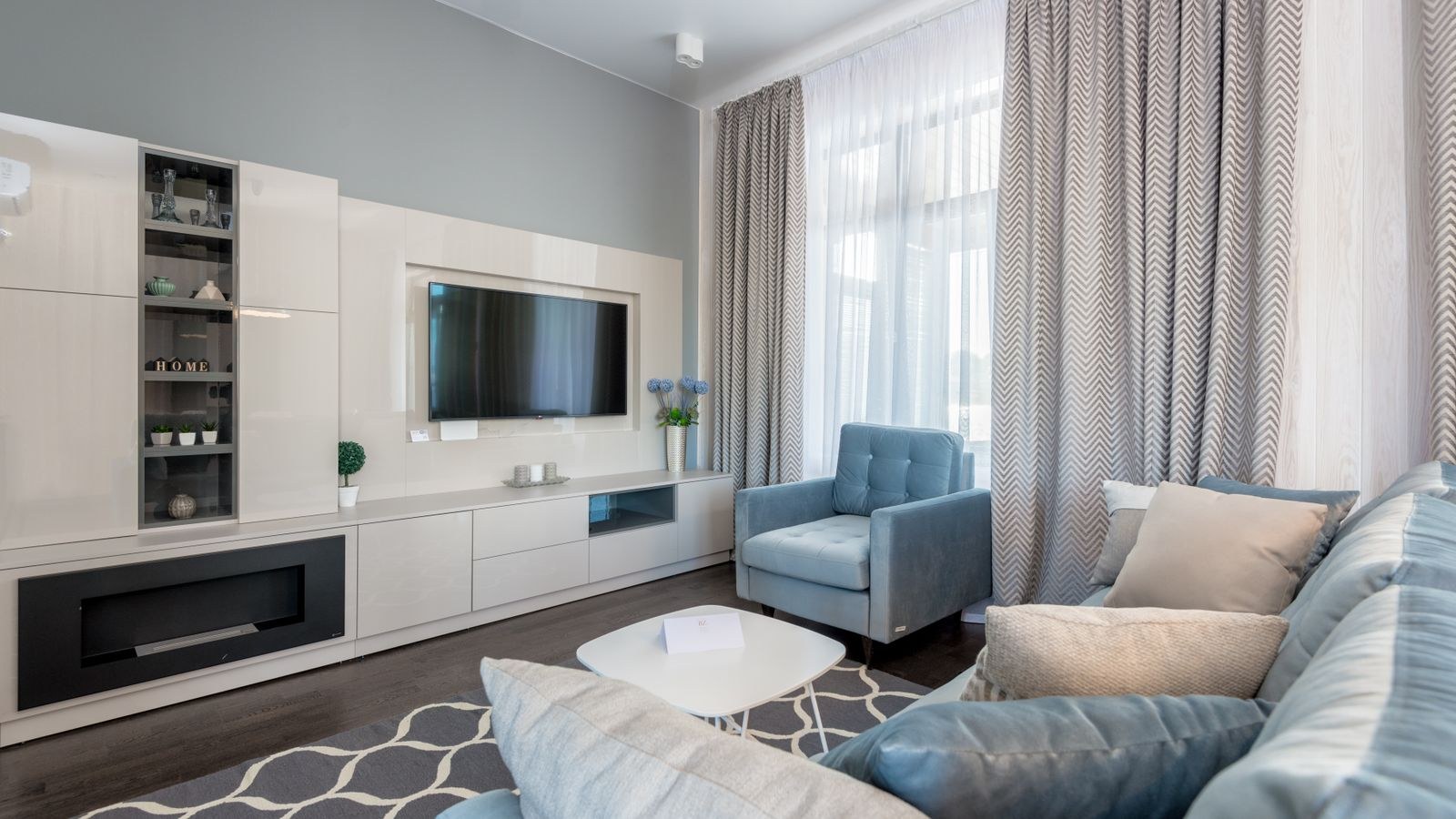
The front legs of the sofa and chairs rest on the rug while the back legs sit on bare floor. This is the workhorse rule for average rooms. It still visually ties the group together, it forgives a slightly smaller rug, and it is usually the sensible answer when an 8×10 fits but a 9×12 does not. The one requirement is consistency: if the sofa has front legs on, the chairs must too.
Floating
The rug sits entirely inside the seating group with no furniture on it at all, functioning as a centerpiece under the coffee table. It works in small rooms and in spaces where the furniture is against the walls anyway, but it is the least anchoring option and looks accidental if the rug is much smaller than the space between the seats.
Step-by-Step: Sizing Your Rug
- Settle the furniture layout first. A rug is sized to a seating arrangement, not to a room, so decide where the sofa and chairs go before you measure anything. If the layout is still moving, the rug size will move with it.
- Measure the overall seating footprint. Run the tape across the full width of the group, from the outer edge of the leftmost piece to the outer edge of the rightmost. Then measure the depth, from the front of the sofa to the front edge of whatever sits opposite it.
- Choose your placement rule. All legs on, front legs on, or floating. Base this on the room size and your budget, not on what looks appealing in a photograph of a much larger house.
- Add the required margin. For all legs on, add at least 18 inches to the footprint on every side, and preferably 24. For front legs on, the rug should extend under the front third of each piece and run at least the full width of the sofa plus 6 to 12 inches at each end. For floating, size it to roughly the coffee table plus 24 to 36 inches all around.
- Check the perimeter gap. Leave 12 to 24 inches of bare floor between the rug edge and the walls. In a small room, 8 inches is acceptable, but a rug that runs wall to wall stops reading as an area rug and starts reading as failed carpet.
- Round to the nearest standard size. Compare your calculated dimensions against 5×8, 6×9, 8×10, 9×12 and 10×14, and when you fall between two, choose the larger one. Nobody has ever regretted a rug being slightly too big.
- Tape the outline on the floor. Mark the exact rectangle with painter’s tape and leave it for a day. Walk the room, sit on the sofa, and look at where the tape line falls relative to the furniture legs and the walls.
- Confirm door clearance. Open every door that swings across the taped area and check it clears the rug’s pile height plus the pad. This is the single most common late discovery, and it is a real problem with thick wool or shag.
- Order a pad in the same size. Buy the pad to the rug’s dimensions and trim it about 1 inch smaller on each side so it disappears under the edge. A pad adds cushioning, stops slipping and materially extends the rug’s life.
Sizing Around Different Seating Layouts
The rules above assume a fairly standard sofa-plus-chairs group. Some arrangements need a small adjustment.
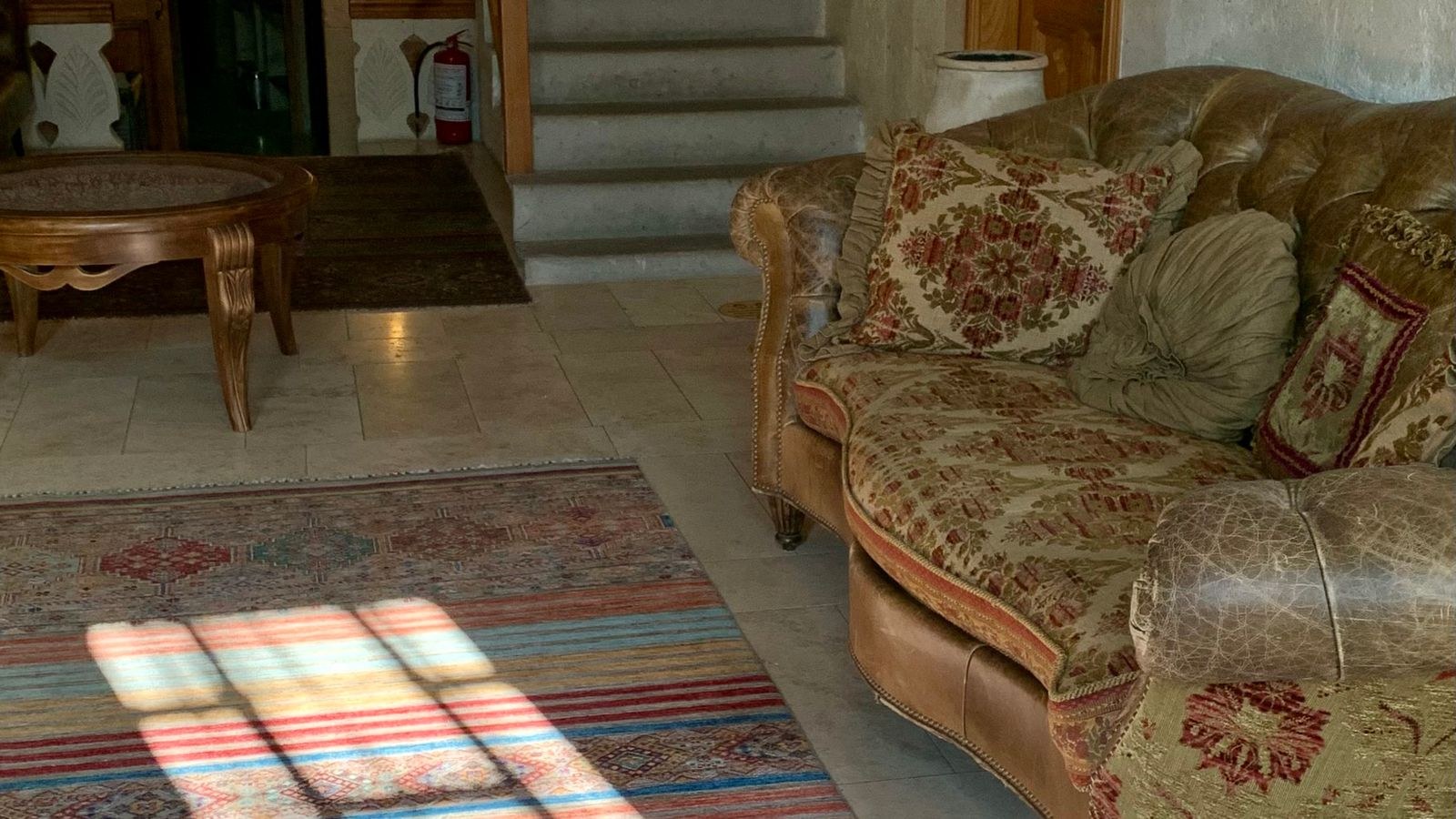
With a sectional, treat the whole L as one object and measure the outer footprint including the chaise. Sectionals almost always demand a 9×12 or larger if you want anything beyond a floating rug, and the rug should extend past the chaise foot rather than stopping at it. If you are still choosing the seating, shapes and chaise lengths vary widely across the best sectional sofas, and picking that first makes the rug decision far simpler.
With a facing pair, where two sofas sit opposite each other, the rug needs to reach under both, so measure the total depth from outer front leg to outer front leg and add margin. This layout usually pushes you to the larger end of the standard sizes.
In an open-plan space, use the all-legs-on rule if you can afford it, because the rug is doing the work of defining the room. Choose the sofa and the rug together as a pair; comparing widths and depths among the best sofas before ordering the rug prevents a mismatch between a deep frame and a shallow rug.
Shape, Pile and Material Considerations
Rectangular rugs suit rectangular seating groups, which covers most living rooms. Round rugs work under a small circular table or in a reading corner, and they soften a room full of hard angles, but they rarely anchor a full seating group well. Runners belong in halls and beside beds, not in the middle of a living room.
Pile height affects both look and practicality. Low pile, under about half an inch, is easiest to vacuum, clears doors reliably and suits high-traffic rooms. Medium pile adds warmth and hides crumbs. High pile and shag feel wonderful underfoot but trap debris, crush under furniture legs and can catch a door. If you have pets or heavy footfall, low or medium pile in a wool or a good synthetic will outlast anything plush, and keeping it clean is easier with equipment matched to the surface, which our roundup of the best vacuums for carpets covers in detail.
Where Chairs Change the Math
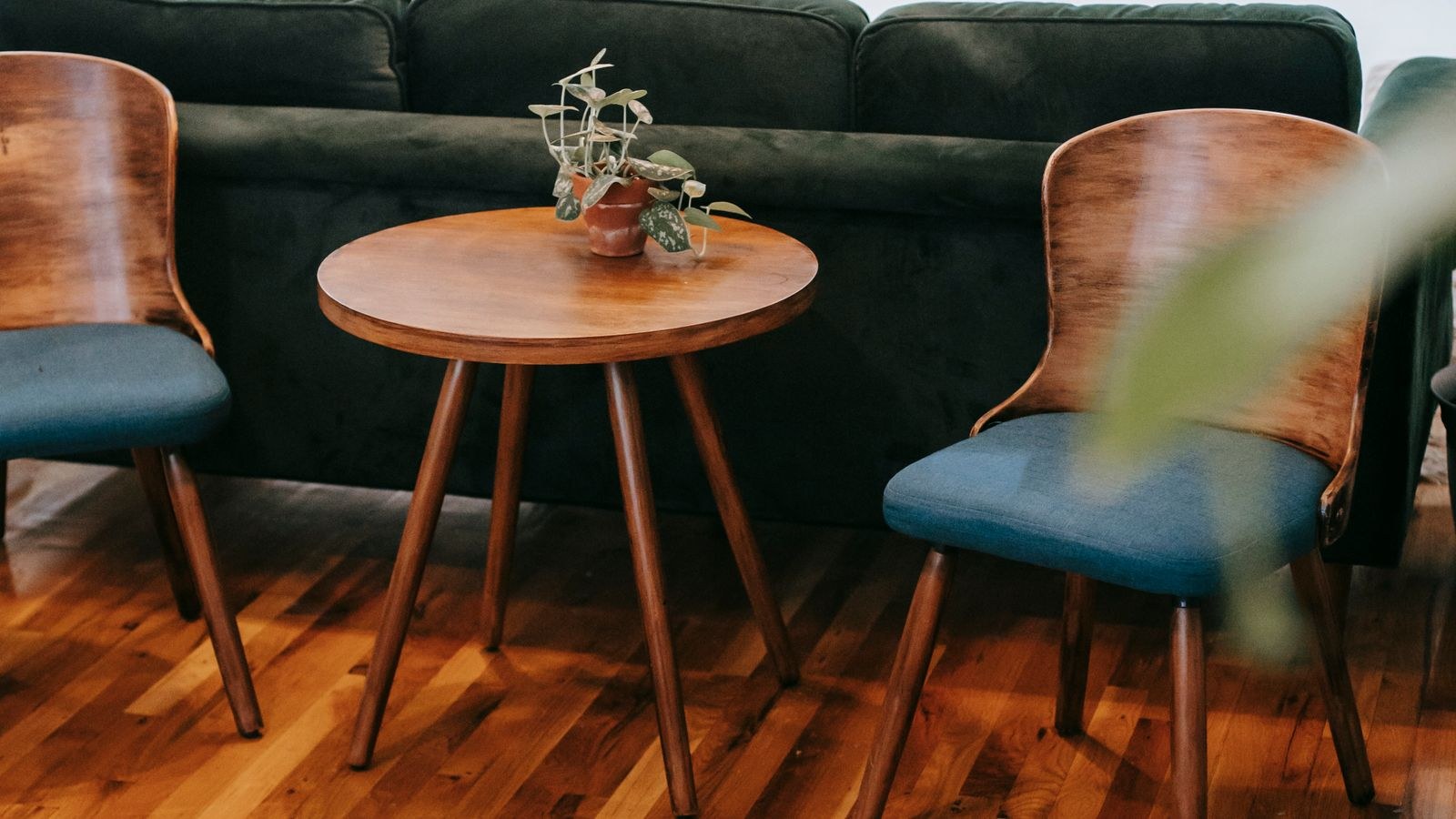
Chairs are the pieces most likely to end up half on and half off a rug, which is the one outcome to avoid. If a chair sits at an angle in a corner of the group, either bring it fully onto the rug or move it fully off; a chair with two legs on and two off wobbles and looks unresolved.
When a chair simply will not fit the rug you can afford, the practical fix is a smaller chair rather than a bigger rug. Compact frames sit closer to the group and land on the rug without pushing the whole arrangement outward, and the best living room chairs and best accent chairs both include narrow-footprint designs that solve this cleanly.
Common Rug Sizing Mistakes
- Buying too small. The default error. When in doubt, go up one standard size.
- Sizing to the room instead of the seating. A rug anchors furniture, not walls.
- Mixing placement rules. Sofa all legs on with chairs floating looks like a mistake, because it is one.
- Filling the floor edge to edge. Leave 12 to 24 inches of bare floor as a border.
- Forgetting the door swing. Measure the gap under every door before choosing pile height.
- Skipping the pad. It costs little and prevents slipping, crushing and premature wear.
Frequently Asked Questions
What size rug fits a standard living room?
An 8×10 suits most rooms around 12 by 14 feet with a three-seat sofa and two chairs, using the front-legs-on rule. Larger rooms move to 9×12, and small apartments often work best at 5×8 floating.
Should the rug be wider than the sofa?
Yes. Aim for the rug to extend at least 6 to 12 inches past each end of the sofa. A rug narrower than the sofa makes the whole group look pinched.
Can I put a small rug in a big room?
Only if it floats deliberately inside a tight seating group, or if you layer it over a larger neutral base rug. On its own in a large space, it will look undersized.
How much floor should show around a rug?
Between 12 and 24 inches on each side in an average room, and at least 8 inches in a small one. Keep the border roughly even on all sides so the rug looks centered.
Final Thoughts
Sizing a rug well takes one decision and one measurement. Decide which placement rule you are following, measure the seating footprint, add the margin that rule requires, round up to the nearest standard size, and tape it out on the floor before you buy. Leave a consistent border of bare floor, match the pile height to your traffic and door clearance, and always add a pad. Get those steps right and the rug will do what it is supposed to do, which is make the whole seating group look like it belongs together.