 Owen Bradley
If you are under about 5 feet 4 inches, the standard office chair is not neutral equipment, it is a chair designed for someone else. The seat sits too high for your feet to reach the floor, the pan is so deep that leaning back leaves a gap behind your lower spine, the armrests never drop far enough to support your elbows, and the lumbar curve lands somewhere between your shoulder blades. The result is the familiar posture of shorter users everywhere: perched on the front edge, feet dangling or tucked under the chair, shoulders hunched toward armrests that will not come down. Every one of those problems is a measurement problem, and every one of them can be filtered for before you buy. This sizing guide lists the exact numbers to check on any listing in 2026.
Why Standard Chairs Do Not Fit
Office seating is designed around a body somewhere near the middle of the adult range, roughly 5 feet 8 to 5 feet 10 inches. The adjustment ranges are then built to flex a few inches either side of that centre. Shorter users sit outside the bottom of that band, which means many chairs are already at their lowest setting and still too big.
Crucially, the failures compound. A seat that is one inch too high pushes your feet off the floor, which shifts weight onto the underside of your thighs, which restricts circulation, which makes you slide forward, which means you lose contact with the backrest entirely. Fixing the seat height alone often resolves three complaints at once, which is why it comes first.
Seat Height: Start Here
Correct seat height puts your feet flat on the floor with knees at roughly 90 degrees and thighs level. Measure it directly: stand in the shoes you normally wear at your desk and measure from the floor to the crease at the back of your knee. That number, give or take half an inch, is your target seat height.
Most office chairs bottom out around 17 to 18 inches. That is too high for a large share of people under 5 feet 4 inches, whose target commonly falls between 15 and 17 inches. If you are 5 feet or shorter, you may need a minimum seat height of 15 to 16 inches, which rules out the majority of mainstream chairs immediately.
Read listings carefully, because the seat height range is usually quoted as two numbers and shoppers instinctively read the higher one. For you, the lower figure is the only one that matters. A chair advertising 17 to 21 inches is a 17-inch chair as far as your fit is concerned. Petite-specific models are collected in roundups of the best office chairs for petite people, which saves filtering hundreds of standard listings by hand.
Short Cylinders and Footrests
If a chair is otherwise perfect but sits an inch or two too high, a shorter gas cylinder is an inexpensive fix, typically dropping the minimum by two to three inches. Confirm the taper fitting matches, which is usually a standard 2-inch class-4 taper.
Where the desk is the constraint rather than the chair, a footrest is the correct answer. If your desk is a fixed 29 or 30 inches, you may need to raise the chair above your ideal seat height simply to reach the keyboard comfortably, and a footrest then restores the support your feet lost. Chairs paired with built-in or matching supports are covered in guides to the best desk chairs with footrest.
Seat Depth: The Second Critical Number
Seat depth is measured from the front edge of the pan to the face of the backrest. Sitting fully back, you want a gap of two to three fingers between the front edge and the back of your knees. Any less and the edge presses into the soft tissue behind your knee.
Standard pans run 17 to 19 inches deep. Shorter users, with correspondingly shorter femurs, usually need 15 to 17 inches. When the pan is too deep, you have two bad options: sit back and let the front edge cut into your calves, or sit forward and lose the backrest. Almost everyone chooses the second, which is exactly how shorter users end up perching all day with no lumbar contact.
The feature to look for is a seat slider or seat depth adjustment, which moves the pan forward and back independently of the backrest. On a chair with a 2 to 3 inch slider, a nominally 19-inch pan can be brought down to a usable 16 inches. This single feature widens your options more than any other. Models combining a shallow pan with a slider appear in lists of the best ergonomic office chairs for short people.
Backrest Height and Lumbar Placement
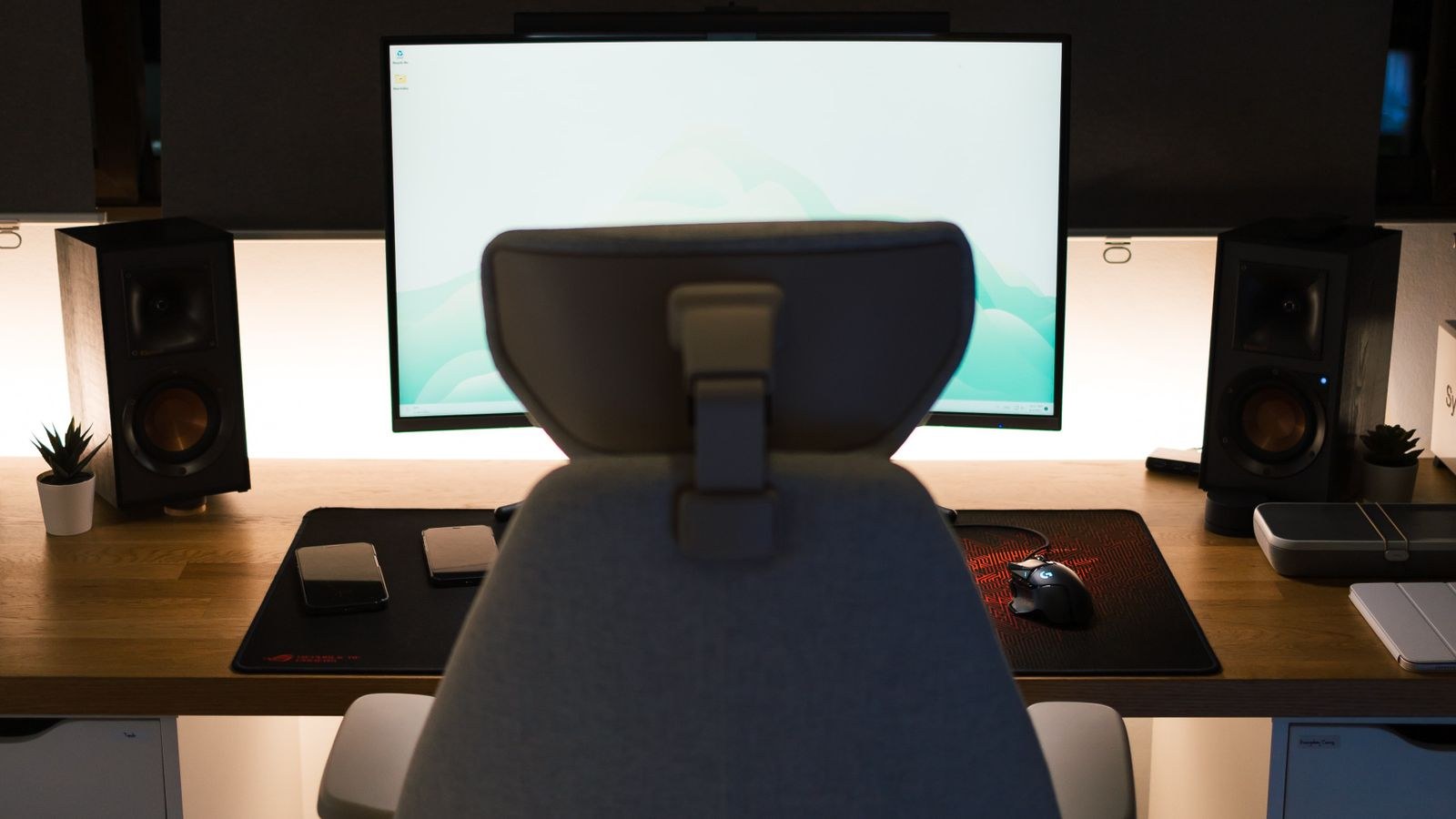
Tall backrests are marketed as premium, but on a shorter frame an oversized back is not an advantage. What matters is where the lumbar curve sits. Your lumbar support should meet the inward curve of your lower back, roughly at belt height, typically 6 to 8 inches above the seat for shorter users compared with 8 to 10 inches for average heights.
On a fixed-lumbar chair designed for average proportions, that support lands too high and pushes your mid-back forward, arching you into an uncomfortable posture that feels like the chair is shoving you. Prioritise height-adjustable lumbar support with genuine downward travel, not just a depth dial. If a chair only has a fixed pad, a small standalone lumbar cushion positioned by hand is a reasonable workaround.
Headrests Are Usually a Problem
Most headrests are mounted for average torsos, so on a shorter frame they contact the back of the head at an angle that pushes it forward, or they sit so high they are simply decorative. Unless the headrest has at least three inches of downward height adjustment plus angle adjustment, it is generally better to choose a chair without one and put the budget into seat and lumbar adjustability.
Armrests and Overall Chair Width
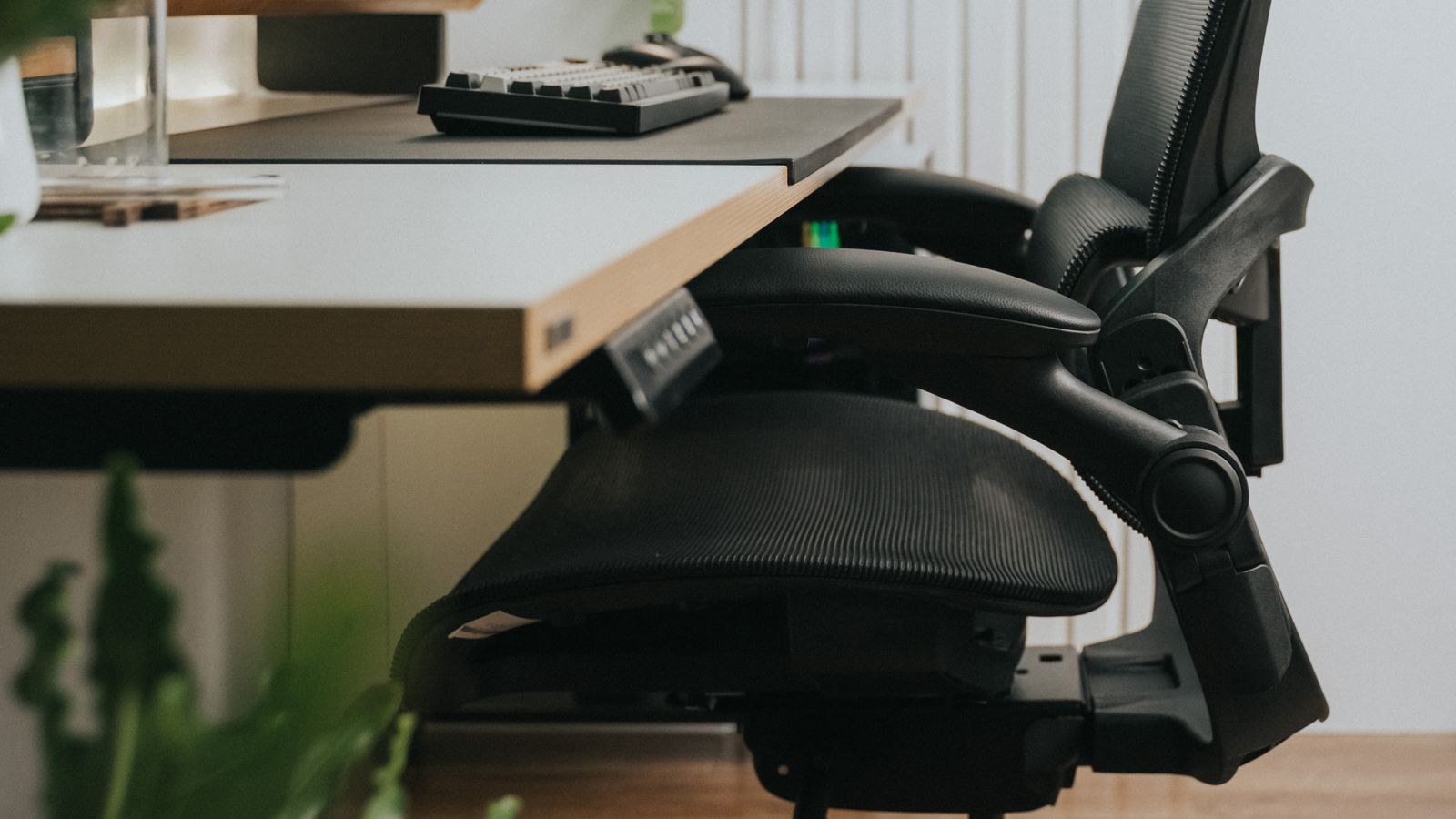
Armrests should support your forearms with shoulders relaxed and elbows near 90 degrees. Shorter users need a low minimum, commonly 5.5 to 7 inches above the seat, whereas many chairs will not drop below 7.5 or 8 inches. Armrests that are too high force you to either shrug or stop using them.
Width matters too. Fixed armrests set wide for broad shoulders leave a narrow frame reaching outward, which is just as fatiguing as reaching up. Look for armrests that slide inward as well as down, and check the overall seat width, since a 20-inch pan on a 16-inch-wide sitter means the armrests are permanently too far apart regardless of their vertical range. Chairs with genuinely low and narrow armrest ranges are gathered in roundups of the best office chairs for short people.
Target Numbers by Height
- 5 feet 2 inches to 5 feet 4 inches: minimum seat height 16.5 inches or lower, seat depth 16 to 17 inches, lumbar adjustable down to about 7 inches, armrests to 6.5 inches or lower.
- 4 feet 11 inches to 5 feet 2 inches: minimum seat height 15.5 inches or lower, seat depth 15 to 16 inches, seat slider strongly recommended, armrests to 6 inches or lower.
- Below 4 feet 11 inches: petite-specific models or a short cylinder swap, seat depth 15 inches or less, and plan on a footrest with any standard-height desk.
Proportions vary, so treat these as a starting filter. Someone with a long torso and short legs will care most about seat height and lumbar placement, while a shorter-torso user will find seat depth and armrest height the deciding factors.
Gaming Chairs and Shorter Frames
Racing-style gaming chairs deserve a specific warning. They are built on large bucket seats with tall backs and high fixed side bolsters, sized for a frame well above average. On a shorter sitter the bolsters press into the ribs and shoulders, the seat is often 20 inches deep, and the minimum height frequently exceeds 18 inches. If you want that aesthetic, seek out the smaller frame sizes that some makers offer, which are compiled in lists of the best gaming chairs for short people rather than assuming a standard model can be adjusted down.
Common Mistakes to Avoid
The most frequent mistake is reading the top of the seat height range instead of the bottom. Listings lead with the larger number because it sounds more capable, but your fit depends entirely on the minimum.
The second is buying a chair that fits and then leaving a too-tall desk unchanged. If the desk forces your elbows up, either lower the desk, add a keyboard tray, or raise the chair and add a footrest. The chair alone cannot fix it.
The third is assuming a smaller-looking chair is a shorter chair. Compact task chairs often use the same standard cylinder as their larger siblings, so the seat height minimum is unchanged even though the chair appears petite in photos.
The fourth is dismissing the seat slider as a luxury. For shorter users it is arguably the single most valuable adjustment available, because it converts an otherwise unusable pan into a correct one.
Frequently Asked Questions
What seat height should I look for at 5 feet 2 inches?
Usually around 15.5 to 16.5 inches, measured floor to the back of the knee in your normal shoes. Focus on the minimum height in the listed range, and be prepared to swap in a shorter cylinder if a chair is close but not quite low enough.
Is a footrest a compromise or a proper solution?
It is a proper solution when the desk height is fixed. Raising the chair to match the desk and supporting your feet on a footrest gives correct elbow and thigh angles at the same time, which a lower chair alone cannot achieve under a tall desk.
Should I avoid high-back chairs entirely?
Not necessarily, but check where the lumbar support sits rather than how tall the back is. A high back with adjustable lumbar that travels low can work well, while a fixed-lumbar high back rarely does.
Can I make a standard chair work with cushions?
Partly. A lumbar cushion can correct support placement and a firm back cushion can reduce effective seat depth. Cushions cannot lower a seat that is already too high, which is why seat height should drive the original purchase.
Final Thoughts
For shorter users, chair shopping becomes straightforward once you stop evaluating chairs by comfort claims and start evaluating them by four numbers: minimum seat height, seat depth, lowest lumbar position and minimum armrest height. Measure your own targets first, reject anything that misses on the first two, and weight a seat slider and adjustable lumbar heavily in whatever remains. Where the desk is the real obstacle, solve it with a keyboard tray or a footrest instead of accepting a chair that does not fit. Do that and you will finally sit back into a chair rather than perch on the edge of one, which is the difference between equipment that supports you and equipment you spend all day working around.