Owen Bradley
 The box said 25,000 hours. The bulb lasted eleven months. If that sounds familiar, you are far from alone, because the gap between rated LED lifespan and real-world experience is one of the most common complaints in home lighting. LEDs genuinely can run for decades, and the underlying diode technology is remarkably durable. What fails is almost never the diode itself. It is the driver electronics, the heat management, or the mismatch between where the bulb was designed to live and where you actually installed it. This guide explains what rated hours really measure, why lumen depreciation matters more than outright failure, and how to buy bulbs in 2026 that actually reach the numbers printed on the packaging.
What “25,000 Hours” Actually Means
The rated life of an LED bulb is not a guarantee that it will stop working at that hour. It is a statistical projection derived from standardised testing, and it usually refers to the L70 point: the number of hours before the bulb’s output falls to 70 percent of its original brightness. At L70 the bulb is still lit, just noticeably dimmer than when new. It is considered end of useful life rather than end of function.
Those figures are also based on a sample tested under laboratory conditions: stable ambient temperature, an open fixture with free airflow, clean power, and a modest number of switching cycles. Change any of those variables and the projection no longer applies. A bulb rated 25,000 hours in a well-ventilated table lamp might realistically deliver 6,000 hours inside a sealed bathroom globe, and that difference is engineering, not fraud.
Rated Hours Versus Warranty Years
Manufacturers often translate hours into years using an assumption of three hours use per day. At that rate 25,000 hours becomes roughly 22 years, which is the figure that ends up in big print on the box. If your kitchen lights actually run eight hours a day, the same bulb reaches its L70 point in about eight and a half years. Neither number is dishonest, but the assumption behind it rarely matches how people light their homes. Check the warranty term instead, since that is what the manufacturer is genuinely willing to stand behind.
Heat: The Number One Killer of LEDs
LEDs do not radiate much heat forward the way an incandescent filament does, which is why they feel cool from the front. They still convert most of their input energy to heat, but that heat is generated at the junction and must be conducted away through the base of the bulb. This is what the aluminium ribs, ceramic sections, or heavy plastic-over-metal bodies on quality bulbs are for.
When heat cannot escape, junction temperature rises. Higher junction temperature accelerates lumen depreciation, shifts colour temperature toward a duller tone, and dramatically shortens the life of the electrolytic capacitors inside the driver. A rough rule from electronics is that capacitor life halves for every 10 degrees Celsius of additional operating temperature, which explains why sealed fixtures destroy bulbs so quickly.
- Enclosed globes and jars trap air and can push internal temperatures far above the design point.
- Recessed cans in insulated ceilings have no airflow and are surrounded by insulation acting as a blanket.
- Base-up orientation in some fixtures traps rising heat around the driver rather than letting it dissipate.
- Hot environments such as attics, garages in summer, or above a cooker add ambient heat before the bulb even switches on.
If any of your fixtures are fully enclosed, using bulbs certified for that duty is the single highest-impact change you can make. The roundup of the best LED bulbs for enclosed fixtures covers models built with the thermal headroom to survive sealed housings.
Driver Failure: The Real Point of Death
Open a failed LED bulb and the diodes are usually fine. What has died is the driver, the small circuit board that converts mains AC into the low-voltage DC the diodes require. Drivers contain capacitors, and capacitors are the least durable component in the assembly. Cheap bulbs use the smallest, lowest-rated capacitors that pass initial testing, which is exactly where a manufacturer saves money without the buyer noticing at the shelf.
This is why price correlates with lifespan more reliably than any specification on the label. A bulb costing three times as much usually contains a better driver, a proper heatsink, and higher-quality diodes running below their maximum rating. Underdriving diodes, running them at less than full capability, is one of the main techniques quality manufacturers use to extend life, and it is invisible on the packaging.
Lumen Depreciation and Colour Shift
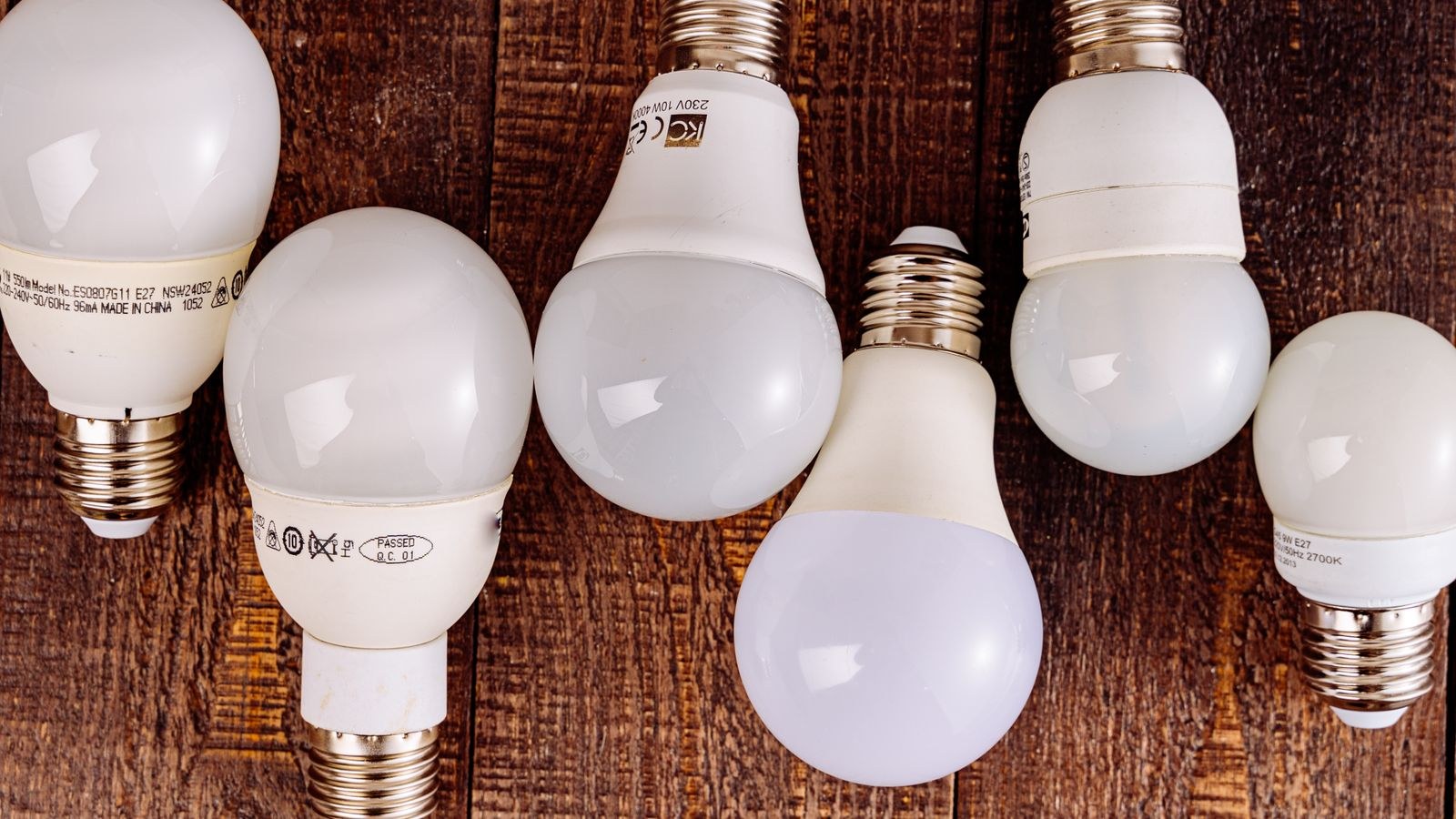
Most LEDs fade rather than fail outright. Lumen depreciation is gradual and hard to notice because your eye adapts, which is why people often discover the problem only when they replace one bulb in a pair and see how much brighter the new one is. Look for L70 or L80 figures on the packaging. An L80 rating at a given number of hours is a stronger claim than L70 at the same figure, since it means the bulb holds 80 percent of its output that long.
Colour shift is the companion problem. As phosphor coatings degrade under heat, a bulb that started at a clean 2700K can drift green or grey over time. In a room with several bulbs installed at different dates the mismatch becomes obvious. Buying all the bulbs for one room at the same time, from the same batch, avoids the patchwork look and makes eventual replacement simpler. The picks in the best quality LED bulbs guide focus on models that hold colour consistently across their rated life.
Switching Cycles and Instant-On Behaviour
Unlike compact fluorescents, LEDs are largely indifferent to being switched on and off, so bathroom and hallway use does not shorten their life the way it did with older technology. Frequent switching does stress the driver’s inrush-handling components slightly, but the effect is minor compared with heat. If a bulb in a frequently switched fixture fails early, look at the fixture’s ventilation and the switch itself before blaming the switching pattern.
Dimmers, Wiring, and Power Quality
Pairing a non-dimmable bulb with a dimmer switch is a reliable way to destroy it. Even at full brightness, most dimmers chop the waveform, which the bulb’s driver was never designed to handle. The symptoms are flickering, buzzing, and failure within months. Equally, a dimmable LED on an old leading-edge dimmer designed for incandescent loads often flickers at low settings because the total load is too small for the dimmer to regulate.
Voltage quality matters too. Homes on rural circuits or with heavy motor loads such as well pumps and air conditioners can see voltage spikes that shorten driver life. Persistent early failures across multiple fixtures in one part of a house often point to a wiring or supply issue rather than bad bulbs, and that is worth an electrician’s opinion rather than another box of replacements.
How to Buy Bulbs That Actually Last
- Match the bulb to the fixture type. Enclosed-rated bulbs for sealed globes, damp or wet rated for bathrooms and outdoors, and standard bulbs only in open fixtures.
- Feel the weight. A bulb with real thermal mass in the base almost always outlasts a light, all-plastic equivalent at the same wattage.
- Check the L70 or L80 figure, not just the hours. The depreciation standard behind the number changes what it means.
- Read the warranty. A three to five year warranty signals genuine confidence; ninety days signals the opposite.
- Avoid overdriven bargain bulbs. A very high lumen figure from a very low wattage in a tiny body usually means diodes running hot at their limit.
- Buy a room’s worth together. Same batch means matched colour now and predictable ageing later.
- Confirm dimmability explicitly. If there is a dimmer on the circuit, the packaging must say dimmable.
For general household replacement across open fixtures, table lamps and ceiling roses, the best LED light bulbs roundup gives a practical starting shortlist, while the best quality LED light bulbs comparison digs further into build standards and warranty terms.
Troubleshooting Bulbs That Keep Failing
When one specific fixture eats bulbs while the rest of the house is fine, the fixture is the problem. Check whether it is fully enclosed, whether it is on a dimmer, and whether the socket contacts are corroded or loose, since a poor connection creates resistance heating right at the base where the driver lives. In recessed cans, confirm the housing is rated for contact with insulation and that the bulb is not buried.
If bulbs fail across an entire circuit, suspect wiring, a faulty dimmer, or supply voltage. If failures are scattered randomly across the whole house and started after one shopping trip, the batch is likely the culprit and worth a warranty claim. Keep receipts and packaging for bulbs carrying multi-year warranties, because those claims are usually straightforward when you can prove the purchase date.
Frequently Asked Questions
Do LED bulbs burn out or just get dimmer?
Both happen. Quality bulbs typically fade gradually toward their L70 point, while cheaper bulbs more often fail outright when a driver capacitor gives up. Sudden failure almost always means electronics rather than diodes.
Is it worth paying more for a premium bulb?
Usually yes in fixtures that are hard to reach or run many hours a day. In a rarely used cupboard light the cheapest option is fine, but for kitchen, living room or high ceiling fixtures the better driver and heatsink pay for themselves.
Can I put any LED bulb in a recessed ceiling light?
Only if the bulb is rated for enclosed or insulation-contact use, or the housing is genuinely ventilated. Standard bulbs in sealed cans routinely fail within a year or two.
Why does my LED glow faintly when switched off?
This is usually a small leakage current from an illuminated switch or a shared neutral in the wiring. It is harmless but can be resolved with a bypass capacitor or by changing the switch type.
Final Thoughts
LED lifespan claims are not lies, but they describe an ideal installation that most homes do not provide. Heat and driver quality decide how long a bulb really lasts, and both are things you can control. Choose bulbs with genuine thermal mass, respect enclosed and damp ratings, keep non-dimmable bulbs off dimmer circuits, and treat a long warranty as the most honest specification on the box. Buy that way and the bulbs you install in 2026 will fade slowly over many years rather than dying quietly in the back of a sealed fixture long before their time.