Owen Bradley
 Indoor and outdoor security cameras look similar enough on a shelf that plenty of buyers assume the difference is just a weatherproof shell. It is not. The two categories are engineered around different problems: outdoor units fight weather, temperature swings, glare and long distances, while indoor units fight cramped sightlines, mixed artificial lighting and household privacy expectations. Putting the wrong one in the wrong place produces fogged lenses, unusable night footage and cameras that die in their first winter. This guide sets out what genuinely separates the two, where each belongs, and how to specify a mixed system in 2026 that performs everywhere you put it.
Weatherproofing and Ingress Protection
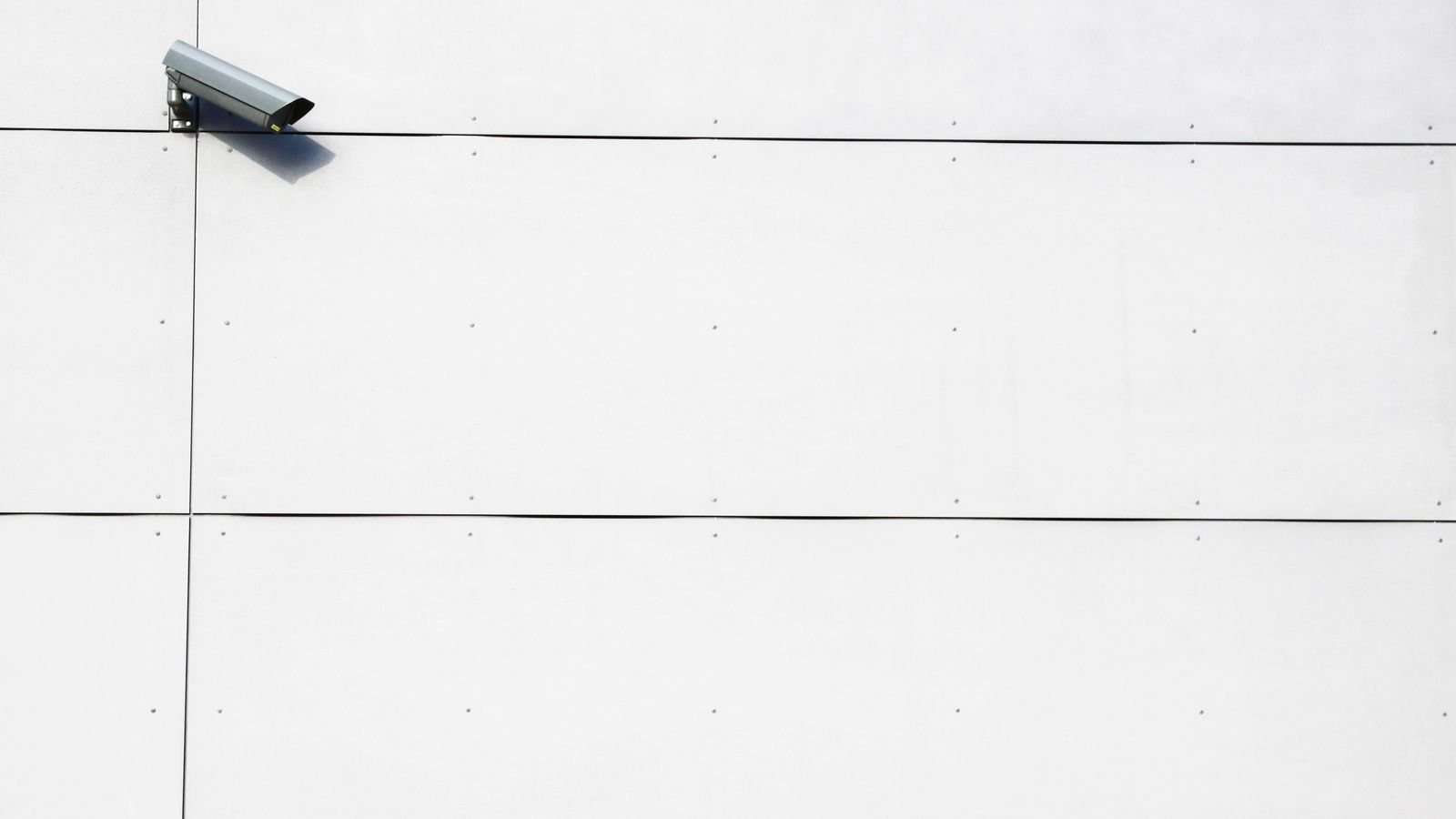
The most visible difference is sealing. Outdoor cameras carry an IP rating, a two-digit code describing resistance to solids and liquids. IP65 handles dust and jets of water and is the sensible minimum for a sheltered position. IP66 or IP67 is what you want on an exposed wall, a pole or anywhere driving rain reaches.
Indoor cameras usually carry no rating at all, because they do not need one. Their enclosures are designed for airflow and low cost rather than sealing, and the joints, cable entries and microphone ports are all routes for moisture.
The common mistake is placing an indoor camera in a covered porch, a carport or a conservatory and assuming the roof is enough. Humidity alone will condense inside an unsealed body during temperature swings, and condensation on the inside of a lens cannot be wiped away. If a camera is not indoors in the strict sense, it needs an outdoor rating.
Temperature Range and Seasonal Survival
Outdoor cameras publish an operating temperature range, frequently something like minus twenty to fifty degrees Celsius, and they achieve the low end through component selection and sometimes a small internal heater. Indoor cameras are typically rated only from around zero upwards.
Cold matters most for battery-powered units. Lithium cells lose a large share of their usable capacity at freezing temperatures, so a camera advertised at six months of battery life may need recharging every few weeks in midwinter. If a battery camera must cover an exposed position year-round, plan for either a solar panel or a wired power option.
Heat is the other extreme and is often overlooked. A dark camera body in direct summer sun can far exceed ambient temperature, which shortens sensor and battery life. Mounting under an eave protects against both sun and rain and is the single easiest longevity improvement available.
Lenses, Field of View and Distance
Indoor and outdoor cameras are optically tuned for different distances. Indoors, subjects are typically eight to twenty feet away, and a wide lens of 110 to 130 degrees covers a whole room from a corner without needing much reach.
Outdoors, useful subjects can be fifty feet away or more. A very wide lens spreads its pixels so thin at that range that a face becomes a few indistinct blocks. Outdoor cameras therefore tend to offer narrower fields of view, higher resolution, or optical zoom to concentrate detail where it matters. If your outdoor positions need to identify people or vehicles rather than merely record movement, the best 4k security cameras give you enough resolution to crop into a frame afterwards and still see something useful.
The practical test is simple: if you cannot recognise a person you know well in the recorded footage, the camera is too far away, mounted too high, or fitted with too wide a lens for the job.
Night Vision: Two Very Different Problems
Indoors at night the scene is usually pitch dark and small, so a modest infrared array easily covers the room. The complication is reflection. Point an indoor camera at a mirror, a glass cabinet, a television screen or a window and the infrared bounces straight back, blowing out the image. Angle the camera to avoid reflective surfaces entirely.
Outdoors the scene is large and unevenly lit. Infrared falls off rapidly with distance, so a camera claiming thirty metres of night vision may render anything beyond ten metres as a dim shape. Meanwhile a nearby wall, railing or downpipe reflects strongly and forces the exposure down. Rain, snow and fog scatter infrared badly, which is why night footage in bad weather is so often a wall of glowing specks.
Where colour night footage matters, a camera with a built-in spotlight or a separate motion-activated floodlight transforms results. Colour footage carries clothing and vehicle detail that monochrome infrared simply throws away. Our comparison of the best outside cameras weighs night performance heavily for exactly this reason.
Power, Connectivity and Mounting
- Indoor cameras almost always run from a nearby socket on a short cable, and Wi-Fi is strong because the router is in the same building. Placement is limited mainly by socket location.
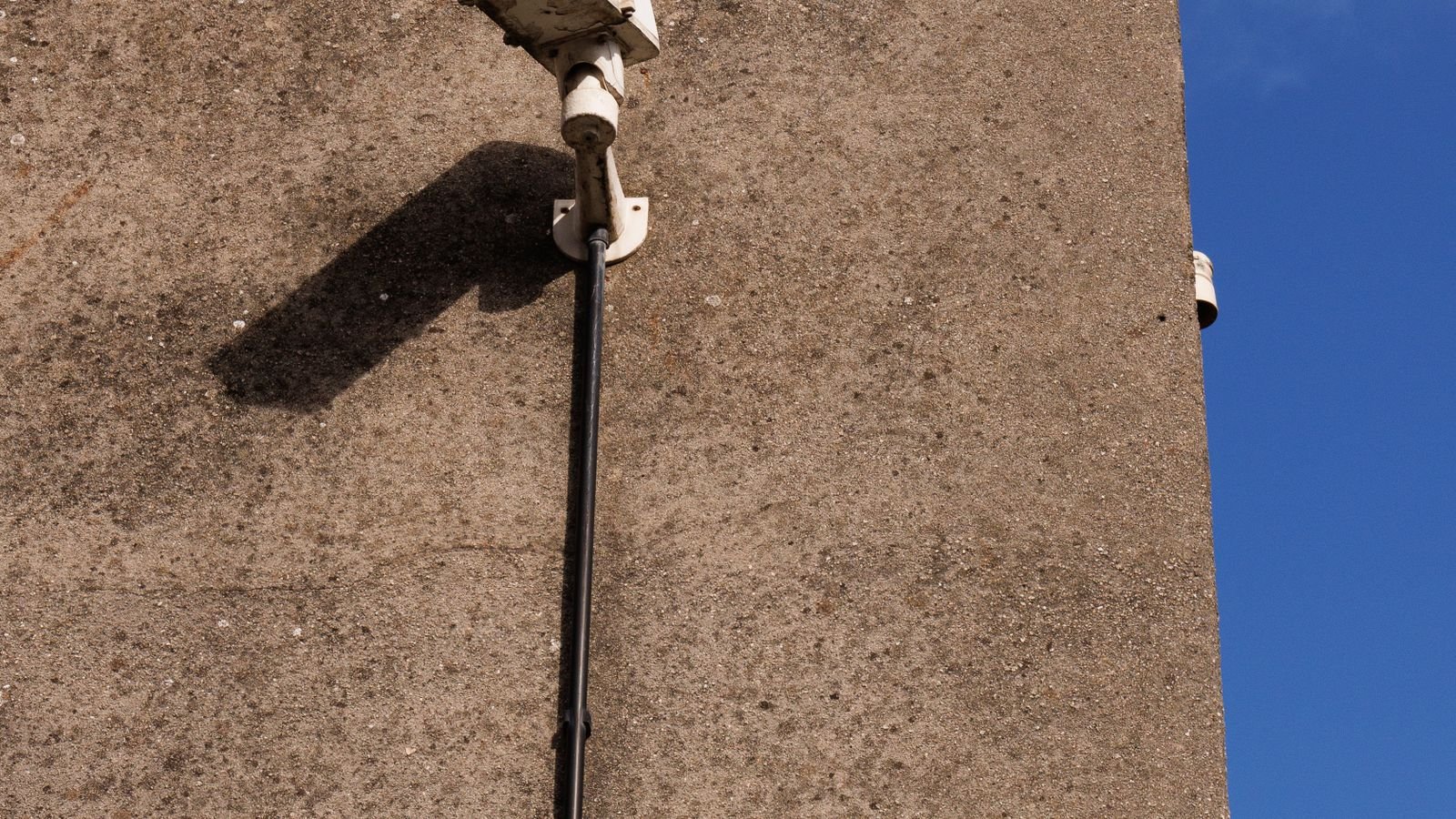
- Outdoor wired cameras need weatherproof power or a Power over Ethernet run, which supplies both data and power over one cable. PoE is the most reliable outdoor option by a wide margin.
- Outdoor battery cameras free you from cabling entirely, at the cost of recharging and of the wake-up delay inherent in battery designs.
- Solar panels keep battery cameras topped up in sunny positions, though northern winters can still outpace them.
- Wi-Fi strength drops sharply through exterior walls. An outdoor camera at the far end of a garden frequently needs a mesh node or an access point to be dependable.
- Mounting hardware differs too. Outdoor brackets are heavier, use masonry fixings, and often include a cable-concealing base to prevent tampering.
Privacy and Household Considerations
Indoor cameras raise questions outdoor ones do not. Everyone living in the house should know where the cameras are, and bathrooms and bedrooms should stay uncovered. Features that matter here include a physical privacy shutter, the ability to disable recording automatically when someone is home, and clear indicator lights showing when the camera is active.
Storage choice is part of this. Cameras that record to a local card or network recorder keep footage inside the house, which many households prefer for interior spaces. The best local storage security cameras cover options that avoid a subscription and keep video off third-party servers entirely.
Outdoors, the considerations shift to neighbours. Angle cameras to cover your own property, use privacy masking where software supports it, and be aware that audio recording is often regulated more strictly than video.
Where Each Type Belongs
- Front door and porch. Outdoor rated, even under cover. This position sees the most weather-driven failures of misplaced indoor units.
- Driveway and garden. Outdoor, with a narrower lens or higher resolution to hold detail at distance.
- Garage and workshop. Outdoor rated if unheated, because condensation and cold both apply.
- Hallways and stairs. Indoor, wide lens, corner mounted near the ceiling to catch anyone moving between rooms.
- Main living area. Indoor, positioned to avoid pointing at windows and mirrors.
- Conservatory or sunroom. Outdoor rated, since temperature swings and condensation there exceed what indoor units tolerate.
For a survey of models suited to interior positions, the best home indoor security cameras comparison is the right starting point, while a whole-property plan is better built from the best home security camera systems that mix both types on one platform.
Maintenance Differences Over Time
Indoor cameras need almost no upkeep beyond an occasional dust of the lens and a check that firmware updates have applied. Outdoor cameras are a different commitment. Lenses collect grime, spiders build webs directly in front of infrared arrays and trigger endless false alerts, gaskets perish, and cable entries loosen. A twice-yearly inspection of every outdoor unit, ideally at the start of autumn and again in spring, prevents the majority of failures people blame on the hardware.
Budget for that difference when planning. A large outdoor installation is not just more expensive to buy, it is more work to keep running, and cameras mounted where a ladder is awkward tend to be the ones quietly neglected until footage is needed.
Frequently Asked Questions
Can I use an indoor camera outside if it is under a roof?
It is a poor idea. Humidity and temperature swings cause internal condensation even where rain never lands, and moisture inside the lens assembly cannot be cleaned. Porches, carports and sheds all need weather-rated hardware.
Can an outdoor camera be used indoors?
Yes, technically. The drawbacks are size, an industrial appearance, no privacy shutter, and a lens often too narrow to cover a room from a corner. It works, but a purpose-built indoor unit does the job better.
Does an outdoor camera need higher resolution than an indoor one?
Generally yes, because outdoor subjects are further away and detail per foot falls with distance. Indoors, a lower resolution camera at close range often produces a clearer identification than a higher resolution one across a garden.
Why does my outdoor camera see nothing beyond a few metres at night?
Infrared intensity falls off sharply with distance and reflects off nearby surfaces, which forces the exposure down. Adding a motion-activated floodlight, or choosing a camera with a spotlight for colour night mode, is the most effective fix.
Should indoor and outdoor cameras be on the same system?
Ideally yes. One app, one recording location and one set of notification rules is far easier to live with than several separate platforms, and it lets you build rules that span inside and out. The best security cameras roundup covers platforms offering both.
Final Thoughts
The indoor versus outdoor distinction is about environment and optics rather than marketing. Anything not fully inside a heated, dry space needs a proper IP rating and a suitable temperature range. Anything watching from a distance needs the resolution or lens to hold detail at that distance. Anything inside your home needs to respect the people living there, with visible indicators, sensible placement and storage you are comfortable with. Match the hardware to the conditions rather than the price tag and the system will still be working, and still be useful, several winters from now.