Owen Bradley
 Modular sofas promised to solve a very old problem: furniture that fits the room you have today but not the one you move into next. Instead of a single welded frame, you buy seats, corners and ottomans that clip together in whatever arrangement the space allows. Traditional sofas answer with a different argument, namely that a single well-built frame is stronger, cheaper and cleaner-looking than any assembly of parts. Both cases have merit, and the right answer depends far more on your living situation than on which looks better in a catalogue. This comparison walks through moving, reconfiguring, comfort, durability, resale and real cost so you can tell which format actually earns its price in your home.
What Counts as a Modular Sofa
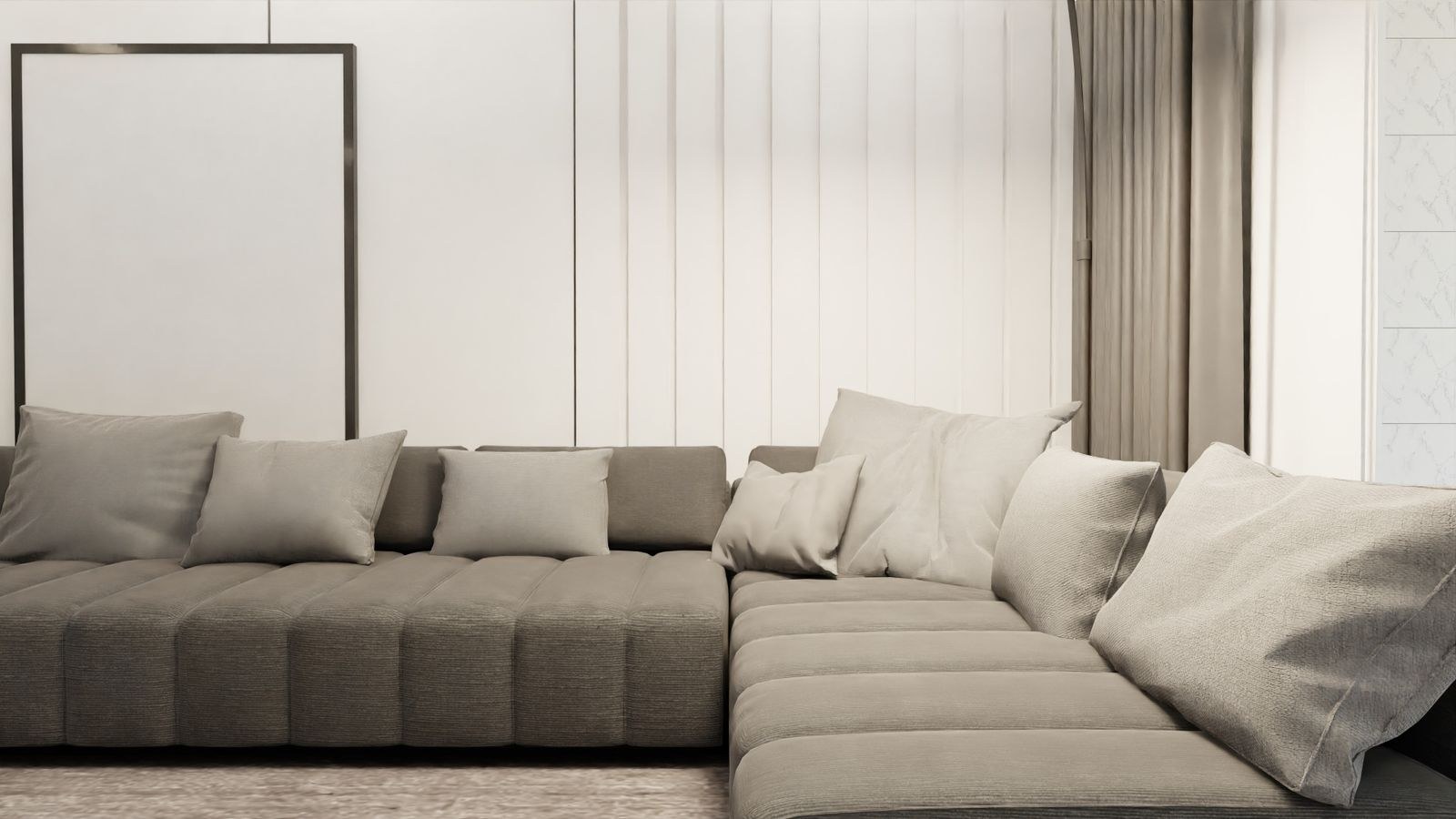
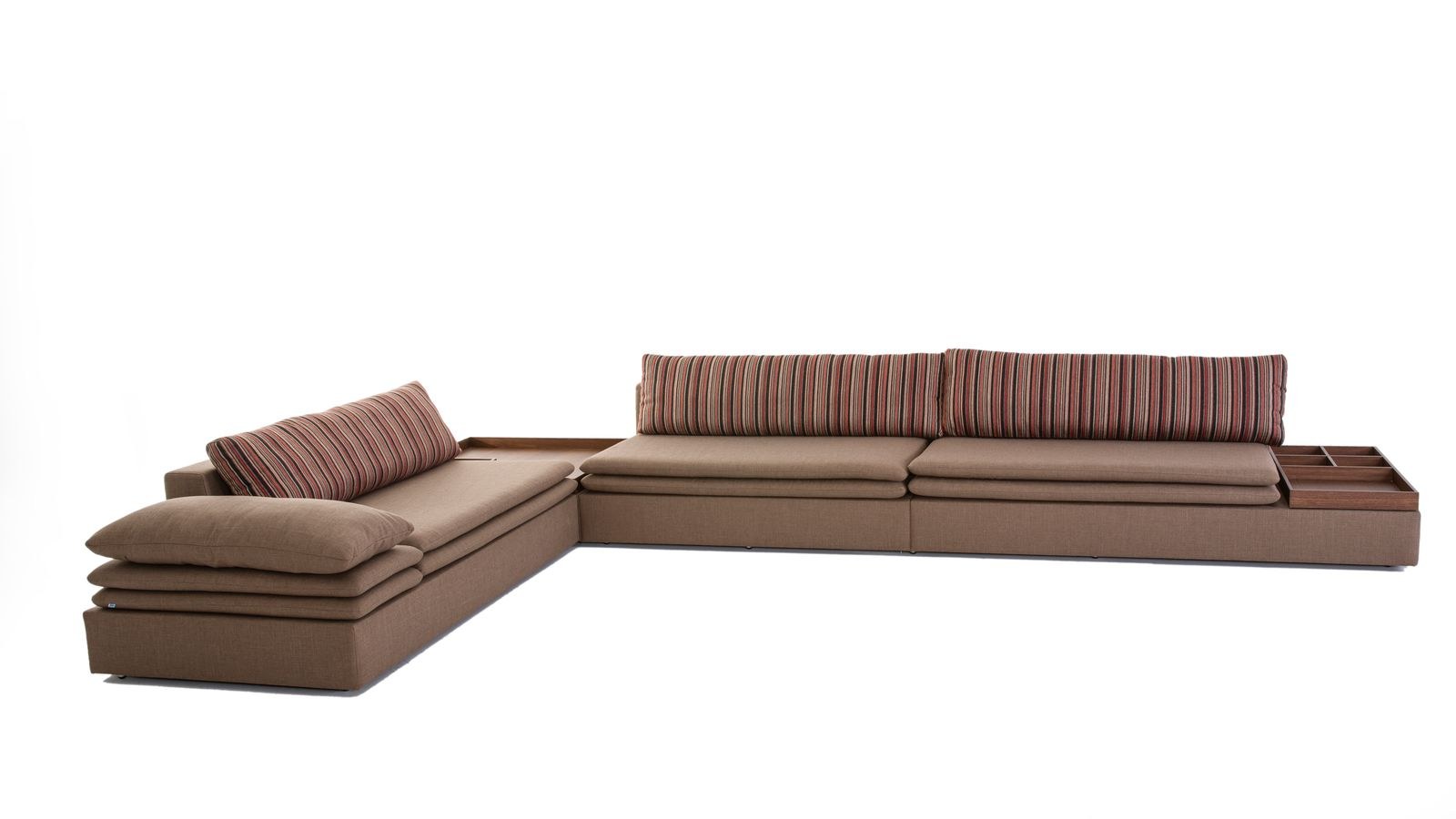
A modular sofa is built from independent units, typically an armless seat, a left arm unit, a right arm unit, a corner wedge and often a separate chaise or ottoman. Each piece has its own frame, legs and cushioning, and they connect with metal brackets, hooks or interlocking feet. You can add units later, split the sofa into two smaller seating groups, or swap the chaise from left to right when you rearrange a room.
A traditional sofa, by contrast, has one continuous frame from arm to arm. Sectionals sit somewhere in between: they come in two or three large pieces that join, but those pieces are not interchangeable and cannot be reconfigured into different shapes. Knowing which of the three you are actually looking at matters, because retailers use the word modular loosely for anything that arrives in more than one box.
Moving and Delivery: The Clearest Win for Modular
This is where modular design justifies itself outright. A three-seat traditional sofa is a single object roughly two metres long that must physically pass through every doorway, stairwell turn and lift on the route to your room. Countless buyers discover the problem only when the delivery team measures the stairwell and takes the sofa back. Modular units are individually small, light enough for one or two people to carry, and fit through standard doorways without drama.
The same advantage repeats every time you move house. A modular sofa comes apart in minutes, stacks efficiently in a van and reassembles without tools in most designs. If you rent, move every couple of years, or live above a narrow staircase, that alone can be the deciding factor. Buyers in tight urban flats often start their search with our list of the best apartment sofas for precisely this reason, since access is usually the binding constraint before style ever enters the conversation.
Reconfiguring: Useful, but Be Honest About It
The marketing image for modular seating is a family cheerfully rebuilding their sofa into a new shape every few months. In practice most owners settle on one arrangement and leave it there for years. That does not make the flexibility worthless, but it should be priced accurately. The genuine value appears at specific moments: moving to a room with a window or door in a different place, converting an L-shape to a straight run, splitting the sofa to seat guests across from each other, or adding a unit when the household grows.
If those moments are likely for you, modular pays. If you have owned your home for a decade and the living room layout is fixed by a fireplace and a television wall, you are paying for an option you will never exercise. In that case a well-made fixed frame in the exact configuration you need is the better buy, and our general roundup of the best sofas covers plenty of fixed frames that outperform modular equivalents on build quality at the same price.
Comfort and Seating Feel
Traditional sofas have a structural comfort advantage that is easy to overlook. A continuous frame supports a continuous seat, so there are no seams between units to sit on. On a modular sofa, the joins between modules create small gaps or ridges that you feel most when lying down across the full length or when a cushion shifts mid-evening. Better modular systems minimise this with tight brackets and overlapping cushion decks, but cheaper ones drift apart under use and need periodic nudging back together.
Modular designs return the favour with depth flexibility. Many systems let you specify seat depth per unit or add a deep chaise on one end only, so one person can stretch out while the rest of the sofa remains upright and easy to rise from. That mixed use is difficult to achieve on a single fixed frame. Deep corner arrangements are also naturally suited to modular construction, which is why so many of the frames in our best L-shaped sofas selection are sold as configurable units rather than one welded piece.
Durability and Long-Term Structure
A single hardwood frame with corner blocks and eight-way hand-tied suspension is, other things being equal, stronger than the same amount of timber split into four smaller frames with connectors between them. Every connection point is a potential source of movement, squeaking or eventual loosening. Over ten years of daily use, brackets work loose and need tightening, and plastic interlocking feet on budget systems can crack.
That said, modular construction has a repair advantage that partly cancels the risk. If one unit fails, sags or gets damaged, you replace that unit rather than the entire sofa, assuming the manufacturer still stocks it. On a traditional sofa a broken frame rail usually means an upholsterer’s bill or a new sofa. The practical rule is to buy modular from established makers who keep parts available for years, and to check whether individual covers and units can be ordered separately before you commit.
What to Inspect Before Buying Either Type
- Frame material: kiln-dried hardwood or engineered ply beats particleboard in both formats.
- Connector quality: on modular units, look for metal brackets rather than plastic clips.
- Suspension: sinuous springs or webbing under every seat, not just at the ends.
- Cushion attachment: loose reversible cushions last longer than fixed, non-flippable ones.
- Level floor tolerance: modular pieces on uneven floors separate more readily; adjustable feet help.
Cost: Where the Money Actually Goes
Compare like for like and modular usually costs more per seat. You are paying for extra frames, extra legs, extra upholstery edges and the engineering of the connection system. A three-seat traditional sofa and a three-unit modular arrangement covering the same floor area rarely price the same, and the gap widens as build quality rises.
The counter-argument is total cost over time. If a modular system lets you avoid buying a second sofa when you move, or lets you extend rather than replace when the household grows, the higher entry price can work out cheaper across a decade. Modular also spreads spending: many systems let you buy three units now and add a corner later, which suits buyers furnishing a first home on a staged budget. Larger configurations are worth comparing directly against fixed alternatives in our sectional sofa guide before you decide which format your money goes further in.
Resale and Secondhand Value
Modular sofas hold resale value noticeably better, for a simple reason: a buyer can adapt them to a room you never saw. A used traditional three-seater only sells to someone whose room and doorways suit that exact size, while a used modular set appeals to anyone who can rearrange the units. The same portability that helps you move helps a buyer collect it without hiring a removals crew.
Two caveats apply. Complete sets sell far better than partial ones, so keep every bracket and spare foot. And discontinued systems lose appeal quickly because buyers cannot extend them, which again argues for choosing a manufacturer with staying power over a one-season design.
Which One Suits Your Situation
Choose modular if you rent or expect to move within five years, if your access route is narrow, if your living room layout is not yet settled, if you want the option to extend later, or if you want mixed seat depths in one run. Choose traditional if your home and layout are stable, if you value a seamless seat for lying down, if you want the strongest frame per pound spent, or if you prefer the cleaner uninterrupted silhouette that a single frame gives.
A middle path exists and is often the smartest one: a two or three-piece sectional. It splits for delivery and moving but has fewer joins than a full modular system, so it captures most of the access benefit without the seam-heavy seating surface. For many households that is the practical compromise, and it is well covered among the configurations in our best modular sofas comparison alongside the fully reconfigurable systems.
Common Mistakes on Both Sides
The most expensive mistake is failing to measure the delivery route rather than the room. Measure every doorway width, hallway turn, ceiling height at stair landings and lift depth, then compare against the largest single piece, not the assembled size. The second mistake is buying modular purely for flexibility you will not use, paying a premium for an option that stays unexercised.
A third error is judging a modular system only in its showroom configuration. Ask to see it split apart, check how visible the seams are when units are separated and rejoined, and push two units apart with your foot to see how well the connectors hold. Finally, avoid assuming that either format is inherently more comfortable. Cushion fill, seat depth and back support decide comfort; the frame format decides logistics.
Frequently Asked Questions
Do modular sofas slide apart during use?
Good ones with metal brackets stay locked. Cheaper systems with plastic clips or gravity-only feet do drift, especially on hard floors. Test the connection by pushing units apart before buying.
Is a modular sofa less comfortable to lie on?
Slightly, because of the seams between units. Systems with overlapping cushion decks and tight connectors reduce it enough that most people stop noticing after a week.
Can I add matching units to a modular sofa years later?
Only if the model is still in production and the fabric batch still matches. Ask about parts availability and dye-lot policy before you buy if staged expansion is part of your plan.
Which type is better for small apartments?
Modular, in most cases. It gets through tight access, adapts to awkward room shapes and can be split into two smaller pieces if you downsize further.
Final Thoughts
The modular versus traditional question is really a question about how settled your life is. If your rooms, layout and household are stable, a single well-built frame gives you more sofa for your money and a better surface to stretch out on. If you move, rent, plan to expand, or face a staircase that has defeated furniture before, the flexibility of modular seating is worth its premium and will hold more of its value when you eventually sell it. Measure your access route first, be honest about how often you will really reconfigure, and judge frame and cushion quality by the same standards in both formats. Do that in 2026 and you will end up with the sofa that suits your home rather than the one that suited the showroom.