Owen Bradley
 Most households own something they call a first aid kit. It is usually a plastic box in a bathroom cabinet, bought years ago, containing forty adhesive bandages, two safety pins and an antiseptic wipe that dried out long before anyone opened it. That kit handles a paper cut. It does not handle a kitchen burn, a deep laceration, an allergic reaction or a sprained ankle at eleven at night, which are the injuries that actually happen at home. A genuinely useful home first aid kit is bigger, better organised and reviewed on a schedule. This home first aid kit guide covers what every household needs, how to split supplies by room, what to add for children, older adults and pets, and the expiry routine that keeps everything usable.
Start With the Injuries You Will Actually Have
Build the kit around real domestic incidents rather than wilderness scenarios. The overwhelming majority of home injuries fall into a short list: cuts and scrapes, burns from cooking or hot liquids, sprains and strains, splinters and small punctures, insect stings and allergic reactions, bumps and bruises, nosebleeds, eye irritation and minor illness such as fever or upset stomach. Falls dominate injuries among older adults, while poisoning and choking dominate among small children.
That list dictates the contents. You need generous wound care, real burn treatment, cold therapy, splinter tools, allergy medication and a way to measure temperature. Everything beyond that is a bonus. Stock depth is more useful than variety, because a single scraped knee can consume half a dozen dressings and you will not want to be rationing.
The Core Kit: Wound Care
This is the largest section and the one most kits skimp on.
- Adhesive bandages in several sizes, including knuckle and fingertip shapes, plus fabric versions that stay on wet skin.
- Sterile gauze pads in 2×2 and 4×4 inch sizes, at least a dozen of each, for wounds too large for a bandage.
- Roller gauze and self-adhering wrap to hold dressings on limbs and joints where tape fails.
- Medical tape, both cloth and paper, since paper tape suits sensitive or older skin.
- Non-stick pads for burns and abrasions that would tear when a standard dressing is removed.
- Antiseptic wipes and saline. Saline in single-use vials is the most useful item most kits lack, because irrigating a wound clean matters more than what you put on it afterwards.
- Antibiotic ointment and a small tube of hydrocortisone cream for irritation and bites.
- Closure strips for gaping cuts that need edges held together while you decide whether stitches are required.
- Nitrile gloves, several pairs. Latex-free avoids the allergy risk entirely.
Tools and Instruments
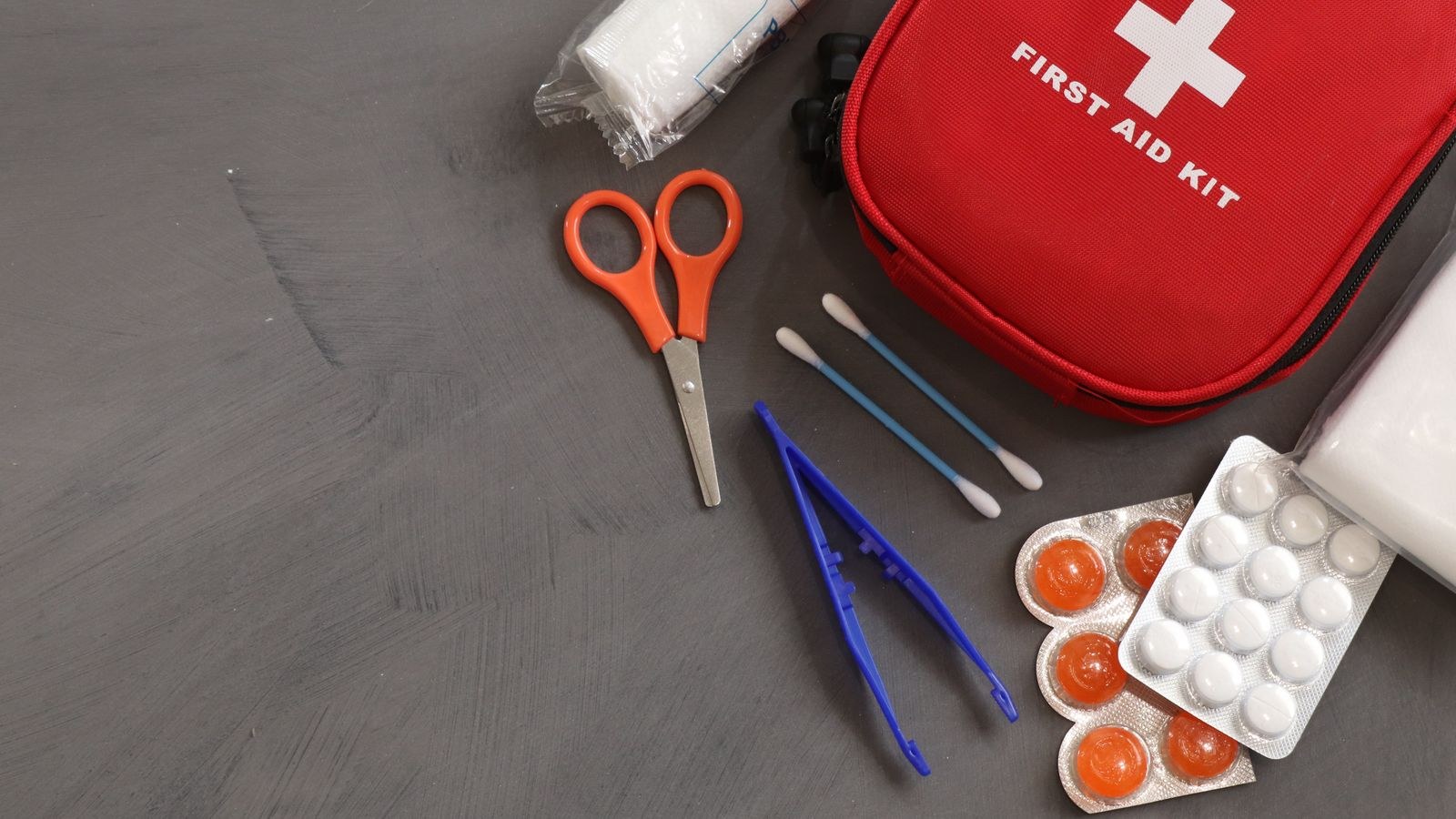
Include blunt-tip trauma shears that cut clothing and tape without stabbing skin, fine-point tweezers for splinters and ticks, a digital thermometer, an irrigation syringe, a small torch and a pair of instant cold packs. A triangular bandage doubles as a sling and a pressure pad. An elastic compression bandage handles sprains, which are among the most common home injuries and the least catered for in bought kits. Add a CPR face shield and a resuscitation mask if anyone in the household has training, and a tourniquet only if someone knows how to use one.
Medications Worth Keeping
Keep a small, deliberately chosen medicine section rather than a chaotic drawer. Include a pain reliever and fever reducer in both adult and child formulations, an anti-inflammatory, an oral antihistamine for allergic reactions and hives, an antacid, an anti-diarrhoeal and oral rehydration sachets. Add activated charcoal only if a poison control service has advised it, since it is no longer routinely recommended.
If anyone in the household carries a prescribed epinephrine auto-injector or a rescue inhaler, the kit should hold a clearly labelled spare and everyone should know where it is. Keep a written list of household members’ medications, allergies, doses and doctor contacts inside the lid. In an emergency nobody remembers dosages accurately, and paramedics ask for exactly that information.
Splitting the Kit by Room
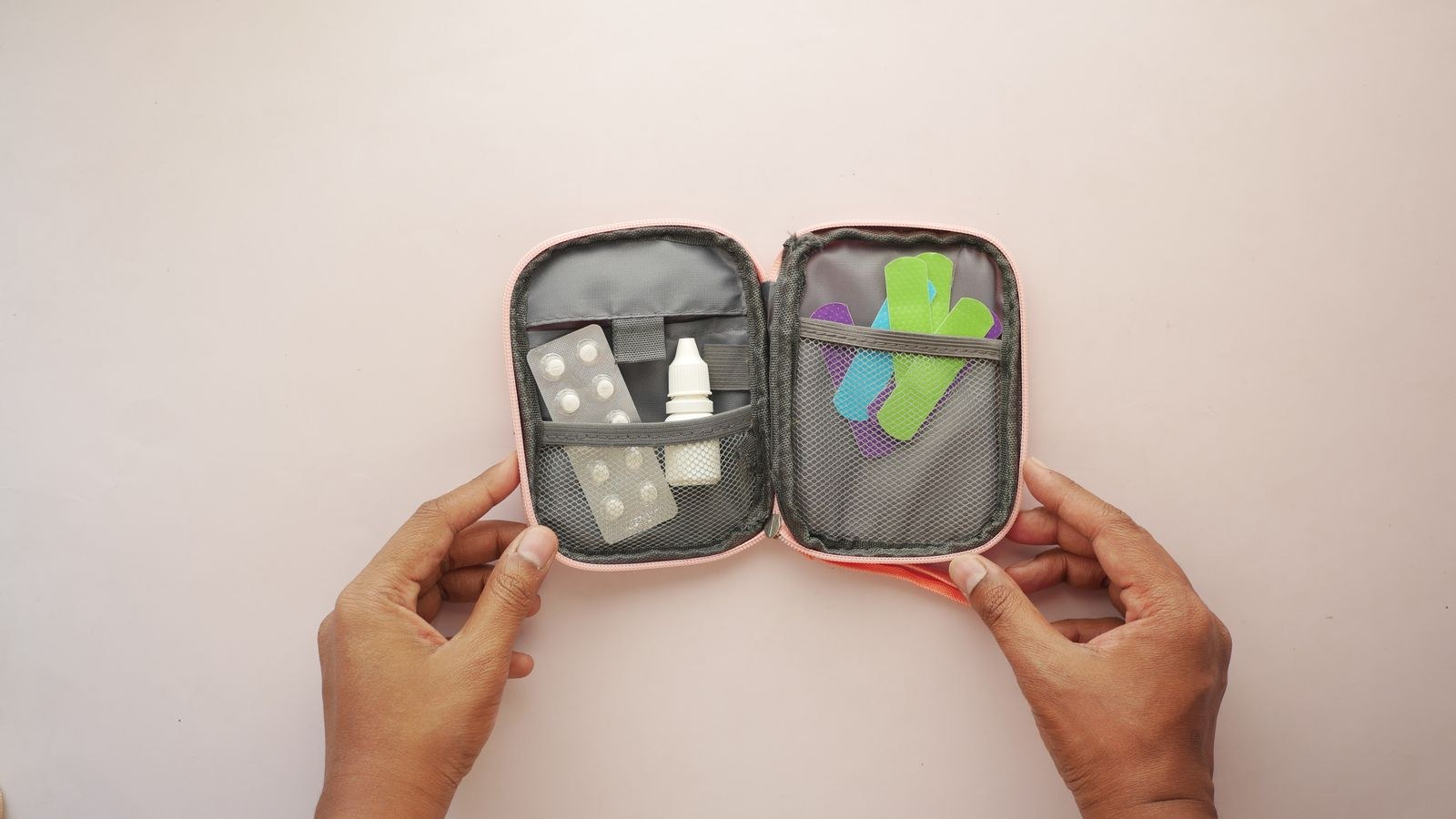
One central kit fails when the injury happens two floors away. Build a main kit and place small satellites where incidents cluster.
- Main kit: kitchen or hall closet, at adult height, in a clearly marked case. Central to the house and near the exit.
- Kitchen satellite: burn dressings, non-stick pads, cold packs and finger bandages. Burns and knife cuts happen here.
- Bathroom satellite: thermometer, medications, antiseptic and small dressings.
- Garage or workshop satellite: larger dressings, eye wash, splinter tweezers, heavy tape and shears. Injuries here tend to be bigger.
- Vehicle kit: a compact version plus a torch, a foil blanket and gloves.
Keep the main kit in a case with internal dividers or clear pockets rather than a single compartment. Searching a jumbled box while someone is bleeding wastes the minutes that matter most, and a transparent layout also makes the annual expiry check trivial.
Adapting for Children, Older Adults and Pets
Households with small children need child-dose liquid medications with an accurate oral syringe, a digital thermometer suitable for infants, saline nasal drops, teething relief and a poison control number posted visibly. Choking is a leading risk, so at least one adult should hold current training, and small choking hazards should be kept out of the kit itself.
Older adults skew toward falls, skin tears and slow-healing wounds. Add paper tape for fragile skin, larger non-adherent dressings, a blood pressure monitor if advised, and a written medication list, since interactions matter more when several prescriptions are involved. Mobility aids and a fall-alert device sit outside the kit but belong in the same plan.
For pets, keep a separate small kit with a muzzle, self-adhering wrap, tweezers, styptic powder for nail bleeds and your vet plus emergency animal hospital numbers. Human medications are frequently toxic to dogs and cats, so never dose a pet from the household kit without veterinary advice.
First Aid Is Only Half of Home Safety
A first aid kit treats injuries after they occur. The equipment that prevents the serious ones sits elsewhere in the house, and buying the kit is a natural moment to check the rest. Working smoke detection is the single largest survival factor in a house fire, and units compared in the best smoke alarms roundup should be present on every level and outside every sleeping area. Carbon monoxide is the invisible counterpart, undetectable without equipment and responsible for poisonings that present as ordinary flu, which is why the best carbon monoxide alarms belong near fuel-burning appliances and bedrooms.
Fire suppression deserves the same attention. A small kitchen fire caught in the first minute is a cleanup job; the same fire two minutes later is a structure loss. Keep a suitably rated extinguisher within reach of the kitchen and another near the garage or utility area, and review the sizing and rating guidance in our fire safety buying guide before choosing. Units from the best home fire extinguishers selection cover the multipurpose classes most households need, while the broader best fire extinguishers comparison helps if you need specialist coverage for a workshop or electrical panel.
The Expiry and Restock Schedule
A kit is only as good as its worst-expired item, and this is where nearly every household fails. Adopt a simple three-tier routine.
- Every three months: quick visual check. Confirm nothing has been used and not replaced, torch batteries work, and the case is where it should be.
- Every six months: check medication expiry dates and replace anything within six months of expiring. Test the thermometer. Rotate cold packs, which lose effectiveness once the seal is compromised.
- Once each 2026: full audit. Empty the kit, check every item against a written contents list, replace expired items, and refresh the medication and contact list inside the lid. Do this alongside your smoke alarm battery change so it never gets forgotten.
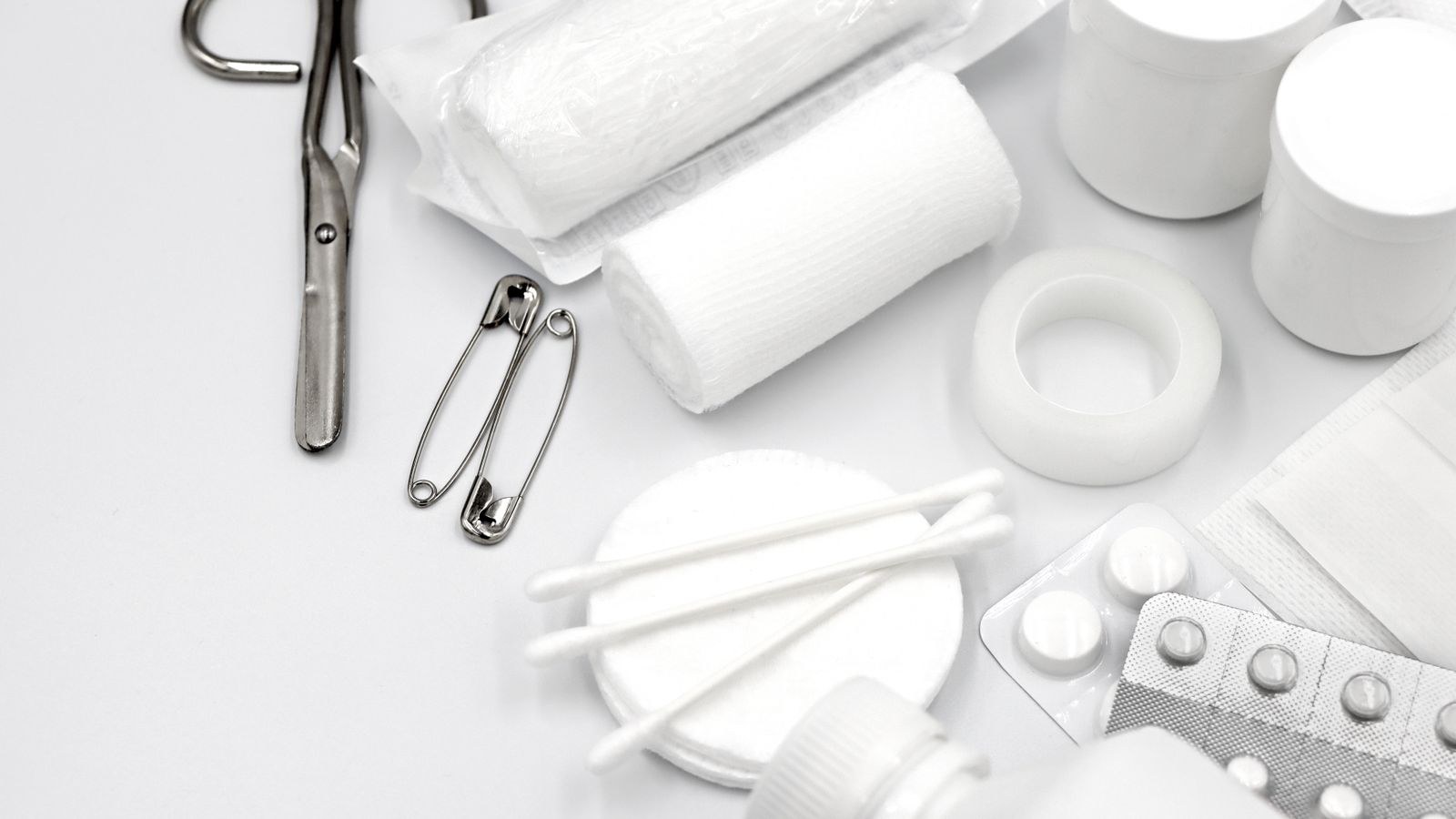
Pay attention to items that degrade silently. Antiseptic wipes dry out in their foil long before the printed date if the pouch is creased. Adhesive bandages lose stick after a few years and their sterile seal fails. Elastic bandages lose recoil. Ointments separate. Write the purchase date on anything without a printed expiry, and keep a spare set of the fastest-consumed items, typically bandages and gauze, in a labelled bag beside the kit.
Common Mistakes
The most frequent is buying a pre-made kit and never opening it. Manufacturers optimise for item count, so a kit advertising hundreds of pieces is usually mostly small bandages. Open it, inventory it and top up the gaps immediately.
The second is storing the kit somewhere inaccessible, such as a high shelf or a locked cabinet. Balance child safety against reach by locking medications separately while leaving dressings accessible. The third is under-stocking depth, which turns a manageable injury into an improvised one. The fourth is skipping training entirely, since equipment without knowledge accomplishes little. A basic first aid and CPR course takes an afternoon and changes outcomes more than anything you can buy.
Frequently Asked Questions
Should I buy a pre-made kit or build my own?
Buy a well-organised case as a base and then supplement it. Pre-made kits provide the container and the small consumables cheaply but almost always lack gauze depth, burn dressings, saline and useful tools.
Where should the main kit live?
Somewhere central, at adult height, in a room every household member can name without hesitation. Kitchen and hall closets work well. Avoid bathrooms for medications, since heat and humidity shorten shelf life.
Do expired medications still work?
Many lose potency gradually rather than becoming harmful, but potency is exactly what you need in an emergency. Replace anything past its date rather than gambling, and dispose of it through a pharmacy take-back scheme.
How large should the kit be?
Size it to your household. A couple needs a compact case; a family of five with pets needs a substantially larger main kit plus satellites. Depth of common consumables matters more than the number of distinct item types.
Final Thoughts
A home first aid kit earns its place through organisation and maintenance rather than through the number of items on the label. Build it around the injuries that genuinely happen at home, stock the common consumables deeply, split supplies across the kitchen, bathroom, workshop and car, and adapt the contents to the ages and pets in your household. Then commit to the audit schedule and pair the kit with working smoke alarms, carbon monoxide detection and an accessible extinguisher. That combination handles almost everything a household will face, and it costs less than most people assume.