Owen Bradley
 A smart thermostat is one of the few connected home devices that reliably pays for itself. Heating and cooling account for the largest share of most household energy bills, and a thermostat that knows when the house is empty, learns how long your system takes to reach a target, and adjusts for weather can cut that bill meaningfully without anyone noticing a comfort change. But the category has two hard gates that trip up buyers: whether the thermostat is electrically compatible with your HVAC system, and whether the savings claims apply to how you actually live. This guide covers compatibility properly, explains where energy savings genuinely come from, and walks through the features worth paying for.
Compatibility: Check This Before Anything Else
The most common smart thermostat disappointment is discovering after purchase that it will not run on your wiring. Compatibility comes down to three questions.
Do You Have a C-Wire?
The common wire, or C-wire, delivers continuous low-voltage power to the thermostat. Traditional thermostats did not need it because they simply closed a switch. Smart thermostats have displays, radios and processors that need constant power, so a C-wire is the clean solution. Pull your existing thermostat off the wall and look at the terminal block: you are looking for a wire in the terminal marked C.
If there is no C-wire, you have three options. Some thermostats include a power extender kit that adapts existing wiring at the HVAC control board. Some models are designed to work without a C-wire by trickle-charging an internal battery through the heating or cooling wire, which usually works but can cause short-cycling on some systems. Or you can have an electrician run a new wire, which is the most reliable fix if the run is accessible. Note that some spare wires already exist behind the wall unused — a bundle with an unconnected conductor is a common and welcome discovery.
What Type of System Do You Have?
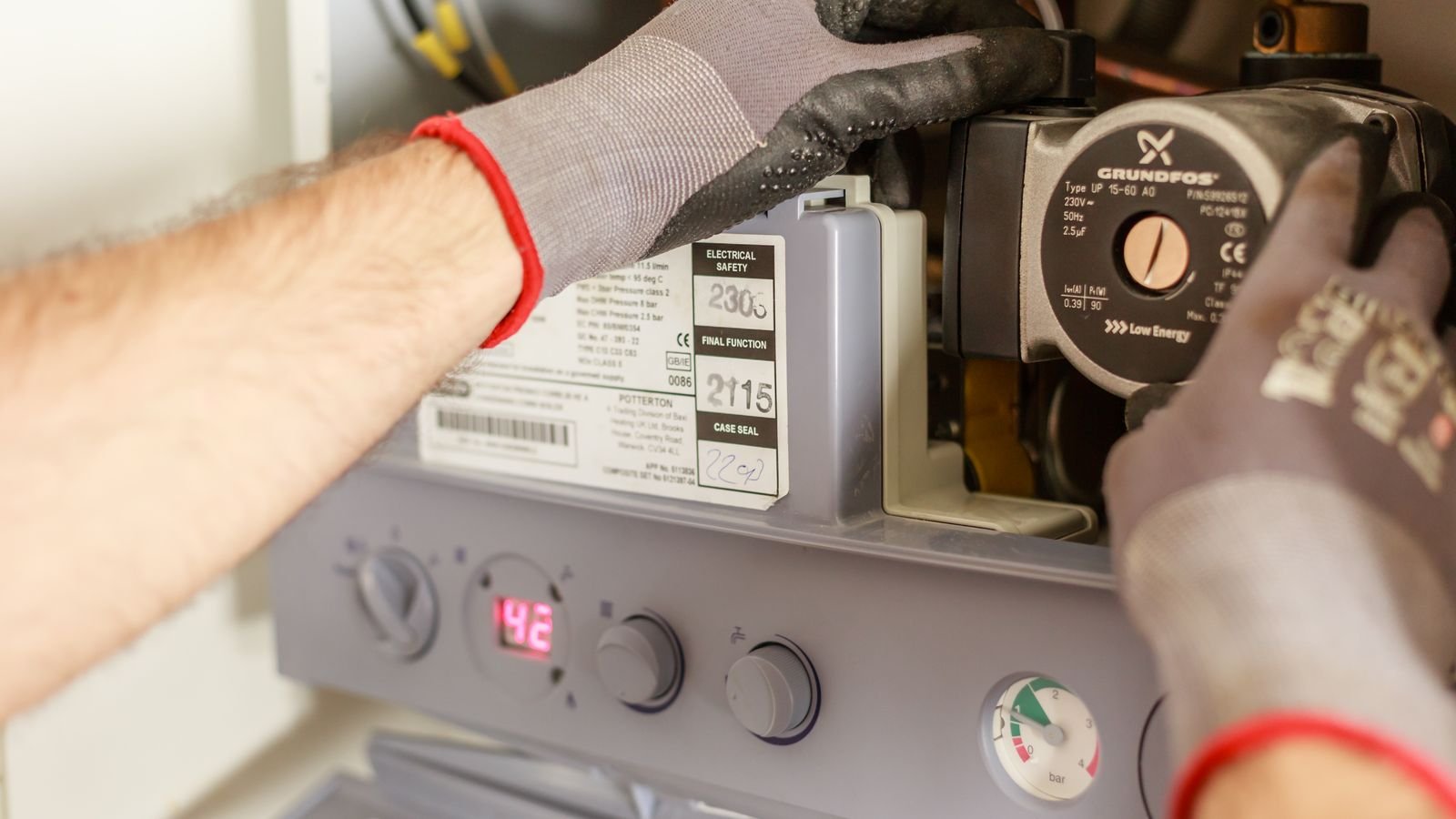
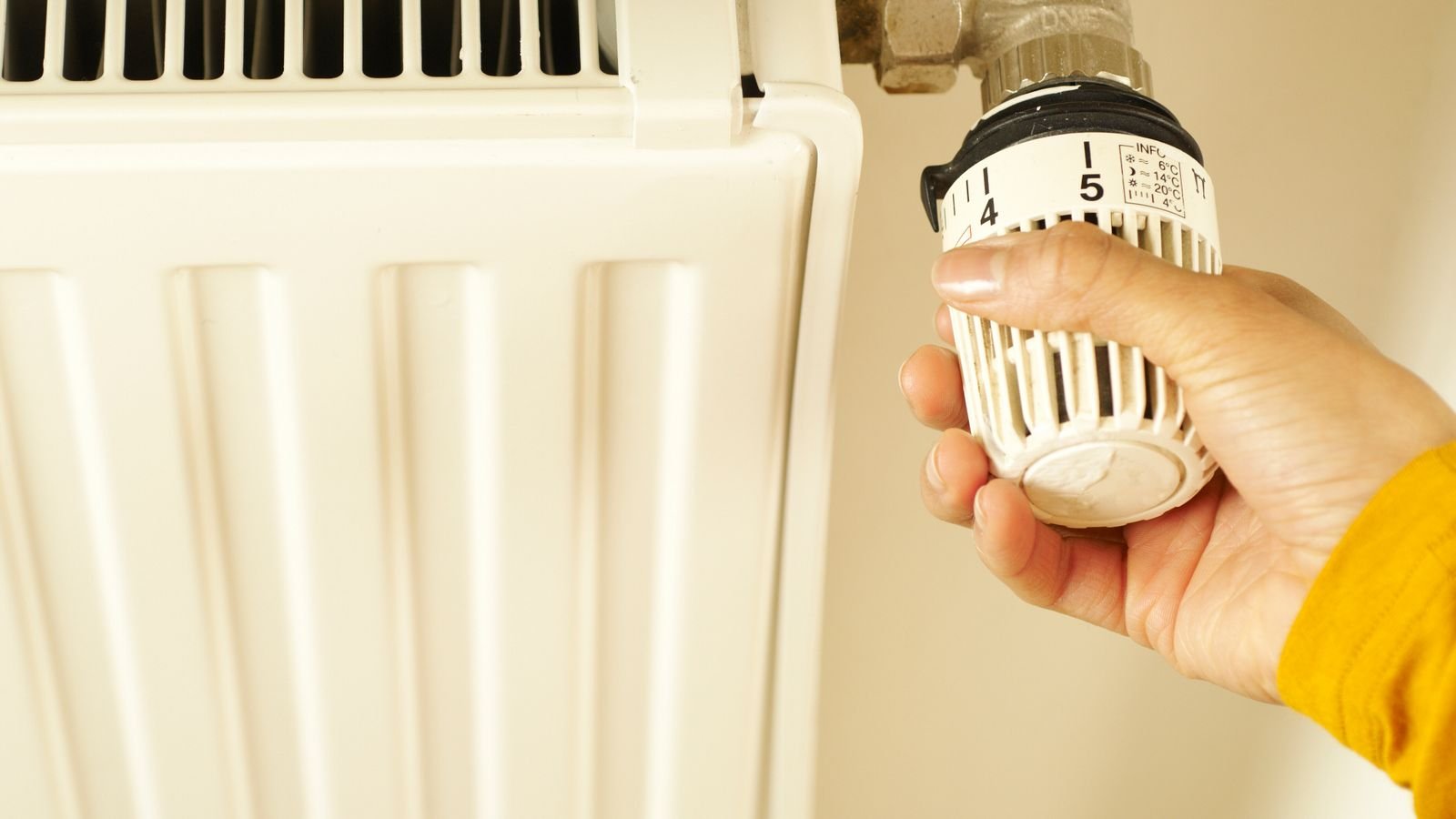
Standard single-stage forced air heating and cooling is universally supported. Multi-stage systems, heat pumps with auxiliary or emergency heat, and dual-fuel setups need a thermostat that explicitly supports the required number of stages — check the specification for terms like two-stage heat, two-stage cool, and heat pump with aux. Systems that need special handling include high-voltage electric baseboard heating, which requires a line-voltage thermostat rather than a low-voltage one, and older millivolt systems found on some floor and wall furnaces. Boiler and radiator systems can work with certain models but need careful selection. Proprietary communicating systems from some HVAC manufacturers may only accept their own controls.
Does the Manufacturer’s Compatibility Tool Approve It?
Every major brand publishes an online checker where you enter the labels on your existing thermostat’s terminals. Use it. Photograph your current wiring before disconnecting anything and keep the photo — it is the single most valuable thing you can do before starting.
Where the Energy Savings Actually Come From
Savings claims for smart thermostats vary widely because the savings depend almost entirely on what you were doing before. If you already ran a well-tuned programmable schedule, the incremental gain is modest. If you left a fixed temperature running around the clock, the gain can be substantial. The mechanisms are worth understanding:
- Setback when away. Not heating or cooling an empty house is where most of the saving lives. Geofencing and occupancy sensing automate what schedules do imperfectly.
- Learning your system’s response time. A thermostat that knows your house takes 40 minutes to warm up starts earlier and stops sooner rather than overshooting.
- Weather compensation. Using local forecast data to anticipate conditions avoids reactive over-correction.
- Reducing overnight conditioning. Automated night setbacks are easy savings that most people never programmed manually.
- Runtime visibility. Monthly reports showing how many hours your system ran change behavior on their own. Many owners find the reports produce as much saving as the automation.
- Maintenance alerts. Filter reminders and abnormal-runtime warnings catch efficiency losses and developing faults early.
Look also at whether your utility offers a rebate for a qualifying smart thermostat, or a demand-response program that pays a credit for letting them make small adjustments during peak periods. These can cover a large share of the purchase price. Compare capable models in our best smart thermostats roundup.
Features That Matter and Features That Do Not
Worth Paying For
- Remote sensors. Probably the highest-value feature in the category. A thermostat in a hallway measures the hallway. Remote sensors in bedrooms and living rooms let the system average or prioritize the rooms you actually occupy, which fixes the classic “one cold bedroom” complaint better than any amount of scheduling.
- Geofencing. Uses your phone’s location to trigger away and home modes automatically. More reliable than motion sensing for households with irregular hours.
- Multi-stage and heat pump support matched to your system, including proper auxiliary heat lockout so expensive backup resistance heat only runs when genuinely needed.
- Matter or broad ecosystem support. Cross-platform compatibility protects you if you change voice assistants or smart home hubs later, and it lets the thermostat work alongside the rest of your smart home system.
- Local control fallback. The thermostat should still work as a thermostat when the internet is down. Verify this — not all do gracefully.
- Humidity control. Useful if you have a whole-home humidifier or dehumidifier, and helpful for comfort even without one.
Often Overrated
- Learning algorithms. Appealing in theory, but many owners end up overriding them and setting a manual schedule anyway. A good schedule plus geofencing gets most of the benefit predictably.
- Built-in voice assistants. A thermostat is a poor location for a microphone and speaker. If you already have smart speakers, this adds cost without value.
- Elaborate displays. You interact with a smart thermostat through your phone most of the time. A beautiful screen on a hallway wall is rarely worth a large premium.
- Air quality sensors. Interesting data, but the thermostat’s location and the sensor quality usually make the readings indicative rather than actionable.
Smart, Wi-Fi and Programmable: The Differences
These terms get used interchangeably and are not the same thing. A programmable thermostat follows a schedule you set manually, with no connectivity. It is cheap, reliable and delivers most of the achievable savings if — and only if — you set it up properly and your household keeps a predictable routine. Our best programmable thermostats guide covers this tier.
A Wi-Fi thermostat adds network connectivity so you can control it remotely from an app, see current conditions and change settings from anywhere. This is genuinely useful for irregular schedules, vacation homes and rental properties. See the best Wi-Fi thermostats comparison for models in this category.
A smart thermostat adds automation on top: occupancy awareness, learning, weather integration, remote sensors and integration with the rest of your connected home. The step from programmable to Wi-Fi is about convenience; the step from Wi-Fi to smart is about the system managing itself. Both steps are worth taking for most households, but be honest about whether you will use the automation.
Installation: What to Expect
- Turn off power at the breaker serving the HVAC system, not just at the thermostat. Confirm the system is dead before touching wires.
- Photograph the existing wiring clearly, including terminal labels, before removing anything. This is your recovery path if something goes wrong.
- Label each wire with the supplied stickers as you disconnect it. Wire colors are conventional, not guaranteed, so trust the terminal label over the color.
- Mount the new base plate, using the trim plate if the old thermostat left marks or a larger hole.
- Connect wires to matching terminals, installing the power extender kit at the HVAC control board first if your setup requires one.
- Restore power and run configuration, telling the thermostat what system type you have. Getting this step wrong is the usual cause of odd behavior afterwards.
- Test every mode — heat, cool, fan, and auxiliary heat if applicable — before considering the job done.
Most installations take under an hour and need only a screwdriver. Call a professional if you have a heat pump with auxiliary heat you are unsure about, a multi-stage or dual-fuel system, a millivolt or line-voltage setup, or no C-wire and no accessible route to add one.
Getting the Most Out of It After Installation
- Set a wider setback range than feels intuitive. A few degrees during unoccupied hours delivers most of the saving with no comfort cost.
- Place remote sensors in the rooms that matter — the bedroom overnight, the living room in the evening — and use scheduled sensor priority if available.
- Avoid mounting the main unit on an exterior wall, in direct sun, above a heat source, or near a supply vent. Any of these produce misleading readings.
- Enable auxiliary heat lockout on heat pumps so resistance backup only runs below a sensible outdoor temperature.
- Review the monthly runtime report. A sudden increase usually means a dirty filter, a failing component or a new air leak.
- Enroll in a utility demand-response program if one is offered and the adjustment windows suit you.
Common Mistakes
- Buying before checking compatibility. The single biggest source of returns in the category.
- Assuming no C-wire means it will work fine anyway. Battery-powered workarounds can cause short-cycling on some systems.
- Setting extreme setbacks. Very deep setbacks make the system work hard to recover and can wipe out the saving, especially with heat pumps.
- Cranking the target temperature to warm up faster. HVAC systems have one output level; setting 80 does not heat faster than setting 70, it just overshoots.
- Overriding the schedule constantly. A thermostat that is manually adjusted several times a day saves nothing. Fix the schedule instead.
- Ignoring the filter. A clogged filter costs more efficiency than a smart thermostat can recover.
Frequently Asked Questions
Will a smart thermostat work without a C-wire?
Many models will, using either an included power extender kit or internal battery charging through the existing wiring. Both approaches work on most systems, but a genuine C-wire is more reliable. If your system has been prone to short cycling, prioritize a model with a power extender kit.
How much can I actually save?
It depends entirely on your starting point. Households that previously held one temperature around the clock see the largest reductions; households already running a disciplined schedule see far less. Check for utility rebates, which often shift the payback calculation more than the energy saving itself.
Do smart thermostats work with heat pumps?
Yes, but you must choose a model that explicitly supports heat pumps with auxiliary heat, and configure the auxiliary lockout correctly. A thermostat that runs resistance backup heat unnecessarily will increase your bill rather than reduce it.
Can I install one myself?
For a standard single-stage forced air system with a C-wire, yes — it is a straightforward job with a screwdriver and about an hour. Multi-stage systems, heat pumps with backup heat, dual-fuel setups and line-voltage or millivolt systems are worth handing to a professional.
What happens if my internet goes down?
A well-designed smart thermostat continues running its stored schedule and functions normally as a local thermostat; you simply lose remote control and cloud features. Confirm this behavior before buying, since implementations differ.
Are remote sensors worth the extra cost?
For most homes, yes, and they are often the feature that produces the biggest comfort improvement. Any house where one room is consistently too hot or too cold benefits immediately.
Final Thoughts
Buy a smart thermostat in this order: confirm compatibility with your wiring and system type, decide whether you need remote sensors, then choose the ecosystem you want it to live in. Those three decisions determine almost everything about how satisfied you will be. Skip the features that look impressive on a spec sheet but sit in a hallway unused, and put the money into sensors and correct system support instead. Then spend twenty minutes setting a realistic schedule and enabling geofencing, because the hardware only saves money once it is configured to match how your household actually lives. Check the comparisons linked above for 2026 to find the model that matches your system, and check your utility’s rebate page before you order.