Owen Bradley
 Outdoor audio breaks most of the rules that make indoor systems work. There are no walls to reinforce bass, no ceiling to contain the sound, and no shelter from rain, frost, pollen, or direct sun. A speaker that sounds excellent in a living room will sound thin on a deck and may not survive its first winter there. This outdoor speaker buying guide covers the weather ratings that actually mean something, the choice between wired and wireless power, how to work out how many speakers a space needs, and how to get good coverage on your patio without broadcasting the whole party to the neighbours.
Why Outdoors Is Harder Than Indoors
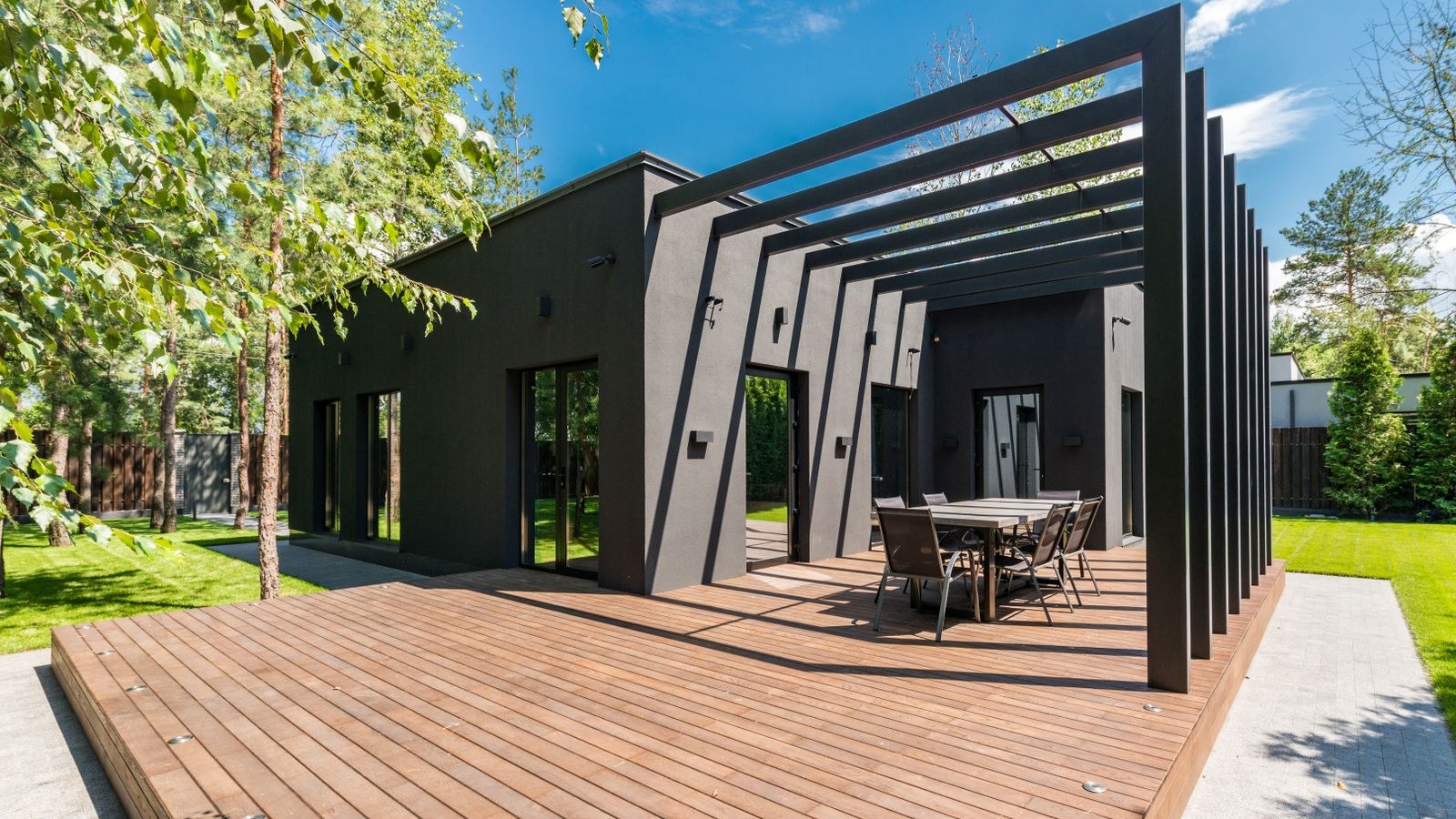
Inside a room, walls and ceiling reflect sound back at you, and the boundaries reinforce low frequencies substantially. Outside, sound radiates away and never returns. Two consequences follow. First, you lose a great deal of perceived bass, which is why outdoor speakers often sound thin unless they are designed with that in mind. Second, level drops off quickly with distance, so a single speaker cannot cover a large area the way it would in a room.
The practical response is more speakers at lower volume rather than fewer speakers turned up. Spreading four modest speakers around a patio delivers even coverage everywhere, while two speakers cranked to reach the far corner will be uncomfortably loud near the house and still weak at the edges. This principle drives almost every recommendation below.
Weather Ratings: What the Numbers Mean
The specification to look for is an IP rating, written as IP followed by two digits. The first digit rates protection against solid objects and dust on a scale to 6. The second rates protection against water on a scale to 8. An X in either position means that property was not tested, so IPX5 tells you about water and nothing about dust.
- IPX4: splash resistant from any direction. Adequate for a covered porch or under a deep eave, not for open exposure.
- IPX5 to IPX6: resists jets of water. Suitable for most patios and open decks that see ordinary rain.
- IP65: dust tight plus water jet resistant. The sensible target for permanently mounted outdoor speakers.
- IPX7: survives temporary immersion. Relevant for poolside use and portable speakers that might end up in the water.
Ratings only describe water and dust, though. Ultraviolet light is the quieter enemy: cheap plastic housings chalk and crack after a couple of summers of direct sun, and untreated grilles rust. Look for UV-stabilised cabinets, powder-coated or stainless steel hardware, and rubber-surround drivers rather than foam, which degrades outdoors. If you live somewhere with hard freezes, check the stated operating temperature range too. Our roundup of the best outdoor speakers notes which models publish real environmental specifications rather than a vague “weather resistant” claim.
Poolside and Coastal Conditions
Chlorine, salt spray, and constant humidity are more corrosive than plain rain. Near a pool or the coast, prioritise stainless or brass hardware and sealed enclosures over headline output figures. Speakers designed specifically for these conditions, such as those in our best pool speakers comparison, use different materials rather than simply a higher IP number, and that materials choice is what determines whether they last five years or one.
Wired Versus Wireless: How Power and Signal Reach the Speaker
There are three broad approaches, and they suit very different situations.
Passive Wired Speakers
These connect back to an indoor amplifier or a dedicated outdoor zone on a receiver using speaker cable. This is the best-sounding and most reliable route for a permanent installation. There is nothing outside to charge, no battery to fail in the cold, and no wireless dropout when someone stands in the wrong place. The cost is installation: you need to run cable, in suitable gauge for the distance, with a UV-stable or direct-burial jacket.
Powered and Wi-Fi Speakers
These need mains power at the speaker location but stream over your home network. They avoid long speaker cable runs and integrate with multi-room systems, but every unit needs an outdoor-rated outlet nearby, and your wireless network has to reach reliably to the far end of the garden. Signal strength outdoors is often worse than people expect once the router’s signal has passed through an exterior wall.
Portable Bluetooth Speakers
The simplest option and the right one for renters, small balconies, or anyone who does not want a permanent installation. Modern portable units are genuinely capable and can be brought indoors in bad weather, which extends their life enormously. Range is the limitation, since Bluetooth realistically covers around 30 feet through obstacles. Our shortlist of the best outdoor Bluetooth speakers compares battery life, pairing options for stereo pairs, and how well each design copes with being left out overnight, and our broader best waterproof speakers guide covers the fully sealed models that shrug off immersion.
How Many Speakers Does Your Space Need
A useful planning rule is one pair of speakers per roughly 400 square feet of open area, mounted so their coverage patterns overlap slightly. A small balcony or a compact deck under 200 square feet is well served by a single stereo pair. A typical patio of 300 to 500 square feet wants a pair, positioned wide. A large garden with distinct zones, a dining area, a pool, and a lounge area, is better treated as three separate small systems than one large one.
Mount height matters as much as count. Eight to ten feet is the sweet spot: high enough that people are not standing directly in front of the drivers, low enough that sound is not thrown over everyone’s heads. Angle the speakers downward toward the seating area rather than out across the property line.
Under an eave or soffit is the ideal mounting location, because the overhang shelters the speaker from direct rain and sun while a hard surface just above it provides a little acoustic reinforcement. Speakers designed for exactly this job, including bracket-mount and rock-style enclosures, are compared in our guide to the best patio speakers.
Keeping the Sound Off the Neighbours
Sound carries much further outdoors than most people realise, and low frequencies travel furthest. A few deliberate choices keep your music in your garden.
- Use more speakers at lower volume. Four speakers at a moderate level cover an area evenly without any single point being loud enough to travel.
- Aim inward and downward. Point speakers back toward the house and toward the seating, never outward across a fence line.
- Mount against a solid surface. A wall or soffit behind the speaker directs energy forward instead of letting it radiate in all directions.
- Keep the bass modest. Deep bass is the frequency range that carries over fences and through walls. Resist the temptation to add a large outdoor subwoofer unless the property is genuinely isolated.
- Use planting and fencing. Dense hedging and solid fencing absorb and block some high-frequency energy. They do little for bass but soften the overall spill.
Power, Impedance, and Long Cable Runs
Passive outdoor speakers usually sit at the end of much longer cable runs than indoor ones. Resistance in the cable rises with distance, so gauge matters more here. For runs beyond about 40 feet, 14 AWG is a sensible minimum and 12 AWG is safer, particularly with lower-impedance speakers. Use cable with a UV-resistant jacket, or direct-burial rated cable if it will be underground, and protect any run inside conduit where it might be hit by a mower or a spade.
Check impedance carefully if you plan to wire several pairs to one amplifier. Connecting multiple pairs in parallel drops the total impedance and can push a receiver below its rated minimum, causing it to shut down or overheat. An impedance-matching volume control or a dedicated speaker selector switch solves this and adds the convenience of a local volume knob outside.
Amplifier power should be chosen generously. Because outdoors offers no boundary reinforcement, you need more clean power to reach a given perceived loudness than you would in a room, and an underpowered amplifier driven into clipping is the fastest way to damage a tweeter.
Installation and Maintenance Details
Mount brackets into structural timber or masonry, not into thin cladding, and use stainless fasteners so rust streaks do not appear down the wall. Leave a drip loop in any cable entering a speaker or junction box so water runs off rather than tracking along the jacket into the terminals. Seal any hole through an exterior wall with an appropriate exterior sealant.
Maintenance is light but not zero. Rinse salt or chlorine residue off the grilles a few times a year, check terminals for corrosion at the start of each season, and apply a little dielectric grease to connections in humid climates. In regions with severe winters, bringing speakers inside for the coldest months meaningfully extends their life, even on models rated for it.
Common Mistakes
Using indoor speakers outside under a covered porch is the most frequent error. Humidity alone destroys paper cones and foam surrounds within a season or two, even where rain never touches them.
Buying two large speakers instead of four small ones is the second. It produces uneven coverage and forces you to run at a level that annoys everyone within earshot.
Running indoor speaker cable outdoors is the third, and it fails slowly enough that people rarely connect the eventual crackling to the cable jacket that cracked two summers ago.
Finally, mounting too high or aiming outward wastes most of the output over the fence. Point the sound where the people are.
Frequently Asked Questions
Can outdoor speakers stay outside all year?
Models with a genuine IP65 or better rating and UV-stable housings are built for it, but longevity improves considerably if you cover them or bring them in during a harsh winter. Check the manufacturer’s stated temperature range before leaving anything out through a hard freeze.
Do I need a subwoofer outdoors?
Usually not. Bass carries furthest and is the most likely to disturb neighbours, and open air robs a subwoofer of the room reinforcement it depends on. Only large, well-isolated properties really justify one.
How far can Bluetooth reach in a garden?
Realistically around 30 feet with obstacles, more in clear line of sight. If your listening area is further from the source than that, Wi-Fi or a wired system will be far more dependable.
What IP rating should I look for?
IP65 is the sensible target for a permanently mounted speaker in an open location. IPX4 is acceptable only for a genuinely sheltered spot, and IPX7 matters for poolside or portable use where immersion is possible.
Final Thoughts
Good outdoor audio comes from planning rather than spending. Work out the area you need to cover, place enough speakers at sensible height and angle to cover it evenly at a moderate level, and choose products whose weather protection matches your actual climate rather than a marketing phrase. Run properly rated cable, size the amplifier and impedance correctly, and give the installation a few minutes of maintenance each season. Do that and your patio system will sound natural, keep the peace next door, and still be working many summers from now.