Owen Bradley
 You buy a smart light switch, pull the old one off the wall, and find two wires where the instructions expect three. There is no white bundle at the back of the box. This is the single most common obstacle in home lighting automation, and it stops more projects than price, ecosystem confusion, or WiFi coverage combined. The reason is historical: for decades, switch loops carried only the hot and switched-hot conductors, because a mechanical toggle needs nothing else. A smart switch, by contrast, has electronics that must stay powered even when the light is off. This guide covers every no-neutral smart switch option available, what each compromises, and how to pick between them.
Why the Neutral Wire Matters
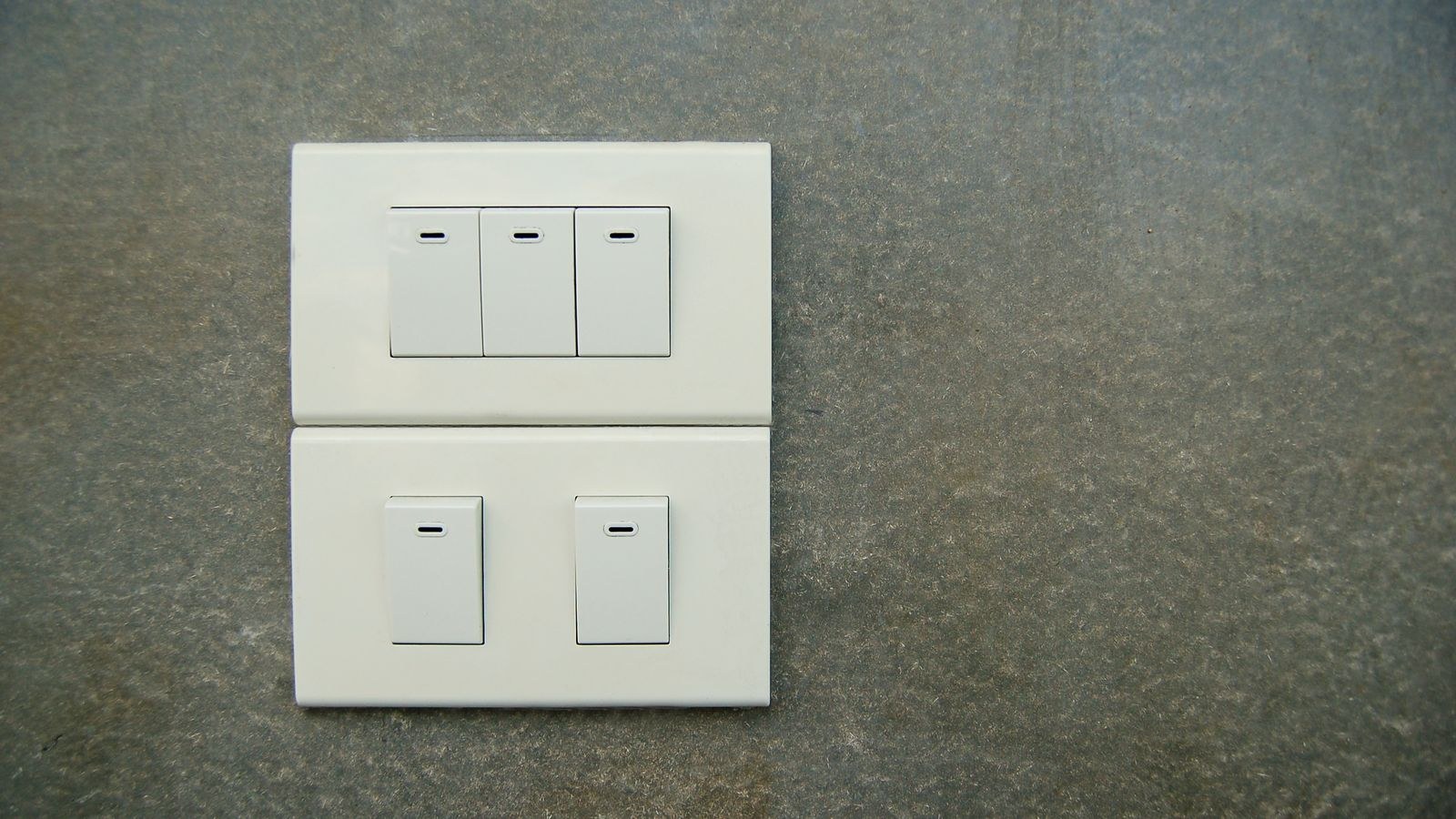
Electricity needs a complete loop. Current flows out along the hot conductor, through the load, and back along the neutral. A traditional switch simply interrupts the hot conductor, so the only wires it needs are hot in and switched-hot out. That is why so many switch boxes contain just two conductors plus ground.
A smart switch is different. Its radio, processor, and relay draw a small but continuous amount of power — typically 0.3W to 1W — around the clock, including when the light is off. To do that it needs a return path, and the neutral is the obvious one. Without it, the switch must find another way to keep itself alive, and every no-neutral solution is essentially a different answer to that problem.
How to Confirm You Have No Neutral
Before assuming, check properly. Turn off the breaker, verify with a non-contact tester, and remove the switch plate and the switch itself. Look for a bundle of white conductors capped together at the back of the box, unconnected to the switch. Many boxes do have a neutral bundle that simply was not used, and finding it turns a difficult project into a simple one. Also check whether the box is metal and whether a ground conductor is present, since several workarounds depend on that. If the box contains only two conductors and a ground, you genuinely have a no-neutral situation.
Option 1: No-Neutral Switches That Trickle Through the Bulb
The most direct solution is a switch specifically designed to work without a neutral. These pass a tiny leakage current through the light fixture itself to power their own electronics, even in the off state. With incandescent bulbs this was invisible — the trickle was far too small to produce light. With LEDs it can be a problem, because modern LED drivers need very little energy to produce a faint glow.
The symptoms are recognisable: bulbs that glow dimly when supposedly off, that flicker occasionally, or that pulse at a slow rhythm. Whether it happens depends entirely on the specific bulb’s driver design, which is why manufacturers publish compatibility lists and why two identical-looking LED bulbs can behave completely differently on the same switch. If you go this route, our comparison of the best smart light switches flags which models handle no-neutral wiring and how tolerant they are of different bulbs.
Minimum Load Requirements
No-neutral switches usually specify a minimum load, often somewhere between 5W and 25W. Below that, there is not enough current path for the switch to power itself reliably and it may fail to respond or reboot repeatedly. A single 6W LED bulb in a hallway fixture is a classic failure case. Adding more bulbs to the same fixture, or choosing higher-wattage LEDs, sometimes solves it — which is an odd position to be in when the point of LEDs was to use less power.
Option 2: Bypass Capacitors
A bypass, sometimes called a load capacitor or dummy load, is a small component wired in parallel with the light fixture at the fixture end. It provides the return path the switch needs, absorbing the trickle current so it never reaches the LED driver. Bypasses cost a few dollars and are the standard fix for glow and flicker on no-neutral switches.
The catch is location. The bypass must be installed at the fixture, inside the ceiling rose or luminaire canopy, not in the switch box. That means getting up to the light, opening it, and having enough space inside for the component. In a recessed downlight with a sealed housing there may be no room at all, and in a fixture with a small canopy the bypass simply will not fit. When it works, though, it works completely, and one bypass per problematic fixture is far cheaper than rewiring.
Option 3: Smart Bulbs Behind a Dumb Switch
Sidestep the wiring problem entirely by putting the intelligence in the bulb. Smart bulbs need no neutral in the switch box because they take their power from the fixture, where a complete circuit already exists. Install smart bulbs, leave the mechanical switch permanently on, and control everything by app or voice.
This is by far the cheapest entry point for a single room and the only option that gives you full colour and colour-temperature control. It also has an obvious weakness: anyone who flips the wall switch off cuts power to the bulbs, and they stop responding to anything. Guests, cleaners, and children do this constantly. Partial fixes include switch guards that physically block the toggle, or replacing the switch with a smart bulb-compatible controller that sends commands rather than cutting power. If you are weighing bulbs as your primary route, our roundup of the best smart bulbs covers protocols, brightness, and colour accuracy across the field.
Cost Scales With Fixtures
Smart bulbs are cheap per unit and expensive per room. A single pendant costs one bulb. A kitchen with eight recessed downlights costs eight, and a chandelier with twelve costs twelve. At that point a single switch, even with an electrician’s visit, is often cheaper and always tidier. Count your bulbs before deciding this is the economical option.
Option 4: Battery-Powered Wireless Remotes and Scene Controllers
An increasingly popular approach uses no mains wiring at all. A battery-powered wireless switch sticks to the wall — over the existing switch plate, or anywhere convenient — and sends radio commands to smart bulbs, a hub, or other smart devices. It requires no electrical work whatsoever and can be relocated freely.
This pairs particularly well with the smart bulb approach, because it restores physical wall control without cutting power. Mount the wireless remote directly over the old switch, leave the original permanently on behind it, and the room behaves normally for anyone who walks in. Batteries typically last one to five years depending on protocol and usage. Our guide to the best wireless light switches compares battery life, mounting options, and which ecosystems each supports.
The limitation is that these are pure controllers. They send commands through a hub or directly to devices, so if that link fails, the switch does nothing. There is no mechanical fallback. For most households that is an acceptable trade in exchange for zero wiring, but it is worth understanding before committing a whole house to it.
Option 5: Fixture-Side Relay Modules
Micro modules — small relay units that fit inside the ceiling rose, the luminaire, or occasionally a deep switch box — are the most elegant solution when there is space. Because they sit at the fixture, they have access to both hot and neutral, so they behave exactly like a fully wired smart switch with none of the trickle-current compromises.
The existing mechanical switch is then rewired as a low-voltage input to the module, meaning the wall switch keeps working normally while the module handles automation. You get the best of both: reliable local control and full smart functionality, with no visible change to the room. This approach is common in Europe, where deeper ceiling roses and back boxes are typical, and less so in North America. It usually requires an electrician, and it requires room inside the fixture.
Option 6: Actually Running a Neutral
Sometimes the right answer is to fix the underlying problem. If the wall is open for other work, if the run is short, or if you are automating an entire floor, having an electrician pull a neutral to the switch boxes removes every compromise at once. You then get full compatibility with any switch, no minimum load, no bypasses, and no bulb-specific quirks.
The cost varies enormously with construction. A single-storey home with an accessible attic above may be inexpensive; a plastered masonry wall in a multi-storey building may be prohibitive. Get a quote before dismissing it, because for a whole-house project the per-switch cost can compare favourably with buying a smart bulb for every fixture. If you decide to proceed with wired switches, our walkthrough on how to install a smart light switch covers the wiring steps and safety checks in detail.
Choosing Between the Options
- One or two bulbs per fixture, colour wanted: smart bulbs plus a battery wireless remote.
- Many bulbs per fixture, white light only: a no-neutral switch, with a bypass if flicker appears.
- Fixture has space inside and you want reliability: a fixture-side relay module.
- Renting and unable to alter wiring: smart bulbs plus a stick-on wireless remote.
- Automating the whole house long term: price up running neutrals before committing to workarounds.
- Three-way circuits involved: expect extra complexity; wireless companion switches are usually the cleanest fix.
Three-way and multi-way circuits deserve particular caution. Traveller conductors complicate every no-neutral approach, and behaviour varies by wiring topology. Many manufacturers sell companion switches specifically for these cases, and mixing brands rarely works. Our broader best smart switches comparison notes which product lines offer proper multi-way support.
Frequently Asked Questions
Is a no-neutral switch safe?
Certified models from reputable manufacturers are safe when installed correctly. The trickle current they pass is tiny and intentional. Safety concerns arise from uncertified products and from incorrect installation, not from the concept itself.
Why do my LEDs glow faintly when off?
The switch’s standby current is passing through the LED driver, which needs almost nothing to produce a faint output. A bypass capacitor at the fixture eliminates it, as does switching to a bulb the manufacturer lists as compatible.
Can I use the ground wire instead of a neutral?
No. Using ground as a current-carrying conductor is unsafe and prohibited by electrical codes everywhere. Any advice suggesting it should be ignored completely.
Do no-neutral switches work with dimming?
Some do, but compatibility narrows considerably. Dimming plus no-neutral plus LED is the hardest combination to get right, and checking the manufacturer’s tested bulb list before buying is essential.
Which option is cheapest overall?
For a single fixture with one or two bulbs, smart bulbs win easily. For fixtures with many bulbs, a switch is cheaper. Count bulbs per fixture and the answer usually becomes obvious. For a fuller cost comparison, see our smart switch buying guide.
Final Thoughts
A missing neutral wire is an inconvenience, not a dead end. You have at least six credible routes forward, and the right one depends on how many bulbs sit behind each switch, whether you can access the fixture, whether you own the property, and how much you value guest-proof physical control. Check the box carefully first in case a neutral is present but unused. Then match the solution to the room rather than buying one product type for the entire house — most successful installations end up mixing switches, bulbs, and wireless remotes depending on what each space actually needs.