Owen Bradley
 Fixed wireless home internet delivered over a mobile network has gone from a rural stopgap to a genuine mainstream option, and the marketing is aggressive: one flat price, no contract, no installation appointment, and a box you plug in yourself. Cable, meanwhile, is the incumbent in most neighbourhoods, with decades of infrastructure behind it and speeds that fixed wireless still cannot match at the top end. Comparing 5G home internet vs cable properly means looking past the advertised headline number at latency, congestion behaviour, upload speed, equipment, and how each technology behaves on a busy evening. This guide walks through those differences and identifies the household types that should switch in 2026 and the ones that are better off staying put.
How the Two Technologies Actually Differ
Cable internet reaches your home over coaxial copper originally laid for television. Your modem shares capacity with every other subscriber on the same neighbourhood node, which is why cable performance dips during peak hours in dense areas. The technology is mature, widely deployed, and capable of very high download speeds, with multi-gigabit tiers available in many markets.
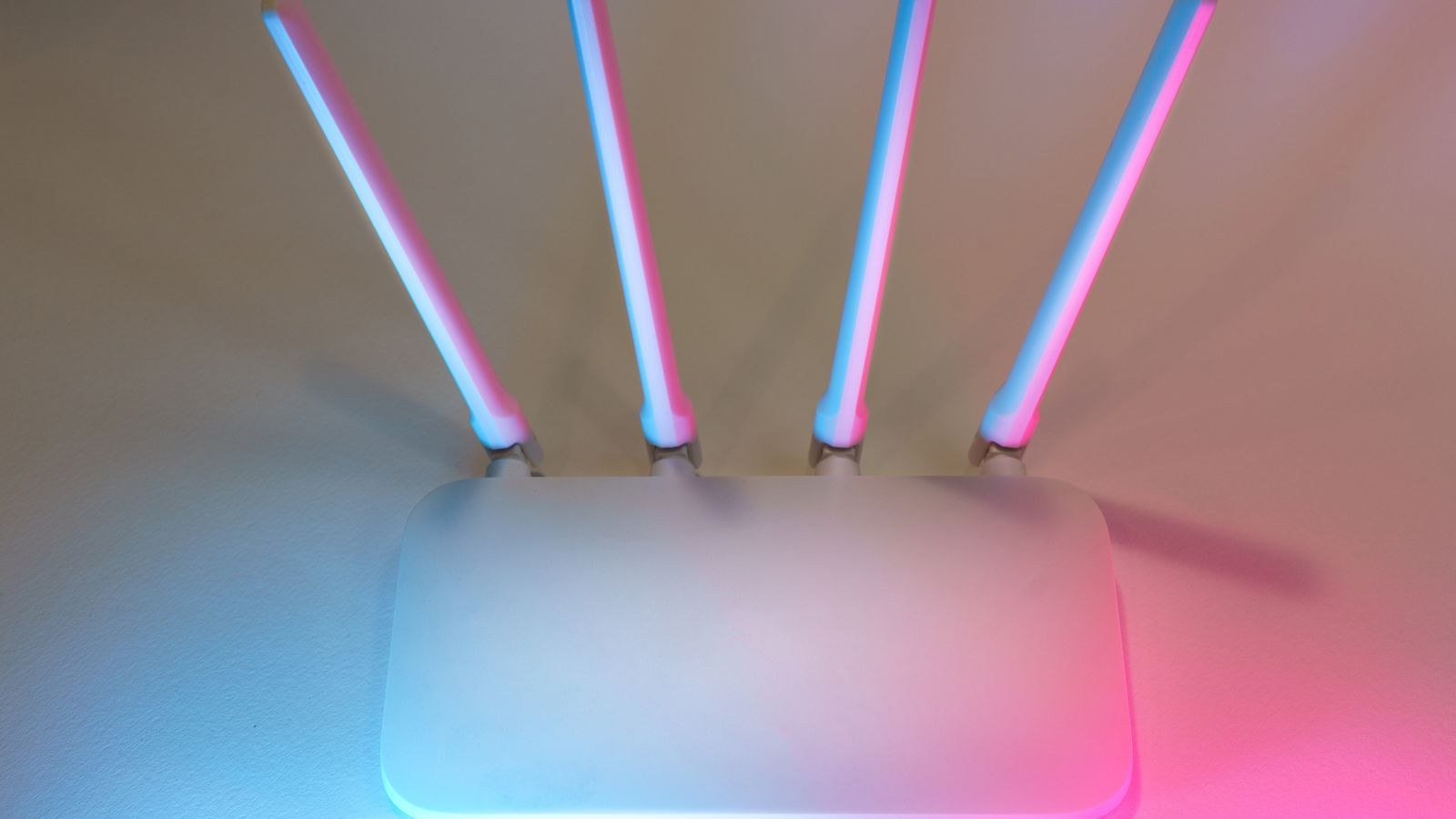
Fixed wireless home internet uses the same mobile network your phone does. A receiver in your home connects to a nearby tower, and the tower backhauls traffic to the wider internet. There is no cable to your property at all, which is why installation is as simple as plugging the unit in and finding a window with a strong signal. The trade-off is that your performance depends on tower distance, obstacles between you and the tower, the spectrum bands available at your location, and how many other subscribers share that tower at the same moment.
The Key Structural Difference
Cable congestion is a neighbourhood problem that providers solve by splitting nodes. Wireless congestion is a tower problem, and mobile operators typically prioritise phone traffic over home internet subscribers. That prioritisation policy is the single most important thing to understand before switching, because it means your home connection can slow down for reasons entirely outside your household.
Speed: The Headline and the Reality
Advertised fixed wireless speeds commonly range from around 100 Mbps to 300 Mbps, with some locations reaching considerably higher on strong mid-band or millimetre-wave signal. Cable routinely offers 300 Mbps to 1 Gbps as standard tiers, with 2 Gbps available in upgraded areas. On paper, cable wins on raw download capacity.
In practice, the gap matters less than the numbers suggest for most households. A family streaming three simultaneous 4K videos, holding a video call, and browsing needs perhaps 60 Mbps of genuine throughput. Anything above roughly 200 Mbps stops changing daily experience for typical use and starts mattering only for large file transfers, frequent multi-gigabyte game downloads, and households with many heavy simultaneous users.
The more useful question is consistency. Cable delivers a fairly predictable speed with a dip at peak time. Fixed wireless can swing far more widely, from a very fast midday result to a fraction of that at nine in the evening. If you rely on the connection for work, a lower but stable figure beats a higher but volatile one.
Upload Speed Deserves Attention
Cable’s biggest weakness is upload. Standard cable tiers often provide only 10 to 35 Mbps upstream regardless of how fast the download is, because the coaxial spectrum allocation favours download heavily. Fixed wireless frequently delivers 10 to 50 Mbps up, sometimes considerably more, so it can be competitive or better here. If you upload large video files, run cloud backups, or host frequent multi-participant video calls, compare upload figures carefully rather than fixating on the download headline.
Latency, Gaming and Video Calls
Latency is the delay before data starts moving, and it shapes how responsive a connection feels. Cable typically sits around 15 to 30 milliseconds to a nearby server, and it is fairly stable. Modern fixed wireless commonly lands in the 25 to 60 millisecond range, which is perfectly usable for video calls and most online games, though it is more variable and can spike under tower load.
For competitive online gaming where reaction time decides outcomes, cable’s stability generally wins. For casual gaming, streaming, remote work, and everything else, the difference is largely imperceptible. Jitter, the variation in latency from moment to moment, is more disruptive to video calls than a slightly higher average, and this is where a congested tower shows its weakness most obviously.
Equipment: What You Get and What You Can Change
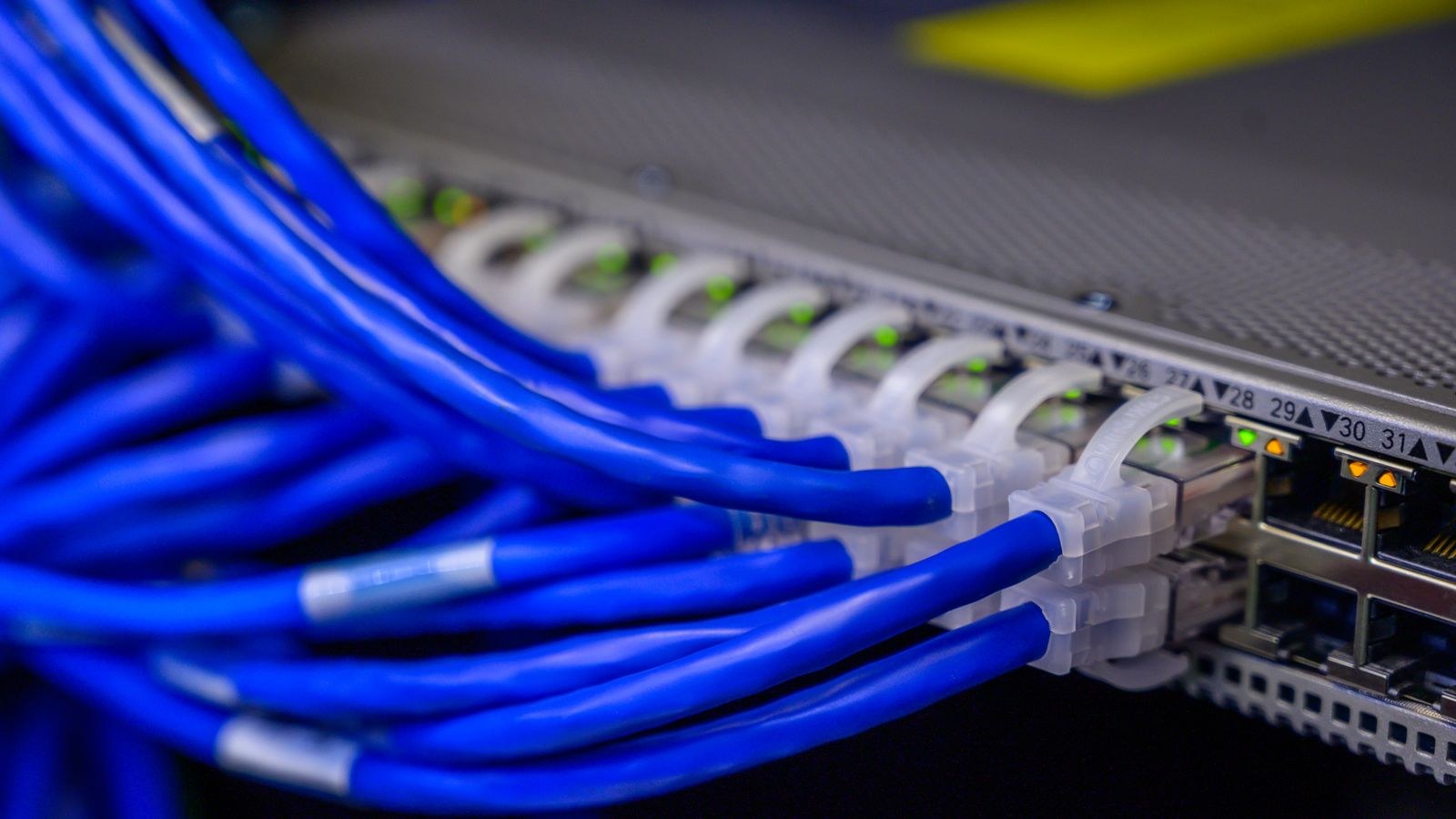
Fixed wireless services usually supply a combined receiver and router in one unit. It is convenient, but the built-in Wi-Fi is often mediocre and the placement is dictated by signal rather than by coverage. The best spot for cellular reception is frequently a window at the edge of the house, which is the worst possible position for distributing Wi-Fi through the building. The standard fix is to run the supplied unit in a pass-through arrangement and connect your own router or mesh system, or to choose a receiver that accepts an external antenna.
If you want more control, dedicated hardware exists for exactly this. Purpose-built units covered in our roundups of the best 5G SIM routers and the best cellular routers accept a provider SIM directly and give you proper router features, external antenna ports, and signal diagnostics that the supplied box hides. For households that also want the connection to travel, the best 5G mobile routers cover portable options with battery power.
Cable requires a modem that matches your provider’s standard, plus a router. Many people rent a combined gateway, which is simple but carries a monthly fee and rarely offers strong Wi-Fi. Buying your own hardware usually pays for itself within two years; our guides to the best routers for cable internet and combined best modem routers explain the channel-bonding and DOCSIS requirements that determine compatibility.
Pricing and Contract Structure
Fixed wireless typically sells at one flat monthly price with equipment included, no installation fee, no contract, and no promotional rate that doubles after a year. That transparency is a genuine advantage and often the deciding factor for people frustrated by rising cable bills.
Cable pricing is usually promotional. The first-year rate looks attractive, then rises substantially. Add equipment rental, sometimes a broadcast fee, and the real cost can be considerably higher than advertised. Cable providers do, however, negotiate, and a call to the retention department frequently produces a better rate than any public offer, particularly if you can credibly mention a fixed wireless alternative.
Data Allowances
Fixed wireless home plans are usually genuinely unlimited in volume, but subject to prioritisation during congestion. Cable plans often carry a monthly allowance, commonly around 1.2 TB, with overage charges or a paid unlimited add-on. Households that stream heavily in 4K should factor that difference into the price comparison rather than treating the monthly figure alone.
Reliability and Support
Cable is affected by neighbourhood outages, line faults, and severe weather damaging aerial cable. Fixed wireless is affected by tower outages, extreme weather attenuating the signal, seasonal foliage blocking the path, and new construction appearing between you and the tower. Neither is inherently more reliable; they simply fail differently.
One practical point favours fixed wireless: because there is no physical line to your property, a fault is rarely something an engineer must visit to fix, and moving home means carrying the box with you rather than booking an installation. One practical point favours cable: performance does not change because a new apartment block went up two streets away.
Who Should Switch and Who Should Stay
Strong candidates for switching to fixed wireless:
- Households paying a high post-promotional cable bill for a speed tier they do not use.
- Renters and frequent movers who want no installation and portable equipment.
- Homes in areas with only one poorly regarded cable provider and no fiber.
- Users who need better upload speed than a standard cable tier provides.
- Anyone who wants a genuinely unlimited allowance without an add-on fee.
Households that should stay on cable:
- Competitive gamers who need consistently low latency and minimal jitter.
- Homes needing sustained multi-gigabit download speeds for large file work.
- Anyone whose location shows weak or borderline signal on the provider’s coverage map.
- Households with many simultaneous heavy users where peak-time congestion would be intolerable.
- People who cannot risk any period of degraded service for remote work.
How to Test Before You Commit
Fixed wireless providers usually offer a trial period with no penalty, which removes most of the risk. Use it properly. Test at several times of day, especially between seven and eleven in the evening when the tower is busiest. Test on a wired connection to the receiver rather than over Wi-Fi so you measure the service rather than your wireless coverage. Run a latency and jitter test, not just a speed test, and try a real video call and a real gaming session.
Move the receiver around during the trial. A change of window or an extra metre of height can transform the result, and the unit’s own signal strength readout will tell you when you have found a better spot. If the best signal location is far from where your household actually uses the internet, plan for a separate router or mesh system before deciding the service has failed.
Frequently Asked Questions
Does bad weather stop fixed wireless working?
Heavy rain and snow can reduce signal strength, especially on higher-frequency bands, but total outages from weather alone are uncommon on mid-band service. The effect is usually a temporary speed reduction rather than a dropped connection.
Can I use my own router with fixed wireless?
Usually yes. Most supplied units can pass traffic through to your own router, or you can connect a router downstream and disable the supplied Wi-Fi. This is often the single biggest improvement available to a new subscriber.
Is fixed wireless fast enough for working from home?
For document work, email, and video calls, comfortably so. The question is stability rather than speed, so use the trial period to test during your actual working hours before cancelling an existing service.
Will my speed drop as more neighbours sign up?
It can. Tower capacity is shared, and providers manage this by adding capacity and by deprioritising home subscribers behind phone traffic. This is the main long-term uncertainty with the technology.
Can I keep both services?
Some households run fixed wireless as a low-cost backup alongside cable, using a router that supports failover. It is a practical arrangement for anyone whose income depends on staying online.
Final Thoughts
The honest answer to 5G home internet vs cable is that neither wins outright; they suit different households. Cable offers higher peak speeds and steadier latency at the cost of promotional pricing, weak upload, and data allowances. Fixed wireless offers flat pricing, simple setup, unlimited volume, and often better upload, at the cost of variability you cannot control. Start by checking your real requirements, particularly upload speed and latency sensitivity, then use a no-penalty trial to measure fixed wireless at your address during your busiest hours. Pair whichever service you choose with your own quality router rather than relying on the supplied box, and you will get considerably more out of either technology in 2026.