Owen Bradley
 Convertible furniture is where good intentions go to die. A piece that has to be a sofa by day and a bed by night is compromising at both jobs, and the three main formats compromise in very different places. A sofa bed hides a proper mattress and mechanism inside a normal-looking couch. A futon folds a single mattress flat over a simple frame. A daybed is essentially a bed with sides, dressed to pass as seating. Choosing between them is less about which is best and more about which compromise you can live with. This comparison lines them up on nightly comfort, footprint, price, guest use and durability so you buy the right one the first time.

How Each Format Actually Works
A sofa bed conceals a folding steel mechanism and a thin mattress beneath the seat cushions. You remove the cushions, pull a handle, and the frame unfolds forward into a flat sleeping platform. It looks like an ordinary sofa when closed, which is its main selling point.
A futon uses a hinged frame, usually wood or tubular metal, with a single thick mattress laid across it. Raise or lower the back and the same mattress serves as backrest or bed surface. There is no hidden mechanism and no separate mattress, which keeps cost and weight low.
A daybed is a twin-size bed frame with a back and two ends. Nothing converts. You add bolsters and cushions to make it read as seating during the day and remove them at night. Some models include a trundle that pulls out to sleep a second person at floor level.
Nightly Sleeping Comfort
Daybeds win this outright, and it is not close. A daybed takes a full standard twin mattress of any thickness you like, sits on a proper slatted or link-spring base, and has no fold line, no support bar and no thickness ceiling. If someone will sleep on the piece regularly, a daybed gives them a real bed.
Futons come second for many sleepers. The mattress is continuous with no metal bar underneath, and quality futon mattresses run six to eight inches, thicker than most sofa bed mattresses. The weakness is the hinge: the frame’s fold line sits under the sleeper’s hips on cheaper models, and futon mattresses compress unevenly over time because the same section spends every day bent at ninety degrees.
Sofa beds come last on raw comfort but have improved most. The mattress is thin, capped by what the mechanism can swallow, and the support bar is a genuine problem on budget frames. Memory foam sleeper mattresses have largely solved the bar issue, and the better designs now sleep acceptably for occasional guests. If comfort is the priority within this format, compare thickness and mattress type in our roundup of the best sofa beds rather than shopping by frame style.
Daytime Seating Quality
Reverse the ranking and you have the seating verdict. Sofa beds look and sit like real sofas because they are real sofas with a mechanism inside. Arms, back cushions and seat depth are all designed for sitting, and a good one is indistinguishable from a fixed frame until you open it.
Futons sit poorly by comparison. The same mattress that serves as your bed becomes both seat and backrest, so seat depth is usually too deep, the back angle too upright or too reclined, and there is no lumbar shaping at all. Wider futon frames with proper arms improve matters, and the models in our list of the best futon sofas are the ones that take daytime seating seriously rather than treating it as an afterthought.
Daybeds sit worst of all in stock form. Without a real back, you are leaning against a wall, a headboard rail or a stack of bolsters, none of which supports a spine well for an evening. Daybeds work best in rooms where seating is casual and brief, such as a home office, sunroom or study, and less well as the main living room sofa. Options designed with genuine back support are gathered among the best daybed sofas.
Footprint and Room Planning
Closed footprint and open footprint are two different numbers, and both matter. Daybeds have the smallest and most predictable footprint because they never change: roughly 79 by 40 inches, against a wall, permanently. Nothing needs clearance in front.
Futons are compact closed, typically 30 to 36 inches deep, and extend to around 75 inches deep when flat. Crucially, most futons fold forward from a fixed back, so they need clearance in front but the back stays put against the wall. Sofa beds need the most open clearance of all: a queen mechanism can project six feet or more from the sofa back, and you must be able to walk around it once open.
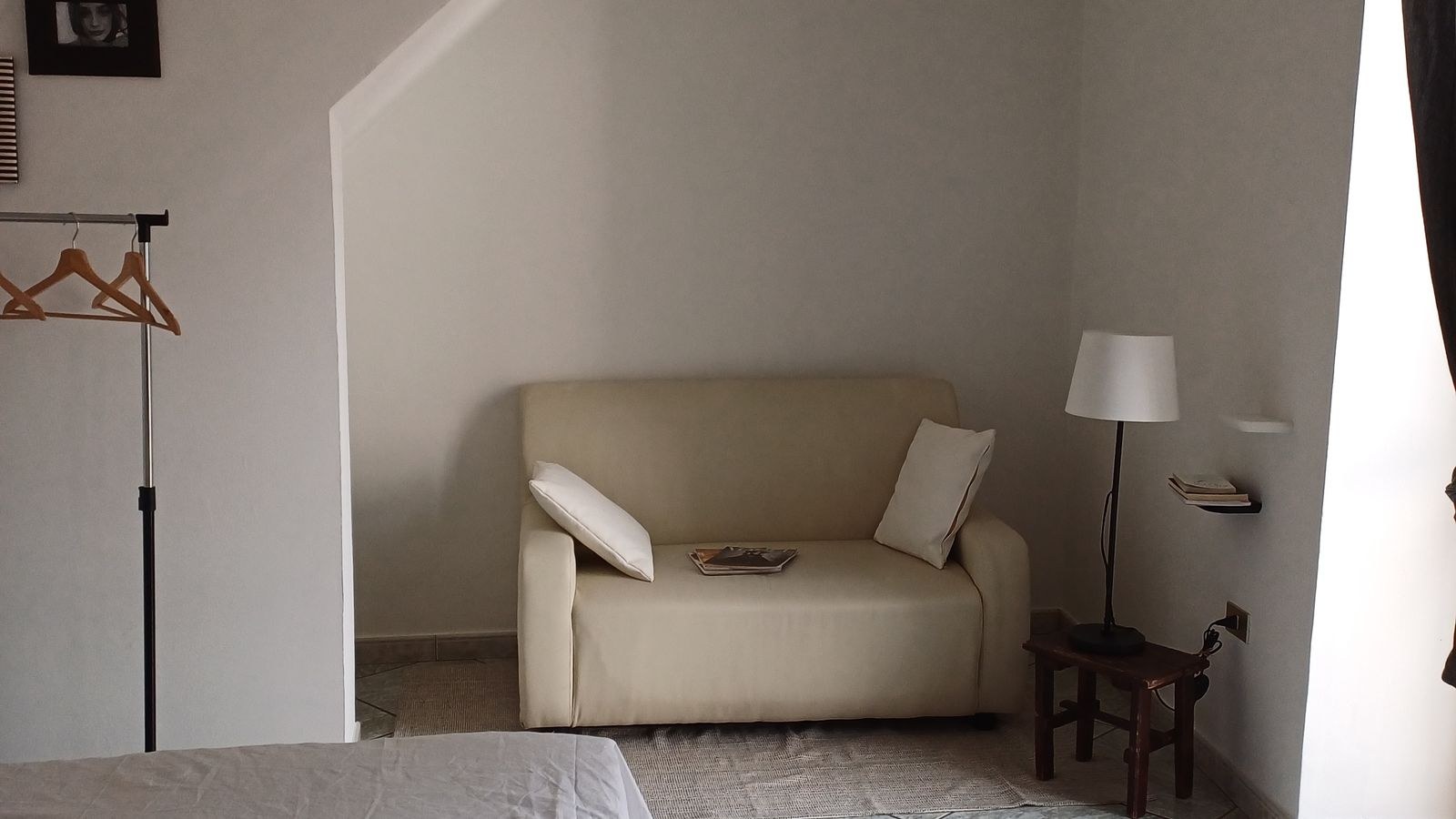
Measuring Before You Buy
- Closed depth against your wall, plus walkway clearance in front.
- Open depth from the back of the piece to the foot of the bed.
- Swing clearance for the mechanism arc on sofa beds, which is wider than the final open depth.
- Delivery route width at every doorway and stair turn; sofa bed mechanisms make the piece heavy and rigid.
- Coffee table position, since it must move every night on sofa beds and futons but never on daybeds.
Small rooms tighten all of these constraints at once, and the pieces that handle them best are collected in our sofa bed small spaces guide and among the compact frames in the best small sofa beds selection.
Price and What Each Tier Buys
Futons are the cheapest entry into convertible furniture and stay cheap even at the better end. You are buying a simple frame and a single mattress, with no mechanism to engineer. That makes them the obvious answer for a first flat, a student room or a spare room on a tight budget.
Daybeds sit in the middle. The frame is straightforward, but you buy the mattress separately, and a decent twin mattress plus bolsters closes much of the gap to a cheap sofa bed. The advantage is that every pound goes into a mattress you would actually sleep on.
Sofa beds cost the most for a given size and quality, because you are paying for upholstery, a folding steel mechanism and a specialist mattress. Cheap sofa beds are a false economy: the mechanism is the part that fails, and the savings come out of exactly that component. If your budget only stretches to a low-end sofa bed, a mid-range futon or daybed will serve you better.
Durability and What Fails First
On sofa beds, the mechanism is the weak point. Hinges loosen, the pull handle tears and the folding legs bend if the bed is dragged rather than lifted. Frequency of use matters enormously; a mechanism opened weekly for a decade is doing far more work than one opened twice a year.
On futons, the mattress fails long before the frame. Constant folding at the same line compresses the fill there permanently, creating a soft crease across the sleeping surface. Futon mattresses are cheap to replace, which softens the blow. Cheap wooden futon frames also crack at the hinge slots under repeated use.
Daybeds have the fewest failure modes because nothing moves. Slats can crack under weight, and trundle rollers stick, but the core structure is as durable as any bed frame. For a piece expected to last fifteen years with minimal fuss, that simplicity is a real advantage.
Guest Use Versus Everyday Use
Match the format to how often the bed function is used. For a few nights a year, a sofa bed makes sense because it disappears completely the rest of the time and your living room does not look like a spare bedroom. For frequent guests, monthly or more, a futon or daybed pays off since neither has a mechanism to wear out and both sleep better.
For someone sleeping there every night, in a studio or a converted room, choose a daybed with a proper mattress, or a sofa bed specifically rated for daily use with a hybrid mattress. Standard occasional-use sofa beds are not built for three hundred and sixty-five openings a year and will show it within two.
Which One Should You Buy
Choose a sofa bed if the room is primarily a living room, seating quality matters most, and the bed is for occasional guests. Choose a futon if budget is the binding constraint, the room is small, or the piece is going into a study or student space where casual seating is fine. Choose a daybed if someone sleeps there often, if the room reads more as a spare bedroom or office than a lounge, or if you want the simplest thing that will still work in a decade.
There is also a fourth path worth knowing: convertible sofas that fold flat without a hidden mechanism, using a click-clack or lift-and-push back. They sit better than futons and cost less than sofa beds, and the stronger examples are covered in our comparison of convertible sofas.
Common Mistakes Buyers Make
The most common is buying for the guest bed use case while ignoring the three hundred and fifty days of sitting. Whatever you choose will spend most of its life as furniture, so sit on it for five minutes before you ever unfold it. The second is failing to test the conversion in person. Open and close every candidate yourself; if it is awkward in a showroom with staff watching, it will be worse in a dark living room at midnight.
A third mistake is underbuying the mattress. On daybeds especially, people spend carefully on the frame then fit the cheapest twin mattress available, undoing the format’s main advantage. Finally, do not forget bedding storage. All three formats need somewhere for sheets, pillows and a duvet, and a trundle drawer or under-seat storage compartment is worth real money if the room has no cupboard.
Frequently Asked Questions
Which is most comfortable to sleep on?
A daybed, because it takes a full standard mattress with no fold line or support bar. Futons come second and sofa beds third, though a foam sleeper mattress narrows the gap considerably.
Are futons comfortable to sit on all evening?
Not particularly. The same mattress serves as seat and backrest, so there is no lumbar shaping. Wider frames with real arms and a firm mattress improve it noticeably.
Can a daybed work as a main living room sofa?
Only with substantial bolsters against a wall. Without a proper back, extended sitting gets tiring, so daybeds suit offices, sunrooms and guest rooms better than main lounges.
Do sofa bed mechanisms wear out?
Yes, and it is the usual failure point. Occasional-use frames handle light guest duty for years but degrade quickly under nightly opening. Buy a daily-use rated frame if the bed sees regular service.
What is the cheapest way to sleep a guest comfortably?
A quality futon or a daybed with a good twin mattress. Both put your money into the sleeping surface rather than into a mechanism, and both sleep better than a budget sofa bed.
Final Thoughts
The right convertible piece follows from one honest answer: how often will someone actually sleep on it? Rare guests justify a sofa bed, because seating quality dominates and the bed can afford to be a compromise. Regular guests tip the balance to a futon or a daybed, where the sleeping surface is better and nothing mechanical wears out. Nightly use means treating the purchase as a bed first and furniture second. Measure both the closed and open footprint, test the conversion yourself, and put your budget into the mattress rather than the frame’s styling. Do that in 2026 and the piece you choose will still be earning its space years from now.