Owen Bradley
 You install a smart dimmer, screw in a set of LED bulbs, slide the level to fifty percent, and the room starts shimmering. Or the lights refuse to go below a certain point. Or they drop out entirely at low levels and snap back on. Smart dimmer LED flicker is the most common complaint in home lighting automation, and it is almost never a defective dimmer or a defective bulb. It is a mismatch between two components that were designed with different assumptions. This guide explains why flicker happens, how to choose a combination that avoids it from the start, and what to do when you are already living with it.
Why LEDs Flicker and Incandescents Never Did
Dimmers do not reduce voltage in a smooth, analogue way. They chop the alternating current waveform, switching the supply off for part of each cycle. Deliver less of each cycle and the lamp receives less energy.
An incandescent bulb is a heated filament with enormous thermal inertia. It cannot cool fast enough to follow the chopping, so it simply glows a bit less brightly. It is also a purely resistive load, which dimmers were designed around, and it draws plenty of current, which keeps the dimmer’s internal circuitry stable.
An LED bulb is nothing like that. It contains a switching power supply that converts mains AC into the low-voltage DC the diodes need. That driver expects a clean waveform and gets a chopped one. The LEDs themselves respond instantly with no thermal lag, so any instability in the driver’s output shows up immediately as visible flicker. And an LED bulb draws a tiny fraction of the current an incandescent did, which starves the dimmer.
The Three Failure Modes
Flicker manifests in recognisable ways. Rapid shimmer across the whole dimming range usually means a waveform mismatch. Flicker only at the bottom of the range points to a minimum load or a dimming curve problem. Bulbs that drop out and restart, or that will not strike at low settings, indicate the driver cannot start reliably from a chopped waveform. Distinguishing which you have narrows the fix considerably.
Leading Edge vs Trailing Edge
This is the single most important compatibility concept, and it explains the majority of flicker cases.
Leading-edge dimmers, also called TRIAC or forward-phase dimmers, cut the beginning of each half-cycle and switch on partway through. They are the older, cheaper technology, designed for incandescent and magnetic transformer loads. The abrupt switch-on produces a sharp voltage spike that LED drivers cope with badly, and it is also the source of the buzzing many people hear from dimmed circuits.
Trailing-edge dimmers, also called reverse-phase or ELV dimmers, switch on at the start of the cycle and cut off partway through. The turn-on is gentle, there is no spike, and LED drivers handle it far more gracefully. Trailing-edge dimming is quieter, smoother, and dramatically less prone to flicker with LEDs.
If you are choosing a smart dimmer for an LED installation, trailing-edge or a dual-mode dimmer that can be configured for it should be your default. Many quality smart dimmers now auto-detect the load or offer a mode setting in the app. Our roundup of the best dimmers for LED lights identifies which models are genuinely trailing-edge rather than leading-edge units with LED branding.
Minimum Load: The Second Big Culprit
Dimmers specify a minimum load, historically something like 40W because incandescent lamps started at that scale. Modern LED bulbs draw 5W to 10W each. Put two 7W LEDs on a dimmer with a 25W minimum and the dimmer has 14W to work with — not enough to power its own electronics stably. The result is flicker, drop-out, or erratic behaviour at low levels.
Check the dimmer’s minimum load before buying and compare it against the total wattage of your fixture. Dimmers designed for LED work often specify minimums of 5W or even lower, which is what you want for a single-bulb pendant. Solutions when you are already stuck include adding more bulbs to the circuit, choosing higher-wattage LEDs, or fitting a load correction device at the fixture that presents an artificial extra load. That last option works but wastes the energy the LEDs saved, so treat it as a last resort.
Maximum Load Matters Too
Dimmers derate significantly for LED loads. A dimmer stamped 600W for incandescent might only be rated for 150W of LED, because switching power supplies stress the internal components differently. Read the LED-specific maximum, not the headline figure, and count each bulb’s full driver rating rather than its light output equivalence.
Not All Dimmable Bulbs Dim Equally
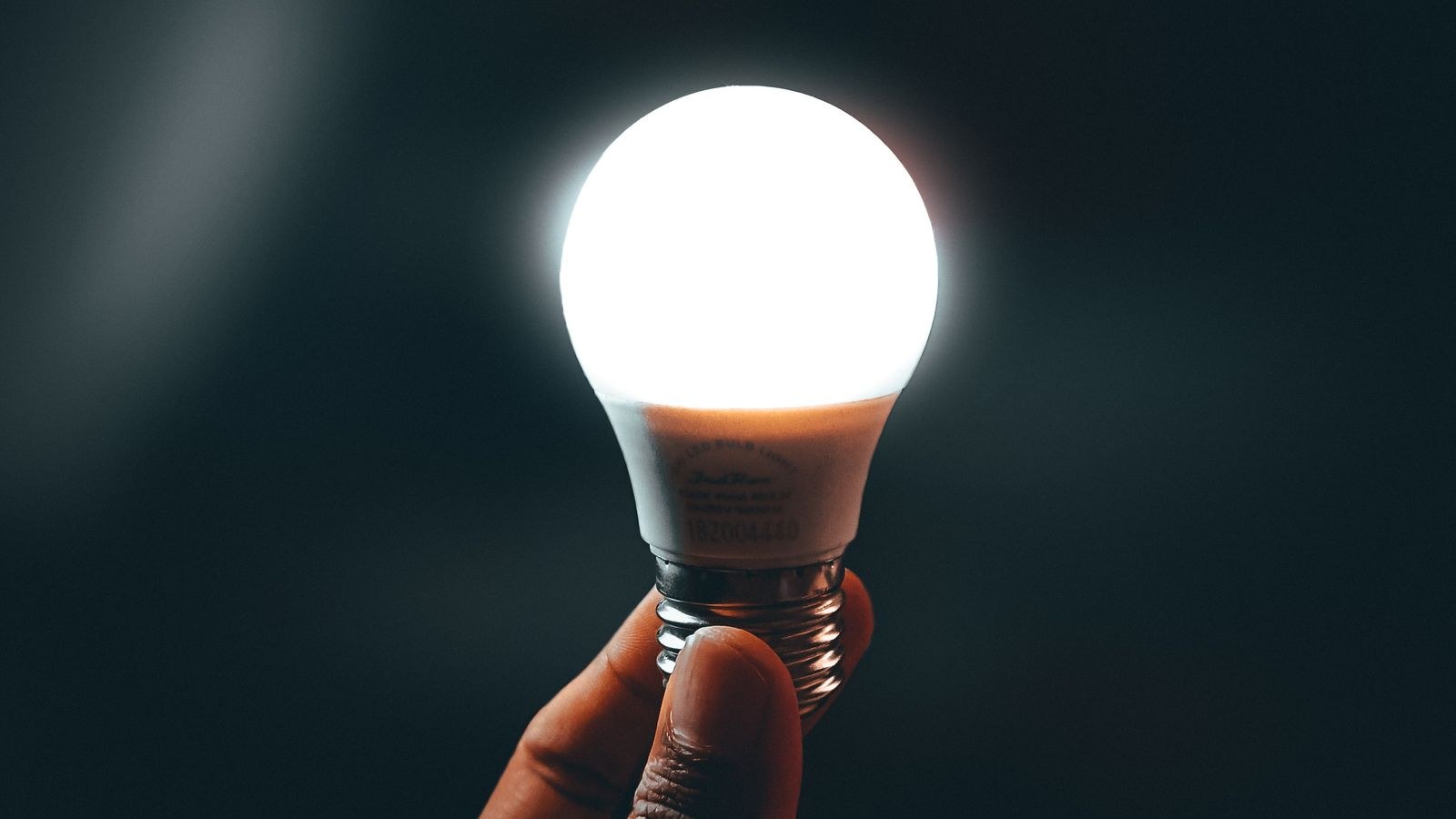
A bulb marked “dimmable” has passed some manufacturer’s internal test, not an industry-wide standard for smooth behaviour with every dimmer. Quality varies enormously between a premium bulb with a well-designed driver and a budget one where dimming support was an afterthought.
Non-dimmable LEDs on a dimmer are worse still. They will flicker badly, buzz, or fail early, and running them dimmed can destroy the driver. Always confirm dimmability on the box before installing. Our comparison of the best dimmable LED bulbs highlights models that dim smoothly to low levels rather than merely tolerating a dimmer.
Mixing Bulbs Is a Reliable Way to Create Flicker
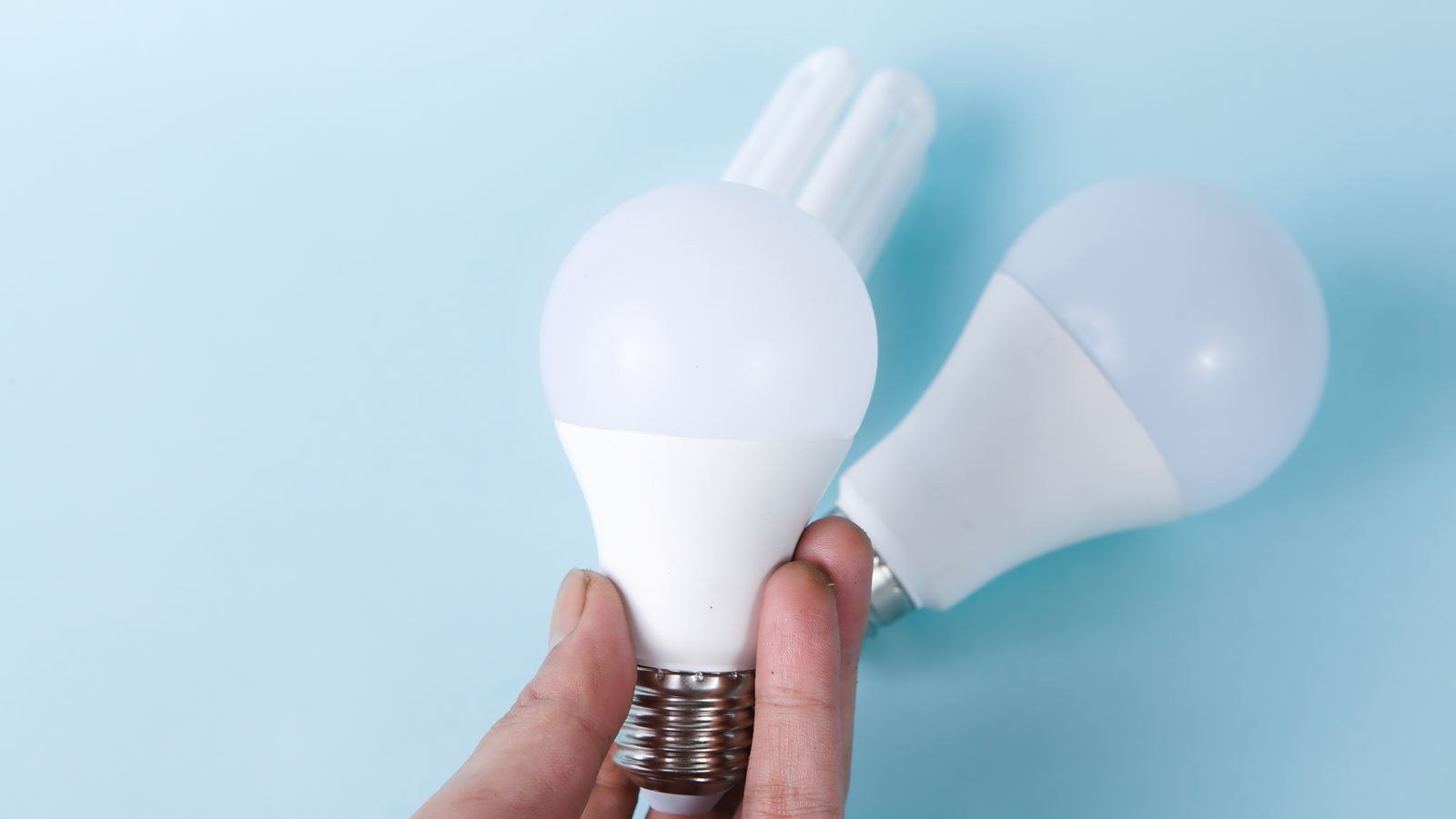
Different bulbs on the same dimmer respond to the same waveform differently, so they reach minimum brightness at different points and can interfere with one another. A fixture with four bulbs from three brands will almost certainly misbehave somewhere in the range. Use identical bulbs — same brand, same model, same batch where possible — on any dimmed circuit. This one rule solves a surprising number of otherwise baffling problems.
Read the Compatibility List
Serious dimmer manufacturers publish tested compatibility lists: spreadsheets naming specific bulb models, how many can be run together, and any caveats. These documents are unglamorous and enormously useful. Checking one before you buy takes five minutes and eliminates most of this article’s problems in advance.
Work in whichever direction suits you. If you already own bulbs, find a dimmer whose list includes them. If you already have a dimmer, buy bulbs from its list. Where nothing matches, buy one bulb and test before committing to a full fixture. Manufacturers update these lists as new bulbs appear, so check the current version rather than one cached in a forum post from years ago. Our guide to the best smart dimmers notes which brands maintain thorough, current compatibility documentation.
Configuration Settings That Fix Flicker
Smart dimmers have a real advantage over mechanical ones: they are configurable in software. Before assuming a combination is incompatible, work through the settings.
- Set the dimming mode. Switch from leading edge to trailing edge if the dimmer supports both. This alone resolves many cases.
- Raise the minimum brightness. Most flicker happens at the bottom of the range. Setting the floor to twenty or thirty percent removes the unstable zone entirely, at the cost of not being able to go dimmer.
- Lower the maximum if the top of the range is unstable, which occasionally happens with certain drivers.
- Adjust the dimming curve where offered, so slider position maps more evenly to perceived brightness.
- Update firmware. Manufacturers frequently ship dimming improvements, and an old firmware version is a common cause of behaviour that reviews say should not happen.
- Recalibrate after changing bulbs, since many dimmers learn the load at setup and hold stale values otherwise.
Work through these in order before returning anything. In practice, mode selection plus a raised minimum brightness fixes the large majority of complaints.
Wiring Issues That Masquerade as Flicker
Not every flicker is a compatibility problem. A loose connection in the switch box, at the fixture, or in a wire nut produces intermittent flicker that no configuration change will cure, and it is a genuine fire risk. If flicker started suddenly on a previously stable installation, or if it changes when you touch the switch plate, kill the breaker and inspect connections before doing anything else.
No-neutral dimmers deserve special mention. They pass a small current through the fixture to power themselves, and with LED loads that trickle can cause faint glow when off and instability when dimmed. A bypass capacitor at the fixture usually resolves it. Buzzing rather than flicker points at leading-edge dimming or a magnetic component resonating, and our walkthrough on how to fix a buzzing dimmer switch covers that specific symptom in detail.
A Troubleshooting Order That Works
- Confirm every bulb is dimmable and that they are all the same model.
- Total the wattage and check it sits between the dimmer’s minimum and its LED-specific maximum.
- Check the dimming mode and switch to trailing edge if available.
- Raise minimum brightness until the unstable zone disappears.
- Update firmware and recalibrate the load.
- Test one bulb from the compatibility list to isolate whether the bulbs or the dimmer is the weak link.
- Inspect wiring with the breaker off if nothing above helps.
- Add a bypass at the fixture if the dimmer has no neutral connection.
Buying to Avoid the Problem Entirely
The cheapest way to solve flicker is not to create it. Buy the dimmer and the bulbs together as a matched pair, both from manufacturers who publish compatibility data. Choose a trailing-edge or dual-mode smart dimmer with a low minimum load, ideally under 10W. Choose bulbs the dimmer explicitly lists. Buy enough identical bulbs for the whole fixture in one order so they share a production batch. Budget a little more than the cheapest option, because dimming performance is precisely where inexpensive drivers economise. Broader guidance on features, neutral requirements, and multi-way support lives in our smart dimmer buying guide, and the wider field of models is covered in our best smart dimmer switches comparison.
Frequently Asked Questions
Why do my LEDs flicker only at low brightness?
Below a certain point the driver receives too little energy per cycle to regulate its output steadily. Raising the dimmer’s minimum brightness setting above that threshold is the standard fix.
Will any LED bulb work on a dimmer?
No. It must be explicitly marked dimmable, and even then it must be compatible with your specific dimmer type. Non-dimmable bulbs on a dimmer flicker badly and often fail early.
Is trailing edge always better for LEDs?
Nearly always. A few LED drivers are designed around leading-edge dimming, so the manufacturer’s compatibility list still overrides the general rule, but trailing edge is the correct default.
Can flicker damage my bulbs?
Sustained flicker stresses the driver and shortens bulb life. It can also trigger headaches or eye strain in sensitive people, so it is worth fixing rather than tolerating.
Do smart bulbs avoid the problem?
Yes, if paired with a plain on/off switch. Smart bulbs dim internally with no phase chopping, so flicker largely disappears. Putting a smart bulb behind a dimmer, however, reliably causes trouble and should be avoided.
Final Thoughts
Smart dimmer LED flicker is a compatibility problem with well-understood causes, not a mystery. Match a trailing-edge or dual-mode dimmer to genuinely dimmable bulbs, keep the total load between the minimum and the LED-rated maximum, use identical bulbs throughout a fixture, and consult the manufacturer’s tested list before you buy rather than after. When flicker already exists, work through dimming mode, minimum brightness, firmware, and finally wiring in that order. Almost every installation can be made to dim smoothly — it just requires treating the dimmer and the bulbs as one system rather than two independent purchases.