Owen Bradley
 The bathroom is the hardest room in the house for connected technology. It is humid, splashed, poorly ventilated, and full of surfaces that punish electronics. It is also, oddly, one of the rooms where a few well-chosen devices deliver the clearest payoff, because the problems here are expensive ones. A slow leak behind a toilet costs thousands. A fan nobody remembers to run turns into mold in a season. A trip to the bathroom at 3 a.m. under a full-brightness vanity light ruins the next hour of sleep. This guide covers the smart bathroom devices that genuinely earn their place, the wiring and safety cautions that come with them, and the expensive gear you can happily skip.
Humidity Control Is the Real Priority
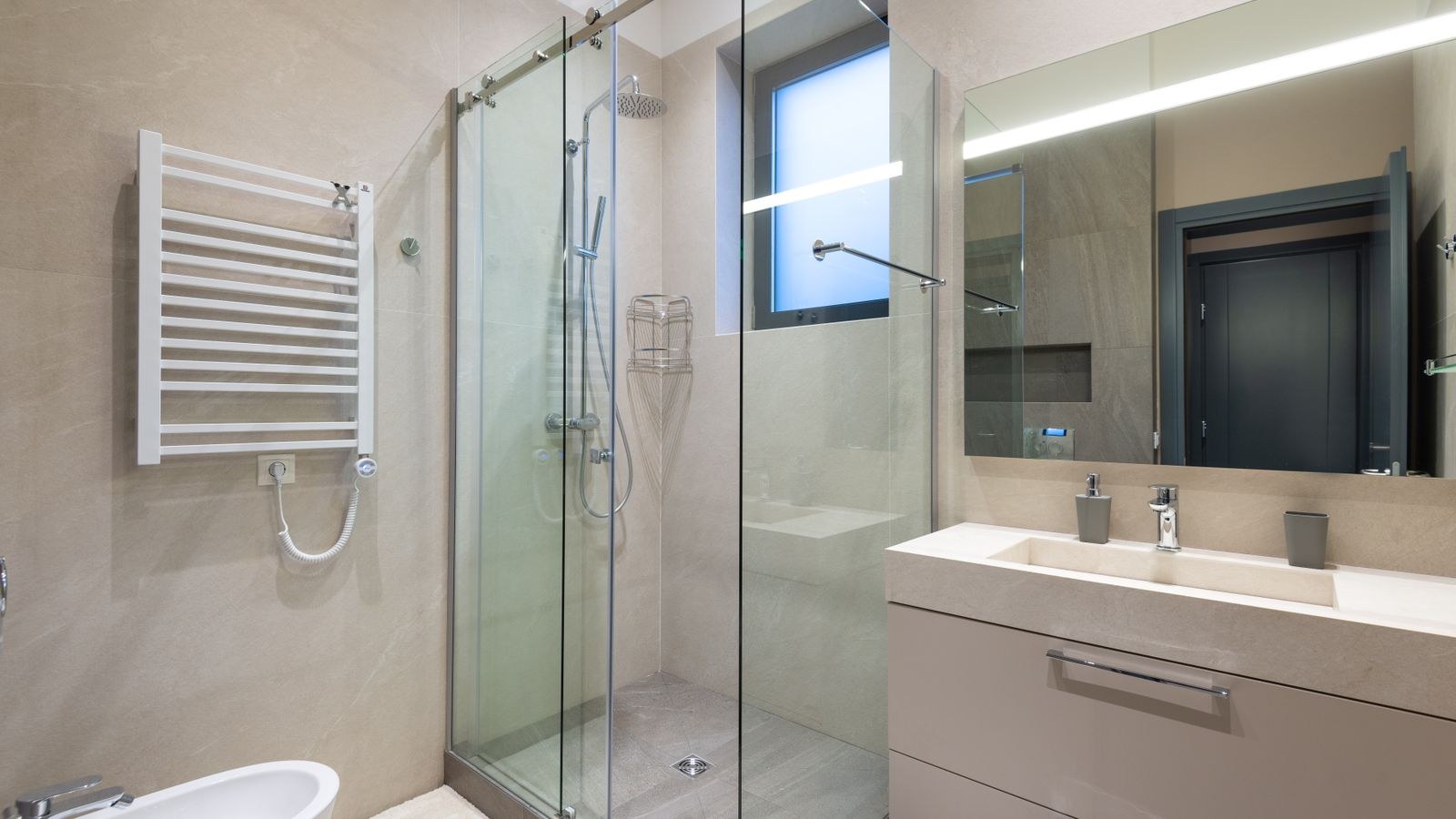
Ask any home inspector what goes wrong in bathrooms and the answer is moisture, every time. Paint peels, grout fails, drywall softens, and mold establishes itself behind surfaces where nobody looks. The cause is almost always the same: the exhaust fan either does not run or runs for two minutes after a fifteen-minute shower.
The fix is a humidity-sensing fan control. Instead of relying on someone flipping a switch, it monitors relative humidity and runs the fan until the level drops back to a set baseline, typically 10 to 15 percentage points above the rest of the house. It then shuts off automatically. This one change does more for the long-term condition of a bathroom than every other smart device combined.
Two approaches exist. A humidity-sensing wall switch replaces the existing fan switch and handles everything locally, which is reliable but requires wiring work. Alternatively, a standalone humidity sensor plus a smart switch or relay gives you the same behavior with more flexibility, including logging so you can see whether the fan is actually keeping up. Either way, check that your fan is rated for the room size in CFM; automating an undersized fan just means it runs longer without ever winning.
Fan Sizing Basics
A common rule of thumb is roughly 1 CFM per square foot of bathroom floor for standard ceiling heights, with more for rooms containing a separate shower enclosure or a jetted tub. A 50 sq ft bathroom with a 50 CFM fan is marginal; 80 to 110 CFM performs noticeably better. Noise is measured in sones, and anything at or below 1.0 sone is quiet enough that people stop turning it off out of annoyance.
Leak Detection: Cheap Insurance for an Expensive Room
Bathrooms have more water connections per square foot than anywhere except the utility room. Toilet supply lines, shower valves, sink traps, and the wax ring under the toilet all fail eventually, and most fail slowly. A leak sensor costs very little, runs for a year or more on a coin cell, and sits flat on the floor.
Place one directly behind the toilet at the base, one inside the vanity cabinet at its lowest point, and one at the outside corner of a tub or shower enclosure if it sits over a finished floor below. Configure alerts as a phone notification plus an audible alarm somewhere people actually are, because a silent notification is useless if the phone is on do not disturb. For a whole-home upgrade, an automatic shutoff valve on the main supply can close when any sensor trips, which converts a flood into an inconvenience.
Night Lighting Done Right
A vanity light at full brightness at 3 a.m. wakes you fully and makes falling back asleep harder. Motion-activated night lighting solves this elegantly: a very dim warm or amber light that turns on when you enter and off a minute after you leave, active only during overnight hours.
The simplest version is a plug-in or battery motion night light placed low, near the floor, aimed away from eye level. The field of best motion sensor night lights includes both battery strips that stick under a vanity and plug-in units with built-in sensors and adjustable dusk thresholds. Set the brightness lower than feels correct during the day; what looks dim at noon is glaring at 3 a.m.
If you already have smart bulbs in the vanity fixture, a motion sensor plus a time condition achieves the same thing without new hardware. The important detail is the time condition. Without it, the light triggers at dim brightness during the day too, which people find confusing and eventually disable.
Fixtures: Faucets, Showers and Toilets
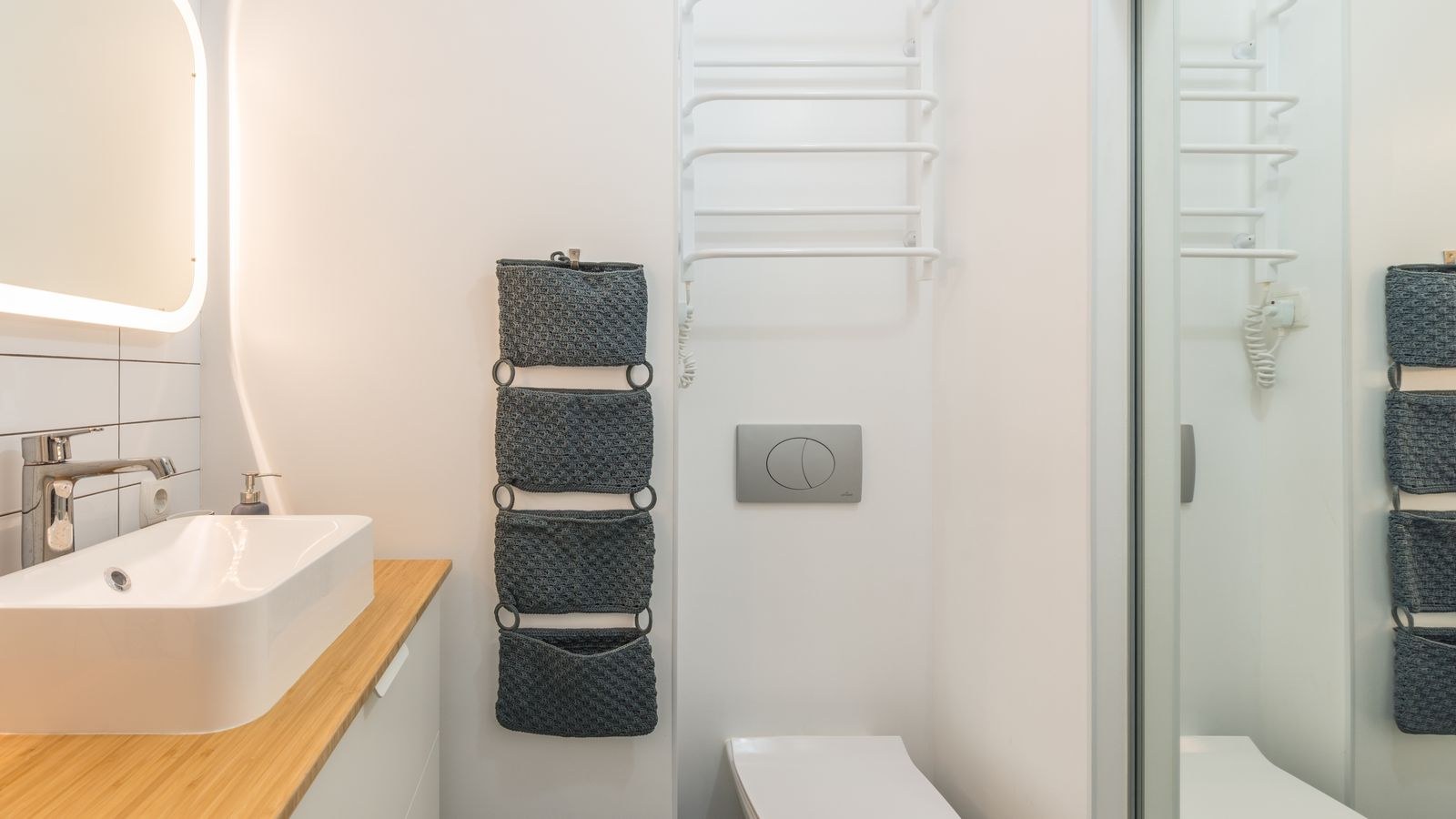
The fixture end of the market is where costs climb fast, so it is worth being clear about what each one actually buys you.
Touchless and voice-controlled faucets are the most defensible of the three. Hands-free operation is genuinely more hygienic, and measured dispensing helps if you fill bottles or measure water. They need power under the sink, either a battery pack or a transformer, and they are much easier to justify if you are replacing a faucet anyway. Reviewing the best smart faucets shows how much the entry price has come down.
Digital shower systems let you set an exact temperature, save per-person presets, and start the shower warming from a wall panel or app. In a household where everyone fights the mixing valve every morning, that is a real quality-of-life change. It is also a substantial plumbing job that usually involves a control unit installed in the wall or an adjacent closet. Anyone considering it should look through the best smart showers and read the installation requirements carefully before budgeting, because the labor often exceeds the hardware cost.
Smart toilets and bidet seats sit at the top of the price range. Heated seats, warm water washing, air drying, and automatic lids are all genuinely pleasant, and a bidet seat in particular is an upgrade most people do not want to reverse. The catch is power: a dedicated grounded outlet near the toilet is required, and older bathrooms rarely have one. Comparing the best smart toilets against a standalone bidet seat is worthwhile, since a seat delivers most of the daily benefit at a fraction of the cost. For the full breakdown of features versus price, the smart toilet buying guide covers what separates the tiers.
Electrical Safety and Wiring Cautions
This is not optional reading. Bathroom outlets must be GFCI protected, and any new outlet you add for a bidet seat or heated device needs to be on a GFCI-protected circuit. Adding one is an electrician’s job in most jurisdictions and often requires a permit.
- Never use an extension cord or a power strip to reach a toilet or vanity device. It is a shock hazard and a code violation.
- Smart plugs sold for indoor dry locations are not rated for wet or damp environments. Keep them away from splash zones entirely, and check whether the best smart plugs you are considering carry any damp-location rating before placing one near a sink.
- Fan and light switches inside the room must be positioned outside the reach of anyone in the tub or shower, per code in most areas.
- Turn off the breaker, not just the switch, before any wiring work, and verify with a tester rather than trusting the panel label.
- If a device requires a neutral wire and the box does not have one, do not improvise. Use a battery-powered wireless control instead.
Devices That Struggle in Bathrooms
Humidity shortens the life of consumer electronics, and bathrooms are hard on anything with an exposed circuit board. Speakers, displays, and sensors placed near the shower fail early. Keep electronics on the far side of the room from the shower plume, above rather than below the mirror if possible, and never inside a shower enclosure unless the device is specifically rated for it.
Cameras have no place in a bathroom, full stop. It is worth stating plainly because motion-activated hallway cameras are sometimes aimed carelessly through an open door. Check camera fields of view after installation and adjust anything that can see into a bathroom.
A Sensible Build Order
- Leak sensors behind the toilet and in the vanity. Under twenty dollars, protects thousands.
- Humidity-controlled exhaust fan, either a sensing switch or a sensor plus smart switch. The highest-value upgrade in the room.
- Dim motion night lighting with an overnight time condition.
- A bidet seat if a GFCI outlet is available or can be added.
- Smart faucet when replacing the existing one.
- Digital shower system only as part of a planned renovation.
Frequently Asked Questions
What humidity level should trigger the fan?
Most humidity switches let you set a rise threshold rather than an absolute number, which handles seasonal variation better. A common setting runs the fan when humidity climbs more than about 10 to 15 points above the room’s recent baseline.
Can I put a smart plug in the bathroom?
Only well away from any splash zone, on a GFCI-protected outlet, and never for a device that could be handled with wet hands. Most indoor plugs are rated for dry locations only.
Do I need a smart toilet or is a bidet seat enough?
For most households a bidet seat delivers the great majority of the daily benefit at far lower cost, and it installs on an existing bowl in under an hour if power is available.
Will steam damage smart devices?
Over time, yes. Condensation on internal components causes corrosion. Position devices away from the shower, ensure the fan actually clears the room, and avoid anything electronic inside the enclosure.
Is a smart mirror worth it?
Rarely. The displays are small, the software ages quickly, and the practical functions are already handled by a phone or speaker. Spend that money on the fan and the lighting instead.
Final Thoughts
Good bathroom automation is defensive. It runs the fan long enough to prevent mold, tells you about a leak while it is still a puddle, and lights your way at night without waking you up. Those three things cost little and matter for decades. Fixtures like faucets, bidet seats, and digital showers are real upgrades but belong later in the sequence and usually alongside a renovation. Handle the moisture and the wiring correctly first, and whatever you add in 2026 will still be working properly years from now.