Owen Bradley
 Every so often a story circulates about a stranger speaking through a family’s baby monitor, or a website hosting thousands of live feeds from bedrooms and living rooms around the world. Those stories are real, and they understandably make people hesitate before putting a camera indoors. What the headlines rarely explain is how those breaches actually happen, and that detail matters enormously, because the overwhelming majority are not sophisticated attacks on camera firmware. They are reused passwords, default credentials, and forwarded ports. This guide explains the genuine security camera hacking risks, how feeds really end up exposed, and the settings that keep yours private in 2026 and beyond.
How Camera Breaches Actually Happen
There are four realistic routes into a home camera, and they are not equally likely. Understanding the ranking tells you where to spend your effort.
Credential stuffing is by far the most common. Attackers take username and password pairs leaked from unrelated website breaches and try them automatically against camera accounts. If you reused the password from a shopping site on your camera app, and that shop was breached, someone can log in with entirely legitimate credentials. No hacking of the camera is involved at all.
Default credentials come second. Cheap cameras and older recorders shipped with well-known admin passwords, and automated scanners sweep the internet looking for devices still using them. This is exactly how the public streaming sites full of shop and nursery feeds were assembled, and every one of those cameras was technically working as designed.
Exposed ports come third. To view a camera remotely, many older guides instructed users to forward a port on the router to the camera. That places the device directly on the public internet, where it is found by scanning services within hours and probed continuously thereafter. Firmware vulnerabilities come fourth, and while real, they usually require the device to already be reachable from the internet to be exploited.
The Insider Risk People Forget
Not every privacy problem involves a stranger. Shared accounts left active after a relationship ends, a former housemate still on the app, or an installer who set up the system with their own email attached are all common and are far more likely than a remote attack. Audit who has access at least once a year, remove accounts you no longer recognise, and never let a third party configure a system under their own credentials.
The Settings That Matter Most
The good news is that a short list of changes eliminates the vast majority of realistic risk. Work through these in order.
- Use a unique, long password for the camera account, generated by a password manager and used nowhere else. This single step defeats credential stuffing entirely.
- Enable two-factor authentication on the camera account. Even a leaked password becomes useless without the second factor, and every reputable brand now offers it.
- Change any default device password on cameras, recorders, and the router itself, including secondary accounts many recorders create silently.
- Turn off port forwarding and UPnP on the router. Use the manufacturer’s relay service or a VPN into your home network instead of exposing the device directly.
- Keep firmware updated, preferably with automatic updates enabled, since patched vulnerabilities only protect devices that install the patch.
- Disable features you do not use, such as remote access, cloud upload, or onboard microphones, because a disabled feature cannot be abused.
These take perhaps thirty minutes across a whole system and matter more than any hardware choice. That said, hardware does influence how easy they are to apply, and brands with mature security practices make secure defaults the norm rather than something you must hunt for, as our roundup of the best smart home security cameras reflects.
Why Port Forwarding Deserves Special Attention
If you take one technical point from this guide, make it this. A forwarded port turns a camera into a public internet server. It will be scanned within hours of going live, probed with default credentials, and tested against known firmware exploits indefinitely. There is essentially never a reason for a home user to forward a port to a camera today, because manufacturer relay services and VPN access both solve remote viewing without exposure. If an installer or an old tutorial tells you to forward a port, decline.
Network Segmentation: The Strongest Practical Defence
Cameras are computers, and like all computers they can be compromised. The question worth asking is not only whether a camera can be breached, but what an attacker could reach if it were. On a flat home network, a compromised camera sits alongside your laptop, network drive, and everything else. Segmentation removes that possibility.
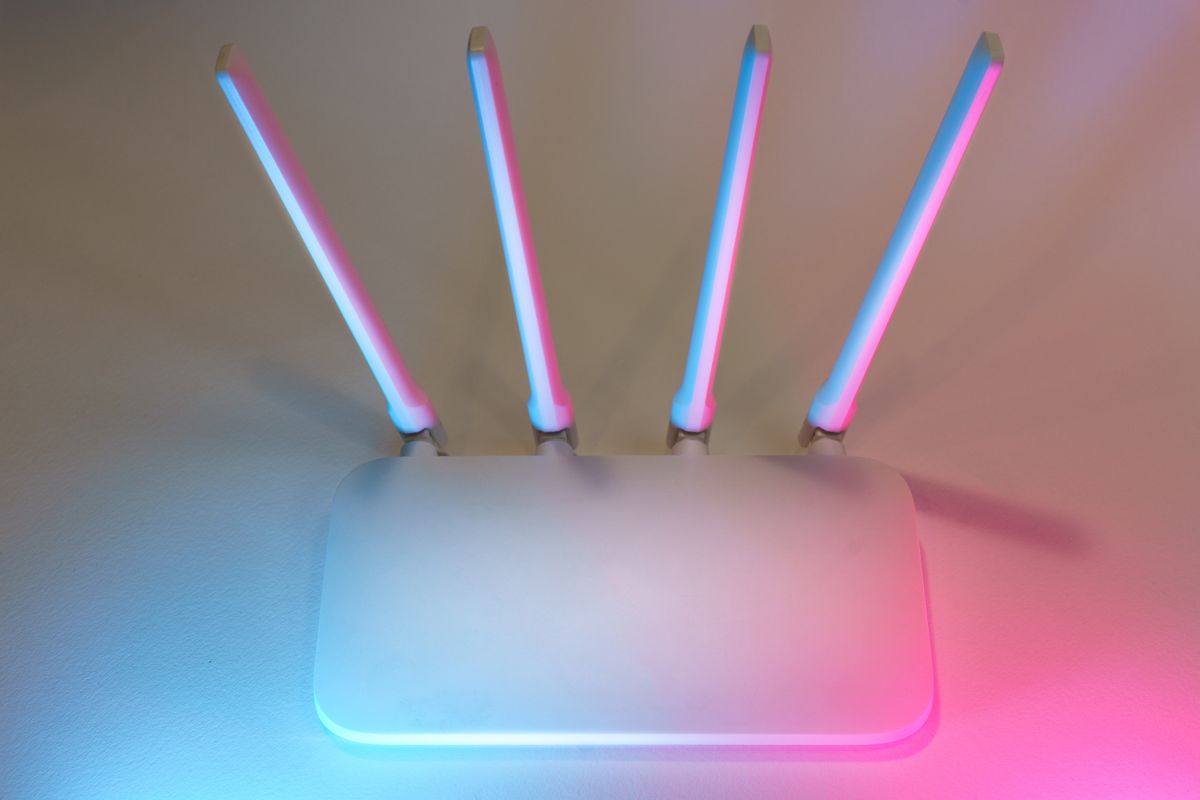
The simplest version is a guest network. Most routers offer one, and most guest networks isolate connected devices from the main network by default. Putting cameras there contains any compromise to devices you have already decided are untrusted. The stronger version uses VLANs on a capable router, letting you block cameras from reaching the internet entirely while still allowing your phone to reach them locally, which is ideal for wired systems recording to a local NVR. A broader walkthrough of router hardening, firewall rules, and isolation is available in our guide to keeping a secure home network from hackers.
Blocking Internet Access for Local Cameras
Wired cameras recording to an on-site recorder do not need internet access at all. Blocking their outbound connections at the router prevents them from phoning home to servers you have not chosen to trust, stops undisclosed data collection, and removes the possibility of remote exploitation. You lose cloud features and manufacturer app access, so you view footage through the recorder over a VPN instead. For anyone genuinely worried about privacy, this is the most complete answer available, and it is one of the quiet advantages of the wired systems covered in our list of the best IP security cameras.
Cloud Storage and Who Can See Your Footage
Hacking is only half the privacy question. The other half is what the company legitimately does with your video. Cloud recordings sit on servers the provider controls, and the meaningful distinction is whether they are end-to-end encrypted. With end-to-end encryption, only your devices hold the keys and the provider cannot view the footage even if compelled or breached. Without it, employees with sufficient access technically can, and several manufacturers have disciplined staff for exactly that.
Read the privacy policy for three specifics: whether footage is used to train machine learning models, under what circumstances it is shared with law enforcement, and how long deleted clips persist in backups. Also check where the servers are located, since that determines which country’s laws apply to your video. None of this makes cloud storage a bad choice, and providers reviewed in our guide to the best cloud security cameras vary widely in how transparently they answer these questions, which is itself a useful signal.
App Permissions and Mobile Security
The phone is often the weakest link, because it holds a permanently logged-in session with full camera access. Protect it accordingly: use a strong device passcode, enable biometric unlock inside the camera app if offered, and avoid staying signed in on shared or work devices. Review which permissions the app requests, and be sceptical of anything unrelated to its function. If a phone is lost, revoke its session from the account’s device list rather than assuming the passcode is enough. Apps with granular session management and per-user permissions make this far easier, and several of the best home security cameras with apps are worth choosing for that reason alone.
Placement, Consent, and the Legal Side
Privacy is not only about intruders. Where you point a camera carries real obligations. Recording your own property is generally straightforward, but capturing a neighbour’s garden, windows, or a shared corridor can breach data protection law in many countries and has led to genuine legal action. Angle cameras to cover your property, use privacy masking to black out areas outside your boundary, and be prepared to explain your coverage if asked.
Audio raises the bar further. Many jurisdictions treat recording conversations more strictly than recording images, sometimes requiring the consent of all parties. Unless you need it, disabling the microphone on outdoor cameras is the simpler course. Indoors, be transparent with household members, cleaners, and guests, and avoid cameras in bathrooms and bedrooms entirely. Cameras with physical privacy shutters are worth seeking out for living spaces, because a mechanical cover is a guarantee no software setting can match.
Warning Signs and Common Mistakes
Signs a camera may be compromised include the indicator light activating when nobody is viewing, the camera panning without input, settings changing on their own, unfamiliar devices in the account’s login history, and unexpected data usage. If you suspect a breach, disconnect the camera, change the account password from a different device, revoke all sessions, factory reset the camera, update its firmware before reconnecting, and check the router for unexpected forwarded ports.
The mistakes that cause most problems are predictable. Reusing passwords across services tops the list, followed by leaving default credentials on a recorder because the app account was secured and the device itself was forgotten. Buying no-name cameras from marketplace sellers is another, since many never receive a firmware update and some ship with undocumented remote access built in. Ignoring update prompts for months leaves known vulnerabilities open. Pointing indoor cameras at private spaces creates a privacy problem regardless of security. And granting family members full administrative access, rather than limited viewing accounts, means one compromised relative’s phone exposes the whole system.
Frequently Asked Questions
Can someone hack a camera that has a strong password and two-factor authentication?
It becomes extremely unlikely through the common routes. Remaining risk sits with unpatched firmware or a provider-side breach, which updates and reputable brands address. The realistic threats are almost entirely credential-based.
Are local cameras safer than cloud cameras?
Local recording removes the provider from the equation and, when combined with blocked internet access, is the most private option. It also removes off-site backup, so weigh the theft risk against the privacy benefit.
Should I put cameras on a guest network?
Yes, where the router supports it and remote features still work. Isolation limits what a compromised camera can reach, and costs nothing but a few minutes of configuration.
Does covering the lens protect my privacy?
A physical shutter does, and it is the only method that cannot be overridden remotely. Software off-switches rely on the firmware behaving as advertised, which is a weaker guarantee for indoor spaces.
Is it legal to record my neighbour’s property?
Rules vary by country, but incidental capture is usually tolerated while deliberate coverage of another household is often not. Use privacy masking and angle cameras inward to stay comfortably within the line.
Final Thoughts
The realistic risk to your cameras is not a skilled attacker targeting your house. It is an automated script trying a password you used somewhere else, or a port someone forwarded years ago and forgot. That is genuinely encouraging, because it means the defence is within everyone’s reach: a unique password, two-factor authentication, current firmware, no forwarded ports, and cameras isolated on their own network segment. Add thoughtful placement, a disabled microphone where you do not need audio, and honesty with the people who share your home, and a camera system becomes what it should be, a tool that watches your property without becoming a window into it.