 Owen Bradley
A ring light does one thing exceptionally well: it wraps soft, even illumination around the lens axis so shadows fall behind the subject rather than across the face. That is why it became the default lighting tool for makeup application, video calls and desk-based content creation. The problem is that the market now runs from ten-dollar phone clips to studio panels costing several hundred, and the listings all use the same vocabulary. This ring light buying guide breaks down the four decisions that actually matter, diameter, CRI, colour temperature and mounting, so you can choose the right unit for your desk in 2026 instead of buying twice.
Why a Ring Shape Works
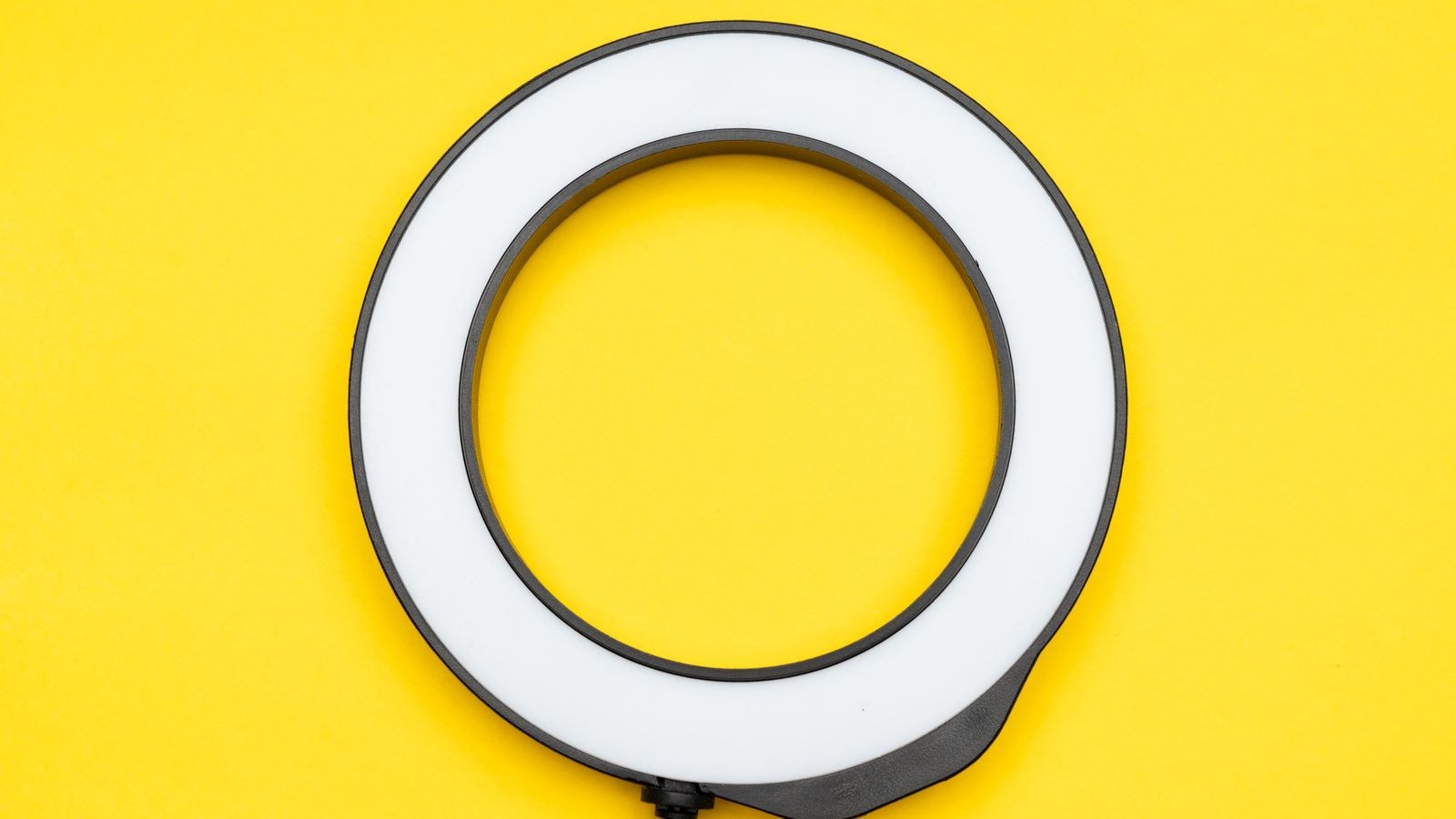
Any light source produces softer, more flattering results as it gets larger relative to the subject. A ring takes that principle and adds a second trick: because the camera sits in the middle of the light, the illumination arrives from every direction around the lens at once. Shadows under the nose, chin and brow are filled from the opposite side of the circle, so the face reads as smooth and evenly lit without a harsh directional shadow anywhere.
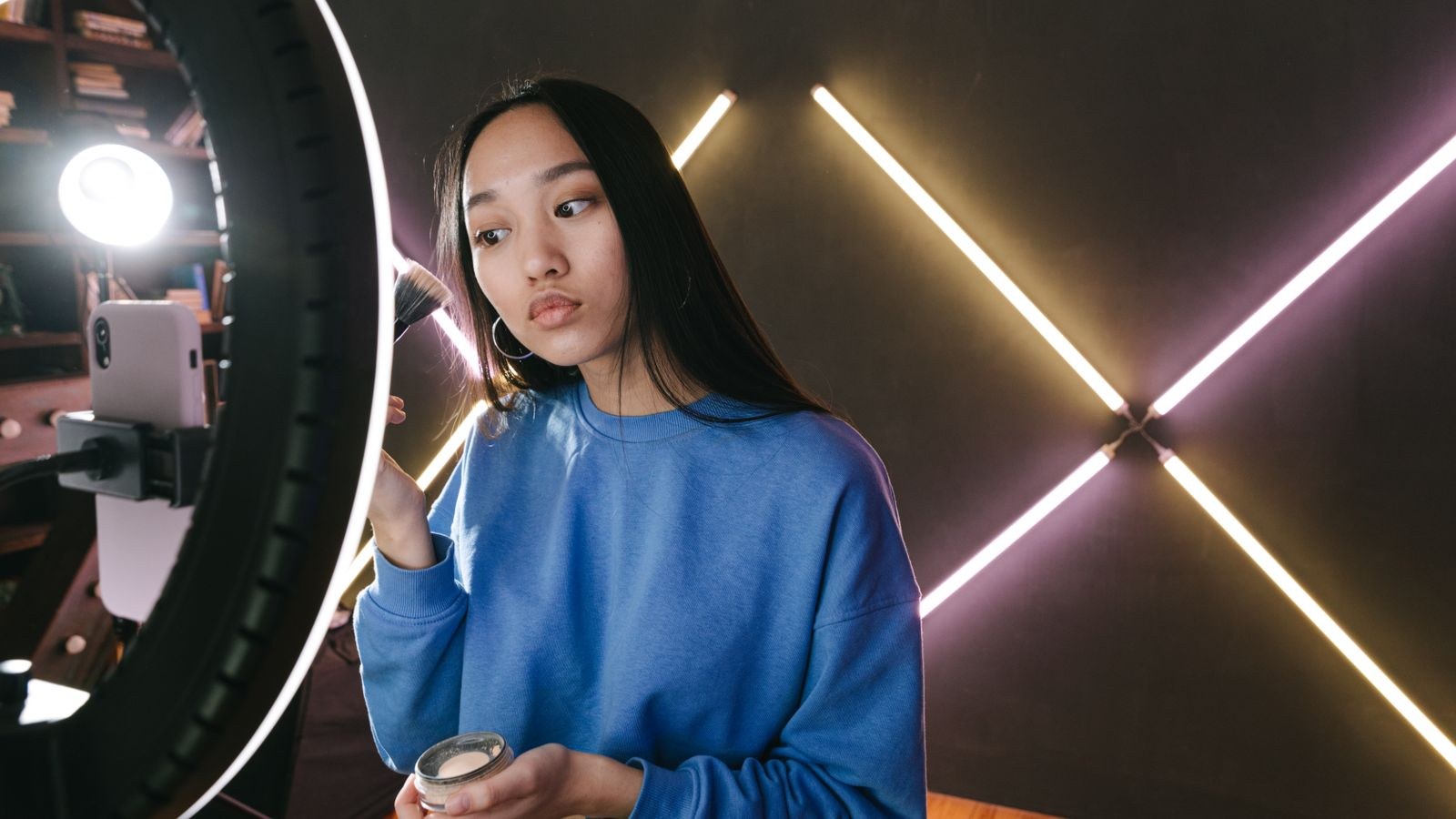
The signature side effect is the circular catchlight in the eyes, which many people find appealing and others consider a giveaway. The other characteristic is flatness: because shadows are minimised, facial contours are also minimised. That is ideal for showing makeup accurately or presenting on a call, and less ideal for dramatic portraiture, where a single off-axis light with a modifier gives more shape.
Diameter: The First and Biggest Decision
Size determines both softness and how far back you can sit. The rule is simple: the light must be large relative to your face at your working distance. A small ring held close is soft; the same small ring at four feet is effectively a point source and looks harsh.
- 6 to 8 inches. Clip-on and small desk units. Fine for a phone held at arm’s length or a laptop at close range. Portable and cheap, but you must sit close and output is limited.
- 10 to 12 inches. The sweet spot for desk use, video calls and seated makeup. Large enough to soften a face at 18 to 30 inches, small enough to sit on a desk without dominating it.
- 14 to 18 inches. Content creation and vanity work where you want to sit further back or include your upper body in frame. Needs a floor stand and real desk or floor space.
- 19 inches and up. Studio territory. Excellent light quality but heavy, power hungry, and impractical in most home offices.
For most people working at a desk with a laptop or webcam, a 10 or 12 inch ring is the honest answer. Larger is better optically but rapidly becomes something you resent setting up.
Ring Lights With Built-In Cameras
An increasingly popular shortcut is a webcam with the ring light integrated around the lens, which removes the mounting problem entirely and guarantees the light is perfectly on-axis. The trade-off is a smaller ring and less control, but for video calls the convenience is hard to beat. The roundup of the best webcams with ring light covers combined units that clip to a monitor and handle both jobs at once.
CRI: The Specification Most Listings Hide
Colour rendering index describes how accurately a light source reproduces colour compared with natural daylight, on a scale to 100. It is the single most important quality specification for a ring light and the one cheap products are quietest about. Under a low-CRI light, reds go muddy, skin tones turn sallow or grey, and the difference between two similar lipstick shades disappears entirely.
Aim for CRI 95 or above for makeup work, where accurate colour is the entire point. CRI 90 or above is comfortable for video calls and general content. Below 85, colour errors become visible to anyone watching. Be sceptical of listings that state CRI without a number, or that quote a figure with no supporting detail, since unverified CRI claims are common at the low end of the market.
A related figure worth looking for is R9, which measures deep red rendering specifically. Standard CRI averages several colour samples and can score respectably while still rendering reds poorly, which matters enormously for skin tones. A light publishing a strong R9 value is usually being honest about the rest of its numbers too. For fixed vanity installations where colour accuracy is critical, the best lighting for applying makeup guide goes deeper into how to judge these figures.
Colour Temperature and Dimming
Most ring lights offer adjustable colour temperature, typically from around 3000K warm through 4500K neutral to 6500K daylight. This is more useful than it first appears, because the goal is usually to match the ambient light in your room rather than to pick a favourite setting. If you sit near a window during the day, a cooler setting near 5000K blends naturally. Under warm evening lamps, dropping to 3000K avoids the mismatched two-tone look where one side of your face is orange and the other blue.
Dimming quality separates good units from bad ones. Look for smooth, flicker-free dimming across the full range rather than a handful of fixed steps. Cheap PWM dimming can produce banding on camera at certain shutter speeds, which shows up as rolling bars in video. A light advertising flicker-free operation or a high PWM frequency is worth the premium if you record rather than just take calls.
Bi-Colour Versus Fixed Temperature
Bi-colour lights achieve their range by mixing warm and cool LEDs, which means that at the extremes only half the diodes are contributing and output drops. Fixed-temperature lights use all their diodes all the time and are typically brighter and slightly higher CRI for the same price. If you always shoot in one consistent environment, a fixed daylight-balanced light can be the better buy. If your lighting conditions change through the day, bi-colour is worth the compromise.
Mounting: Where Most Buyers Regret Their Choice
The mount decides whether the light gets used daily or shoved in a drawer. Consider your actual desk before the optics.
- Desk tripod. Small folding legs, cheapest option, takes up desk space and wobbles if knocked. Fine for occasional use.
- Clamp or desk arm. Clamps to the desk edge and swings on an articulated arm. Frees the desk surface entirely and allows precise positioning above eye level. The best choice for most home office setups.
- Floor stand. Adjustable height stand reaching six feet or more. Essential for larger rings and standing work, but needs floor space and is easy to trip over.
- Monitor or laptop clip. Attaches directly to the screen. Extremely convenient and always aligned with the camera, but limited to small rings.
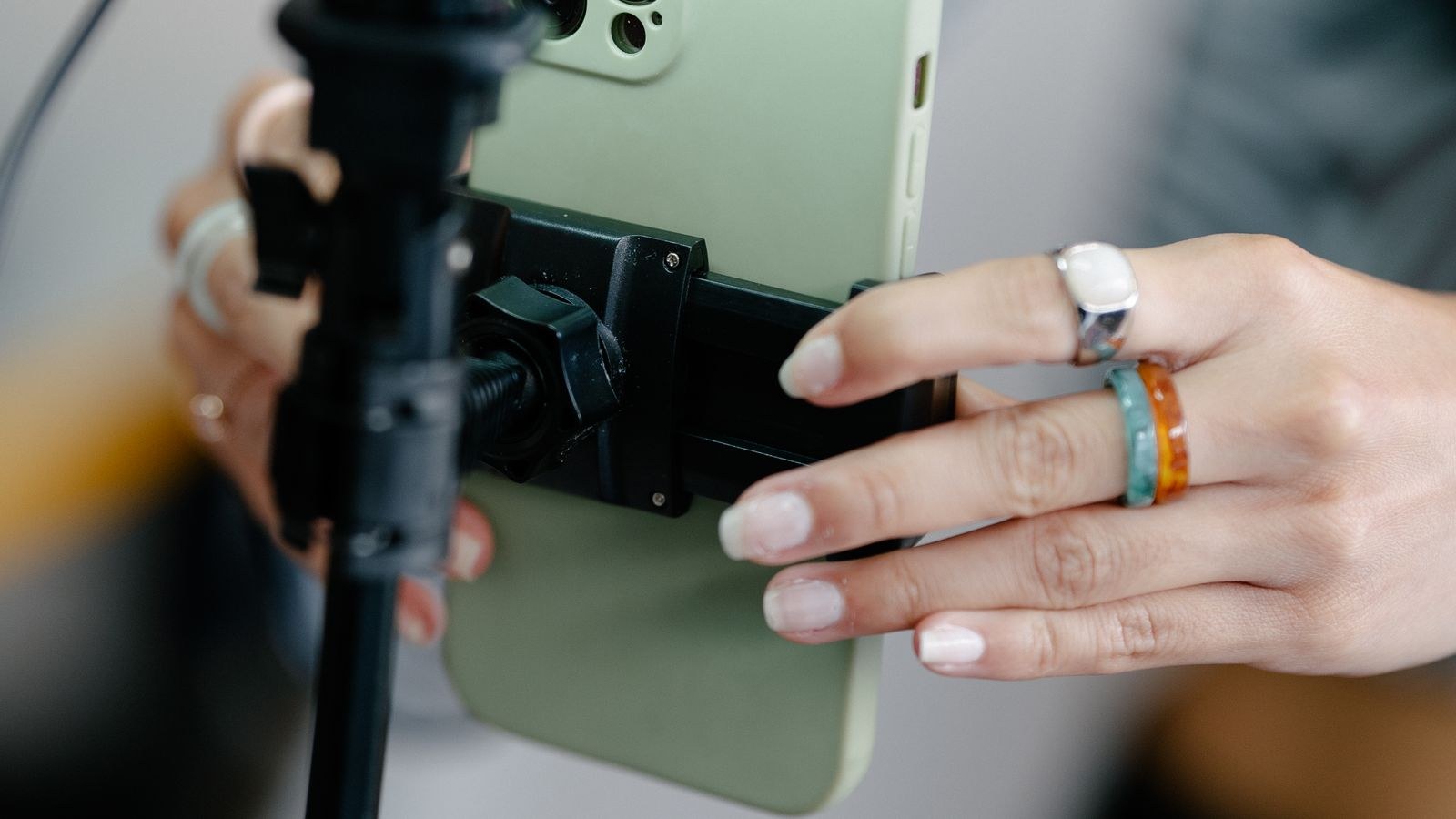
Whatever you choose, check the phone holder and the ball head. A cheap plastic ball head that will not hold angle under the weight of the ring is a daily irritation, and many bundled phone clamps do not fit larger handsets in a case. If you need a light that moves between rooms or travels, the best portable LED lights roundup covers battery-powered panels and compact rings built for that use.
Power, Output and Practical Placement
Most desk ring lights run from USB, which caps output at a modest level but keeps cabling simple and lets you power from a laptop or hub. Larger rings use a mains adapter and deliver considerably more light, which matters if you are competing with a bright window. Battery-powered units add freedom at the cost of weight and runtime management.
Placement follows a few reliable rules. Position the ring so the camera sits at or near its centre, at roughly eye level or slightly above, and about 18 to 30 inches from your face for a desk-sized unit. Tilting the ring down very slightly is more flattering than shining it dead level. If you wear glasses, angling the light a few degrees off-axis or raising it slightly removes the circular reflection in your lenses without losing much of the even fill.
When a Ring Light Is the Wrong Tool
Ring lights are excellent for faces at close range and poor at almost everything else. Lighting a whole room, a product on a table, or a subject standing several feet back all call for a softbox or panel instead, because the ring’s advantage disappears once the light is no longer large relative to the subject. Glossy surfaces are another weakness, since the ring reflects as an obvious circle in glass, screens, jewellery and shiny packaging.
For a fixed makeup station, wall or mirror-mounted vanity lighting often beats a ring outright. It provides light from both sides at face height, avoids the flat look, and never needs setting up. Anyone building a permanent station rather than a portable setup should compare options in the best vanity lighting for makeup guide before committing to a ring.
Buying Checklist
- How far back will you sit? Close range suits 8 to 10 inches, further back needs 14 inches or more.
- Is colour accuracy critical? Makeup demands CRI 95 and a published R9 figure.
- Will you record video? Insist on flicker-free dimming.
- Where will it mount? Clamp arms preserve desk space; tripods do not.
- Does the ambient light change? Variable rooms favour bi-colour, consistent ones favour fixed.
- Do you wear glasses? Choose a mount that tilts and raises to control reflections.
Frequently Asked Questions
What size ring light do I need for video calls?
A 10 to 12 inch ring at 18 to 24 inches from your face covers almost every desk scenario. Larger rings offer softer light but rarely justify the space they consume for calls.
How do I stop the ring reflecting in my glasses?
Raise the light slightly above eye level and tilt it down, or shift it a few degrees off the camera axis. Tilting your glasses down marginally at the temples also helps.
Is a ring light better than a softbox?
For close-up faces and on-axis fill, yes. For anything further away, larger, or requiring shape and depth, a softbox produces better results.
Does CRI really matter for video calls?
Less than for makeup, but it still shows. Low CRI makes skin look grey or sallow on camera, and CRI 90 or above is a noticeable improvement for very little extra cost.
Final Thoughts
Choosing a ring light comes down to matching four things to how you actually work: a diameter suited to your sitting distance, a CRI high enough for the colour accuracy you need, a colour temperature that blends with your room, and a mount that keeps the light in position without stealing your desk. Get those right and the rest is detail. Skip them and you end up with a wobbly tripod holding a small, green-tinted circle that flickers on camera. Decide your working distance first, set a CRI floor second, and the shortlist for 2026 narrows quickly to a handful of units that will genuinely earn their place beside your screen.