Owen Bradley
 Memory is one of the easiest components to buy badly. The marketing leans on big numbers, the spec sheets bury the details that actually matter, and it is tempting to grab whichever kit has the flashiest heat spreader or the highest advertised speed. Yet the difference between a well-chosen memory kit and a careless one shows up every day in how smoothly your system multitasks, how stable it runs, and whether you paid for performance your platform can even use. This buying guide decodes the three numbers that define a kit, speed, latency and capacity, and explains how they interact so you can pick memory that genuinely suits your build rather than the box with the loudest claims.
Understanding Memory Speed
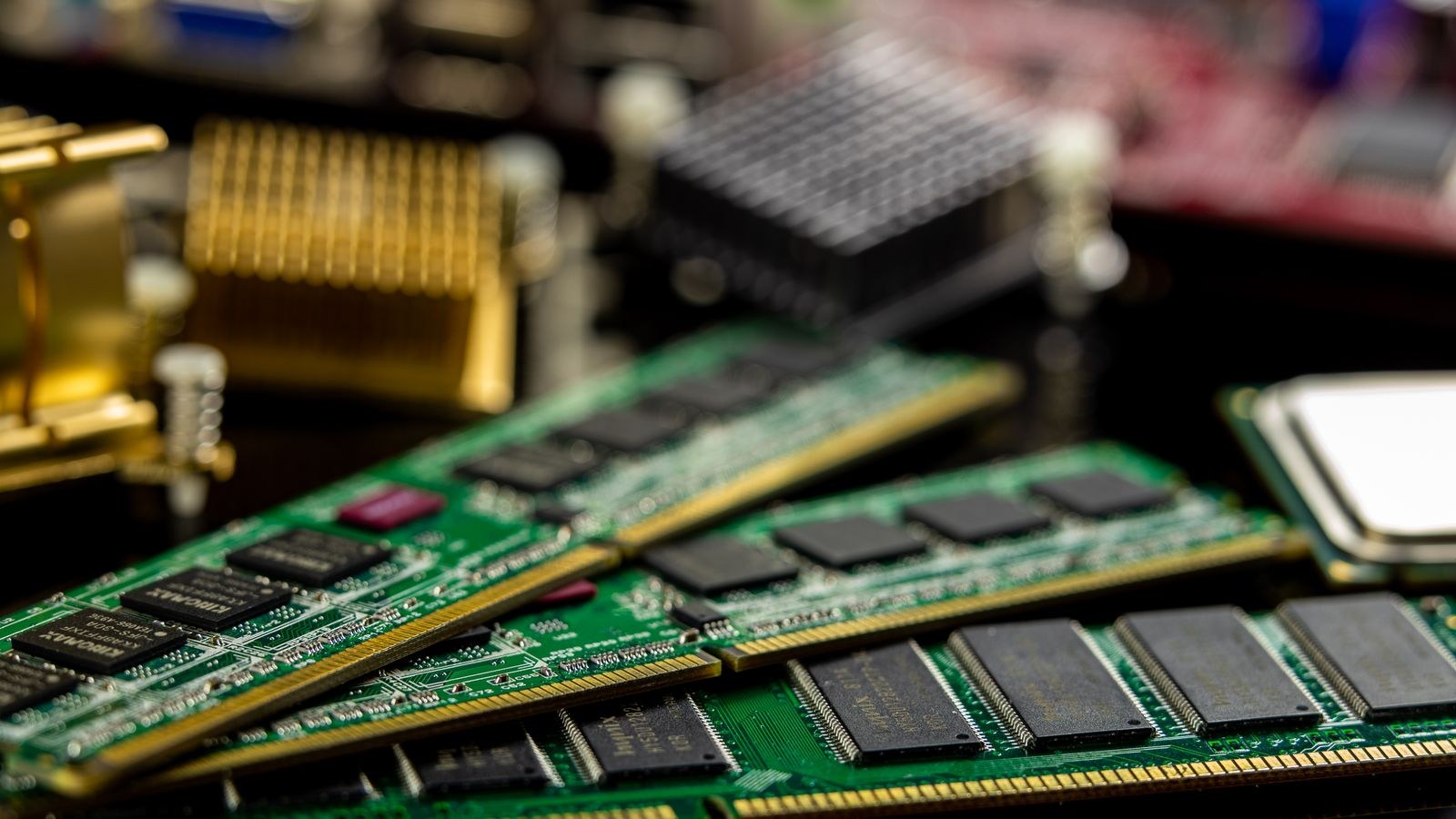
Speed, quoted in megatransfers per second and often shown as a figure like 6000, describes how quickly the memory can move data. Higher numbers move more data per second, which helps in tasks that stream large amounts of information, and it is the headline spec on every kit. The catch is that your processor and motherboard set a ceiling on what runs reliably, and pushing past that ceiling either fails to boot or forces the memory to run slower than advertised. Before chasing a high number, check what your platform officially supports, then treat anything faster as a bonus rather than a guarantee. For gaming systems where responsiveness matters, kits marketed among the best RAM for gaming tend to sit at the sweet spot where speed and price make sense together.
It is worth knowing that advertised speeds above the base standard are reached through a stored profile the motherboard loads automatically. You enable it in the firmware, and the kit jumps from its conservative default to its rated speed. Without enabling that profile, even an expensive fast kit runs at a plain baseline. Buying fast memory and forgetting this step is one of the most common reasons people feel they wasted money on speed.
Decoding CAS Latency
Latency is the quieter half of memory performance and the part most buyers ignore. CAS latency measures the delay, in clock cycles, between the memory receiving a request and delivering the data. A lower number means less delay. Two kits at the same speed can feel different because one has tighter timings, so latency deserves as much attention as the speed rating. The tricky part is that latency in cycles cannot be compared directly across different speeds, because faster memory runs more cycles per second. A slower kit with a low cycle count can end up with a similar real-world delay to a faster kit with a higher one.
For everyday buying you do not need to calculate this by hand. The practical rule is to compare latency only between kits of the same speed, and to favor tighter timings when the price difference is small. Builders who prioritize responsiveness sometimes seek out the best low-latency RAM, which pairs strong timings with sensible speeds rather than chasing raw megatransfers alone. On the flip side, if you want the highest speeds available, look at the best high-speed RAM and accept that timings often loosen as speed climbs.
How Speed and Latency Work Together
Neither number tells the whole story alone. Real memory performance depends on the combination of how fast data moves and how quickly the first byte arrives. A very fast kit with loose timings and a moderate kit with tight timings can land surprisingly close in actual use, which is why the highest speed on the shelf is not automatically the best buy. The balanced approach is to pick a speed your platform supports comfortably, then choose the tightest timings you can get at that speed for a reasonable price. That gives you a kit that performs well across gaming, productivity and background multitasking rather than excelling in a single synthetic benchmark.
Choosing the Right Capacity
Capacity is the spec with the clearest real-world impact, because running out of memory forces the system to lean on much slower storage and everything stutters. For a mainstream gaming and everyday machine, a mid capacity handles current titles and a healthy pile of browser tabs without complaint. Step up if you edit video, run virtual machines, work with large datasets or keep dozens of applications open at once. Creative and professional workloads reward more memory directly, and a larger pool means fewer slowdowns when projects grow. Many builders settle on a kit from the best 32GB RAM options as a comfortable middle ground that leaves room for the workload to expand.
Resist the urge to buy far more than you will use. Memory that sits empty delivers no benefit, and the money is usually better spent on a faster processor or a larger solid-state drive. Match the capacity to your actual tasks, with a modest cushion for growth, rather than to a number that simply sounds future-proof.
Kit Configuration Matters
How you buy your capacity is as important as how much you buy. Modern platforms run memory in pairs, so a matched two-stick kit almost always outperforms a single stick of the same total size, because it lets the memory controller talk to two modules at once. Always buy your capacity as a matched kit rather than mixing loose sticks bought at different times, since mismatched modules can refuse to run at their rated settings or fail to boot at all. If you think you may expand later, leaving two slots free on a four-slot board is cleaner than trying to blend an old pair with a new one.
Also consider which memory generation your motherboard uses, because the two current standards are not interchangeable in the same slots. If your platform is built around the newer standard, focus your search on the best DDR5 RAM so you are buying modules the board can actually accept. Confirming the generation before you order avoids the frustrating and common mistake of buying memory that physically will not fit.
Heat Spreaders and Lighting
The metal shrouds and lighting on premium kits are mostly about looks, with a modest cooling benefit. Standard memory runs cool enough that elaborate heat spreaders are rarely a performance necessity, so treat them as an aesthetic choice rather than a reason to pay a large premium. If your case has a window and you want a coordinated look, taller finned kits and lighting are fine to prioritize. If the memory hides under a large air cooler or lives in a closed case, low-profile modules avoid clearance headaches and cost less. Let the visual features serve your build rather than drive it.
A Simple Buying Checklist
Before you order, run through a short list. Confirm the memory generation your motherboard supports. Check the maximum speed your processor and board handle reliably, and pick a kit at or just below that. Choose your total capacity based on your real workload with a little headroom. Buy that capacity as a matched two-stick kit. Compare latency only among kits of the same speed and favor tighter timings when the price gap is small. Finally, verify physical clearance against your cooler if you choose tall modules. Ticking off these six points steers you away from nearly every common memory-buying mistake.
Single-Rank, Dual-Rank and Why It Matters
Beyond the numbers on the label, memory modules differ in how their internal chips are arranged, described as single-rank or dual-rank. Without getting lost in the engineering, dual-rank configurations can let the memory controller interleave requests more efficiently, which sometimes yields a small performance edge at the same rated speed. You rarely see this printed prominently on the box, so it is not something to obsess over, but it explains why two kits with matching speed and latency can still test slightly differently. For the vast majority of buyers, choosing a reputable matched kit at a supported speed captures nearly all the available performance, and rank arrangement is a fine detail rather than a deciding factor.
The practical takeaway is that chasing exotic configurations offers diminishing returns. A dependable kit from a known maker, bought as a matched pair at a speed your platform supports with tight timings for that speed, will serve you better than hunting for a marginal rank advantage. Spend your attention on the fundamentals of speed, latency, capacity and configuration, and let the smaller details fall where they may.
Frequently Asked Questions
Is faster memory always better?
No. Speed only helps up to the limit your processor and motherboard support, and beyond a certain point the gains shrink while the price climbs. A balanced kit with good latency at a supported speed usually serves you better than the fastest kit on the shelf.
Do I need to enable anything for rated speed?
Yes. Kits rated above the base standard reach that speed only when you enable their stored profile in the motherboard firmware. Without it, even a fast kit runs at a plain default speed.
Should I buy one stick or two?
Buy two matched sticks whenever possible. A pair lets the memory controller work with both modules at once, which improves performance over a single stick of the same total capacity.
Can I mix old and new memory?
It is risky. Modules from different kits may not share the same timings or voltage behavior, so they can refuse to run at rated settings or fail to boot. Buying a single matched kit avoids the problem entirely.
Final Thoughts
Good memory buying is about balance, not bragging rights. Pick a speed your platform actually supports, favor tight latency at that speed, choose a capacity that fits your real workload with a little room to grow, and always buy it as a matched kit in the correct generation. Treat heat spreaders and lighting as the finishing touch rather than the goal. Get those fundamentals right and your memory quietly does its job for years, keeping the whole system responsive without you ever thinking about it again.