 Owen Bradley
Casters are so standard on desk seating that most people never question them. Then a chair leaves a trail of scuffs across a hardwood floor, or rolls away from the desk every time someone shifts their weight, or slowly migrates across a sloped room over the course of an afternoon. At that point the question becomes urgent: are office chairs with wheels actually the right choice, or would a fixed-glide chair serve better? The honest answer depends on your flooring, your room, the kind of work you do and how much you move while working. This guide compares rolling and stationary bases on floor damage, stability, movement and ergonomics, so you can match the base to your actual space in 2026 rather than defaulting to whatever the showroom stocks.

What Each Base Type Actually Is
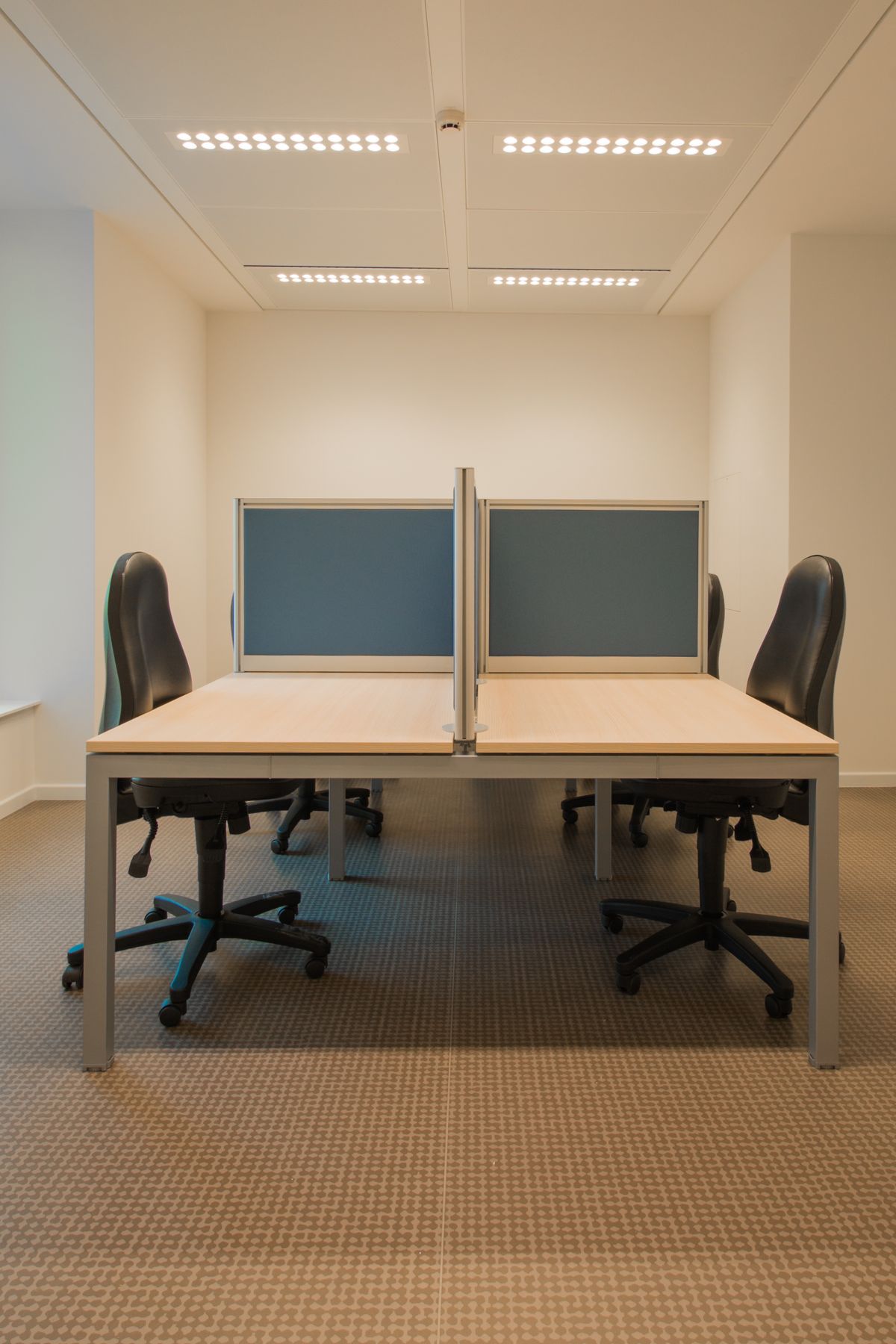
A wheeled chair almost always uses a five-star base with a caster at each arm and a gas cylinder in the centre. The casters swivel freely, and the chair as a whole spins on the cylinder. This is the standard task-chair arrangement and it exists because it lets one person cover a wide work area without standing up.
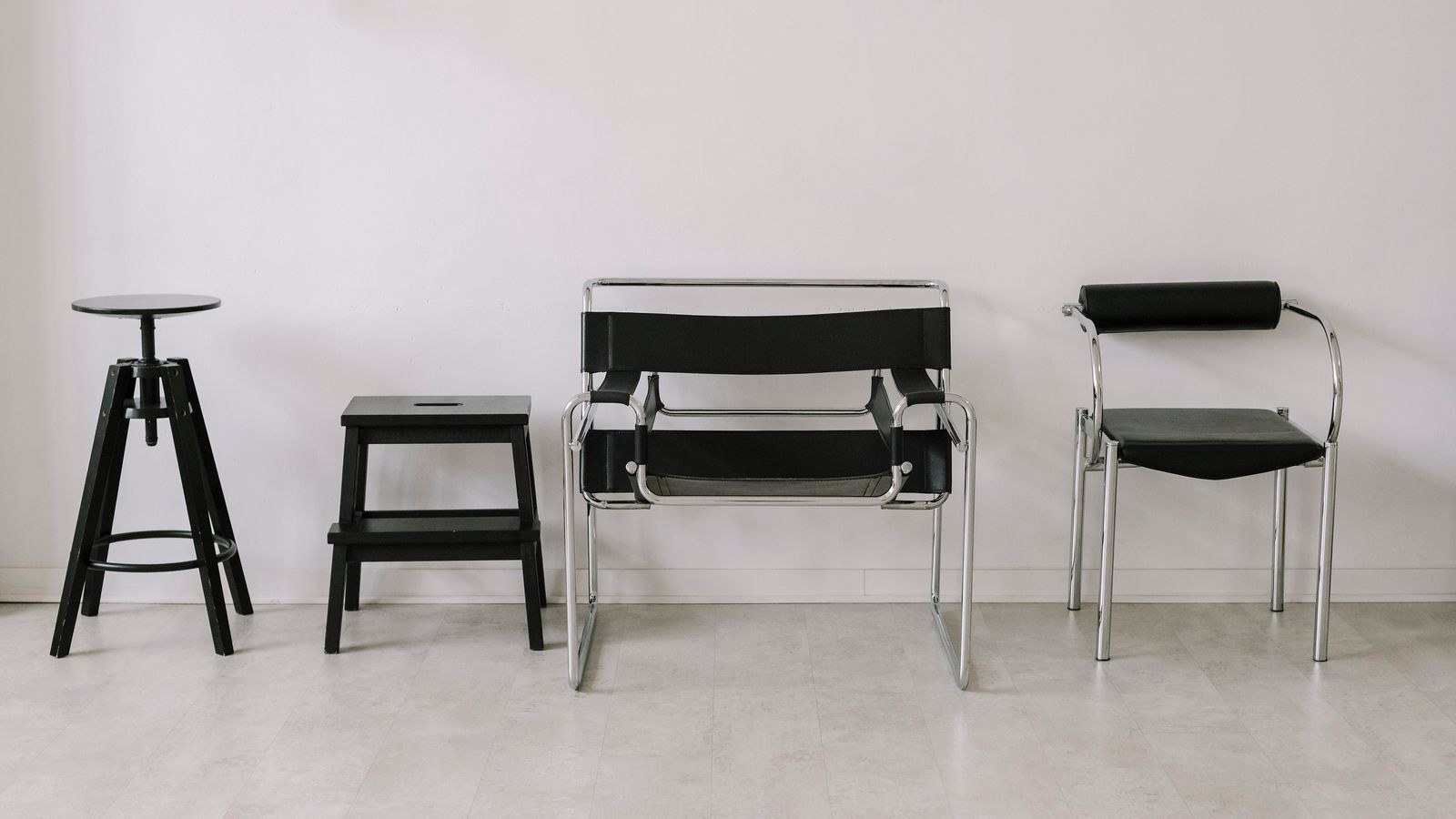
A chair without wheels comes in two forms that behave very differently. The first is the same five-star base fitted with glides, small fixed pads instead of casters. It still swivels and still adjusts height, but it will not roll. The second is a four-leg or sled base chair, which has no cylinder, no swivel and usually no height adjustment. Conflating these two is the most common mistake buyers make, because the first keeps almost all the ergonomic function while the second gives up most of it.
Floor Damage: Where Most of the Complaints Come From
Wheels are not inherently damaging, but the wrong wheels on the wrong floor absolutely are. Standard casters shipped with most chairs are hard nylon, designed for carpet. On hardwood, laminate, vinyl plank or engineered flooring, hard nylon acts like a grinding wheel. It picks up grit, drags it across the finish and produces the fine web of scratches that only becomes visible when sunlight hits the floor at a low angle.
The fix is usually not to abandon wheels but to change them. Soft polyurethane or rubber-tyred casters roll quietly, grip better and are dramatically gentler on hard surfaces. They cost very little and swap out in a couple of minutes on nearly every five-star base. A chair mat achieves something similar, though it introduces its own edge that catches feet and vacuum cleaners.
Glides are the low-risk option, but they are not automatically safe either. A hard plastic glide dragged across a soft wood floor scrapes just as effectively as a caster. Felt-bottomed glides are the gentlest choice for hardwood, while rubber glides suit tile and vinyl. Guides such as the right desk chair wheels for your floor type walk through the specific pairings, and it is worth matching your flooring before you decide the base is the problem.
Stability and Unwanted Movement
The strongest argument for a wheel-free chair is that it stays where you put it. Casters roll under any horizontal force, including the push your legs apply when you lean forward to type or reach for something. Over hours, that produces a slow drift away from the desk that many people compensate for by perching on the front edge, which is a genuine posture problem.
The issue is worse on hard floors, where rolling resistance is lowest, and on any floor that is not perfectly level. Older houses, converted lofts and rooms with slight settling can produce a chair that reliably migrates in one direction. Glides eliminate the drift entirely.
There is also a safety dimension. Sitting down onto a rolling chair without holding it is one of the more common household falls, particularly for older users, children and anyone with balance issues. Chairs designed without wheels avoid the problem altogether, which is why shortlists like the best office chairs without wheels are frequently recommended for shared family rooms.
The Case Against Total Immobility
Movement is not the enemy, though. A rolling chair lets you reach a printer, a second monitor or a filing drawer without breaking your working posture. Ergonomists generally regard small, frequent position changes as beneficial, and a chair that cannot move at all encourages you to twist your spine to reach things instead of repositioning the whole body.
If your work involves any lateral spread, a wheeled chair is usually the healthier option. If your work is entirely contained within one screen and one keyboard, immobility costs you very little.

Room Type and Noise
Where the chair lives matters as much as the chair itself. In a dedicated study on carpet, wheels are near-frictionless and cause no problems. In a bedroom directly above a living room, caster noise transmits through the floor and can be genuinely disruptive to people downstairs, especially with hard nylon wheels on laminate. Glides are silent by comparison.
Shared spaces such as dining rooms, living rooms and studio flats favour wheel-free designs for a different reason: appearance. A four-leg chair reads as furniture rather than office equipment, which matters if the workspace has to disappear into a living area in the evening. Rolling task chairs, however discreet, always look like office kit.
Small rooms cut both ways. A wheeled chair can be rolled fully under a desk and out of the walkway, whereas a four-leg chair with fixed arms may not tuck away at all. Measure the chair’s footprint against your clearances before assuming either type saves space.
What You Give Up Without Wheels
This is the part buyers underestimate. Removing casters from a five-star base costs you nothing but rolling. Choosing a four-leg or sled-base chair, however, usually costs you height adjustment, swivel, tilt and often lumbar adjustment as well. That is a substantial ergonomic downgrade for anyone working a full day.
Height adjustment in particular is not optional. If the seat height is fixed at, say, 18 inches and your desk needs 19, you have no recourse other than a cushion or a footrest. Swivel matters too, because without it you turn by twisting your torso rather than rotating the whole chair, which loads the lumbar spine unevenly.
The sensible compromise for most people is a proper adjustable task chair fitted with glides. You keep the mechanisms and lose the rolling. Collections covering the best desk chair with no wheels increasingly feature this style rather than pure four-leg designs, precisely because it preserves the adjustments.
Converting a Wheeled Chair to Glides
You do not necessarily need to buy a different chair. Nearly all five-star bases accept standard 11mm grip-ring stems, and glides with that stem are widely available and inexpensive. The swap takes minutes: pull the casters straight out with a firm tug or a lever against the base, and push the glides in until they click.
Before ordering, check two things. Measure the caster stem diameter, since a minority of chairs use 10mm or threaded stems. And account for the height difference, because glides usually sit slightly lower than casters and will drop your seat height by half an inch or so. That is rarely a problem, but it is worth knowing if you are already at the bottom of your height range.
A middle path is locking or braked casters, which roll freely when you push deliberately but hold still under normal weight. These give you repositioning without drift, and they are a strong option for hard floors where the drift problem is worst.
Budget and Availability
Wheeled task chairs dominate the market, which means far more competition and better value at every price point. Wheel-free chairs are a smaller category, so a comparable level of build quality often costs a little more, and adjustable models with glides can be harder to find than fixed four-leg designs.
The cheapest route to a non-rolling chair is almost always to buy a good wheeled chair and spend around $15 on a set of glides. That gets you the full adjustment range of a mainstream task chair with none of the rolling. If you want a chair designed from the outset without casters, comparison lists such as the best desk chair without wheels narrow a scattered market down considerably.
Gaming setups face the same choice, usually on hard floors in bedrooms where noise and scratching are both concerns. The best gaming chairs without wheels category exists for exactly that scenario, though the glide-conversion trick works equally well on a standard gaming chair base.
Common Mistakes to Avoid
The first mistake is blaming wheels for damage that hard nylon casters caused. Swapping to soft polyurethane solves most hardwood complaints for a fraction of the cost of a new chair. The second is buying a fixed four-leg chair to stop drifting, then discovering the seat height is wrong for the desk and cannot be changed.
A third is ignoring the stem size when ordering replacement casters or glides, which leads to parts that will not seat properly. A fourth is assuming a chair mat is a complete solution: mats protect the floor but do nothing about drift, and cheap thin mats crack under caster pressure within a year. Finally, many buyers overlook that glides make a chair harder to move for cleaning, which is a small but real daily annoyance on carpet.
Frequently Asked Questions
Do office chair wheels really damage hardwood?
Hard nylon casters can, especially once they collect grit. Soft polyurethane or rubber-tyred casters roll gently and rarely mark a sealed hardwood floor. The wheel material matters far more than the presence of wheels.
Can I put glides on any office chair?
On most five-star bases, yes. Check that your casters use the common 11mm grip-ring stem, then pull them out and push glides in. Threaded or non-standard stems need a matching glide, so measure before ordering.
Are wheel-free chairs worse ergonomically?
Only if they also lack height adjustment, swivel and tilt. A full task chair fitted with glides is ergonomically equivalent to the same chair on casters. A fixed four-leg chair is the real downgrade.
What about carpet?
Carpet already provides plenty of rolling resistance and no scratch risk, so wheels are usually the better choice there. Glides on thick carpet can be hard to slide and may drag the pile.
Are locking casters a good compromise?
For many people, yes. Braked casters that engage under weight let you reposition deliberately while preventing the slow drift away from the desk, which addresses the main complaint without giving up mobility.
Final Thoughts
The office chairs with wheels versus without decision is less about the chair than about the floor beneath it and the way you work. If your desk sits on carpet and your job involves reaching for printers, papers or a second screen, keep the casters and enjoy the mobility. If you work on hardwood, sit above someone else’s living room, share the space with children or older relatives, or find yourself constantly rolling away from the desk, a wheel-free setup will make your days quieter and steadier. Before you replace anything, try the cheap experiments first: swap in soft polyurethane casters, or fit a set of glides for the price of a takeaway. Only step down to a genuinely fixed four-leg chair if you are confident you can live without height adjustment, swivel and tilt, because those matter far more to your back than whether the chair rolls.