Owen Bradley
 Ask three homeowners which smart thermostat to buy and you will hear three different answers, usually delivered with total confidence. The truth is less tidy: Nest, ecobee and Honeywell each solve the same problem from a different angle, and the best one for you depends far more on your wiring, your HVAC system and the voice assistant you already use than on any headline feature. This comparison sets the three families side by side across sensors, scheduling, installation demands and long-term running costs, so you can pick once and stop second-guessing. Nothing here is a product review; it is a framework for deciding which platform deserves a spot on your hallway wall in 2026.
The Short Answer Before the Detail
If you want the simplest possible experience and a thermostat that learns your habits with minimal input, the Nest philosophy suits you. If you have rooms that run hot or cold and you care about balancing temperatures across a house, the ecobee approach with distributed remote sensors is the stronger fit. If your priority is broad HVAC compatibility, conventional programming you fully control, and a lower price of entry, Honeywell’s range covers the widest ground.
Those one-line summaries hold up surprisingly well, but they hide the details that actually cause regret after installation: whether you have a common wire, whether your system has auxiliary heat, and whether you want the thermostat to make decisions for you or simply follow orders. The rest of this guide works through each of those.
Design Philosophy: Learning vs Sensing vs Control
Nest built its reputation on automation. The device watches when you adjust temperature, notes when the house is empty, and gradually assembles a schedule you never had to write. For households with irregular routines this feels close to magic. For households that want a fixed, predictable schedule, the same behaviour can feel like arguing with an appliance that keeps changing its mind.
ecobee took the opposite route. Rather than guessing harder, it gathers more data by placing small wireless sensors in the rooms you care about, then averages or prioritises those readings instead of relying on the hallway where the thermostat happens to live. This directly addresses the most common household complaint, which is not that the thermostat is inaccurate but that it is accurate about the wrong room.
Honeywell, with decades of HVAC engineering behind it, generally emphasises reliability and control. Its smart models range from simple app-connected programmables to feature-rich touchscreens, and they tend to support unusual system configurations that trip up more design-led competitors. If your home has multi-stage heating, a humidifier, or a system installed by a contractor rather than a homeowner, this matters.
Room Sensors and Temperature Balance
A thermostat measures one point in your home and makes decisions for all of it. In an open-plan single-storey house that is fine. In a two-storey home with a sunny south-facing bedroom, it is the root cause of endless thermostat wars.
Remote sensors solve this by letting the system consider several rooms at once, and by switching focus based on occupancy so an empty guest room stops dictating your comfort. ecobee ships this capability as a core part of the experience and includes occupancy detection in its sensors. Nest offers separate temperature sensors on its higher models, though occupancy handling is less central to how they work. Honeywell’s support varies by model, with some units offering optional remote sensors and others relying on the built-in reading alone.
Decide early whether you need this. If one room in your house is consistently uncomfortable, sensors will improve your life more than any other feature on the spec sheet. If your home heats evenly, you can safely spend less. Browsing a broad shortlist such as our roundup of the best smart thermostats makes it easier to see which price tiers include sensors in the box versus as an add-on.
Wiring and Installation Reality Check
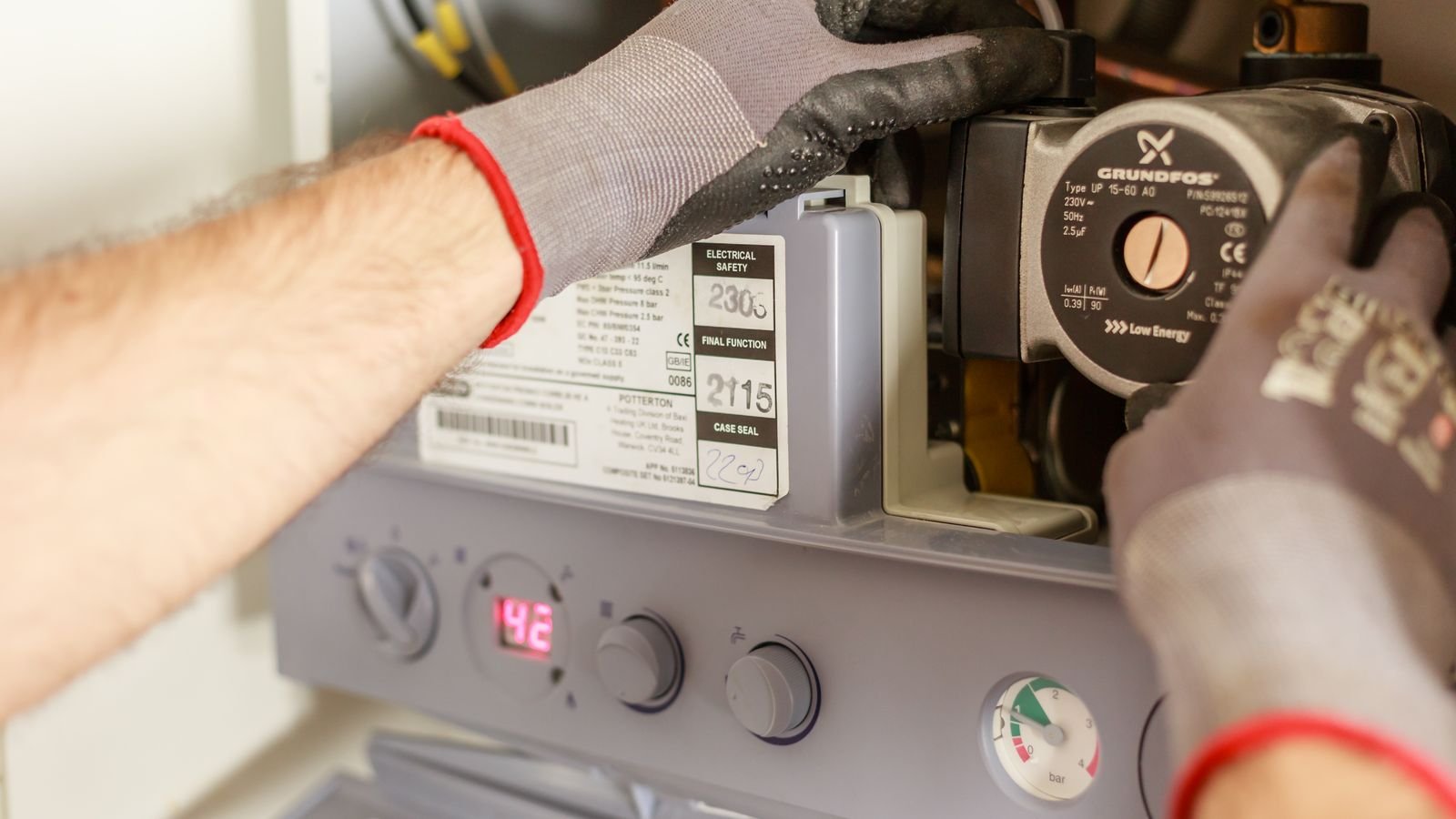
The single most common reason a smart thermostat purchase goes wrong is wiring. Modern thermostats need continuous power to run a screen, Wi-Fi radio and processor, and that usually means a common wire, often labelled C. Older installations frequently lack one.
The three brands handle this differently. Nest can often run without a dedicated common wire by drawing small amounts of power through existing wires, which works well in many homes and causes intermittent problems in others, particularly with sensitive or older HVAC control boards. ecobee sidesteps the issue by shipping an adapter module that installs at the furnace or air handler and supplies power properly. Honeywell’s approach depends on the model, with some including an adapter and others requiring you to run new wire or add a transformer.
Before you buy anything, pull your existing thermostat off the wall and photograph the terminal block. Write down every lettered terminal that has a wire attached. That single photo answers most compatibility questions in seconds and prevents an afternoon of frustration.
Scheduling, Automation and Daily Use
Scheduling is where personal preference dominates. Nest’s adaptive scheduling reduces setup to almost nothing but gives you less direct authority over the result. Its eco temperature handling and away detection are genuinely effective at trimming waste when nobody is home.
ecobee offers comfort profiles, which are named temperature settings such as home, away and sleep that you drop onto a weekly grid. It is more configuration up front, but the outcome is exactly what you specified, and the follow-me sensor behaviour adds intelligence without removing control.
Honeywell tends to favour classic seven-day programming, familiar to anyone who has used a traditional programmable thermostat, wrapped in an app. That familiarity is an advantage for households where several people need to change settings without a tutorial. If you like this style of predictable control, our best Honeywell thermostats comparison shows how the connected models build classic weekly programming into a modern app experience.
Geofencing and Occupancy
All three platforms can use your phone’s location to decide the house is empty. Geofencing is convenient but imperfect: it struggles with multiple household members, work-from-home days and phones that aggressively manage background location. Treat it as a helpful bonus, not the backbone of your energy plan. Occupancy sensors inside the house are more reliable because they measure what is actually happening rather than where a phone last checked in.
Ecosystem and Voice Assistant Support
Your existing smart home matters more than most buyers expect. Nest integrates most naturally with Google Assistant and the wider Google Home experience. ecobee has historically offered the broadest third-party support, including strong Apple Home compatibility, and several models include a built-in speaker and microphone. Honeywell’s connected models generally work with the major assistants, though the depth of integration varies between product lines.
The practical test is simple. Name the app you already open most often to control lights or locks, then confirm the thermostat you are considering appears inside it natively rather than through a workaround. Cross-platform bridges work until they do not, and a thermostat is not the device you want to be troubleshooting on a cold morning. Comparing the best Nest thermostats against the best ecobee thermostats largely comes down to which ecosystem your household already lives in.
HVAC Compatibility and Complex Systems
Simple single-stage furnace and air conditioner setups work with essentially anything. Complexity is where brands separate. Multi-stage heating, heat pumps with auxiliary or emergency heat, dual-fuel systems, whole-home humidifiers, ventilators and zoned systems all demand more terminals and smarter control logic.
ecobee and Honeywell generally lead here, offering more accessory terminals and configuration options for equipment beyond basic heating and cooling. Nest supports many of these systems too but occasionally with less granular configuration. If you own a heat pump, pay close attention to how the thermostat manages auxiliary heat lockouts, because a poorly configured thermostat can call expensive backup heat far more often than necessary and quietly inflate your winter bills.
Price Tiers and What You Actually Get
Think in three tiers rather than individual models. Entry-level connected thermostats give you app control, remote scheduling and basic energy reports. Mid-tier models add better displays, more accessory terminals and usually one included room sensor. Flagship models bring larger touchscreens, built-in voice assistants, air quality sensing and multiple sensors in the box.
The jump from entry to mid-tier is usually worth it, because that is where sensors and accessory support appear. The jump from mid-tier to flagship is more about polish and voice hardware, which you may already own in a nearby speaker. Spend the difference on extra sensors instead if your home has temperature imbalance.
Running Costs and Payback
Savings claims deserve scepticism. A smart thermostat saves energy mainly by ensuring you are not heating or cooling an empty house and by preventing forgotten manual overrides. If you already run a disciplined schedule with a basic programmable unit, the incremental savings will be modest. If your current habit is leaving one temperature set around the clock, the improvement can be substantial. Check whether your utility offers a rebate, since that often shortens payback more than any feature comparison.
Common Mistakes Buyers Make
The first mistake is buying before checking wiring. The second is assuming remote sensors are optional extras when your household argues about room temperature every winter. The third is choosing a thermostat outside the ecosystem you already use, which turns a five-second voice command into a three-app scavenger hunt.
A fourth, less obvious mistake is over-automating. Adaptive learning works best when you let it settle rather than adjusting the dial every few hours, which resets its understanding. Give any learning system a couple of weeks of consistent behaviour before judging it. Finally, do not ignore placement: a thermostat mounted in direct sunlight, above a heat source, or on an exterior wall will report misleading temperatures no matter which brand is on the faceplate.
Frequently Asked Questions
Do I really need a C wire?
Not always, but it is the most reliable option. Some thermostats power themselves without one, others include an adapter, and some require a new wire run. Checking your terminal block first tells you which situation you are in and rules out incompatible models early.
Which brand is best for a heat pump?
Look for explicit auxiliary heat control and lockout settings rather than brand loyalty. ecobee and Honeywell typically expose more configuration for staged and dual-fuel systems, but several Nest models handle heat pumps well too. Confirm the specific model supports your stage count before buying.
Can I install one myself?
Most homeowners can, provided the wiring is straightforward and they cut power at the breaker first. Photograph the existing wiring, label each wire as you remove it, and stop if you find high-voltage wiring or an unfamiliar terminal layout. Line-voltage and proprietary systems need a professional.
Are the extra sensors worth the money?
If any room in your home is noticeably warmer or cooler than the hallway, yes. Sensors address a comfort problem that no amount of scheduling can fix. In a small, evenly heated home they add little.
Will a smart thermostat work without internet?
Yes for basic heating and cooling. The device continues to hold its schedule and respond at the wall. What you lose is remote control, geofencing, software updates and energy reporting until connectivity returns.
Final Thoughts
Nest, ecobee and Honeywell are all capable of running your HVAC well. The decision hinges on three questions: what does your wiring allow, does your home need multi-room sensing, and which app ecosystem do you already live in. Answer those honestly and usually one option stands out clearly.
If you are still weighing the fundamentals, our broader smart thermostat buying guide walks through compatibility, features and installation in detail before you commit to a brand. Photograph your terminal block, decide whether room balance matters, then buy the least expensive model that clears both hurdles.