
 Owen Bradley
 A mirror is the cheapest way to make a room feel twice its size, and one of the easiest things to get wrong. Hang one too small above a sofa and the wall looks unfinished. Point one at a blank corner and you double the emptiness rather than the light. Choose a frame that fights the room and you have an expensive object that never quite settles. This mirror buying guide works through the decisions in the order that matters: what the mirror is for, how big it needs to be for the furniture beneath it, which shape and frame suit the space, and where to place it so it bounces daylight into the darkest part of the room. By the end you should be able to buy confidently in 2026 rather than guessing at the shop.
Start With the Job the Mirror Has to Do
Every mirror falls into one of three roles, and the role decides everything that follows. A functional mirror is for looking at yourself: a bathroom or vanity mirror, a full-length dressing mirror, a hallway mirror for a last check before leaving. It needs accurate reflection, distortion-free glass and good light on the face. A decorative mirror is a piece of wall art that happens to reflect. Its job is proportion, shape and frame, and what it reflects matters more than how flattering it is. A light-bouncing mirror is placed purely to redistribute daylight or lamplight into a dark area, in which case size and position beat style.
Many mirrors do two jobs at once, but naming the primary role stops you from compromising on the thing that actually matters. A gorgeous ornate frame is irrelevant if you cannot see your face in it, and perfect optical clarity is wasted on a mirror hung above a fireplace at chest height.
Sizing: The Two-Thirds Rule and Its Exceptions
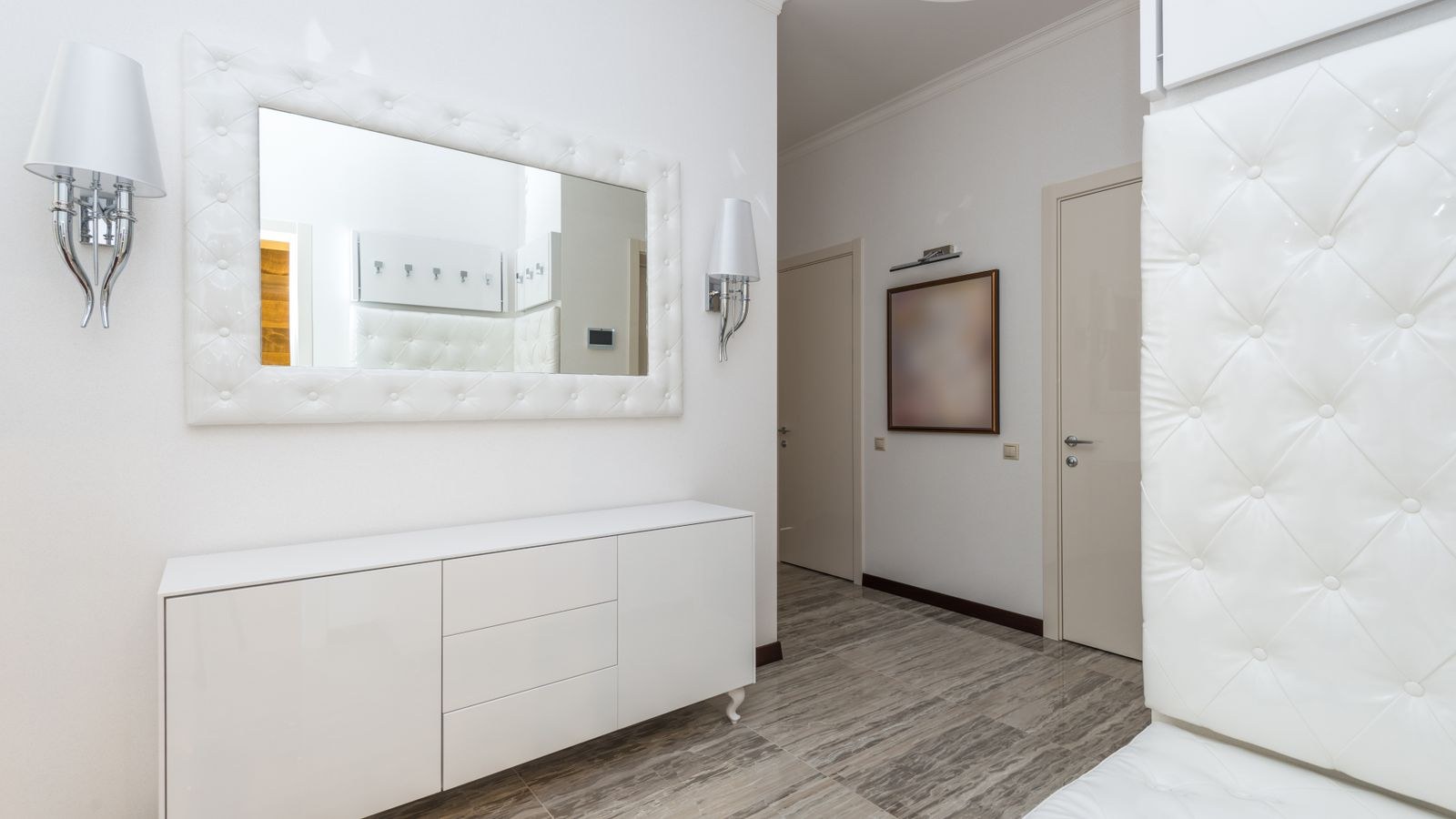
The most reliable sizing rule in interiors is to make wall-mounted objects roughly two-thirds to three-quarters the width of the furniture below them. Above a sofa, that means a mirror spanning about two-thirds of the sofa width. Above a vanity, roughly seventy to eighty percent of the counter. Above a console table, two-thirds again. Anything much narrower reads as a floating accessory rather than a considered choice, and anything wider than the furniture itself tends to look top-heavy.
Height matters as much as width. Leave four to eight inches of wall between the top of the furniture and the bottom of the mirror. Less than that and the two objects merge visually; much more and the mirror drifts away from the piece it is meant to anchor. On an empty wall with no furniture, the centre of the mirror should sit at roughly eye level, which for most rooms falls around fifty-seven to sixty inches from the floor, the same convention galleries use for hanging art.
The main exception is the full-length mirror. It needs to show your whole body from a few feet back, which means a minimum height of around sixty inches and a width of at least twenty-four. Leaning a tall mirror against the wall works beautifully in a bedroom, but tilt changes the reflection, so try it before committing, and always secure it to the wall with a safety strap.
Sizing a Bathroom or Vanity Mirror
Vanity mirrors follow the same width logic but add a lighting constraint. Centre the mirror on the sink rather than on the wall if the two do not line up, and leave a few inches above the backsplash so splashes cannot run behind the frame. For a double vanity, either one wide mirror spanning both basins or two matched mirrors, each centred on its own sink, will look intentional.
Lighting decides whether the mirror is usable. Downlights alone cast shadows into the eye sockets and under the chin, which is why hotel bathrooms put light at the sides. Aim for illumination at roughly face height from both sides, at a neutral colour temperature and a high colour rendering figure so skin tones and cosmetics read accurately. Our roundup of the best light bulbs for vanity mirrors explains which colour temperatures and rendering numbers to look for, the guide to the best vanity lighting covers sconce and bar fixtures, and the broader vanity and makeup lighting guide walks through positioning in detail.
Shapes and What They Do to a Room
Rectangular mirrors are the workhorses. Hung vertically they stretch a low ceiling upward; hung horizontally they widen a narrow wall. They suit hallways, vanities and anywhere you want structure rather than drama.
Round mirrors soften rooms full of straight lines, which is why they read as modern above a boxy console or a rectangular vanity. They also handle awkward wall space well, because a circle has no corners to clash with mouldings or sloping ceilings. Bear in mind that a round mirror shows less of your reflection than a rectangle of the same footprint.
Arched mirrors have become a default for a reason: they add the height of a rectangle with the softness of a curve, and they echo doorways and window arches. Oval shapes flatter a face and suit traditional interiors. Irregular or organic shapes work as sculpture but demand a quiet wall around them.
A practical way to choose is to look at the dominant lines already in the room. If everything is rectangular, a round or arched mirror provides relief. If the room already has curved furniture and arched openings, a clean rectangle restores order.
Frames, Glass and Build Quality
Frames set the tone. Thin metal frames in black, brass or brushed nickel disappear into contemporary rooms and let the reflection do the work. Wide wooden frames add warmth and weight, suiting traditional and rustic spaces. Ornate carved or gilded frames become the focal point themselves, so they need space around them and little competition. Frameless mirrors with a polished or bevelled edge are the most neutral option of all, and a bevel adds a subtle prismatic line that stops the glass looking like a plain sheet.
Glass quality varies more than people expect. Look for thickness of at least a quarter inch on anything large, because thin glass flexes on the wall and distorts the reflection into a funhouse wobble. A copper-free, moisture-resistant backing matters in bathrooms, where cheap silvering develops black creep along the edges within a couple of years.
Weight drives the mounting decision. A large framed mirror can weigh forty pounds or more, which is far beyond what a picture hook or a drywall anchor alone should carry. Fix into studs wherever possible, use a French cleat for even weight distribution on heavy pieces, and check the hardware’s stated load rating rather than assuming what comes in the box is adequate. Any mirror in a home with children should also be secured against tipping, leaning styles especially.
Placement: Where Mirrors Earn Their Keep
The single most effective placement is on the wall perpendicular to a window, or on the wall opposite one. Perpendicular placement catches daylight and scatters it sideways into the room without creating glare; directly opposite gives the strongest brightening effect and effectively doubles the view of the window. Both approaches make a dark room noticeably lighter without touching the wiring.
The second rule is to mind what the mirror reflects, because it will show that view constantly. Aim it at something worth seeing: a window, a plant, an interesting piece of art, an open sightline through a doorway. Avoid pointing a large mirror at a cluttered worktop, a television, a toilet or a blank wall, all of which the mirror will faithfully double.
Hallways and entryways are natural homes for mirrors because they are usually narrow and short of daylight. A tall mirror at the end of a corridor makes the passage read as continuing rather than stopping. In a dining room, a mirror opposite a light fixture multiplies the sparkle in the evening. Above a fireplace, keep the mirror within the width of the chimney breast and slightly above the mantel.
Where daylight simply does not reach, a mirror alone will not solve the problem, since it can only redistribute the light already present. Pair it with well-placed artificial light instead. Our list of the best lamps for dark rooms covers fixtures with the output and beam spread to fill a gloomy corner, and positioning one so a mirror catches its glow doubles the effect.
Mirror Groupings and Gallery Walls
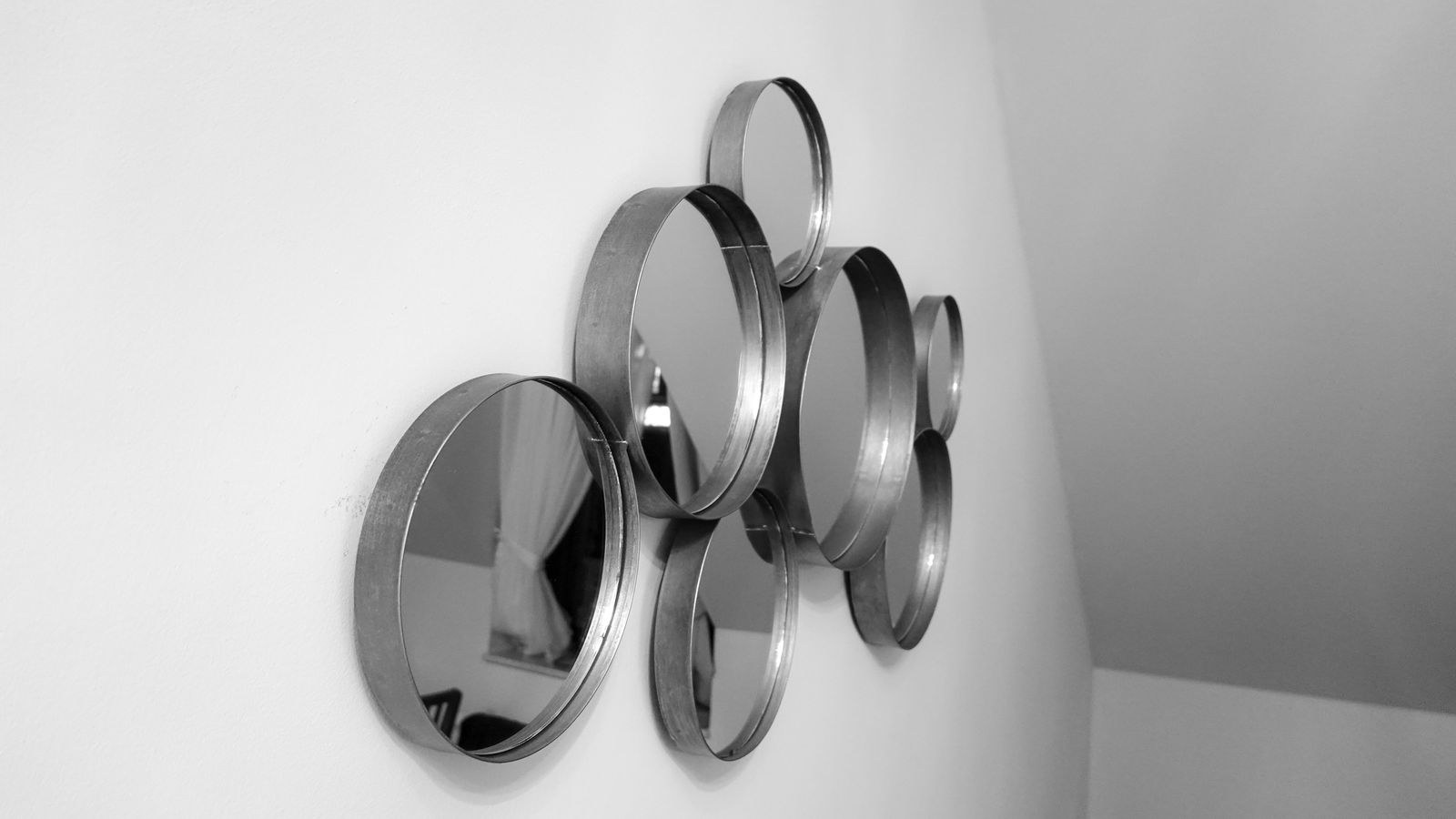
Several small mirrors can substitute for one large one, but only if they are treated as a single composition. Keep consistent spacing, usually two to three inches between frames, and align either the top edges, the bottom edges or a central horizontal axis. Odd numbers tend to look more natural than even ones. Mixing mirror shapes within a group works when the frames share a finish; mixing both shape and finish usually reads as accidental.
Before drilling, cut paper templates to the size of each mirror and tape them to the wall. Live with the arrangement for a day, check it from the seated position you will most often view it from, and only then mark your fixings.
Budget Tiers and Where to Spend
Entry-level mirrors are typically thin glass in a lightweight resin or thin metal frame. They are perfectly serviceable as decorative pieces on a small wall, but look closely at the edges and the reflection quality before buying, and expect the frame finish to chip.
The mid range brings thicker glass, real wood or solid metal frames and better mounting hardware. This is where most people should spend for a mirror they will look at every day, especially a bathroom or full-length mirror where clarity matters.
At the top sit large antique, custom-cut and made-to-measure mirrors, where you pay for size, glass quality and craftsmanship. Big pieces also carry installation costs, since anything genuinely oversized needs professional fixing. A useful strategy is to spend on one large statement mirror rather than several small ones, because a single generous piece almost always does more for a room.
Common Mistakes That Spoil the Effect
- Buying too small. The most frequent error by far. When in doubt, size up rather than down.
- Hanging too high. Aim for eye level or a consistent gap above the furniture, not up near the ceiling.
- Ignoring the reflection. Check what the mirror will show before you commit to a wall.
- Underspecifying the fixings. Heavy mirrors need studs or a cleat, never a single picture hook.
- Using bathroom-unsuitable glass. Non-moisture-resistant backing spots and blackens at the edges.
- Fighting the room’s lines. Match or deliberately contrast the existing shapes rather than adding a third language.
Frequently Asked Questions
How big should a mirror above a sofa be?
Roughly two-thirds the width of the sofa, hung with four to eight inches of wall between the sofa back and the bottom of the frame. If you are choosing new seating at the same time, our comparison of the best sofas lists standard widths that make this calculation straightforward.
Does a mirror really make a room brighter?
It redistributes light rather than creating it, but the effect is real. Placed opposite or perpendicular to a window, a large mirror measurably lifts the brightness of the far side of a room.
Round or rectangular for a bathroom vanity?
Rectangles show more of your reflection and suit wide vanities; round mirrors soften a boxy room and work well on a single narrow basin. Either is correct if the width is proportionate to the counter.
How do I hang a heavy mirror safely?
Locate the studs, use a French cleat or heavy-duty rated hardware, and check the total weight against the fixings before drilling. Add a safety strap for anything tall or leaning.
Final Thoughts
Buying a mirror well comes down to a short sequence. Decide what the mirror is for, size it to about two-thirds of the furniture below or centre it at eye level on an open wall, pick a shape that either echoes or deliberately relieves the room’s existing lines, and choose glass and framing built for the environment it will live in. Then place it where it catches daylight and reflects something worth seeing, and mount it into something solid. Do that and one purchase changes how the whole room feels, which is more than almost any other piece of decor at the same price can claim.









