Owen Bradley
 A wrapped tree is the display element that stops traffic. Unlike a roofline, which outlines a shape, a lit trunk and branch structure fills space with depth, and a single well-wrapped maple in a front garden does more visual work than a hundred metres of eave lighting. The catch is that wrapping consumes far more strand length than people expect, and doing it by eye produces uneven spacing that looks messy the moment the sun goes down. This guide covers estimating how many strands you actually need, the wrapping technique professionals use, how to power a multi-tree display, and how to protect the tree so it is still healthy next spring.
How Many Lights Do You Actually Need
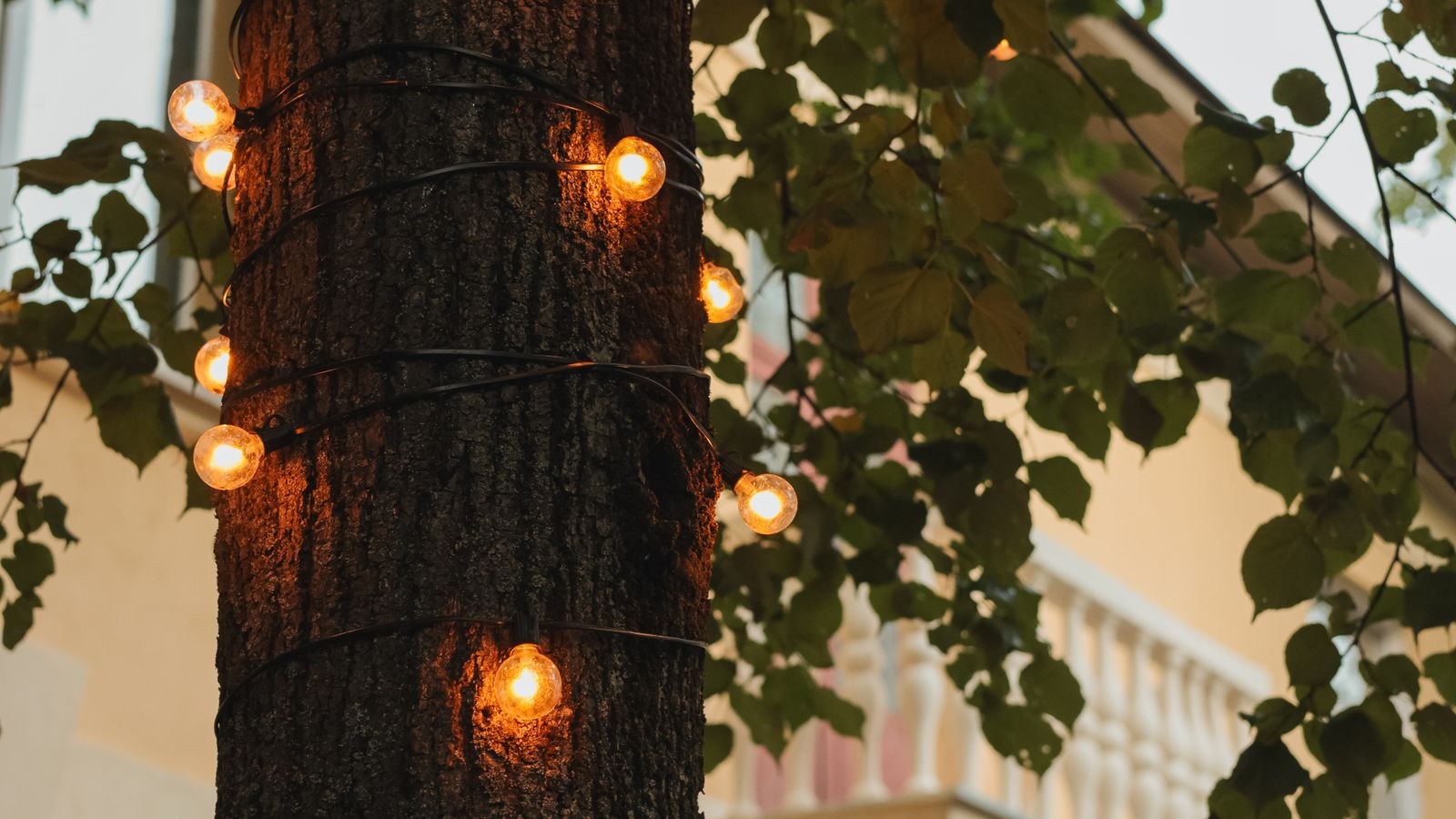
Almost everyone underbuys. A useful rule for trunk wrapping is that one metre of trunk consumes roughly 3 to 4 metres of light strand at 10cm spacing, and considerably more at 5cm spacing. For branches, estimate the total length of the branches you intend to wrap and apply the same multiplier.
A practical method is to measure the circumference of the trunk at chest height, then multiply by the number of wraps you plan up the height you intend to cover. For a trunk 60cm around, wrapped to a height of 3m at 10cm spacing, that is 30 wraps at 0.6m each, or about 18m of strand for the trunk alone. Add branches and the number climbs quickly. Buy in whole strands, buy 20 percent more than the calculation, and keep the receipt so you can return what you do not use.
Spacing Determines the Look
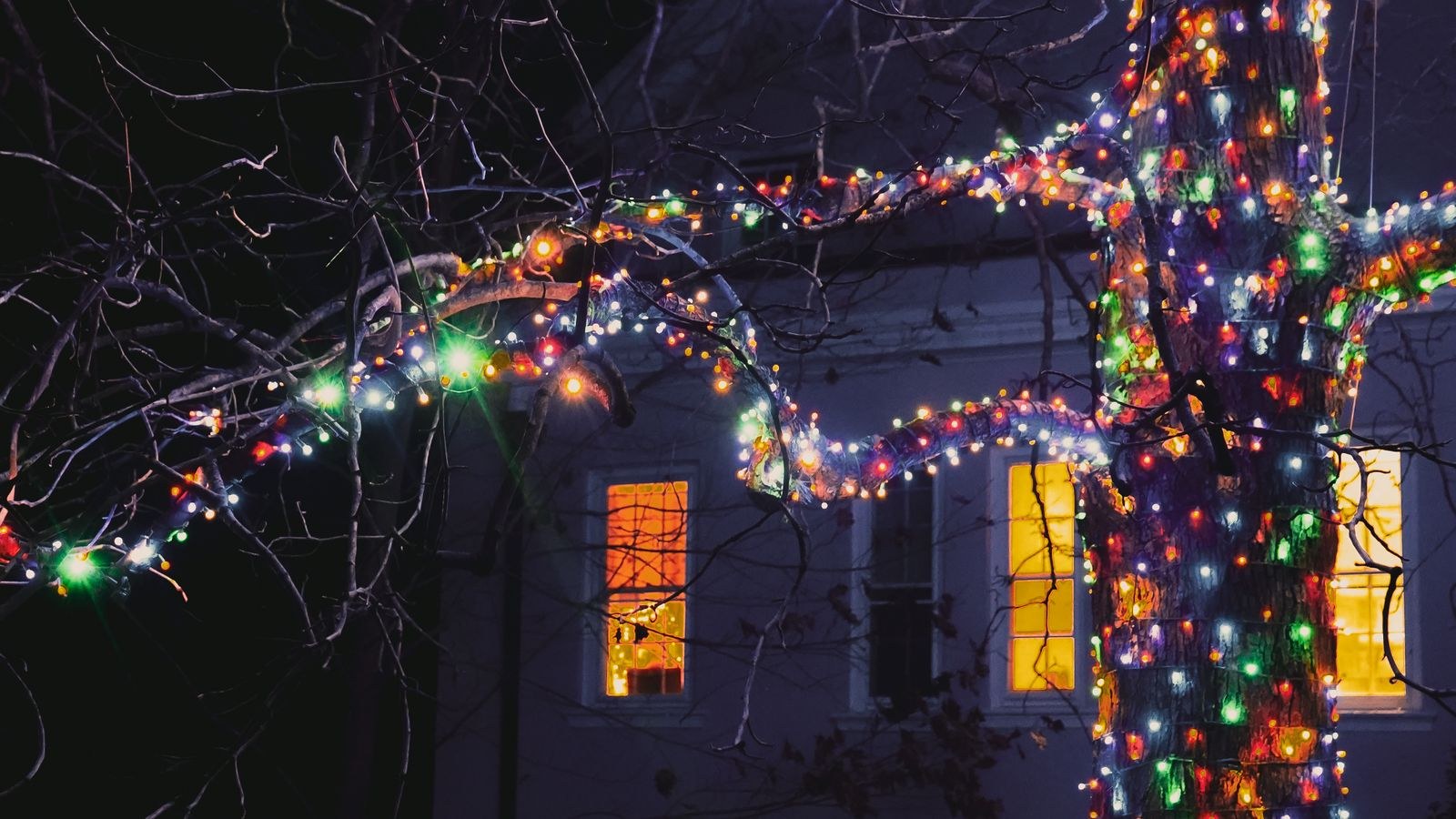
Tight 5cm wrapping produces a solid glowing column and is what you see on commercial installations at shopping centres. It looks spectacular and costs roughly double. Medium 10cm spacing is the sweet spot for most homes, reading as clearly deliberate without an enormous strand count. Loose 15 to 20cm spacing suits large trunks and long branch runs where you want the tree suggested rather than outlined. Whatever you choose, keep it consistent, because inconsistent spacing is the single biggest tell of an amateur job.
Tools and Materials
- Outdoor-rated LED string lights on green or brown wire so the cable disappears by day
- Heavy-gauge outdoor extension cords and an RCD or GFCI protected socket
- Outdoor timer or smart plug
- Stakes and a low-voltage cable if you are lighting several trees from one supply
- Green garden twist ties or soft plant ties for securing loops
- Sturdy stepladder with levellers, plus a helper
- Gloves, a headlamp, and a bucket or bag to carry strands
- Tape measure and a notepad for your strand estimate
Step-by-Step: Wrapping a Tree With Christmas Lights
- Test each strand on the ground. Plug every set in and check it before it goes anywhere near the tree. Unwinding a dead strand out of a wrapped trunk is a thoroughly miserable job.
- Plan the power path first. Decide where the socket is and which side of the tree the cable will run down. Start wrapping at the base on that side so the plug ends where you need it.
- Anchor the first end. Loop the female end of the first strand around the base of the trunk and secure it loosely with a soft tie. Leave enough tail to reach your cord.
- Wrap the trunk upward. Work in a consistent spiral, keeping the strand snug against the bark but never tight. Hold the coil in one hand and pass it around the trunk rather than walking the whole strand around, which tangles it.
- Keep the spacing constant. Use the width of your hand as a spacing gauge so you do not need to measure each wrap. Check by stepping back every metre, because spacing drifts wider as you get tired.
- Join strands cleanly. When one strand runs out, plug the next straight into it and keep spiralling. Tuck the connection against the trunk on the back side so it is hidden, and keep it above ground level.
- Move onto the branches. At the first major fork, continue up whichever limb you want to emphasise. Wrap out to the tip, then either wrap back down the same branch on the return or run the strand back along the underside where it is less visible.
- Prioritise structure over coverage. Wrapping three or four major limbs fully looks far better than wrapping every twig thinly. Trees read as silhouettes at night, so emphasise the shape rather than trying for total coverage.
- Secure the loose points. Add a soft tie anywhere the strand wants to slip, particularly on smooth-barked trees and on the underside of horizontal branches. Never use wire ties directly against bark and never nail or staple into the tree.
- Run the drop and test at night. Bring the final cable down the back of the trunk, stake it along the ground to the socket, plug into an RCD-protected outlet through a timer, and view the result from the street. Adjust gaps that look obviously dark before you pack up.
Different Trees Need Different Approaches
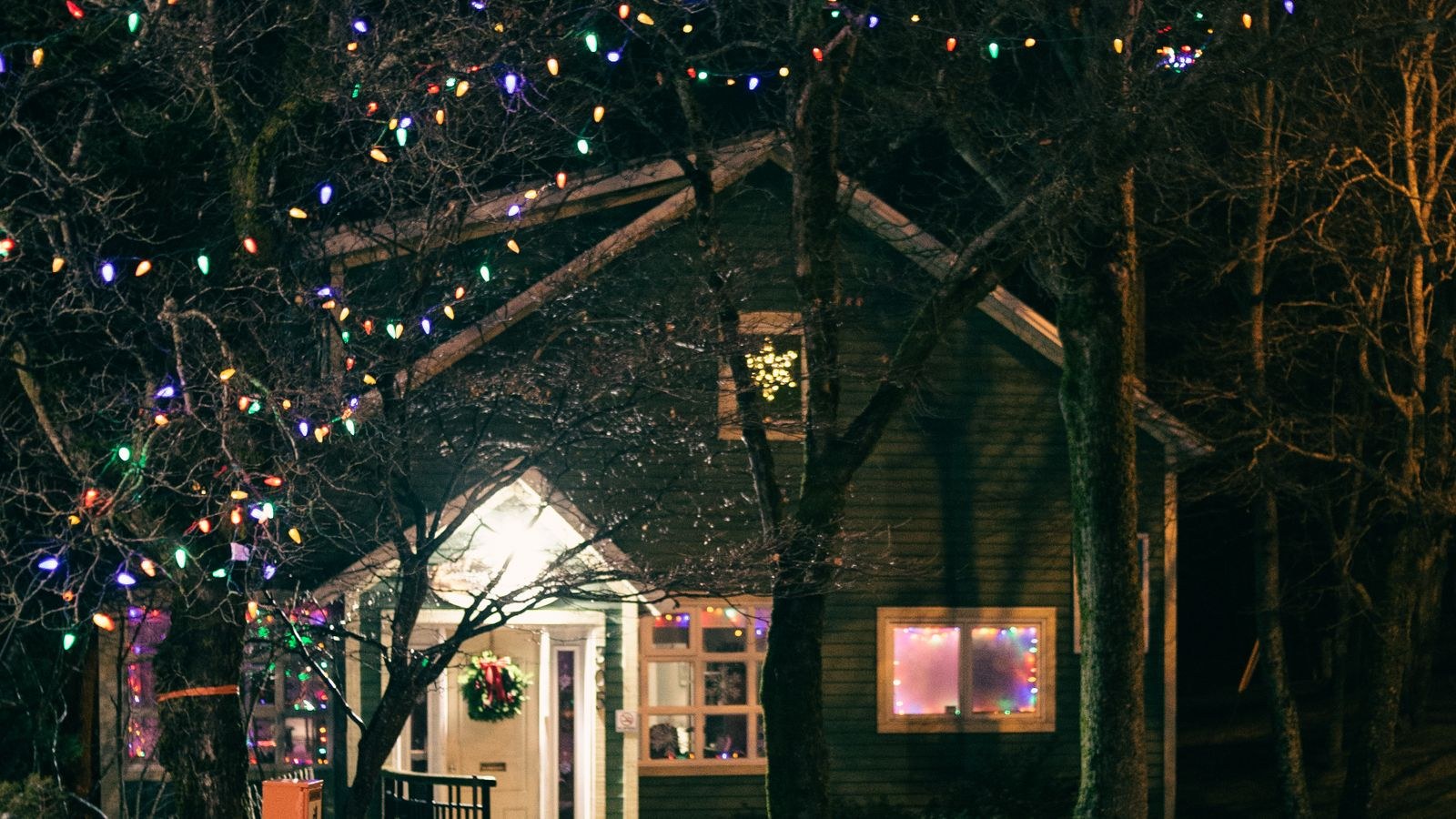
- Deciduous trees in winter: bare branches are the easiest and most rewarding to wrap, since every strand shows. Wrap trunk and major limbs and the structure lights up beautifully.
- Evergreens and conifers: wrapping is impractical. Instead, drape strands over the outside in vertical passes from the top down, or use a net light pulled over the whole form.
- Palms: wrap the trunk only and let the fronds stay dark, or add uplighting at the base. Wrapping fronds looks cluttered.
- Multi-stem shrubs: treat each stem as a small trunk, or use a net over the whole mass for speed.
- Very large mature trees: wrap only what you can reach safely from a stepladder, typically the lower 3m of trunk. A well-lit base under a dark canopy still looks intentional, and no display is worth working at height in a tree.
- Small ornamental trees: the best value of all, since a 2m tree can be fully wrapped with two or three strands and looks complete.
Protecting the Tree
Living trees grow, and anything wrapped tightly around a trunk will eventually girdle it and cut off the flow of nutrients. Keep every wrap loose enough to slide a finger under, never leave lights on a growing tree for more than a season without checking, and remove them entirely at the end of winter on young fast-growing specimens. Avoid wrapping newly planted trees at all for the first couple of years while the bark is thin. Use LED strands rather than incandescent, because incandescent bulbs sit warm against the bark and can dry it out where they touch. Never screw, nail or staple anything into a trunk, and never use bare wire ties that bite into bark as the strand tightens in cold weather.
Powering a Multi-Tree Display
Total the wattage of every strand before you plug anything in and keep each circuit under 80 percent of its rating. Check the maximum end-to-end connection count printed on the strand box and stay within it, since exceeding it overheats the first connector. Use one heavy-gauge outdoor extension cord per tree back to a distribution point rather than daisy-chaining thin cords between trees. Keep all connectors above ground on a stake or a brick, loop the cable upward before each plug so water drips away, and cover joins with a purpose-made connector box. Put the whole display on a timer so it is not running unattended overnight. Where trenching a cord is impractical, solar tree lights avoid the cable run entirely, though expect shorter runtime in midwinter.
Common Mistakes
Buying too few strands is the near-universal error, and it leads to the second mistake of stretching spacing wider partway up so the tree looks thin at the top. Others include wrapping tightly enough to damage bark, mixing warm and cool white sets on the same tree, using indoor lights outdoors, leaving connections lying in wet grass, wrapping every small twig so the effect turns fuzzy instead of structural, and starting on the wrong side of the trunk so the cable has to cross the front of the tree to reach power. Buy quality strands too, because cheap sets shed bulbs after one frost, whereas robust Christmas lights for trees use sealed sockets and survive several seasons of wrapping and unwrapping.
Frequently Asked Questions
How long does wrapping a tree take?
Allow about an hour for a small ornamental tree and three to four hours for a mature deciduous tree with several wrapped limbs. Having a second person feeding strand from the coil roughly halves it.
Should I use mini lights or larger bulbs?
Mini lights are the standard for wrapping because their small bulbs and flexible cable follow bark contours smoothly. Larger bulbs suit draping and outlining rather than tight spirals. Sets sold as LED string lights with closely spaced mini bulbs give the densest look per strand.
Can I leave the lights up year round?
On a mature tree with outdoor-rated LED strands, many people do. Check the tension every few months so the wraps do not tighten as the trunk grows, and expect UV to fade the cable over a couple of years.
What spacing looks best from the street?
From more than about 15m away, 10cm spacing reads as a continuous glow. Tighter spacing only pays off on trees viewed close up, such as beside a path or a doorway.
Do I need special lights for outdoor trees?
Yes, use sets explicitly rated for outdoor or wet locations with sealed lampholders. Any set sold as Christmas lights for exterior use will carry that rating; indoor sets will fail within weeks once moisture reaches a socket.
Final Thoughts
Wrapping trees well is mostly arithmetic and consistency. Measure the trunk, calculate the strand length honestly, and buy more than you think you need. Choose one spacing and hold it from base to branch tip. Emphasise the tree’s structural limbs rather than chasing total coverage, keep every wrap loose enough to protect the bark, and plan the power path before the first loop goes on. Get those five things right and even a modest garden tree becomes the focal point of the whole street.