Owen Bradley
 Buying a graphics card should feel like matching a tool to a job, not chasing the biggest number on the box. The right GPU for a 1080p esports build looks nothing like the card a 4K creator needs, yet both shoppers face the same wall of confusing model names, memory figures, and price tiers. This graphics card buying guide cuts through that noise. Instead of ranking hardware, it teaches you how to read a spec sheet, weigh performance against your actual monitor and games, and avoid overpaying for capability you will never use. By the end you should be able to walk into any purchase in 2026 knowing exactly which tier fits your needs and your budget.
Start With the Screen, Not the Card
The single biggest factor in choosing a GPU is the display you plan to drive. Resolution and refresh rate together define how much work the card must do every second, so they set your performance target before you compare a single model. A powerful card wired to a modest 1080p 60Hz panel will spend most of its time idling, while a budget card struggles the moment you attach a 1440p or 4K monitor.
Think in three broad targets. For 1080p gaming, especially at 60Hz, even entry-level modern cards deliver smooth frame rates in most titles. For 1440p, the sweet spot for many players, you want a solid mid-range card that keeps frame rates high without dropping settings to the floor. For 4K, demands rise sharply and only upper mid-range and high-end cards keep pace at playable frame rates. If you chase high refresh rates like 144Hz or 240Hz, treat that as a step up in class, because pushing more frames per second is as taxing as pushing more pixels.
Match Your Refresh Rate Honestly
A 165Hz monitor only pays off if your card can actually produce enough frames to feed it. Buying a fast panel and a weak GPU wastes money on both ends. Decide the frame rate you genuinely want to hit in the games you play most, then shortlist cards known to reach it at your resolution. If you want a head start on models that suit fast competitive play, our roundup of the best GPUs for gaming groups cards by the frame rates they realistically deliver.
Understanding VRAM and Why It Matters
Video memory, or VRAM, holds textures, frame buffers, and other assets the GPU needs instantly. Run short on it and games stutter, pop in blurry textures, or crash to desktop, no matter how fast the core is. As a rough guide, 8GB is a comfortable floor for 1080p and light 1440p play, 12GB gives 1440p breathing room and handles high-resolution textures, and 16GB or more suits 4K gaming and memory-hungry creative work.
Resolution, texture quality, and ray tracing all inflate memory use, and newer titles are trending upward year over year. It is safer to buy a little more VRAM than you need today than to sit exactly at the edge. That said, memory is only useful when paired with enough core horsepower, so do not choose a weak card simply because it advertises a large memory figure.
Decoding GPU Model Names and Tiers
Model names encode a hierarchy once you learn the pattern. Both major brands use a series number and a tier number, where a higher second figure usually means a faster card within the same generation. Suffixes and edition labels signal further steps up or down. The trap is comparing across generations by name alone, because a new mid-range card can match or beat an older flagship while drawing less power.
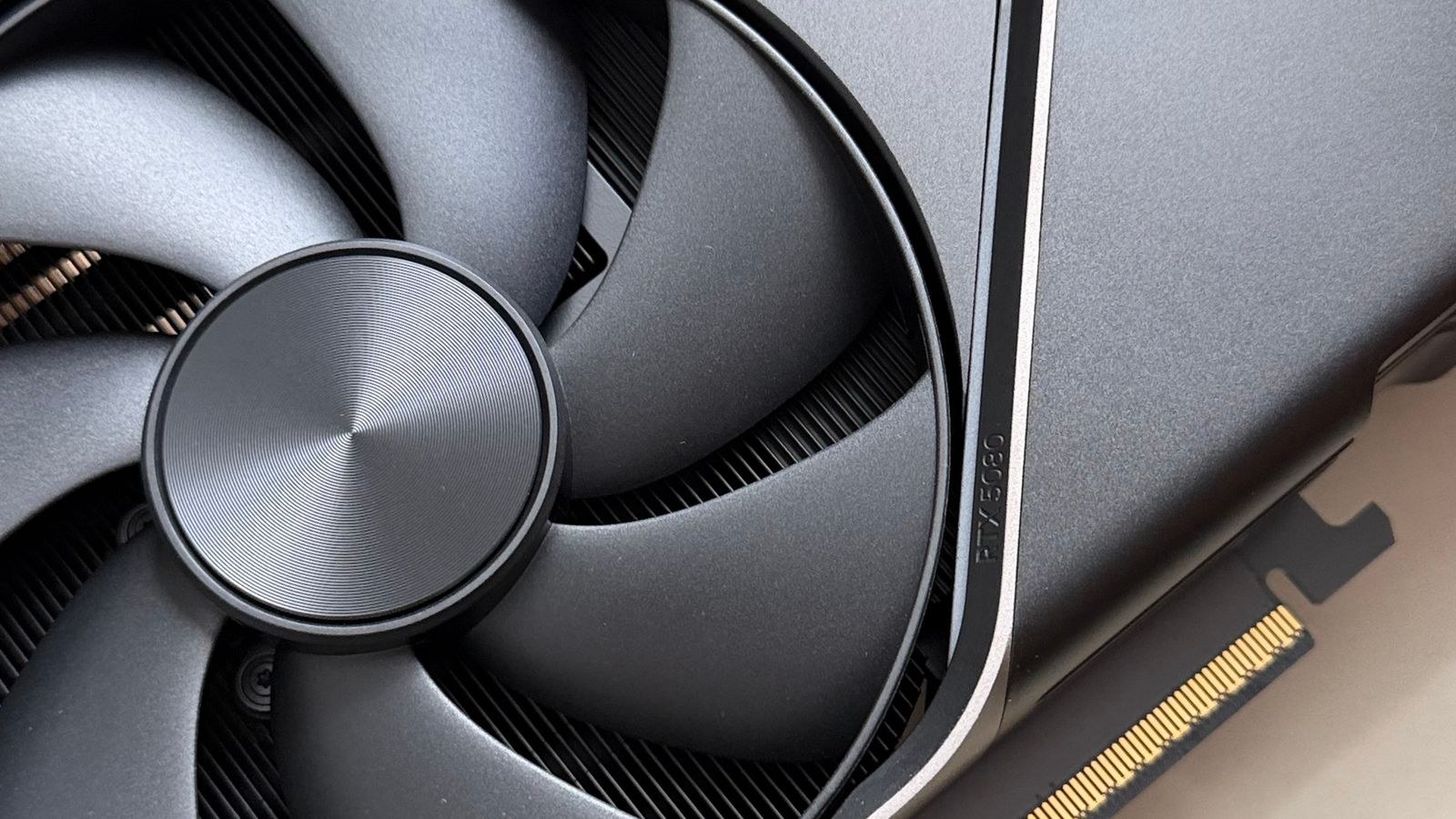
Rather than memorize every SKU, anchor yourself to independent benchmarks at your target resolution. If you prefer a curated shortlist, browse the best RTX series GPUs for feature-rich options with strong ray tracing and upscaling, or compare them against the best AMD graphics cards, which often lead on raw rasterization value at a given price.
Ray Tracing and Upscaling Features
Modern cards add features beyond raw frames. Ray tracing produces more realistic lighting and reflections but costs performance, so it matters most on mid-range and higher cards. Upscaling technologies render at a lower internal resolution and reconstruct a sharper image, recovering much of that lost speed and often making higher settings viable on modest hardware. If these features matter to you, confirm which generation and tier support the newest versions before buying.
Power, Cooling, and Physical Fit
A GPU is only as good as the system it lives in. Every card lists a recommended power supply wattage and a set of power connectors. Check that your PSU meets the recommendation with headroom and has the right connectors, since higher tiers increasingly use newer plug standards. Undersizing your power supply invites instability and shutdowns under load.
Physical fit trips up many first-time builders. High-end cards can be long, tall, and three slots thick, so measure your case clearance before buying. Cooling matters too: better coolers run quieter and hold higher sustained clocks, while cramped cases trap heat and throttle performance. If you are planning a full build, our guide to picking a balanced gaming PC CPU, GPU, and RAM combination explains how to avoid bottlenecks between parts.
Setting a Realistic Budget by Tier
Price tiers map loosely to the resolution targets above. Entry cards handle 1080p and often cost the least to run. Mid-range cards, frequently the best value, carry most players comfortably through 1440p. High-end cards unlock smooth 4K and heavy ray tracing but climb steeply in price for each extra frame. The smart move is to buy the lowest tier that clears your performance target, then spend the savings on more memory headroom, a better monitor, or storage.
If you shop with a firm ceiling, focused lists help. Our picks for the best GPUs under 500 highlight strong 1440p value, while the best GPUs for 4K gaming gathers cards that hold up at maximum resolution. Match the list to your screen, not the other way around.
New Versus Used and Timing Your Purchase
Used cards can stretch a budget, but inspect them carefully, since heavy prior use can wear cooling fans and thermal paste. Prices also shift around new product launches, so if a fresh generation is imminent, waiting can either lower prices on current cards or bring better performance per dollar. If your current card still meets your needs, patience often pays.
Common Mistakes That Waste Money
A few predictable errors cost buyers the most. The first is buying by headline number, whether that is the largest VRAM figure or the highest model digit, without checking how the card actually performs in the games and resolution that matter to you. The second is pairing an expensive card with a weak processor or slow memory, which caps the frame rate the GPU can reach and hides much of what you paid for. A balanced system almost always beats one lopsided component.
Another frequent misstep is ignoring the total cost of ownership. Higher-tier cards can draw considerably more power, which raises running costs and demands a stronger, sometimes newer, power supply. Finally, many shoppers forget to account for the display and peripherals: a superb card behind a low-refresh panel or a slow storage drive still delivers an underwhelming experience. Look at the whole setup, and spend where the improvement is most visible to you.
A Simple Five-Question Buying Checklist
- What resolution and refresh rate is my monitor? This sets your performance target first.
- Which games or apps do I actually run? Demanding titles and creative software raise the bar.
- How much VRAM do those workloads need? Aim for headroom, not the bare minimum.
- Does my power supply and case support the card? Verify wattage, connectors, and clearance.
- What is my hard budget ceiling? Buy the lowest tier that clears your target and save the rest.
Frequently Asked Questions
Is more VRAM always better?
Not on its own. VRAM prevents stutter and texture issues, but a slow core with lots of memory still produces low frame rates. Balance memory capacity against core performance for your resolution rather than chasing the largest number.
Do I need the newest generation?
Not necessarily. A well-chosen previous-generation card at a discount can outperform a pricier new entry-level model. Compare benchmarks at your resolution and weigh features like upscaling support before deciding.
How long should a graphics card last?
With a sensible tier choice and enough VRAM, many cards deliver several years of comfortable play. Buying slightly above your current needs is the simplest way to extend that lifespan without overspending today.
Does the rest of my PC affect GPU performance?
Yes. A weak processor, slow memory, or an undersized power supply can hold back even a strong card. Aim for a balanced build so no single component drags the others down.
Final Thoughts
Choosing a graphics card gets far easier once you flip the process: start with your monitor and the games you play, translate that into a resolution and VRAM target, then pick the lowest tier that clears the bar with a little headroom. Confirm power, cooling, and physical fit before you commit, and treat brand names and model numbers as shortcuts to benchmarks rather than proof of value. Follow that order and you will buy the right GPU for your setup in 2026 instead of the biggest one on the shelf, keeping money free for the parts of your build that also shape the experience.