Owen Bradley
 Hip pain from sitting rarely announces itself on day one. It creeps in as a dull ache in the front of the hip, a pinch deep in the crease when you stand up from your chair, or a stubborn tightness that makes the first few steps toward the kitchen feel stiff and mechanical. Eight hours a day in a fixed seated position keeps the hip flexors shortened, the glutes switched off, and the joint capsule starved of the movement it needs to stay healthy. The good news is that this is one of the most reversible desk-related complaints there is. This guide walks through why sitting irritates the hips, how to correct the chair settings that quietly make it worse, and the exact sequence of movements that undoes a full workday in about ten minutes.

Why Sitting All Day Makes Your Hips Hurt
When you sit, your hip sits at roughly ninety degrees of flexion. Hold that angle for hours and the muscles at the front of the hip, mainly the psoas and rectus femoris, adapt to their shortened length. Meanwhile the glutes on the back of the hip are compressed against the seat and receive almost no work. The result is a classic imbalance: tight in front, weak behind. Standing up asks the front muscles to lengthen suddenly, and that is the moment most people feel the pinch.
There is a second, less obvious mechanism. Cartilage in the hip has no blood supply of its own and relies on movement to pump nutrients in and waste out. Static loading for hours starves the joint of that pumping action, which is why the ache often feels deep and diffuse rather than sharply muscular. A third factor is circulation: sustained pressure from the seat pan on the back of the thighs restricts blood flow, contributing to the heavy, stiff sensation many people describe at the end of the day.
Telling Muscle Tightness From Something More Serious
Most desk-related hip pain is mechanical and responds within a couple of weeks to setup changes and movement. Some symptoms warrant a professional opinion instead. Pain that wakes you at night, pain that radiates below the knee, numbness or tingling in the leg, a hip that locks or gives way, or pain that keeps worsening despite four weeks of consistent changes should be assessed by a physician or physiotherapist. This article covers the ordinary, movement-responsive kind.
Tools and Setup You Will Need
Nothing here requires a gym. Before you start, gather a few things so you are not improvising mid-routine.
- An adjustable chair with working seat height and, ideally, seat tilt.
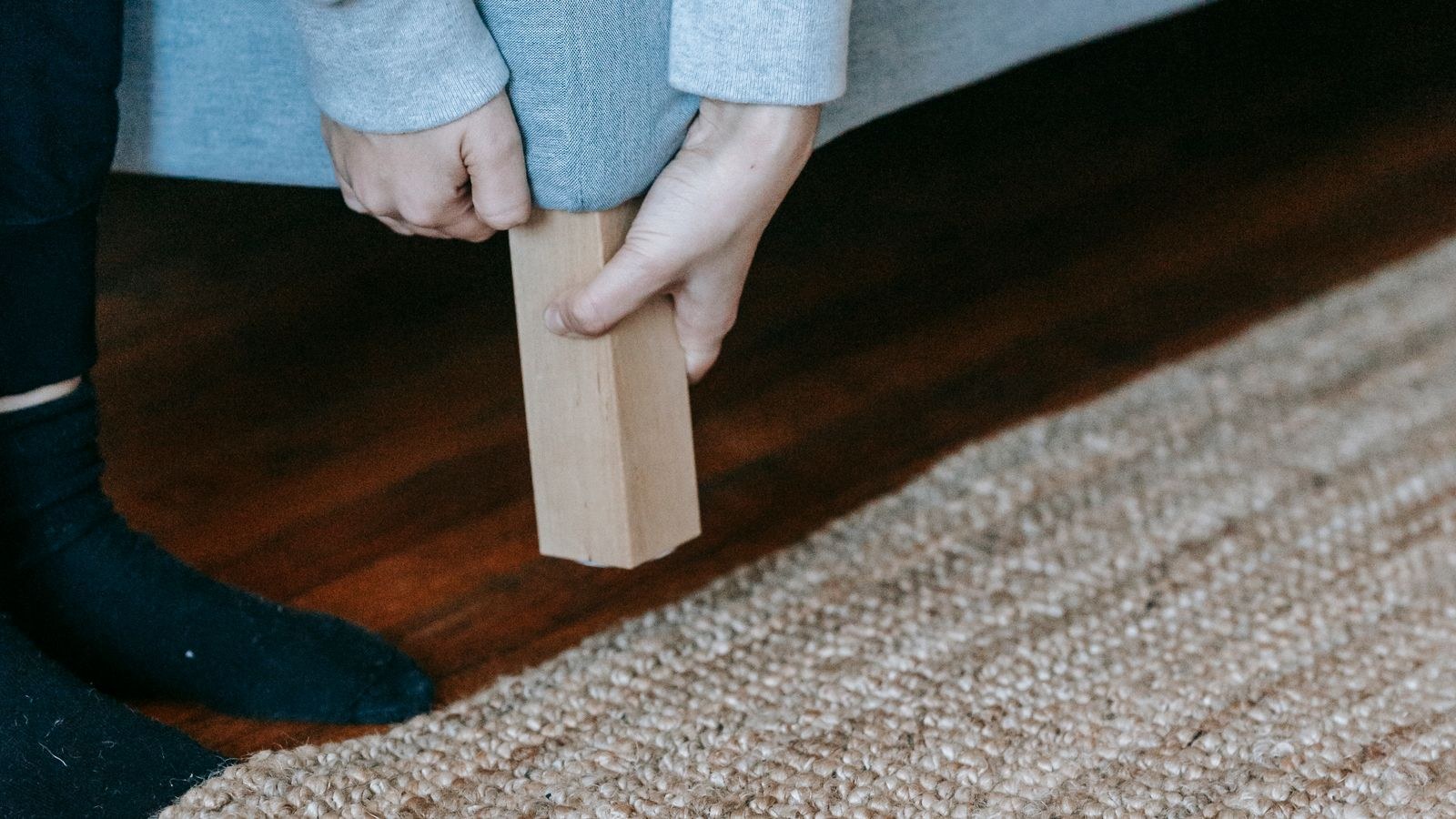
- A firm cushion or folded towel to wedge under the back of the seat if your chair cannot tilt.
- A footrest, a sturdy box, or a stack of books if your feet do not sit flat on the floor.
- A timer, which can simply be your phone or a calendar reminder.
Step by Step: Fixing the Chair First
Stretching a hip that gets re-shortened every hour is a losing battle. Correct the seat before you correct the body.
- Set seat height so your hips sit slightly above your knees. The old advice of thighs perfectly parallel to the floor puts the hip at its most closed angle. Raising the seat one to two inches so the knees drop a little below hip level opens the hip crease and immediately reduces flexor tension. Your feet must still rest flat; if they now dangle, add a footrest.
- Check seat depth. Slide back until your lower back meets the backrest, then measure the gap behind your knees. You want roughly two to three fingers of clearance. A seat pan that is too deep forces you to perch forward and lose lumbar support; one that is too shallow concentrates pressure under the thighs. Many chairs have a sliding seat pan for exactly this reason.
- Add a small forward seat tilt. Tipping the front of the seat down by about five degrees rotates the pelvis forward, restores the natural lumbar curve, and opens the hip angle further. If your chair has no tilt function, place a folded towel across the rear third of the seat to create the same wedge.
- Lower or widen your armrests. Armrests set too high push the shoulders up and encourage a slumped, posteriorly tilted pelvis, which drives the hip into more flexion. Set them so your forearms rest lightly with shoulders relaxed.
- Relieve pressure under the thighs. If the front edge of the seat digs in, look for a waterfall front edge or add padding. A supportive cushion is often the cheapest meaningful upgrade; browse the best desk chair cushions for options that redistribute pressure without raising you too high.
- Reassess the chair itself. If your seat cannot be raised, tilted, or depth-adjusted, no amount of stretching will fully solve the problem. Chairs designed specifically for this complaint, such as the best chairs for hip pain, prioritise seat pan shape and pressure distribution, while the broader best ergonomic office chairs cover full adjustability for general desk work.

The Ten-Minute Hip Routine
Do this once in the middle of your workday and once in the evening. Every movement is held gently; none should produce sharp pain. Breathe normally throughout rather than holding your breath.
- Half-kneeling hip flexor stretch, 45 seconds per side. Kneel on one knee with the other foot forward. Before pushing anything forward, tuck your tailbone under and squeeze the glute on the kneeling side. That single cue does more than lunging deeply. Ease forward only until you feel a stretch across the front of the kneeling hip.
- Glute bridge, 12 slow repetitions. Lie on your back, knees bent, feet flat and hip width apart. Press through your heels and lift the hips until shoulders, hips and knees form a straight line. Squeeze at the top for two seconds, then lower slowly. This wakes up the muscles the chair has been sitting on all day.
- Figure-four glute stretch, 45 seconds per side. On your back, cross one ankle over the opposite knee, then draw the supporting thigh toward your chest. This targets the deep external rotators, a common source of pain in the back of the hip and outer buttock.
- Standing hip circles, 10 in each direction per leg. Hold a desk edge for balance, lift one knee to hip height and draw slow circles with it. This is a joint mobility drill rather than a stretch, and it is what actually pumps fluid through the joint capsule.
- Deep bodyweight squat hold, 30 to 60 seconds. Feet slightly wider than shoulders, toes turned out a little, sink as low as you comfortably can while holding a doorframe for support. It restores the end-range hip flexion your chair never asks for.
- Standing side lunge, 8 per side. Step wide to one side and shift your weight over that leg while the other stays straight. Desk sitting neglects side-to-side hip movement entirely, and this fills the gap.
The Micro-Break That Matters More Than the Routine
A single ten-minute session does not offset seven hours of stillness. What changes hip health most is frequency. Set a timer for every 30 to 45 minutes and simply stand, take a few steps, and perform three or four standing hip circles. Thirty seconds is enough. If you find yourself ignoring the timer, tie the break to something you already do: standing for every phone call, refilling water each hour, or walking to a printer placed deliberately far from your desk.
Building Movement Into the Workday
Alternating your working posture is more effective than any single stretch because it prevents any one tissue from being loaded continuously. Switching between sitting and standing several times a day keeps the hip cycling through different angles, and the wider benefits are covered in our overview of sit-stand desk health benefits. If a height-adjustable desk is not an option, take walking meetings, stand while reading, and use a taller counter for tasks that do not need typing.
For those whose work genuinely demands long uninterrupted sessions, the seat needs to be forgiving over time rather than just comfortable in the first ten minutes. Chairs built for extended use, like the best chairs for long hours, focus on pressure distribution and cushion resilience that holds up across a full shift.

Common Mistakes That Keep the Pain Coming Back
The most frequent error is aggressive stretching of an already irritated hip flexor. Cranking into a deep lunge with an arched lower back stretches the lumbar spine, not the hip, and often leaves the joint more inflamed. The tailbone tuck is the whole exercise; the depth is almost irrelevant.
The second mistake is treating tightness as a flexibility problem when it is usually a strength and control problem. Muscles that feel tight are frequently protecting a weak or unstable joint. That is why the glute bridge belongs in the routine alongside the stretches, and why a week of stretching alone often produces only temporary relief.
Finally, plenty of people buy an excellent chair and never adjust it beyond the height lever. A well-designed chair left at factory settings performs little better than a cheap one. Spend fifteen minutes with the manual once; the payoff lasts for years.
Frequently Asked Questions
Is standing all day better than sitting for hip pain?
No. Prolonged standing swaps one static posture for another and commonly produces its own problems, including foot, knee and lower back discomfort. The benefit comes from alternating, not from picking a side. Aim to change position several times an hour rather than committing to a single posture.
Should I use ice or heat on a sore hip?
For the diffuse ache that follows a long day of sitting, heat is generally more useful because it increases blood flow to tissues that have been compressed and immobile. Ice suits acute, sharp, recently injured pain. Neither is a substitute for movement; both are comfort measures.
Do I need a specific ergonomic chair, or will a cushion do?
A cushion can solve pressure problems and add a mild forward wedge, which is often enough for mild cases. It cannot fix a seat pan that is too deep or a chair that will not raise high enough to open your hip angle. If the geometry is wrong, the chair itself is the constraint.
How often should I really be getting up?
Every 30 to 45 minutes is the practical target, and the quality of the break matters less than its consistency. Thirty seconds of standing and a few hip circles every half hour beats one long walk at lunchtime, because it is the duration of unbroken stillness that drives the problem.
Final Thoughts
Hip pain from sitting is a predictable consequence of holding a joint at one angle for most of your waking hours. The fix is equally predictable: open the hip angle at your chair, wake up the glutes that the seat has been suppressing, and break up long static blocks with brief, frequent movement. Start with the seat height and forward tilt today, add the ten-minute routine tomorrow, and set a recurring timer before you close this page. Those three changes address the cause rather than chasing the symptom, and most people feel the difference well before the month is out.