Owen Bradley
 Hard floors look great and clean easily, but they give furniture nothing to grip. Sit down on a sofa standing on polished oak, tile or laminate and the whole piece creeps back an inch. Do that a few thousand times and the sofa ends up pressed against the wall, the rug is bunched, and the floor finish has a set of dull tracks worn into it. Stopping a sofa from sliding is straightforward once you understand that the fix depends on the type of foot the sofa stands on and the type of floor underneath it. This guide covers every practical method, from ten-second grip pads to a properly sized rug, and explains which ones will not mark your finish.
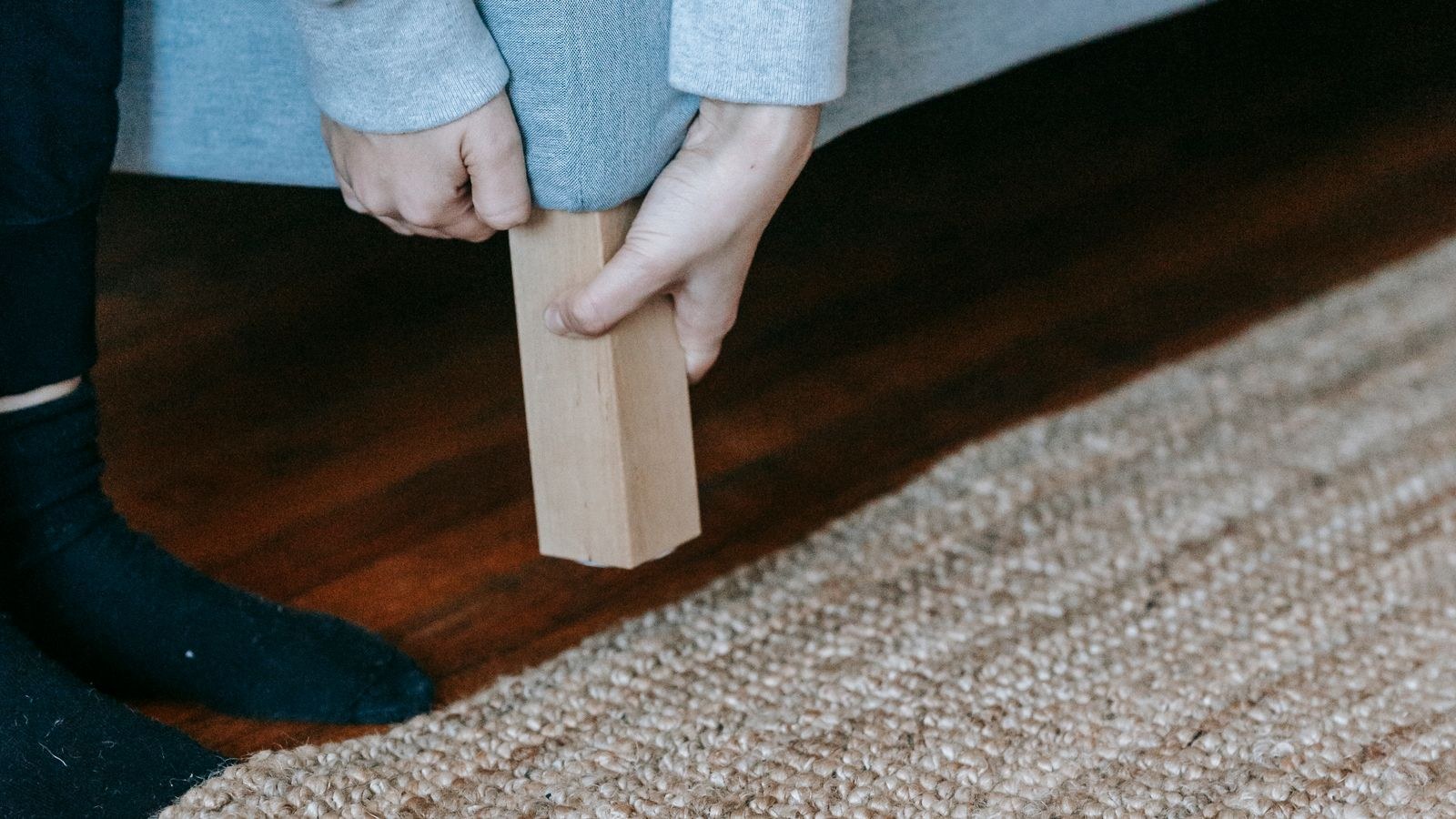
Why Sofas Slide on Hard Floors
Three things combine. First, the feet themselves: plastic glides, metal ferrules and lacquered wooden legs all have very low friction against a sealed floor. Second, the force you apply is horizontal, not vertical, because sitting down means dropping backwards into the seat. Third, hard floors are often finished with a slick polyurethane or a ceramic glaze that is deliberately smooth so it cleans easily.
Weight does not help as much as people expect. A heavy sectional slides just as readily as a light two-seater when the feet are slippery, because friction depends far more on the contact material than on the load. That is why the answer is almost always changing what the sofa touches the floor with.
Check the Feet Before You Buy Anything
Tip the sofa back and look. Hard plastic domes, felt discs worn shiny, bare metal caps and varnished wood are all low-grip. Felt pads deserve special attention because they are designed to slide, which is exactly right for chairs you move often and exactly wrong for a sofa you want to stay put. Note the shape and diameter of each foot, since round, square and recessed feet take different grippers.
What You Will Need
- Rubber or silicone furniture grippers sized to your feet, either cup or pad style
- Non-slip rug pad, ideally a natural rubber or PVC-free open weave
- Double-sided carpet tape or removable rug gripper tabs
- Clean cloth and mild floor-safe cleaner
- Tape measure and a marker
- A helper to tip the sofa while you work
Step by Step: Stop the Sofa Sliding
- Clean the floor and the feet. Dust and polish residue act like tiny ball bearings, and no gripper sticks properly to a dirty surface. Wipe the floor where each foot lands, then wipe the feet themselves and let everything dry fully before fitting anything.
- Measure each foot. Record the diameter or the width and depth. Grippers only work when the foot sits fully inside or fully on top of them; an oversized cup lets the leg rock and an undersized pad squeezes out under load.
- Remove old felt pads. Peel them off and scrape any dried adhesive with a plastic scraper. Leaving felt under a new rubber pad defeats the whole exercise, because the felt is still the layer touching the floor.
- Fit rubber grippers to every foot. Tip the sofa back with a helper, press a self-adhesive rubber pad onto each foot or slide a rubber cup over it, and hold for thirty seconds so the adhesive keys. Do all the feet, not just the back two, or the sofa will pivot instead of sliding.
- Lower the sofa and test it. Sit down hard and stand up several times. A correctly gripped sofa may flex slightly but should not travel. If it still creeps, the pads are too small, the floor was not clean, or the feet are recessed so the pad never fully contacts the floor.
- Add a rug with a proper pad if grip alone is not enough. A rug is the most reliable long-term answer because it removes the hard surface entirely. Put a non-slip pad underneath it, because a loose rug on a hard floor just slides as a unit and takes the sofa with it.
- Anchor the rug at the corners. Use rug gripper tabs or a few strips of double-sided carpet tape at the corners and midpoints. Test the tape on an inconspicuous patch first, as strong adhesives can lift a soft floor finish when removed.
- Recheck after a couple of weeks. Adhesive pads settle and sometimes need a firmer press or a replacement. Rubber cups can walk off a tapered leg. A quick tip-and-look prevents a pad falling off unnoticed and letting a bare metal foot score the floor.
Choosing the Right Gripper for Your Floor
Not every anti-slip product is safe on every finish. Cheap rubber compounds containing plasticisers can leach into a polyurethane or vinyl floor and leave a permanent yellow or dark stain under each foot. That is the single most common way people damage a floor while trying to protect it.
- Hardwood and engineered wood: use non-staining natural rubber or silicone grippers, and check that the product is described as safe for finished wood. Avoid coloured rubber and anything tacky to the touch.
- Laminate: similar to wood, but laminate scratches more visibly, so favour a soft rubber cup that covers the whole foot rather than a small pad.
- Tile and stone: grip is easy here, but grout lines can rock a hard foot. Wide rubber cups spread the load and stop the rocking noise.
- Luxury vinyl and PVC: the most sensitive of all to plasticiser migration. Look specifically for non-staining or vinyl-safe grippers, or use a rug pad instead.
Getting the Rug Size Right
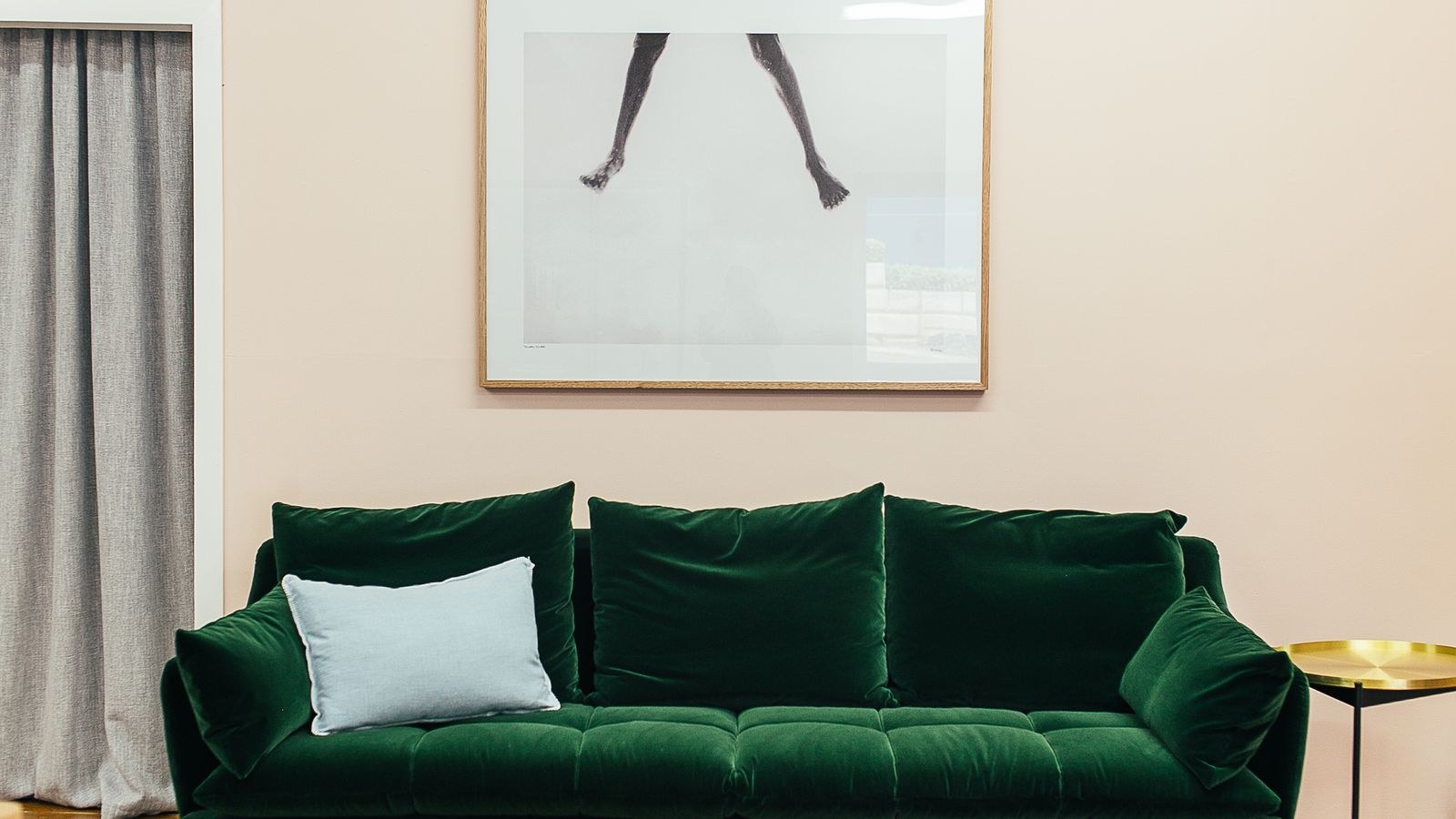
A rug only stops movement if the sofa actually stands on it. The usual mistake is a small rug floating in front of the sofa, which does nothing at all for grip and looks undersized as well. At minimum, the front two feet of every seating piece should sit on the rug. Better still, place all four feet on it, which locks the sofa in place and makes the seating area read as one zone.
Measure your seating group as a rectangle, then add roughly eight inches on each side to get a rug size that will contain it. Under a corner unit, the rug needs to run under both arms of the L or the piece will look stranded. Pair whatever you choose with a dense pad, because a thin foam pad under a heavy sofa compresses to nothing and stops gripping within a month.
Special Cases: Sectionals, Recliners and Legless Bases
Multi-piece sofas have a second problem: the sections drift apart from each other as well as sliding on the floor. Most modern sectionals ship with metal connector brackets or interlocking clips that hook the sections together at the base. Fit them, because two connected sections behave like one heavy piece and are far harder to shift.
Recliners push backwards hard every time the footrest goes up, so they benefit from the largest rubber cups that will fit and from being placed on a rug. Platform sofas with a solid plinth instead of legs need adhesive rubber strips applied along the base edge rather than pads, since there is no discrete foot to grip.
Choosing a Sofa That Stays Put
If you are still shopping, weight distribution and foot design matter. Wide-footed frames, low-profile bases and connected multi-piece designs all stay in place better than a light frame on four narrow tapered legs. Our overall roundup of the best sofas is the place to start comparing frame styles and base types.
Corner designs are naturally stable because two runs of seating brace against each other, and our guides to the best L-shaped sofas and the best sectional sofas both cover models that ship with proper section connectors. If you like the flexibility of rearranging your layout, modular sofa systems use clip-together bases that hold their shape once positioned. And since bare floors need more frequent cleaning around furniture feet, our picks for the best vacuum cleaners for hardwood floors cover models with soft rollers that will not scuff the finish you are protecting.
Mistakes to Avoid
- Using felt pads on a sofa. Felt is a sliding aid, not a gripper.
- Fitting grippers to the back feet only. The sofa will simply rotate instead.
- Buying coloured or cheap rubber for vinyl and wood. Staining under the feet is difficult to reverse.
- Laying a rug with no pad. The rug and the sofa slide together.
- Choosing a rug too small for the seating group. If no feet stand on it, it changes nothing.
- Skipping the cleaning step. Adhesive pads fall off dusty feet within days.
Frequently Asked Questions
Will rubber grippers scratch my hardwood floor?
Good-quality non-staining rubber will not scratch, because it is far softer than the finish. The risk is discolouration from plasticisers in cheap compounds, so buy grippers explicitly described as safe for finished wood or vinyl.
Can I just push the sofa against the wall instead?
It stops the movement but transfers it to the wall, scuffing the paint and eventually marking the plaster. If you do it, fit small bumpers to the back of the frame and leave a fingers-width gap.
Do heavy sofas still slide?
Yes. Friction depends mainly on the materials in contact, so a heavy frame on slick plastic glides moves nearly as easily as a light one. Change the contact material and the weight becomes an advantage.
What is the best fix for a rented home?
Slip-on rubber cups plus a rug with a non-slip pad. Neither uses adhesive on the floor, both come away cleanly, and you can take them with you.
Final Thoughts
Stopping a sofa from sliding comes down to giving the feet something grippy to stand on and, ideally, putting a properly sized rug underneath the whole seating group. Clean the floor and the feet first, remove any old felt, fit non-staining rubber to every foot rather than just the back pair, and connect the sections if you own a sectional. Done properly, the whole job takes half an hour, costs very little, and saves you from the slow wear marks that hard floors quietly accumulate under a sofa that never stays where you put it.