Owen Bradley
 Choosing a sofa is the fun part. Getting it through your front door, up your stairs, into the right room, and out of its packaging is where the money and the frustration hide. Sofa delivery options range from a driver leaving a wrapped box on the pavement to a two-person team who carry it in, assemble it, position it, and take the packaging away, and the price gap between those two experiences can be several hundred dollars. Add return policies that treat oversized furniture very differently from a pair of shoes, and it becomes clear that checkout deserves as much attention as the product page. This guide explains what each delivery tier actually includes, which fees appear late, how to measure your access route, and what a sofa return really involves.
The Main Sofa Delivery Options Explained
Retailers use similar names for these services, but the details vary, so read the description rather than trusting the label. Four tiers cover almost everything you will encounter.
Parcel or courier delivery applies to flat-packed and boxed sofas shipped through standard freight networks. The carton arrives at your door like any large parcel, often carried by one person, and everything after that is yours to handle. It is usually the cheapest option and frequently free, but it is also the only tier where a heavy box can legitimately be left outside.
Curbside or threshold delivery means a freight truck brings the item and the crew unloads it, but the service stops at the kerb or, for threshold variants, just inside your front door or garage. No stairs, no unpacking, no assembly. This is the standard included service for many large items, and it catches out anyone living above the ground floor.
Room of choice upgrades that by having the team carry the item to the room you specify, including up stairs. Packaging usually stays on and assembly is not included, but the heaviest part of the job is done for you. It is often the best value tier for anyone without a helper on hand.
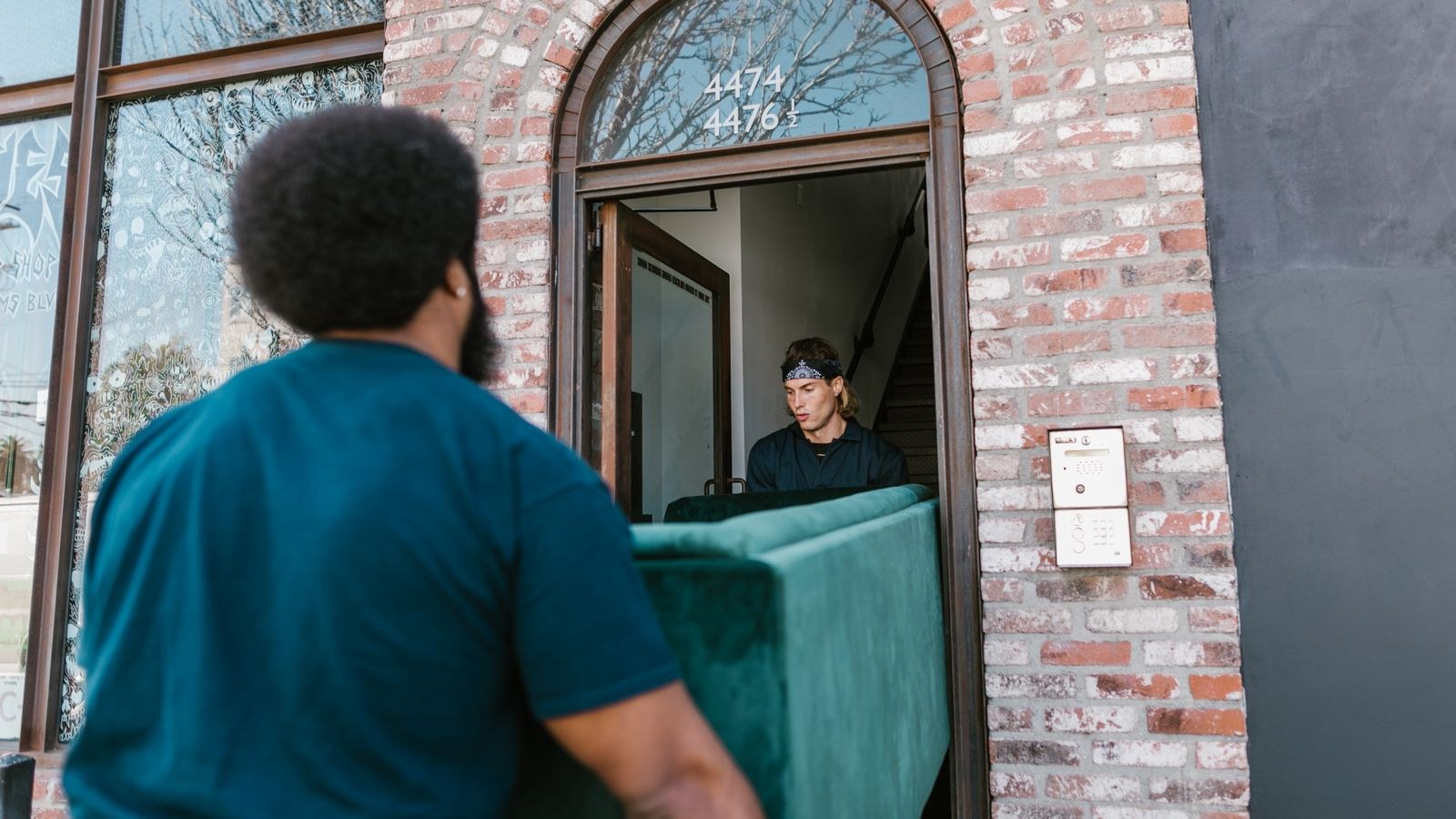
White glove delivery is the full service: two people bring the sofa to your room, unbox it, assemble legs and any modular sections, position it where you want it, inspect it with you, and remove all packaging. Many providers also offer haul-away of your old sofa for an extra fee. It is the most expensive tier and the only one that leaves you with nothing to do afterwards.
Which Tier Suits Your Situation
Ground-floor homes with wide doorways, a helper available, and a flat-pack design can save real money on curbside. Upper-floor apartments, tight stairwells, heavy one-piece frames, anyone living alone, and anyone with a back that objects to lifting should treat room-of-choice as the minimum. White glove earns its price on large sectionals, sleeper sofas with heavy mechanisms, and any piece that arrives in multiple bulky cartons.
Fees That Appear Late in Checkout
The headline delivery price is rarely the whole figure. Watch for a few extras that commonly appear only at the final step or in the fine print.
- Stair carry charges applied per flight above the ground floor, sometimes waived where a working lift is available.
- Assembly fees charged separately from delivery on modular sofas, sectionals, and pieces with detachable legs or arms.
- Haul-away or disposal fees for removing your old sofa, which usually must be booked in advance rather than requested on the day.
- Remote or extended area surcharges triggered by postcode, common outside major metro delivery zones.
- Failed delivery and redelivery charges if nobody is home during the booked window or the item cannot fit through the entrance.
- Long carry fees where the truck cannot park within a set distance of your door.
None of these are unreasonable in themselves, but they change which retailer is genuinely cheapest. Compare total landed cost, not sticker price. This is one reason flat-pack ranges look so attractive on paper, and it is worth reading how the assembly trade-off plays out across the best IKEA sofas before assuming a self-assembly saving is free.
Measure the Route Before You Order
Failed deliveries almost always come down to access rather than the room itself. Measure the entire path the sofa must travel, not just where it will sit.
- Measure the sofa’s boxed dimensions, which are larger than the product dimensions. Ask for carton size if the listing only gives assembled measurements.
- Measure every doorway width and height along the route, including the building entrance, and note whether doors can be removed from their hinges to gain a few inches.
- Measure stairwell width, ceiling height above the stairs, and especially the diagonal clearance at any turn or landing, which is where most sofas get stuck.
- Check lift interior dimensions and the door opening, remembering that a sofa may need to go in diagonally or upright.
- Note tight hallway corners, low ceiling fixtures, radiators, and handrails that reduce usable width.
Compare the sofa’s smallest cross-section, usually the diagonal depth measured from the top of the back to the front edge of the seat, against your narrowest point. If the margin is under two inches, look at sofas that arrive in sections or knock-down frames instead. Designs built for difficult access appear throughout our roundup of the best sofas, and choosing one of them is far easier than negotiating a redelivery.
Lead Times and Scheduling Realities
Stock items from large retailers commonly ship within one to three weeks. Made-to-order and custom-fabric sofas run far longer, frequently eight to sixteen weeks, because production only begins after your order is confirmed. Custom-focused brands are honest about this in their listings, and the wait is worth understanding before you fall for a fabric swatch, as buyers exploring the best Joybird sofas or the best Article sofas quickly discover.
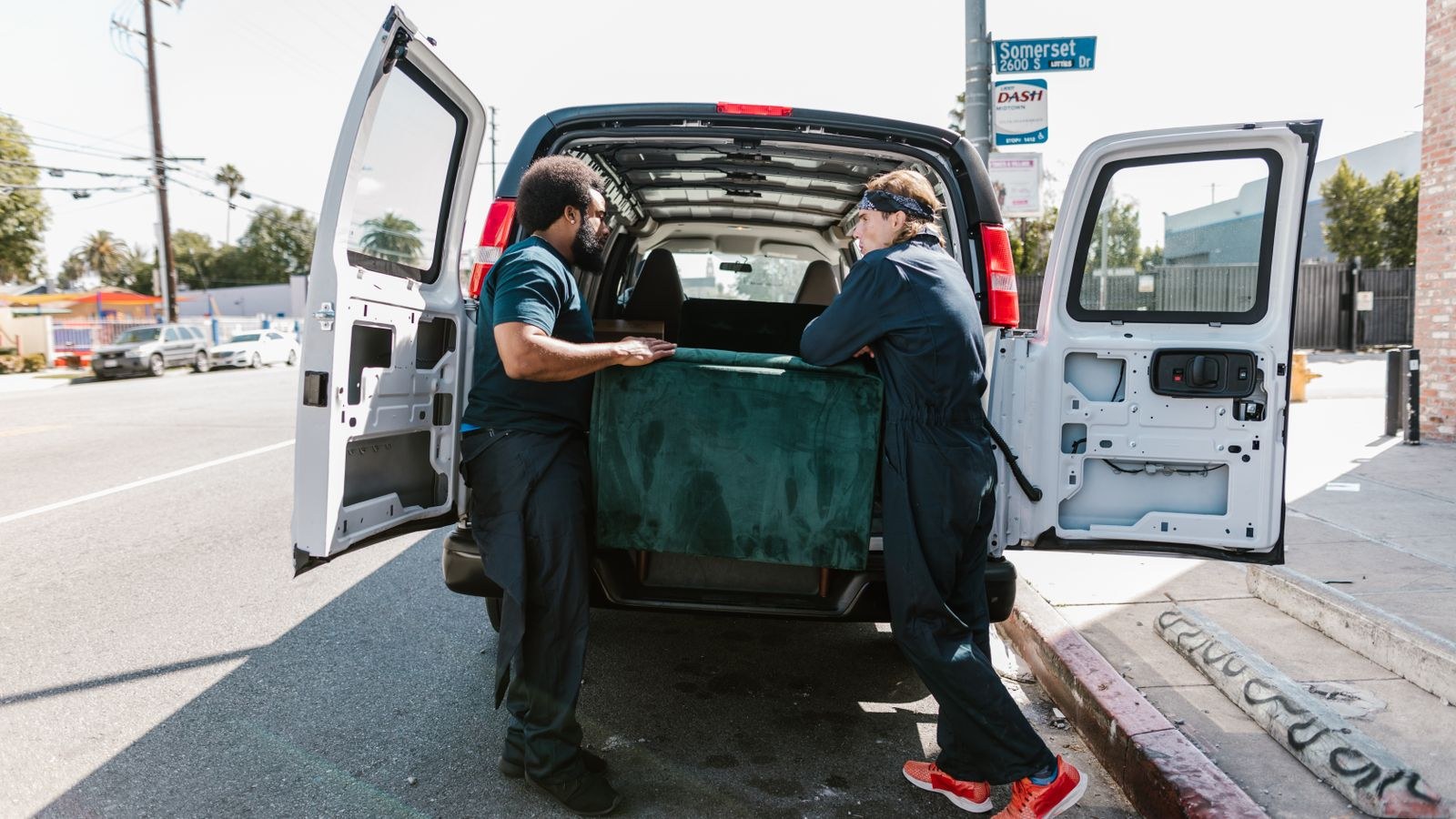
Most freight deliveries arrive in a scheduled window rather than at a fixed time, typically two to four hours, confirmed by call or text a day or two ahead. Someone over eighteen usually must be present to sign. Ask three questions when booking: how many people are on the crew, whether the window can be narrowed, and what the policy is if the item will not fit. The answer to that last question decides whether a failed attempt costs you nothing or costs you a restocking fee.
Preparing the Day of Delivery
Clear the route completely, including rugs and anything fragile near a corner. Reserve parking if your street is tight, since long-carry fees start where parking ends. Keep your phone available for the window call and a tape measure handy.
Inspecting the Sofa Before You Sign
Signing the delivery note usually confirms the goods arrived in acceptable condition, so inspect before you sign rather than after. Check the fabric across arms, back, and seat for scuffs, snags, and pulls. Look at the frame corners and legs for cracks or transit dents. Sit down and listen for creaks. Confirm the model, fabric, and configuration match your order, and that a sectional’s pieces are the correct handedness for your room.
If you find damage, note it in writing on the delivery paperwork before signing and photograph it immediately with the packaging still nearby. Verbal reports are far harder to act on later. Retailers generally require damage claims within a short window, often two to seven days, so raise it the same day rather than waiting to see whether it bothers you.
How Sofa Return Policies Actually Work
Return rules for oversized furniture differ sharply from ordinary retail returns. Expect most of the following.
Shorter windows. Furniture return periods are often 14 to 30 days rather than the longer windows offered on small goods, and they typically start from the delivery date rather than the order date.
Return shipping is rarely free. Even where the return itself is accepted, you commonly pay collection costs, and on large items that can run into the hundreds. Some retailers deduct the original outbound delivery cost as well.
Restocking fees. A percentage deduction, frequently in the 10 to 25 percent range, is common on furniture returns that are not due to a fault.
Custom orders are usually final. Anything made to your chosen fabric, size, or configuration is generally non-returnable unless faulty, because it cannot be resold. This is the single most important clause to read before ordering a custom piece.
Condition and packaging requirements. Many policies require the item to be unused and in its original packaging, which is a real problem if a white glove crew removed the boxes. If you have any doubt about keeping the sofa, ask the crew to leave the packaging and store it flat for the length of the return window.
Faulty goods sit under separate consumer protection rules in most regions, and a manufacturing defect is generally the retailer’s problem to fix, replace, or refund regardless of the return policy’s commercial terms. Keep your order confirmation, delivery note, and photographs together in one place.

Trial Periods and Showroom Alternatives
Some online sellers offer extended home trials, sometimes 30 to 100 days, with free returns as a deliberate counterweight to the fact that you cannot sit on the sofa before buying. That is a genuinely valuable benefit and worth paying a little more for on a first online furniture purchase. Traditional retailers with showroom floors take the opposite approach: you try before you buy, so return terms are tighter. Both models are reasonable, but you should know which one you are shopping in. Established showroom brands such as those in our guides to the best West Elm sofas and the best Pottery Barn sofas typically pair in-person testing with paid, structured delivery tiers.
Common Delivery Mistakes to Avoid
The most common errors are comparing sofas on price while ignoring delivery tiers, booking curbside for an upper-floor flat and assuming the crew will help anyway, measuring the room but not the route, letting crews take the packaging while you are still unsure about keeping the sofa, signing paperwork before inspecting, and ordering a custom fabric without reading the final-sale clause.
Frequently Asked Questions
What is the difference between curbside and white glove delivery?
Curbside stops at the kerb or your threshold and leaves the item packaged for you to move. White glove brings it to your chosen room, unpacks it, assembles and positions it, and removes the packaging. The gap is essentially all of the physical work.
Will the delivery team take my old sofa away?
Only if you book haul-away in advance and pay the fee, and usually only alongside a white glove or room-of-choice service. Crews rarely accept an on-the-day request because disposal has to be scheduled and permitted.
What happens if my sofa does not fit through the door?
The crew will take it away and you will be treated as a failed delivery, which commonly means paying redelivery or return costs and possibly a restocking fee. Measuring the route beforehand, or choosing a sofa that arrives in sections, avoids this entirely.
Can I return a sofa if I simply do not like it?
Sometimes, within a shorter window than usual and usually at your cost, with a restocking fee deducted. Custom-made pieces are generally excluded. Retailers offering long home trials are the main exception and will collect at no charge.
How long does a made-to-order sofa take?
Commonly eight to sixteen weeks from order, and longer during peak periods or when a specific fabric is on backorder. Ask for the fabric’s stock status at the time of ordering, since fabric availability causes most of the delays.
Final Thoughts
Delivery is the part of a sofa purchase most likely to go wrong and the part buyers research least. Spend twenty minutes before checkout doing three things: measure every doorway, stairwell turn, and lift on the route; add up the real delivery total including stairs, assembly, and haul-away; and read the return clause, paying particular attention to custom-order exclusions and packaging requirements. Choose the service tier that matches your access and your ability to lift rather than the cheapest line on the page, because a redelivery fee erases any saving instantly. Inspect thoroughly before you sign, photograph anything questionable, and keep the paperwork. Do that, and the sofa arrives once, in one piece, in the room you wanted it in.