Owen Bradley
 A good reading lamp does something surprisingly specific: it puts a controlled pool of light on the page without spilling glare into your eyes or lighting up the whole room. Most lamps sold as decor fail at this, which is why so many people read under a fixture that leaves them squinting after twenty minutes. This reading lamp buying guide covers the brightness targets that actually matter, how beam control and shade design shape the light, and where to position a lamp for a bed, an armchair, or a desk. Get these three things right and long reading sessions stop feeling like work, whatever lamp style you choose in 2026.
Brightness: What Numbers to Aim For
Forget watts. LED lamps draw so little power that wattage tells you nothing about output, and the number you want is lumens. For focused reading, a lamp delivering 450 to 800 lumens covers most people comfortably. That corresponds roughly to the old 40 to 60 watt incandescent range and produces a bright, readable page without washing out the room around you.
Two factors push you higher. Age is the biggest: eyes need progressively more light over time, and readers past their fifties often want 800 to 1,100 lumens for the same comfort a younger reader gets from 500. Small print, glossy paper, and dark-toned rooms all raise the requirement too. Readers who prefer dim, cozy conditions or use an e-ink device with a front light can sit comfortably at the lower end.
Lux at the Page Beats Lumens on the Box
Lumens measure total light leaving the bulb; lux measures light landing on your book, and lux is what your eyes experience. A 600-lumen lamp positioned 18 inches above the page delivers far more useful light than a 1,000-lumen lamp mounted across the room. Reading comfortably wants somewhere around 300 to 500 lux on the page. This is why lamp position and shade design often matter more than raw output, and why a modest lamp placed well outperforms a powerful one placed badly.
Beam Control and Shade Design
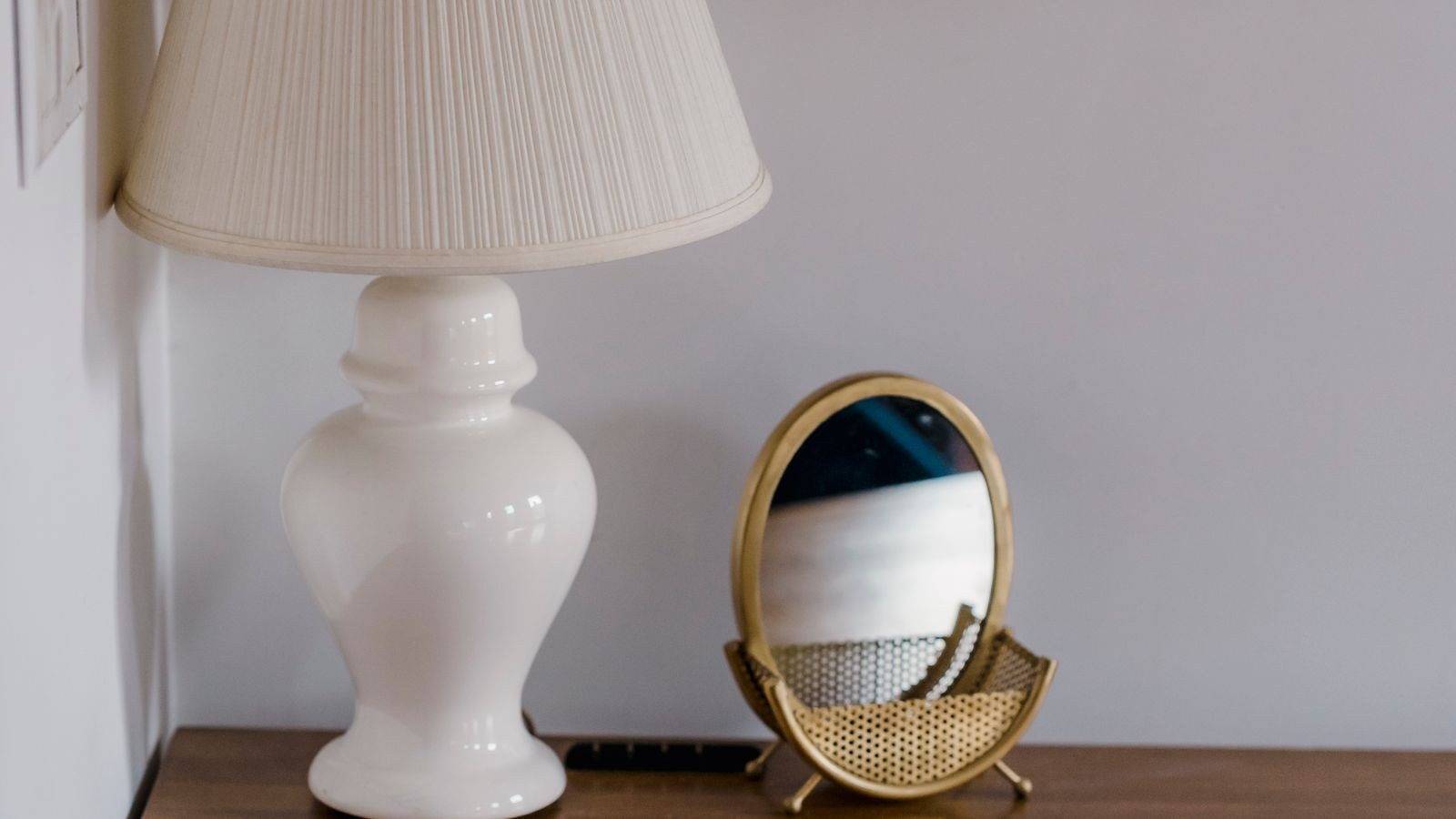
The shade decides where light goes and whether you see the bulb. An opaque, downward-directed shade concentrates light onto the page and hides the light source, which is exactly what focused reading wants. A translucent fabric shade glows softly and lights the surrounding area, which feels warmer but delivers less to the page and can create a bright spot in your peripheral vision.
Look for a shade deep enough that the bulb is not visible from your normal seated position. Seeing the bare bulb or a bright LED array while reading is the single most common cause of eye fatigue, because your pupils keep adjusting between the bright source and the darker page. A recessed diffuser or a shade lip that extends past the bulb solves this cheaply.
Adjustable Heads and Arms
Fixed lamps force you to move; adjustable lamps move for you. A gooseneck offers infinite fine positioning but can droop over time under a heavy head. A jointed swing arm holds position firmly and lets you swing the light entirely out of the way when you are not reading. A simple pivoting head on a fixed pole handles angle but not reach. If you read in more than one position, or if more than one person uses the chair, adjustability is worth paying for. Our roundup of the best reading lamps compares arm mechanisms alongside output and footprint.
Color Temperature and Light Quality
Color temperature, measured in Kelvin, changes how the light feels and how your body responds. 2700K to 3000K is warm and relaxing, ideal for evening reading and bedside use because it interferes least with winding down. 3500K to 4000K is neutral and crisp, better for daytime study, detailed work, and anyone who finds warm light muddy. Above 5000K the light reads as harsh and clinical for leisure reading, though some people prefer it for technical material.
Two other quality markers matter. CRI of 90 or above renders colors accurately, which matters more than you would expect for illustrated books, magazines, and craft work. Low flicker is worth checking too; cheap drivers produce flicker fast enough to be invisible but slow enough to cause headaches over a long session. Lamps that advertise flicker-free or low-flicker drivers are generally the safer buy. Our guide to the best LED bulbs for reading goes deeper on CRI, flicker, and dimming behavior if you plan to keep a lamp you already own and simply upgrade the bulb.
Positioning: The Rules That Kill Glare
Where the lamp sits does more for reading comfort than any spec. The universal principle is that light should come over your shoulder from behind and to one side, angled down onto the page. That geometry lights the text fully while keeping the source out of your line of sight and preventing reflections bouncing off glossy paper straight into your eyes.
Choose the side opposite your writing hand if you take notes, so your hand does not shadow the page. Aim for the light source to sit roughly 15 to 20 inches above the reading surface and slightly forward of your head. If you can see the bulb or the lit inner surface of the shade while looking at the page, the lamp is too far forward or too high, and moving it back a few inches usually fixes everything.
Bedside Reading Positions
Beds have their own constraints, especially when a partner is sleeping. The bottom of the shade should sit around 20 inches above the mattress when you are propped up reading, which usually means the lamp base sits low on a nightstand or the fixture is wall mounted. Wall-mounted swing arms and clamp lights free the nightstand entirely and let you aim light tightly at your side of the bed. A narrow beam and warm color temperature are both courtesies to whoever is trying to sleep next to you. Our picks for the best bedside reading lights focus on tightly controlled beams and low-profile mounting.
Armchair and Sofa Positions
For a reading chair, a floor lamp behind and to the side is the classic arrangement, with the shade bottom about level with your shoulder when seated, typically 40 to 50 inches from the floor. Arc lamps reach over the chair from a base placed out of the traffic path, which suits sofas where there is no room for an end table. Choose from the best floor lamps for reading if you need reach and a stable weighted base, or from the best table lamps for reading when there is a side table already in place and you want a smaller footprint.
Dimming, Controls, and Convenience Features
A single fixed brightness rarely suits every session. Stepless dimming lets you match output to the time of day and the material; stepped dimming with three or four levels is usually enough in practice and often more reliable. Tunable white lamps that shift color temperature alongside brightness are genuinely useful if you read both in the morning and late at night.
Other features worth considering: a touch or tap control on the base is easier to find in the dark than a cord switch, a memory function restores your last setting so you are not re-dimming every night, a USB port keeps an e-reader charged without another outlet, and a timer or auto-off is a small mercy for anyone who falls asleep mid-chapter. Rechargeable cordless lamps have improved considerably and free you from cable routing entirely, though they trade some maximum output for portability.
Build Quality and Practical Fit
Stability is the specification nobody lists. A floor lamp with a light base and a long arm will tip, and a table lamp that slides every time you adjust it becomes an irritation fast. Look for weighted bases, metal rather than plastic joints on adjustable arms, and clamp mounts with real screw pressure rather than spring tension if you are attaching to a headboard or shelf.
Check the bulb situation too. Lamps with integrated LEDs are sleeker but cannot be re-bulbed, so when the LED array fails the lamp is finished. Lamps with a standard socket let you swap bulbs, change color temperature later, and repair cheaply. Neither is wrong, but integrated units are worth buying only when the build quality and warranty justify treating the whole lamp as a long-term unit.
Common Reading Lamp Mistakes
- Reading in a dark room with one bright lamp. High contrast between page and surroundings tires eyes fast; keep some ambient light on.
- Placing the lamp in front of you. This guarantees glare off the page and a bright source in your field of view.
- Buying by wattage. With LEDs, wattage says nothing about brightness. Read the lumen figure.
- Choosing a shade that shows the bulb. Visible sources cause more fatigue than insufficient brightness.
- Ignoring dimming compatibility. A dimmable lamp with a non-dimmable bulb flickers or simply refuses to dim.
- Prioritizing looks over reach. A beautiful lamp that cannot get light onto your page is decor, not a reading lamp.
Frequently Asked Questions
How many lumens do I need for reading?
Most readers are comfortable between 450 and 800 lumens from a well-positioned lamp. Older eyes, small print, or dark rooms push that toward 1,000 or more, while a tightly focused beam close to the page can work with less.
Is warm or cool light better for reading?
Warm light around 2700K to 3000K is better for evening and bedtime reading because it is gentler and less stimulating. Cooler 3500K to 4000K light suits daytime study and detailed work where alertness matters more than relaxation.
Where should a reading lamp be placed?
Behind and to one side of you, angled down onto the page, with the light source about 15 to 20 inches above the reading surface. Use the side opposite your writing hand so your hand never shadows what you are reading.
Do reading lamps cause eye strain?
A badly positioned lamp can. Strain comes mainly from glare, visible bulbs, flicker, and high contrast between a bright page and a dark room, not from the lamp itself. Fix position, choose a deep shade, and keep some ambient light on.
Are floor lamps or table lamps better for reading?
It depends on the seating. Floor lamps reach over a chair or sofa and need no table, making them ideal for armchairs. Table lamps suit setups that already have a side table or nightstand and generally take up less visual space.
Final Thoughts
Choosing a reading lamp gets simple once you stop shopping by appearance and start with three questions: how much light lands on the page, whether you can see the source from where you sit, and whether the lamp reaches the position you actually read in. Target 450 to 800 lumens, pick a shade that hides the bulb, and place the light over your shoulder rather than in front of you. Add dimming and a color temperature you like, confirm the base is stable, and you will have a lamp that disappears into the routine, which is exactly what a good one should do.